

Red Yeast Rice: Benefits, Uses & Side Effects
Red yeast rice has become a popular dietary supplement among people looking for natural ways to support healthy cholesterol levels, but its story is more complicated than the word “natural” may suggest. It is made by fermenting rice with Monascus species, traditionally Monascus purpureus, which can produce compounds known as monacolins. One of these compounds, monacolin K, is chemically identical to lovastatin, a prescription statin medication used to lower cholesterol. That connection helps explain both the potential cholesterol-lowering benefits of red yeast rice and many of its possible side effects. Understanding what is actually inside a supplement is therefore essential before deciding whether it belongs in your health routine.
Interest in red yeast rice supplements has grown as more people search for complementary approaches to cardiovascular health, especially when lifestyle changes alone have not produced the cholesterol numbers they want. Research suggests that certain preparations containing meaningful amounts of monacolin K can reduce LDL cholesterol, although the strength and consistency of commercially available products vary considerably. Red yeast rice should not be viewed as a simple food-based replacement for prescribed cholesterol medication because it may behave like a statin inside the body. It can also interact with medicines, affect the liver and muscles, and contain unwanted contaminants such as citrinin. This guide explains its benefits, common uses, risks, interactions, and important considerations for choosing and using a product responsibly.
What Is Red Yeast Rice?
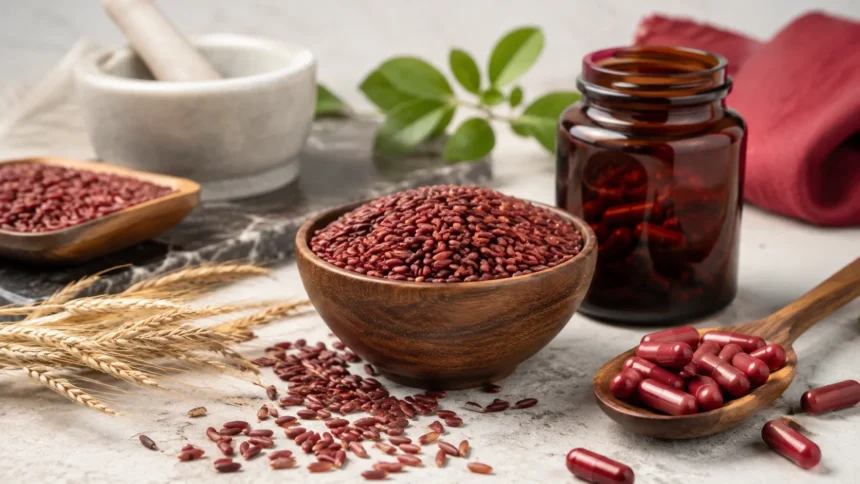
Red yeast rice is produced when rice is fermented with certain species of Monascus fungus, giving the finished product its distinctive reddish-purple appearance. Despite its name, the microorganism involved is technically a mold rather than the type of yeast commonly associated with baking or brewing. Fermented red rice has a long history in parts of Asia, where it has been used as a food ingredient, coloring agent, and component of traditional practices. Modern red yeast rice supplements are typically sold as capsules, tablets, or powdered extracts rather than as culinary fermented rice. The nutritional and chemical characteristics of those supplements can differ significantly depending on how the rice was fermented and processed.
The compounds that attract the most scientific interest are called monacolins, which are naturally produced during certain fermentation processes. Monacolin K is particularly important because its chemical structure is identical to lovastatin, a prescription cholesterol-lowering drug. Like lovastatin, monacolin K can inhibit an enzyme involved in cholesterol production within the liver, which can ultimately reduce circulating LDL cholesterol. However, not every red yeast rice product contains the same amount of this active substance, and some products may contain almost none. This variability explains why two supplements carrying similar-looking labels may produce very different biological effects. It also makes red yeast rice dosing more complicated than simply comparing the number of milligrams of fermented rice listed on a bottle.
One common misunderstanding is that a higher amount of red yeast rice automatically means a stronger cholesterol-lowering product. In reality, the total quantity of red yeast rice powder does not tell you precisely how much monacolin K or other monacolins are present. An analysis discussed by the National Center for Complementary and Integrative Health found substantial variation in monacolin K levels among commercially available products, including some with little or no detectable amount. Consumers therefore cannot reliably predict pharmacological strength by looking at the red yeast rice milligram number alone. This lack of standardization is one of the most important issues surrounding red yeast rice supplements.
The regulatory situation adds another layer of complexity, particularly in the United States. The U.S. Food and Drug Administration considers products containing enhanced or added lovastatin to fall outside the legal definition of an ordinary dietary supplement because lovastatin was approved as a prescription drug. As a result, manufacturers cannot simply market a high-lovastatin red yeast rice preparation as a conventional dietary supplement. This creates an unusual marketplace in which products with enough monacolin K to have strong cholesterol-lowering effects may also raise regulatory concerns. Meanwhile, products containing minimal amounts may be easier to sell but might not provide the effects consumers expect. Buyers should therefore avoid assuming that every product labeled “red yeast rice” has the same activity.
Red yeast rice should ultimately be understood as more than an ordinary fermented food when it is consumed in concentrated supplement form. Its potential effectiveness is closely tied to biologically active compounds that can behave in drug-like ways inside the body. That does not automatically make red yeast rice dangerous, but it does mean that treating it casually can create unnecessary risks. Anyone researching natural cholesterol support should distinguish between culinary red yeast rice and concentrated dietary supplements designed to influence blood lipids. The most useful question is not simply whether red yeast rice is natural, but what active compounds a particular product contains and how those compounds may affect an individual. That perspective creates a much more realistic foundation for evaluating its possible benefits.
How Does Red Yeast Rice Lower Cholesterol?
The primary reason people use red yeast rice is its potential ability to reduce LDL cholesterol, often called “bad” cholesterol. Monacolin K works by inhibiting HMG-CoA reductase, an enzyme the liver uses during cholesterol production. This is essentially the same biochemical pathway targeted by lovastatin and other statin medications, although the amount delivered by a red yeast rice product may be much less predictable. When cholesterol synthesis in the liver decreases, liver cells can increase their uptake of LDL particles from the bloodstream. Over time, this process can contribute to lower circulating LDL cholesterol concentrations. The effect depends heavily on the amount and bioavailability of active monacolins contained in the particular preparation.
Clinical research provides meaningful evidence that some red yeast rice preparations can improve lipid profiles. A 2024 systematic review and meta-analysis of double-blind clinical trials found that red yeast rice extract was associated with average reductions of approximately 37 mg/dL in total cholesterol and about 36 mg/dL in LDL cholesterol across the included studies. However, the trials used specific preparations under controlled conditions, so those results should not be assumed for every supplement sold online or in stores. Differences in fermentation, formulation, monacolin content, study populations, and treatment duration can influence outcomes considerably. This is why research demonstrating effectiveness does not guarantee that an unknown commercial product will create the same cholesterol reduction.
Another meta-analysis of randomized controlled trials similarly found reductions in total cholesterol, LDL cholesterol, and triglycerides after red yeast rice supplementation. These findings strengthen the evidence that preparations containing active monacolins can influence lipid metabolism rather than producing only a placebo effect. Nevertheless, the important phrase is “preparations containing active monacolins,” because products with little or no monacolin K may not provide comparable results. NCCIH specifically notes that the cholesterol effects of red yeast rice products containing very little monacolin K remain uncertain. For consumers, this creates a practical contradiction between wanting predictable effectiveness and dealing with a supplement market where potency can be difficult to determine.
Lowering LDL cholesterol matters because elevated LDL contributes to the development of atherosclerotic plaque within arteries and is an established cardiovascular risk factor. However, cholesterol management involves more than lowering one laboratory number, and individual cardiovascular risk varies according to age, blood pressure, diabetes, smoking, family history, and existing cardiovascular disease. Someone with mildly elevated cholesterol and low overall risk may receive different medical recommendations than a person who has already experienced a heart attack or stroke. For that reason, taking red yeast rice solely because an LDL number appears high can oversimplify a more complex health decision. A complete lipid panel and cardiovascular risk discussion provide far better context than treating cholesterol numbers in isolation.
Red yeast rice is sometimes described online as a “natural statin,” but that phrase can be misleading when it implies the supplement offers statin-like benefits without statin-like concerns. The same monacolin K responsible for much of its cholesterol-lowering activity can also produce some of the adverse effects and interactions associated with lovastatin. A supplement may therefore be biologically powerful precisely because it contains a compound that behaves like a medication. People who dislike the idea of taking a prescription statin should not automatically assume red yeast rice offers an entirely different pharmacological pathway. Instead, the decision should be based on expected benefit, actual cardiovascular risk, possible adverse effects, product reliability, and professional guidance. Natural origin does not remove the need for careful risk-benefit thinking.
Potential Red Yeast Rice Benefits
The best-supported potential benefit of red yeast rice is reducing elevated LDL cholesterol in people with hyperlipidemia or dyslipidemia. Multiple clinical trials and meta-analyses have reported meaningful LDL reductions when preparations containing adequate amounts of active monacolins were used consistently. This makes red yeast rice different from many cholesterol supplements that have limited evidence or produce only small changes in blood lipid levels. Still, it is important to separate evidence for a researched preparation from expectations about any product carrying the same ingredient name. Commercial supplements vary widely, and the consumer may not know whether the product contains an amount comparable to that used in clinical studies. Red yeast rice is therefore potentially effective, but its real-world predictability remains a challenge.
Red yeast rice may also reduce total cholesterol because LDL cholesterol represents a significant portion of the total cholesterol calculation. Some studies have reported improvements in triglycerides as well, although findings are less consistent across different reviews and formulations. HDL cholesterol, commonly called “good” cholesterol, does not appear to change as reliably or as dramatically as LDL. This pattern suggests that red yeast rice should primarily be discussed as an LDL-lowering intervention rather than a supplement that universally improves every component of a lipid panel. People comparing before-and-after blood tests should therefore focus on clinically meaningful changes rather than expecting every cholesterol measurement to move in a favorable direction. Lifestyle factors can further influence triglycerides and HDL independently of supplementation.
Another possible benefit is that some people who previously experienced problems while taking prescription statins investigate red yeast rice as an alternative approach. However, this situation requires particular caution because monacolin K has the same chemical identity as lovastatin and can produce similar muscle or liver-related effects. A person who developed statin-associated muscle symptoms may therefore not automatically tolerate red yeast rice better. Some studied formulations may deliver different exposure than prescription statins, but that does not guarantee safety for an individual with a history of statin intolerance. Anyone considering red yeast rice after stopping a prescribed cholesterol medication should involve the clinician who understands the original reaction. Switching products without discussing the cause of previous symptoms can make it difficult to recognize repeated adverse effects.
Some research has explored wider metabolic or cardiovascular effects of red yeast rice preparations, including possible changes in blood pressure, blood glucose, inflammation, and cardiovascular outcomes. NCCIH notes that certain products containing considerable amounts of monacolin K have demonstrated improvements in several metabolic measures in research settings. However, these findings should not turn red yeast rice into a general-purpose cardiovascular supplement because effects vary according to the preparation and population studied. The most established benefit remains cholesterol reduction, while broader claims require more careful interpretation. In addition, products containing enough monacolin K to produce substantial effects raise the same regulatory and safety issues discussed throughout this guide. People should therefore be cautious with products advertised as supporting nearly every aspect of heart or metabolic health.
Red yeast rice may be most useful conceptually as one possible component of a structured cholesterol-management discussion rather than as a stand-alone solution. Even when a supplement lowers LDL, dietary quality, physical activity, weight management, sleep, smoking status, blood pressure, and diabetes control remain important contributors to cardiovascular health. A supplement cannot compensate completely for a lifestyle pattern that consistently increases cardiovascular risk. Likewise, someone at high risk for heart attack or stroke may need therapies backed by stronger long-term outcome data than a consumer supplement can provide. The benefit of red yeast rice should therefore be measured not only by whether LDL falls, but by whether the overall approach meaningfully improves long-term cardiovascular risk. That broader view keeps the focus on health rather than simply chasing laboratory numbers.
Common Red Yeast Rice Uses
The most common modern use of red yeast rice supplements is supporting cholesterol management, particularly among adults who prefer to explore complementary approaches. People may discover the supplement after routine blood testing shows elevated LDL cholesterol or total cholesterol. Others encounter it while searching for plant-based or naturally derived products promoted for cardiovascular wellness. Although those motivations are understandable, elevated cholesterol should first be viewed within the context of overall cardiovascular risk. A person with modest LDL elevation may have very different treatment needs from someone with familial hypercholesterolemia, diabetes, cardiovascular disease, or a history of stroke. Red yeast rice should therefore be considered within an individualized plan rather than chosen solely because it appears on a list of natural cholesterol remedies.
Some consumers take red yeast rice alongside a heart-healthy diet that emphasizes vegetables, fruits, whole grains, legumes, nuts, seeds, fish, and sources of soluble fiber. This approach makes more sense than treating supplementation as a substitute for nutrition because dietary improvements can influence cholesterol while providing broader metabolic benefits. Soluble fiber from foods such as oats, barley, beans, and certain fruits can help reduce cholesterol absorption, while replacing saturated fats with unsaturated fats can support healthier LDL levels. Exercise, weight management, and smoking cessation can further strengthen cardiovascular risk reduction. When red yeast rice is considered, these foundational strategies should remain part of the conversation. Supplements are generally most useful when they complement proven health habits rather than competing with them.
Another group interested in red yeast rice includes people who want to avoid prescription medication because they fear statin side effects. That concern deserves a thoughtful discussion rather than an assumption that a supplement will automatically be safer. Since monacolin K is identical to lovastatin, red yeast rice can expose the body to statin-like pharmacological activity even though it is purchased without a prescription. The difference is that prescription medications typically have standardized doses, clear labeling, manufacturing controls, established monitoring practices, and substantial clinical outcome data. Red yeast rice products may provide less predictable exposure from one brand or batch to another. Anyone choosing between a prescription statin and red yeast rice should compare both effectiveness and predictability, not simply “natural” versus “pharmaceutical.”
Traditional culinary use represents a different context from concentrated supplementation. Red fermented rice has historically been used in Asian cuisine to add color and flavor to foods, and culinary exposure may not resemble the doses found in concentrated extracts. Problems arise when the history of food use is used as proof that modern supplements must be harmless at any amount. Concentrating biologically active substances can fundamentally change exposure, just as concentrated extracts of many plants act differently from ordinary servings of food. A capsule designed to influence cholesterol should therefore be treated with more caution than a small amount of fermented rice used in cooking. Traditional use can provide historical context, but it does not replace modern toxicology, quality testing, interaction screening, or clinical research.
Red yeast rice should not be used as an emergency response to an unexpectedly high cholesterol result or as a way to delay appropriate medical evaluation. Very high LDL cholesterol can sometimes reflect genetic conditions such as familial hypercholesterolemia, which may require aggressive treatment to reduce lifelong cardiovascular risk. Similarly, lipid abnormalities can be influenced by hypothyroidism, diabetes, kidney disease, liver conditions, medications, diet, and other factors that deserve evaluation. Starting several cholesterol supplements at once may obscure the underlying issue and make side effects harder to trace. A more useful approach is to confirm abnormal results, understand the potential cause, assess overall risk, and then discuss suitable interventions. Red yeast rice may fit some plans, but it should not replace the diagnostic process.
How to Take Red Yeast Rice Safely
There is no universally appropriate red yeast rice dose that can be recommended simply from the number of milligrams printed on the front of a supplement bottle. Clinical studies have used different formulations and amounts, while commercial products vary in the quantity of monacolin K they provide. A capsule containing 1,200 milligrams of red yeast rice may therefore not be equivalent to another capsule containing the same total weight. What matters biologically is the concentration of active compounds, particularly monacolin K, along with how the product was manufactured. This is one reason self-selecting a “stronger” supplement based only on milligrams can be misleading. People considering red yeast rice for cholesterol should discuss the specific formulation and label with a healthcare professional.
Regulatory approaches also illustrate why dosage should not be treated casually. European Union rules require individual daily portions of food supplements to provide less than 3 mg of monacolins from red yeast rice and include specific warnings for consumers. Importantly, EFSA’s 2025 safety review concluded that available evidence still did not allow experts to establish a daily monacolin intake that was free from safety concerns, even below 3 mg. This does not mean every person taking a small amount will experience harm, but it does show why a universal “safe dose” is difficult to promise. Product labels should therefore not be interpreted as personalized medical recommendations.
If a clinician agrees that red yeast rice is appropriate, baseline information can help make its use safer and more meaningful. This may include reviewing the complete medication and supplement list, checking a lipid panel, and determining whether liver function or other laboratory monitoring is appropriate for the individual. Follow-up cholesterol testing can show whether the product is actually producing the intended effect rather than relying on assumptions. Monitoring also creates an opportunity to identify unexpected symptoms or changes before long-term use continues. People should tell their healthcare providers about red yeast rice even if they purchased it over the counter. Calling something a supplement does not make it irrelevant to medical decision-making.
Consistency also matters when evaluating whether red yeast rice is helping. Starting the supplement while simultaneously changing multiple medications, adding several new nutraceuticals, adopting a completely different diet, and dramatically increasing exercise makes it difficult to determine what produced a cholesterol change or side effect. A structured approach makes outcomes easier to interpret and reduces unnecessary exposure. People should also avoid exceeding the labeled amount in an attempt to lower cholesterol faster because higher exposure may increase the possibility of adverse reactions. Cholesterol management is generally a long-term process rather than something that needs to be forced down quickly through unsupervised supplementation. Sustainable improvement and measurable safety matter more than aggressive short-term experimentation.
Red yeast rice should ideally be combined with evidence-based lifestyle habits rather than being used to replace them. A Mediterranean-style eating pattern, adequate soluble fiber, regular physical activity, healthy weight management, sufficient sleep, and avoidance of smoking can contribute to long-term cardiovascular health in ways a single supplement cannot duplicate. People who drink substantial amounts of alcohol or have an unhealthy dietary pattern should not assume red yeast rice will neutralize those risks. Similarly, skipping prescribed medication and substituting a supplement without medical advice can leave high-risk cholesterol inadequately treated. The safest use begins with understanding why cholesterol needs attention and what level of reduction is medically appropriate. Once those goals are clear, the role of any supplement becomes easier to evaluate.
Red Yeast Rice Side Effects
Some people experience gastrointestinal symptoms while taking red yeast rice, including nausea, abdominal discomfort, diarrhea, gas, or digestive upset. These effects may be mild and temporary, but persistent symptoms should not simply be ignored because a product is available without a prescription. Supplements can contain multiple ingredients in addition to red yeast rice, so an adverse reaction may also relate to fillers, botanicals, or other compounds included in the formula. Anyone developing new symptoms after beginning supplementation should consider the timing carefully and discuss persistent problems with a healthcare professional. Stopping and restarting products repeatedly without guidance can make causality difficult to establish. Keeping a record of supplements and symptoms can be particularly useful when several products are being used simultaneously.
Muscle-related symptoms are among the more important concerns because monacolin K can produce statin-like effects. These may range from muscle aches or weakness to rare but serious muscle injury such as rhabdomyolysis, which can lead to kidney complications. Severe muscle pain, pronounced weakness, dark urine, or symptoms that develop rapidly deserve prompt medical attention rather than a wait-and-see approach. Risk may be increased when red yeast rice is combined with medications or substances that increase exposure to statin-like compounds. EFSA’s updated 2025 assessment continued to highlight reports of serious musculoskeletal reactions associated with monacolin K from red yeast rice. The possibility is uncommon compared with mild symptoms, but its seriousness makes awareness important.
Liver-related adverse effects are another reason red yeast rice deserves more respect than many ordinary food supplements. Monacolin K is processed through pathways associated with statin metabolism, and liver injury has been reported in people using red yeast rice preparations. Warning signs of liver problems can include unusual fatigue, persistent nausea, loss of appetite, dark urine, pale stool, pain in the upper right abdomen, or yellowing of the skin or eyes. These symptoms warrant medical assessment rather than simply reducing the supplement dose. People with known liver disease or abnormal liver tests should be particularly cautious and seek professional guidance before use. Combining red yeast rice with other potentially hepatotoxic substances can further complicate risk.
Kidney health can be affected indirectly through severe muscle injury, but another concern involves contamination with citrinin. Citrinin is a mycotoxin that can be produced during fungal fermentation and has the potential to damage the kidneys. Manufacturing and quality-control practices therefore matter considerably when choosing a red yeast rice product. NCCIH has highlighted analyses in which citrinin contamination was detected in commercially available supplements, including cases where products were marketed as citrinin-free. This demonstrates why label promises alone are not always enough to establish product purity. Independent laboratory verification can provide additional reassurance, although third-party testing still cannot guarantee that a supplement is suitable for every individual.
Safety debates around red yeast rice should also account for the difference between clinical trials and real-world use. Some controlled trials and meta-analyses have reported relatively low rates of adverse events, which may reassure consumers when the findings are viewed alone. However, safety authorities have emphasized that many trials were not large enough or long enough to reliably detect rare serious reactions. EFSA’s 2025 review concluded that available evidence still could not identify a daily intake of monacolins that raises no safety concerns for the general population or vulnerable groups. This distinction is important because “well tolerated in a trial” does not mean “risk-free for everyone.” The safest interpretation combines clinical trial findings, case reports, pharmacology, manufacturing quality, and an individual’s medical history.
Red Yeast Rice Drug Interactions and Who Should Avoid It
Red yeast rice can interact with medicines through many of the same pathways associated with lovastatin. Combining it with prescription statins, for example, may increase overall statin-like exposure and could raise the risk of muscle or liver problems without providing a clearly predictable additional benefit. People taking cholesterol-lowering medication should therefore not add red yeast rice independently in an attempt to accelerate their results. The European Union’s labeling requirements specifically warn against consuming red yeast rice products while taking cholesterol-lowering medicines. A healthcare professional can determine whether combination therapy is appropriate and choose treatments with known doses when additional cholesterol reduction is necessary. Supplement stacking is rarely a good substitute for a carefully designed treatment plan.
Certain medications that influence the CYP3A4 enzyme pathway may also affect how monacolin K is metabolized, potentially increasing exposure and adverse-effect risk. This concern can involve some antibiotics, antifungal medicines, antiviral therapies, and other drugs that alter the same metabolic pathway, although the relevance depends on the specific medication and dose. People should therefore avoid relying on generic online interaction checkers without confirming their complete medication list with a pharmacist or clinician. Prescription drugs, over-the-counter medicines, herbal products, and recreational substances can all matter when evaluating interactions. Even medications taken only briefly may be important if they strongly inhibit the metabolism of statin-like compounds. A short discussion with a pharmacist can prevent a surprisingly complicated interaction.
Pregnant and breastfeeding individuals should avoid red yeast rice because adequate safety data are lacking and compounds that interfere with cholesterol synthesis are not considered appropriate during these periods. NCCIH specifically states that red yeast rice products are not recommended during pregnancy or lactation. European labeling rules also warn against use during pregnancy and breastfeeding and advise against consumption by children under 18 and adults over 70. Recommendations for older adults can vary by country and medical context, so individuals should follow local guidance and their clinician’s advice. Red yeast rice should not be given to children simply because it is marketed as a natural supplement. Cholesterol disorders in younger people require appropriate medical assessment, especially when hereditary conditions are suspected.
People with liver disease, unexplained elevations in liver enzymes, significant kidney disease, or previous serious statin reactions should seek medical guidance before considering red yeast rice. The same caution applies to anyone who previously developed rhabdomyolysis, severe muscle pain, or significant weakness while using cholesterol-lowering medication. A history of intolerance does not guarantee that a reaction will occur again, but it changes the risk calculation substantially. People who consume large amounts of alcohol should also discuss liver-related risks before using products containing active monacolins. Multiple supplements designed for cholesterol control can create additional uncertainty because ingredients may overlap or interact. Reviewing everything being taken at once is often more useful than evaluating each bottle separately.
Anyone taking red yeast rice should know which symptoms deserve urgent attention. Severe or rapidly worsening muscle pain, profound weakness, dark-colored urine, jaundice, severe abdominal symptoms, swelling, difficulty breathing, or signs of an allergic reaction should prompt medical evaluation rather than continued experimentation with the product. Less severe symptoms such as persistent nausea, fatigue, muscle soreness, or digestive problems are also worth discussing if they begin after supplementation. A healthcare provider may recommend stopping the product, reviewing interactions, or performing laboratory tests depending on the situation. People should bring the supplement bottle or a clear photograph of its ingredient panel when seeking advice. Knowing the exact formulation can help clinicians determine whether monacolins or other ingredients could be involved.
How to Choose a Red Yeast Rice Supplement
Choosing red yeast rice is more difficult than comparing price, capsule count, or the total milligrams printed on the front label. A higher quantity of fermented rice does not necessarily mean a predictable amount of monacolin K, and the biological strength can vary considerably among products. Look for manufacturers that clearly disclose their ingredients, production standards, serving information, and quality-testing practices rather than relying mainly on vague claims such as “maximum strength” or “doctor recommended.” Marketing language should never replace meaningful quality information. Products promising dramatic cholesterol reductions without discussing safety deserve particular skepticism because meaningful monacolin activity also creates meaningful pharmacological considerations. A trustworthy manufacturer should not need exaggerated promises to sell a health supplement.
Third-party testing can be useful because it provides another layer of quality control beyond the manufacturer’s own claims. Independent verification may evaluate whether the product contains the ingredients stated on its label and check for certain contaminants, although the scope of testing varies among certification organizations. Consumers should specifically investigate whether testing addresses citrinin because contamination has been a recognized problem with red yeast rice products. A “citrinin-free” claim is more reassuring when supported by credible batch-specific laboratory testing than when it appears only as marketing text. However, even a clean laboratory result does not establish that the supplement is medically appropriate for the person taking it. Purity and personal safety are related but separate questions.
Combination formulas deserve additional attention because manufacturers frequently mix red yeast rice with ingredients such as CoQ10, plant sterols, berberine, niacin, garlic, or other compounds promoted for cardiovascular support. More ingredients do not automatically create a better product, and multi-ingredient formulas can make side effects and interactions harder to identify. Some combinations may have a reasonable rationale, while others mainly create an impressive-looking supplement facts panel. Consumers should understand why each active ingredient is present and whether the combination has actually been studied. People taking medications should be particularly cautious because every additional bioactive ingredient introduces another potential interaction. Simple formulations can sometimes make monitoring and tolerability easier than complex “all-in-one” cholesterol products.
Consumers should also be skeptical of red yeast rice products marketed as guaranteed replacements for statins. Prescription statins are standardized medications with defined doses and extensive evidence regarding LDL reduction and cardiovascular outcomes, while supplements can have greater variability in active-compound content. That does not mean red yeast rice has no legitimate role, but the two approaches should not be presented as interchangeable simply because they influence a similar biological pathway. People who require substantial LDL reduction because of established cardiovascular disease or very high risk may need more predictable treatment. Decisions about replacing or stopping medication should be made with the prescribing clinician. The goal is not to choose the most “natural” option, but to choose an effective and appropriately safe strategy.
Finally, evaluate whether taking red yeast rice is producing a measurable benefit rather than continuing it indefinitely out of habit. Cholesterol testing after an appropriate follow-up period can show whether LDL levels have changed enough to justify continued exposure and expense. If the supplement produces little improvement, increasing the dose without professional advice is not necessarily the right next step because potency and safety remain uncertain. If it works well, periodic review is still sensible because medications, health conditions, diet, and cardiovascular risk can change over time. Supplements should be reassessed just like other parts of a long-term health plan. The best red yeast rice product is not simply the one with the most impressive label, but one whose quality, potential benefit, and risks can be evaluated responsibly.
Is Red Yeast Rice Worth Taking?
Red yeast rice occupies an unusual space between traditional food, dietary supplement, and pharmacologically active cholesterol-lowering product. Evidence indicates that preparations containing meaningful amounts of monacolin K can reduce LDL cholesterol, sometimes by clinically significant amounts. A 2024 meta-analysis of double-blind trials, for example, reported substantial average reductions in LDL and total cholesterol, adding to earlier research supporting its lipid-lowering potential. However, those results cannot be automatically transferred to every commercial supplement because monacolin content varies. Effectiveness is therefore real for some preparations but unpredictable for others. Anyone considering red yeast rice should understand that the compound responsible for much of the benefit is also closely connected to the supplement’s safety concerns.
The biggest mistake consumers can make is assuming that red yeast rice provides the effectiveness of a statin without the disadvantages of taking one. Monacolin K is chemically identical to lovastatin, meaning its biological effects cannot be separated completely from statin-like adverse reactions and drug interactions. Muscle pain, severe muscle injury, liver problems, gastrointestinal symptoms, and medication interactions are all important considerations. Citrinin contamination introduces an additional concern that does not normally arise when taking standardized prescription statins. Product quality therefore affects both how well red yeast rice works and how confidently its risks can be evaluated. This makes careful product selection and medical guidance more important than many supplement advertisements suggest.
The most recent regulatory assessments also reinforce the need for caution. EFSA’s 2025 scientific opinion reviewed new clinical, analytical, case-report, and post-marketing data but still concluded that a daily intake of monacolins from red yeast rice that raises no safety concerns could not be identified. The panel specifically reiterated concerns about serious muscle and liver adverse effects reported at monacolin K intakes as low as 3 mg per day. These conclusions do not prove that low doses are harmful to every consumer, but they challenge the idea that a universally risk-free supplemental dose is known. People should therefore avoid interpreting dosage recommendations from influencers, blogs, or product labels as personalized medical advice. Safety depends partly on individual risk factors, medications, and the actual composition of the product.
For someone with mildly elevated cholesterol, the first steps are usually understanding cardiovascular risk and strengthening lifestyle habits rather than immediately purchasing multiple cholesterol supplements. Eating more soluble fiber, replacing saturated fats with unsaturated fats, exercising regularly, maintaining a healthy weight, avoiding smoking, and managing blood pressure can produce benefits extending far beyond a single laboratory measurement. When additional LDL lowering is needed, a clinician can discuss therapies with evidence appropriate to the person’s risk level. Red yeast rice may be part of that conversation for some adults, but it should not be used to avoid necessary diagnosis or evidence-based treatment. The right option depends on the person rather than on whether a product is available without a prescription.
Ultimately, red yeast rice can lower cholesterol, but its potential benefits and risks come from the same underlying biology. That is the central point consumers should remember when deciding whether the supplement is worth taking. A high-quality product used with professional guidance may be reasonable in selected situations, while unsupervised use can expose someone to unpredictable potency, interactions, contaminants, or unnecessary side effects. Anyone already taking cholesterol medication, dealing with liver or kidney problems, experiencing previous statin reactions, or considering use during pregnancy or breastfeeding should seek medical advice rather than experimenting independently. Red yeast rice is neither a miracle natural remedy nor something that must always be avoided. It is a biologically active supplement that deserves the same thoughtful, evidence-based approach applied to other cholesterol-lowering interventions.