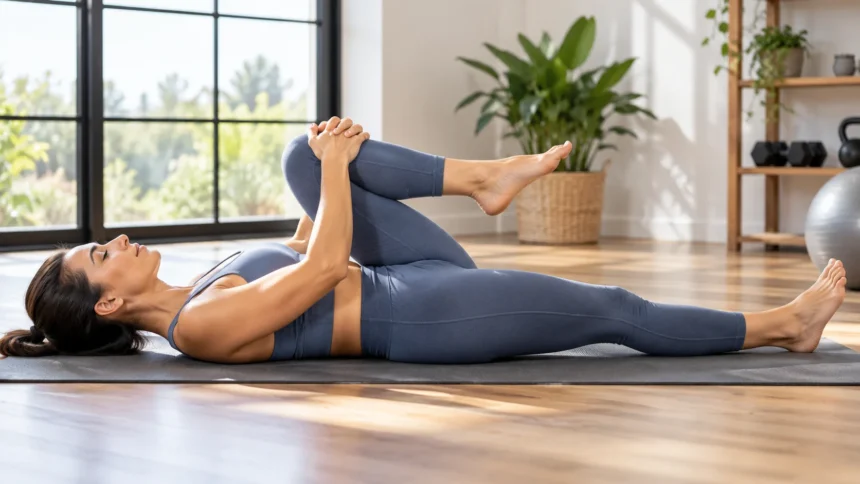
The knee-to-chest stretch is a simple flexibility exercise that can help release muscle tension, improve mobility, and promote relaxation in the lower back. It requires no special equipment and can be performed comfortably at home, making it a practical addition to many stretching routines. Whether you spend long hours sitting or want to improve your movement, learning the correct technique can help you stretch safely.
Although the movement looks easy, proper positioning and controlled breathing make a difference in how effectively it works. Understanding its benefits, variations, and common mistakes can help you avoid unnecessary strain and make the most of each stretch.
What Is the Knee-to-Chest Stretch?
The knee-to-chest stretch is a gentle stretching exercise that involves lying on your back and bringing one or both knees toward your chest. This movement encourages comfortable bending through the hips and lower spine while stretching muscles around the lower back and buttocks. It is commonly included in flexibility routines, rehabilitation programs, and exercises designed to support everyday mobility.
There are two main variations of this exercise: the single knee-to-chest stretch and the double knee-to-chest stretch. The single-leg version focuses on one side at a time, allowing greater control over the movement. The double-leg variation brings both knees toward the chest, creating a different stretching sensation across the lower back and surrounding tissues.
One reason this stretch is popular is its accessibility for people with different flexibility levels. You can adjust how far you pull your knee toward your body based on your comfort and range of motion. When performed without forcing the movement, the knee-to-chest exercise can become a useful part of a balanced stretching and mobility routine.
Muscles Targeted by the Knee-to-Chest Stretch
The knee-to-chest stretch primarily affects muscles and soft tissues around the lower back, hips, and buttocks. Bringing the thigh toward the chest moves the hip joint into flexion and encourages the lower spine to bend gently. This position may create a stretching sensation through the gluteal muscles and tissues surrounding the lumbar spine, depending on individual flexibility.
The gluteus maximus is one of the major muscles involved in this movement because it helps control hip extension during normal activities. As the hip bends toward the chest, this muscle may experience a gentle stretch. The movement can also influence surrounding hip muscles, although the exact sensation varies with body position and personal anatomy.
Muscles supporting the lower spine, including the erector spinae, may also experience gentle lengthening as the back rounds slightly. However, the knee-to-chest stretch does not stretch every lower-back muscle equally, and it is not primarily a hip flexor stretch. Understanding these differences helps you choose appropriate exercises for specific flexibility goals instead of expecting one movement to address every muscle group.
Benefits of the Knee-to-Chest Stretch
One of the main benefits of the knee-to-chest stretch is its ability to encourage gentle movement through the lower back and hips. People who remain seated for extended periods may find this movement comfortable after a long day. Regular, pain-free stretching can help maintain flexibility and make everyday movements feel easier, although results depend on individual circumstances.
Another potential benefit is temporary relief from mild muscular tightness around the lower back and buttocks. The supported lying position allows the body to relax while the hips and spine move through a controlled range. Some people find that combining this stretch with slow breathing creates a calming experience, particularly after prolonged periods of physical or mental tension.
The exercise can also support body awareness by helping you recognize comfortable and uncomfortable movement patterns. Practicing controlled stretching encourages attention to posture, breathing, and muscle sensations without requiring complicated equipment. However, it is important to understand that this stretch is not a guaranteed treatment for back pain, and certain spinal conditions may respond poorly to forward bending.
How to Perform the Single Knee-to-Chest Stretch
Begin by lying flat on your back on a comfortable exercise mat or another supportive surface. Bend both knees and place your feet flat on the floor, keeping your shoulders relaxed and your head supported naturally. Slowly lift one knee toward your chest while allowing the opposite foot to remain planted, helping you maintain a stable starting position.
Place your hands behind the raised thigh or around the shin, avoiding direct pressure on the kneecap. Gently guide the knee closer to your chest until you feel a mild, comfortable stretch around your lower back or buttock. Keep your shoulders relaxed, breathe normally, and avoid lifting your head or pulling aggressively on your leg.
Hold the position for approximately 15 to 30 seconds if it feels comfortable, then slowly release your leg. Return your foot to the floor before repeating the movement with the opposite knee, maintaining the same controlled technique. You can complete one or two gentle repetitions per side initially and adjust according to your comfort or professional guidance.
How to Perform the Double Knee-to-Chest Stretch
The double knee-to-chest stretch is a variation that brings both legs toward the upper body simultaneously. Start by lying on your back with your knees bent and feet resting comfortably on the floor. Slowly raise one knee and then the other toward your chest, keeping your movements controlled rather than using momentum to lift both legs.
Wrap your hands behind your thighs or around your shins, depending on which position feels more comfortable. Guide both knees toward your chest until you experience a gentle stretching sensation across the lower back or buttocks. Allow your lower back to round naturally if comfortable, but avoid forcing your knees against your body or placing excessive pressure on your abdomen.
Hold the position for around 15 to 30 seconds while breathing slowly and keeping your neck relaxed. Release one leg at a time and return both feet to the floor before attempting another repetition. Because this variation involves greater spinal flexion than some alternatives, people with certain back conditions may find the single-leg version more appropriate.
Proper Breathing and Body Position During the Stretch
Breathing plays an important role in maintaining comfort during the knee-to-chest stretch because it encourages a relaxed approach to movement. Before lifting your knee, take a gentle breath and allow your shoulders to settle against the floor. Exhale naturally as you bring your knee closer to your chest, avoiding any pressure to reach a particular position.
Once you reach a comfortable stretch, continue breathing slowly instead of holding your breath. A relaxed breathing pattern may help reduce unnecessary muscle guarding and make it easier to notice changes in tension. If you find yourself straining, tightening your jaw, or restricting your breathing, ease the movement until you can maintain the position comfortably.
Correct body positioning is equally important for getting a controlled stretch without creating additional discomfort. Keep your neck in a neutral position, support your head if needed, and avoid twisting your trunk while pulling the knee inward. Rather than forcing your entire back flat against the floor, allow your spine to move naturally within a comfortable range.
Common Knee-to-Chest Stretch Mistakes to Avoid
One common mistake is pulling the knee too forcefully toward the chest in an attempt to achieve a deeper stretch. Excessive pulling can create discomfort around the hip joint, knee, or lower spine instead of improving flexibility. A gentle stretching sensation is sufficient, and there is no need to reach the chest if your current range of motion does not allow it.
Another mistake involves lifting the head and shoulders away from the floor while bringing the knee inward. This position can unnecessarily strain the neck and upper back, particularly when the movement is repeated frequently. Keeping your head supported and your shoulders relaxed allows you to focus on controlled hip movement without introducing extra tension.
Some people also rush through repetitions or hold the position while restricting their breathing. Fast movements can make it harder to recognize discomfort and may reduce your ability to control the stretch. Moving gradually, pausing when necessary, and maintaining steady breathing can make your stretching session more comfortable and easier to repeat consistently.
Knee-to-Chest Stretch Modifications for Beginners
Beginners can make the knee-to-chest stretch easier by starting with a smaller range of motion. Instead of pulling the knee close to the chest, lift it only as far as feels comfortable while keeping the opposite foot on the floor. This adjustment reduces the intensity of the movement and allows you to become familiar with the stretching position.
Another useful modification involves placing your hands behind your thigh rather than holding the shin. This position can reduce pressure around the knee and may be easier for people who experience discomfort while bending the joint deeply. If reaching your leg is difficult, a soft stretching strap placed behind the thigh may provide assistance without requiring excessive pulling.
People who find lying completely flat uncomfortable can use a thin pillow or folded towel to support their head. Those with limited mobility may benefit from guidance from a physical therapist who can recommend an appropriate alternative position. The goal is to achieve comfortable movement rather than copying a specific stretching position regardless of individual limitations.
How Often Should You Do the Knee-to-Chest Stretch?
The ideal frequency for the knee-to-chest stretch depends on your flexibility, comfort, physical activity, and individual health needs. Many people include gentle stretching several times per week as part of a regular mobility routine. If the exercise feels comfortable, a short daily session may also be appropriate, provided you avoid forcing the movement or stretching through pain.
A practical starting point is holding each stretch for approximately 15 to 30 seconds and performing one or two repetitions. You can gradually adjust the duration or number of repetitions based on how your body responds. There is usually no need to perform large numbers of stretches, because quality and controlled movement are more useful than excessive repetition.
You may prefer completing the stretch after walking, light exercise, or other activities that help your body feel ready to move. Some individuals enjoy incorporating it into a gentle evening mobility routine before relaxing. Whatever time you choose, consistency matters more than intensity, and persistent discomfort is a reason to reconsider the exercise rather than push harder.
Who Should Be Careful With the Knee-to-Chest Stretch?
Although the knee-to-chest stretch is generally gentle, it is not appropriate for every person or spinal condition. People with recent back injuries, spinal fractures, significant disc-related symptoms, or certain postoperative restrictions may need to avoid or modify spinal flexion exercises. A qualified healthcare professional can help determine whether the movement is suitable for their particular situation.
Individuals experiencing hip pain, knee injuries, or limited joint mobility should also approach the exercise carefully. Deeply bending the hip or pulling around the knee may aggravate some conditions, especially when additional pressure is applied. If a movement causes sharp pain, tingling, numbness, or symptoms spreading into the leg, stop the stretch rather than continuing.
People experiencing severe or worsening back pain should seek medical advice instead of relying on stretching alone. New leg weakness, loss of bladder or bowel control, or numbness around the groin requires urgent medical assessment. The knee-to-chest stretch can be a useful mobility exercise, but it should never replace appropriate evaluation or treatment when concerning symptoms appear.
Other Exercises That Complement the Knee-to-Chest Stretch
The knee-to-chest stretch can work well alongside other gentle mobility exercises that encourage comfortable movement through the spine and hips. Pelvic tilts are one option because they involve small, controlled movements of the pelvis while lying on your back. These movements can improve awareness of spinal positioning without requiring large ranges of motion or complicated equipment.
Cat-cow movements provide another way to explore comfortable spinal mobility through alternating rounded and extended positions. This exercise is usually performed on the hands and knees, with the spine moving gradually as you breathe. People with sensitive wrists or knees may need extra support or an alternative position, and any uncomfortable movement should be modified.
Gentle walking and comfortable hip mobility exercises can also complement a balanced stretching routine. Strengthening exercises for the trunk and hips may support everyday function, although they serve a different purpose from passive stretching. Combining flexibility work with appropriate movement and strengthening activities creates a more complete approach to mobility than relying on the knee-to-chest stretch alone.
Conclusion
The knee-to-chest stretch is an accessible exercise that encourages gentle movement through the lower back, hips, and surrounding muscles. Both the single-leg and double-leg variations can be useful when performed within a comfortable range of motion. Understanding the correct technique helps you avoid unnecessary strain while making stretching sessions more controlled, relaxed, and effective.
Practicing this stretch regularly may help maintain flexibility, ease temporary muscular tightness, and improve awareness of everyday movement. Slow breathing, relaxed shoulders, and gradual positioning are important elements of good technique. Rather than trying to pull your knees as close as possible, focus on creating a gentle stretching sensation without pain or excessive pressure.
The most effective stretching routine is one that suits your individual mobility, activity level, and physical needs. Pairing knee-to-chest stretches with gentle movement and appropriate strengthening exercises can support a balanced approach to physical activity. If you experience persistent pain, unusual symptoms, or difficulty performing the movement, consult a qualified healthcare professional for personalized advice.
Frequently Asked Questions
1. What is the knee-to-chest stretch good for?
The knee-to-chest stretch helps encourage gentle mobility through the lower back and hips. It may reduce temporary muscular tightness, support flexibility, and provide a relaxing movement option within a balanced stretching routine.
2. Can the knee-to-chest stretch help with lower back pain?
Some people experience temporary relief from mild lower-back tightness when performing this stretch. However, it can aggravate certain conditions, so avoid painful movements and seek professional advice for persistent or worsening symptoms.
3. How long should you hold a knee-to-chest stretch?
A common starting duration is approximately 15 to 30 seconds per repetition. Hold only as long as the position feels comfortable, maintain steady breathing, and release the stretch if discomfort develops.
4. Is the knee-to-chest stretch safe to do every day?
Daily stretching may be suitable for many people when the movement remains comfortable and controlled. However, exercise frequency should reflect individual needs, existing injuries, and any restrictions recommended by a healthcare professional.
5. What is the difference between single and double knee-to-chest stretches?
The single knee-to-chest stretch moves one leg at a time, allowing more independent control. The double variation brings both knees inward and generally creates greater bending through the lower spine.