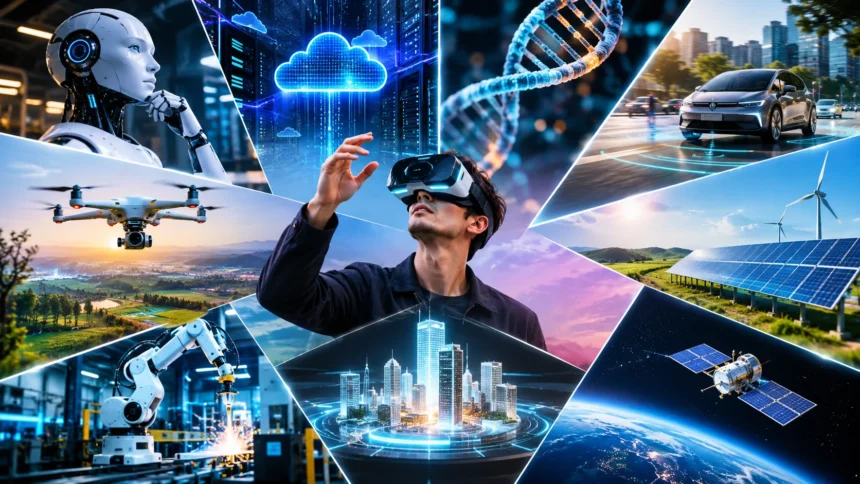
Technology is advancing quickly, and businesses are facing increasing pressure to keep up with new digital innovations. Traditional systems may struggle to meet growing demands for automation, security, speed, and personalized experiences. As industries prepare for the coming years, understanding the top 10 modern technologies in 2027 can help individuals and organizations recognize important opportunities. These developments could change how people work, communicate, learn, and interact with technology.
From artificial intelligence and intelligent robotics to quantum computing and advanced cybersecurity, emerging technologies are creating new possibilities across different industries. Some innovations are already widely used, while others remain in research or early commercial development. Their influence will depend on technical progress, affordability, regulations, and practical business needs. This guide explores ten important technologies to watch in 2027, their potential benefits, real-world applications, and possible challenges.
1. Artificial Intelligence and Machine Learning
Artificial intelligence is expected to remain one of the most influential modern technologies in 2027. AI systems help computers analyze information, identify patterns, and perform tasks that previously required extensive human involvement. Machine learning allows these systems to improve specific capabilities through training on data. Together, these technologies support intelligent applications across business, healthcare, education, and software development.
Generative AI is changing how organizations produce content, develop applications, and manage information. AI-powered tools can assist with coding, document preparation, customer support, and complex research tasks. Businesses are also exploring AI agents that can complete multistep workflows using approved software tools. However, these systems still require human supervision, reliable data, and effective security controls to prevent costly mistakes.
By 2027, more organizations may integrate AI directly into everyday software instead of treating it as a separate feature. Developers will likely focus on creating reliable AI workflows, evaluating model performance, and protecting sensitive information. Responsible implementation will become increasingly important as intelligent systems influence business decisions. Companies that combine automation with human expertise may achieve more dependable results.
2. Quantum Computing and Advanced Processing
Quantum computing is an emerging technology that uses principles of quantum mechanics to perform certain types of calculations. Unlike conventional computers that process information using binary bits, quantum systems operate with qubits. These systems may eventually solve selected problems that are extremely difficult for classical computers. Researchers are exploring applications involving scientific simulations, materials development, and complex optimization.
One promising area involves simulating molecular behavior to support chemistry and materials research. Quantum computing could help scientists explore chemical interactions that are difficult to model using traditional methods. Researchers are also investigating potential applications in logistics and computational mathematics. However, quantum advantages depend on the specific problem, algorithm, and capabilities of the available hardware.
Quantum computing will probably remain a specialized technology in 2027 rather than a replacement for ordinary computers. Major challenges include hardware stability, error correction, scalability, and operating costs. Businesses interested in this field should focus on realistic applications and ongoing scientific developments. Learning quantum programming concepts may also create opportunities for professionals working in advanced computing research.
3. Robotics and Intelligent Automation
Robotics is moving beyond traditional industrial machines toward systems that can respond to more complex environments. Modern robots combine sensors, software, computer vision, and artificial intelligence to perform useful tasks. These technologies are already used in manufacturing, warehousing, agriculture, and selected healthcare settings. Continued improvements could make robotic systems more adaptable and capable of handling varied activities.
Intelligent automation allows machines to complete repetitive operations with less direct human involvement. In warehouses, robots can help transport products and support inventory management. Manufacturing facilities use robotic systems for assembly, inspection, and material handling. Some healthcare organizations are also exploring assistive robots for logistics, rehabilitation support, and other carefully supervised applications.
By 2027, advances in physical AI may improve how robots understand their surroundings and respond to unexpected situations. However, reliable operation in unpredictable environments remains difficult. Organizations must consider safety standards, maintenance, worker training, and integration costs before adopting advanced robotic systems. The most successful applications will likely combine automated efficiency with appropriate human oversight.
4. Cloud Computing and Edge Computing
Cloud computing has become an important foundation for modern digital services and business applications. It allows organizations to access computing power, storage, and software infrastructure without maintaining every resource locally. Businesses can expand services according to customer demand and support teams working across different locations. These capabilities make cloud technology valuable for both established companies and growing organizations.
Edge computing extends digital processing closer to connected devices and information sources. Instead of sending every request to a distant data center, selected operations can happen locally. This approach may reduce delays and support applications that require quick responses. Connected factories, smart transportation systems, and industrial sensors are examples of environments where edge processing can provide benefits.
In 2027, cloud and edge computing may increasingly operate together within distributed technology environments. Developers will need to balance application performance, network reliability, security, and infrastructure costs. Hybrid cloud strategies may also help businesses manage sensitive information across different systems. Choosing the right architecture will remain more important than simply adopting the newest computing platform.
5. Cybersecurity and Zero Trust Technology
Cybersecurity is becoming increasingly important as businesses depend on interconnected applications and digital information. Modern organizations must protect customer records, financial systems, cloud environments, and software infrastructure from evolving threats. Security weaknesses can lead to operational disruptions and loss of customer confidence. Advanced cybersecurity technologies aim to identify risks earlier and strengthen protection across digital environments.
Zero Trust security focuses on verifying access rather than automatically trusting users or devices inside a network. It combines identity checks, limited permissions, continuous monitoring, and other protective controls. AI-assisted security platforms can also help analysts detect suspicious activity and prioritize potential vulnerabilities. These capabilities support faster investigation, although automated alerts still require careful interpretation.
Preparing for future security challenges also involves post-quantum cryptography and stronger software supply chain protection. Organizations are evaluating encryption methods designed to withstand known threats from future quantum computers. Regular software updates, secure development practices, and employee awareness remain equally important. In 2027, effective cybersecurity will depend on combining modern tools with consistent security management.
6. Internet of Things and Smart Connected Devices
The Internet of Things, commonly called IoT, connects physical devices so they can collect, exchange, and process information. These devices include sensors, smart appliances, industrial equipment, and environmental monitoring systems. IoT technologies help organizations understand conditions in real time and respond to operational changes. Their applications continue to expand across homes, businesses, agriculture, and public infrastructure.
Smart buildings can use connected sensors to monitor temperature, lighting, and energy consumption. Agricultural systems may track soil conditions and environmental changes to support better resource management. Industrial companies use connected equipment to identify maintenance needs and monitor performance. These examples demonstrate how IoT can connect physical operations with useful digital information.
By 2027, improvements in wireless connectivity, edge processing, and device management may support more capable IoT applications. However, connected devices can introduce security weaknesses if they are poorly maintained. Businesses must consider network protection, data privacy, compatibility, and long-term support. Reliable IoT systems require careful design rather than simply connecting more devices.
7. Augmented Reality, Virtual Reality, and Spatial Computing
Augmented reality and virtual reality are creating new ways for people to interact with digital information. Augmented reality adds digital elements to a view of the physical environment, while virtual reality creates simulated experiences. Spatial computing combines digital systems with information about physical spaces. These technologies are being explored for education, design, employee training, and interactive entertainment.
Businesses can use immersive applications to visualize products before manufacturing or purchasing them. Training programs may simulate workplace scenarios where practicing directly would be expensive or impractical. Architects and designers can explore three-dimensional representations of buildings and products. These applications may improve understanding by allowing users to interact with information in more visual ways.
In 2027, better displays, tracking systems, and development tools could make immersive experiences more practical. However, hardware costs, accessibility, user comfort, and battery limitations remain important challenges. Organizations should evaluate whether immersive technology solves a genuine problem. Successful applications will focus on usefulness rather than treating virtual environments as necessary for every activity.
8. Blockchain Technology and Decentralized Systems
Blockchain is a distributed ledger technology that allows participating systems to maintain shared records. Its design can make certain unauthorized record changes difficult to carry out without detection. Although blockchain is associated with digital assets, it also has potential uses in supply chain tracking and document verification. These applications focus on improving record consistency and transparency.
Businesses may use blockchain-based systems to trace products through different stages of distribution. Digital verification tools can also support selected identity and certification processes. Smart contracts allow predefined actions to execute when specified conditions are satisfied. However, their reliability depends on secure programming and trustworthy information about real-world events.
By 2027, organizations may continue exploring blockchain applications that require shared records across independent participants. Important challenges include scalability, privacy, regulatory compliance, and integration with existing systems. Traditional databases are often better suited to applications that do not require decentralization. Businesses should select blockchain only when its technical characteristics provide a meaningful advantage.
9. Generative AI Agents and Autonomous Software
AI agents represent an important development beyond simple conversational assistants. These software systems can use authorized tools, retrieve information, and perform sequences of tasks based on defined objectives. For example, an agent may organize customer requests, examine relevant records, and prepare reports. This approach could make business operations more responsive and reduce repetitive administrative work.
Multi-agent systems allow several specialized AI components to cooperate on larger activities. One agent might gather information while another evaluates results and a third prepares an output. Development teams are also experimenting with AI coding agents that can propose changes and run tests. These capabilities may improve productivity when developers maintain strong review and approval processes.
In 2027, AI agent governance may become as important as the agents themselves. Organizations will need to control permissions, verify outputs, monitor actions, and protect sensitive business information. Autonomous software can make mistakes or carry out incorrect instructions if safeguards are insufficient. Reliable deployment will depend on clear accountability, testing, and human supervision.
10. Biotechnology and Digital Health Innovations
Biotechnology combines biological science with engineering and computing to develop new tools and processes. Advances in genetic analysis, medical research, and computational biology are expanding possibilities in this field. Artificial intelligence can help researchers examine complex biological information and identify patterns. These capabilities may support scientific discovery, diagnostic research, and the development of specialized treatments.
Digital health technology is also changing how healthcare information is collected and managed. Wearable devices can record selected activity and physiological measurements, while remote monitoring systems help clinicians review certain patient information. Software platforms may improve communication and care coordination. However, consumer devices do not replace professional medical evaluation or provide reliable diagnoses in every situation.
By 2027, research in personalized medicine, biological modeling, and AI-assisted drug discovery may continue to advance. Many applications will still require extensive testing, regulatory review, and clinical validation before widespread use. Protecting personal health information will remain essential. The most valuable innovations will combine scientific evidence, patient safety, and responsible technology development.
How Modern Technologies Will Change Industries in 2027
Modern technologies are influencing industries by improving how information is processed and how complex activities are managed. Manufacturing companies can combine robotics, IoT sensors, and predictive analytics to monitor equipment performance. Retail businesses can use cloud applications and AI-powered recommendations to improve customer experiences. These examples show how several technologies can work together.
Education may also benefit from accessible digital platforms and personalized learning support. AI-assisted tools can help organize study materials, while immersive applications may explain difficult concepts visually. In healthcare, connected systems can support selected monitoring and administrative tasks. However, technology must remain accessible, accurate, and appropriate for the people using it.
Different industries will adopt new technologies at different speeds depending on costs and practical requirements. Large organizations may have more resources for experimentation, while smaller businesses often prioritize affordable solutions. Regulations and workforce skills will also influence adoption. Successful digital transformation requires understanding specific needs rather than expecting every emerging technology to deliver immediate benefits.
Important Skills to Learn for Future Technology Careers
Preparing for technology careers in 2027 begins with developing strong technical foundations. Programming, database management, cybersecurity principles, and cloud computing are useful across many digital roles. Understanding how software systems communicate through APIs can also support practical development work. These foundational skills make it easier to learn emerging technologies as they evolve.
Artificial intelligence and data-related skills may provide additional career opportunities. Professionals can benefit from learning Python, data analysis, machine learning fundamentals, and AI system evaluation. Cloud infrastructure, automation, and secure software development are also valuable areas to explore. Choosing one specialization while maintaining broad technical awareness can support steady professional growth.
Technical knowledge alone is not enough to succeed in a changing technology industry. Problem-solving, communication, collaboration, and adaptability remain important professional skills. Building small projects can provide useful experience and demonstrate practical understanding. Continuous learning helps individuals evaluate new tools critically instead of depending on technology trends that may change quickly.
Conclusion
The top 10 modern technologies in 2027 highlight how digital innovation may influence everyday life and business operations. Artificial intelligence, cloud computing, cybersecurity, robotics, and connected devices are expected to remain important areas of development. Meanwhile, technologies such as quantum computing and spatial computing offer additional possibilities. Their impact will depend on continued progress and practical implementation.
Businesses should evaluate emerging technologies according to real operational needs rather than adopting every new development. Security, affordability, reliability, and employee training are important considerations when introducing digital tools. Some innovations may provide immediate benefits, while others will require years of additional research. Careful planning can help organizations make better technology investments.
For students, developers, and technology professionals, understanding these developments provides a useful foundation for future learning. Building practical skills and staying informed can make changing technology environments easier to navigate. The future will likely reward individuals and businesses that combine innovation with sound judgment. Meaningful progress comes from using technology to solve real problems.
Frequently Asked Questions (FAQs)
What are the top 10 modern technologies in 2027?
Important technologies to watch include artificial intelligence, quantum computing, robotics, cloud and edge computing, cybersecurity, IoT, spatial computing, blockchain, AI agents, and biotechnology. Their adoption and impact will vary by industry.
Which technology is expected to grow the most in 2027?
Artificial intelligence is expected to remain a major growth area, particularly in automation, software development, and enterprise applications. However, growth rates will differ across industries, and no single technology is guaranteed to lead every market.
What is the most important technology for future jobs?
Artificial intelligence, cloud computing, cybersecurity, and data engineering offer useful career pathways. The best choice depends on personal interests and technical strengths. Programming fundamentals and problem-solving skills remain valuable across different technology roles.
How will modern technology affect businesses in 2027?
Modern technologies may help businesses automate repetitive tasks, improve security, analyze information, and deliver better digital services. Their success will depend on appropriate implementation, employee training, costs, and measurable operational benefits.
Is quantum computing going to replace traditional computers by 2027?
No, quantum computing is not expected to replace conventional computers by 2027. It remains an emerging field focused on specialized calculations, while traditional computers will continue supporting everyday software, communication, and business operations.