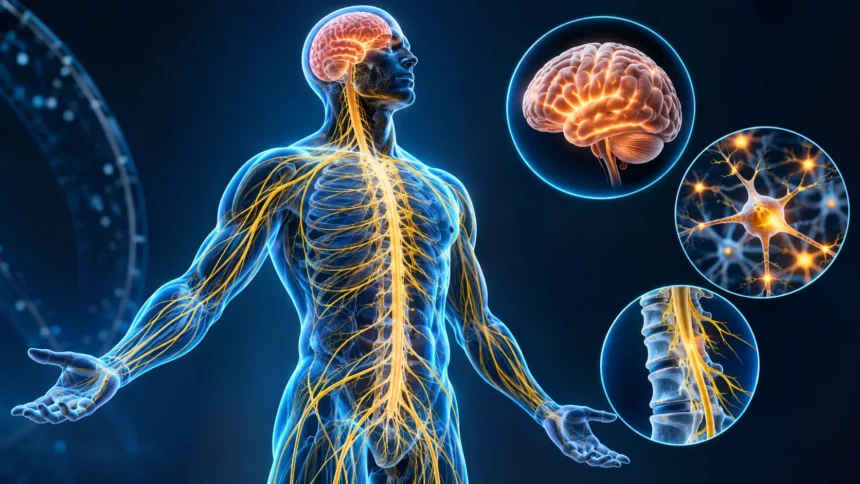
The human body performs thousands of activities every day, from breathing and walking to thinking and remembering. Behind these actions is a complex communication network called the nervous system. It connects different parts of the body and helps them work together efficiently.
Understanding nervous system function is important because this system controls movement, senses, emotions, learning, and many automatic processes. It allows your body to respond to changes both inside and outside your environment. Without it, your organs and muscles could not coordinate their activities properly.
The nervous system includes the brain, spinal cord, and billions of specialized nerve cells. These structures exchange information through electrical and chemical signals. This guide explains how the nervous system works, its major parts, essential functions, common disorders, and ways to support neurological health.
What Is the Nervous System?
The nervous system is the body’s main communication and control network. It receives information, processes signals, and sends instructions to different organs and tissues. This coordination allows people to move, think, experience sensations, and respond to their surroundings.
The system contains specialized cells called neurons, which transmit information throughout the body. Other cells, known as glial cells, support, protect, and maintain these neurons. Together, these cells form complex networks that allow information to travel between different body regions.
For example, when you touch something cold, sensory nerves send information toward your brain and spinal cord. Your nervous system processes that information and helps you recognize the sensation. It can also coordinate an appropriate response, such as moving your hand or putting on gloves.
What Is the Main Function of the Nervous System?
The primary nervous system function is to receive, process, and respond to information. It helps the body maintain communication between the brain, spinal cord, organs, muscles, and sensory receptors. This continuous exchange supports both conscious activities and automatic processes.
One important responsibility is sensory processing. The nervous system detects changes in temperature, pressure, light, sound, and body position. It then interprets these signals so you can understand what is happening around you and inside your body.
Another major responsibility involves controlling movement and internal organ activity. The nervous system helps you walk, speak, and perform coordinated movements. It also regulates essential functions such as breathing patterns, digestion, and heart rate through specialized control pathways.
Understanding the Two Main Parts of the Nervous System
The human nervous system has two major divisions: the central nervous system and the peripheral nervous system. Each division performs different responsibilities while working closely with the other. Understanding these structures makes it easier to recognize how information moves throughout the body.
The central nervous system includes the brain and spinal cord. It processes information, coordinates responses, and supports complex activities such as memory, decision-making, and movement. These structures are protected by bones, membranes, and cerebrospinal fluid.
The peripheral nervous system includes nerves and associated structures outside the brain and spinal cord. It connects the central nervous system with muscles, organs, skin, and sensory receptors. Together, both divisions create an extensive communication network that supports everyday activities.
Central Nervous System: Brain and Spinal Cord
The central nervous system serves as the body’s main processing and coordination center. It receives information from different regions and helps organize appropriate responses. Its two major structures, the brain and spinal cord, perform closely connected functions.
The brain supports thinking, emotions, sensory interpretation, memory, and voluntary movement. Different regions specialize in particular tasks, although many activities require several areas working together. For example, reading involves visual processing, language networks, attention, and memory.
The spinal cord carries signals between the brain and the rest of the body. It also contains neural circuits that coordinate certain reflexes without requiring immediate conscious involvement. These rapid responses help the body react efficiently to some potentially harmful situations.
Peripheral Nervous System and Its Functions
The peripheral nervous system connects the brain and spinal cord with structures throughout the body. It includes cranial nerves, spinal nerves, and smaller nerve branches. These pathways allow information to travel between the central nervous system and peripheral tissues.
Sensory nerves carry information from receptors toward the central nervous system. Motor nerves transmit commands that influence muscles and other target tissues. This communication supports activities such as detecting pressure, moving your fingers, and responding to environmental changes.
Peripheral nerves also carry signals involved in automatic organ regulation. Some control skeletal muscles, while others influence the heart, digestive tract, and glands. Damage to these nerves can interfere with sensation, movement, or internal body functions.
How Neurons Transmit Messages Through the Body
Neurons are specialized cells responsible for transmitting information in the nervous system. Most neurons contain a cell body, dendrites, and an axon. These structures help receive incoming messages, process electrical changes, and communicate with other cells.
Nerve impulses involve rapid electrical changes across a neuron’s membrane. When an appropriate signal reaches a threshold, an action potential travels along the axon. This process allows information to move efficiently through neural pathways.
Communication between neurons usually occurs at specialized connections called synapses. At many synapses, chemical messengers called neurotransmitters carry signals between cells. These messages may increase or decrease the likelihood that another neuron will become active.
Sensory Functions of the Nervous System
Sensory functions allow the body to detect information from the surrounding environment and internal tissues. Specialized receptors respond to light, sound, touch, temperature, chemicals, and physical movement. These receptors convert different forms of stimulation into signals the nervous system can process.
Your brain interprets incoming sensory information to create meaningful experiences. For example, light entering the eyes activates cells in the retina, while sound vibrations stimulate receptors in the inner ear. Neural pathways carry these signals toward regions involved in perception.
The nervous system also monitors internal conditions through specialized sensory pathways. These signals provide information about muscle position, stretching, blood pressure, and other bodily changes. Such feedback helps the body adjust its activities and maintain coordinated function.
Motor Functions and Body Movement
Motor function involves controlling muscles to produce movement and maintain posture. The nervous system coordinates signals that allow you to walk, write, speak, and perform everyday physical activities. Different brain regions and spinal pathways contribute to accurate and controlled movement.
Voluntary movements begin through coordinated activity in brain networks involved in planning and motor control. Signals travel through descending pathways toward motor neurons that activate skeletal muscles. Sensory feedback helps the nervous system adjust the movement as it happens.
The cerebellum and basal ganglia also contribute to movement regulation. They help coordinate timing, precision, movement selection, and learned motor skills. When these systems function together, people can perform complex actions with improved balance and coordination.
Autonomic Nervous System and Automatic Body Functions
The autonomic nervous system regulates many activities that happen without conscious effort. It influences heart rate, blood pressure, digestion, sweating, and gland activity. These automatic processes allow the body to respond to changing needs throughout the day.
This system includes sympathetic and parasympathetic divisions, along with specialized networks involved in digestive regulation. The divisions work together to adjust organ function according to different situations. Their actions are coordinated rather than simply switching between two completely separate states.
For example, physical activity can increase sympathetic activity and support changes in circulation and breathing. During restful conditions, parasympathetic pathways can contribute to digestion and a slower heart rate. Both divisions help maintain internal stability through continuous adjustments.
Sympathetic and Parasympathetic Nervous Systems
The sympathetic nervous system helps the body respond to physical demands and challenging situations. Its activity can increase heart rate, influence blood vessel function, and redirect resources toward immediate needs. These changes form part of the body’s broader stress response.
The parasympathetic nervous system supports many activities associated with rest, recovery, and digestion. It can slow the heart rate and influence digestive secretions and intestinal movement. However, its effects vary depending on the organ and the body’s current condition.
Both systems remain active to different degrees during everyday life. They continuously adjust organ function in response to internal signals and external circumstances. Healthy autonomic regulation involves flexible coordination rather than keeping one division permanently dominant.
How the Nervous System Controls Reflex Actions
Reflexes are rapid, automatic responses to particular stimuli. They often involve circuits in the spinal cord or brainstem that can generate a response without waiting for conscious decision-making. These mechanisms support protection, posture, and normal body function.
A reflex pathway typically includes a sensory receptor, sensory neuron, central connections, and an appropriate response mechanism. Some reflexes involve direct communication between sensory and motor neurons, while others contain additional neurons. The specific pathway depends on the reflex.
For example, the knee-jerk reflex occurs when stretching a tendon activates receptors in the muscle. Signals travel through the spinal cord and produce a brief muscle response. Healthcare professionals may examine such reflexes when assessing nervous system function.
The Role of the Nervous System in Thinking and Memory
The nervous system supports thinking, attention, learning, and decision-making through coordinated brain activity. Different neural networks exchange information to help people understand experiences and solve problems. These processes depend on communication between specialized brain regions rather than one isolated center.
Memory involves several processes, including encoding, storing, and retrieving information. Structures such as the hippocampus help form certain types of new memories, while other brain regions contribute to long-term storage and recall. Repeated experiences can modify connections between neurons.
The brain also demonstrates neuroplasticity, meaning neural connections and activity patterns can change with experience. Learning new skills, practicing familiar activities, and recovering from some injuries may involve these adaptations. However, the extent of change depends on many biological and environmental factors.
How the Nervous System Influences Emotions
Emotions involve coordinated activity across several brain regions and body systems. Networks involving the amygdala, prefrontal cortex, insula, and other structures help process emotional information. Their interactions influence how people recognize, interpret, and respond to different experiences.
The nervous system also connects emotional responses with physical changes. Stress or excitement may affect breathing, heart rate, muscle tension, and attention. These reactions involve communication between brain networks, the autonomic nervous system, and the body’s hormonal systems.
Emotional regulation depends partly on learning, experience, and brain development. Strategies such as recognizing feelings, practicing relaxation, and developing coping skills may help people respond more effectively. Persistent emotional difficulties can benefit from appropriate support from qualified healthcare professionals.
How the Nervous System Maintains Homeostasis
Homeostasis refers to the body’s ability to keep internal conditions within workable ranges. The nervous system contributes by monitoring changes and coordinating responses with other body systems. This regulation supports processes such as temperature control, fluid balance, and circulation.
The hypothalamus is particularly important for many homeostatic functions. It helps coordinate hunger, thirst, body temperature, sleep-related rhythms, and certain hormonal responses. Its connections with other brain regions and endocrine organs support internal regulation.
For example, when body temperature rises, the nervous system can stimulate sweating and changes in skin blood flow. These responses help release heat into the environment. Similar feedback mechanisms regulate many physiological functions and respond continuously to changing conditions.
Relationship Between the Nervous System and Endocrine System
The nervous and endocrine systems work together to coordinate body activities. The nervous system generally communicates through electrical signals and neurotransmitters, while the endocrine system releases hormones into the bloodstream. These communication methods operate over different distances and timescales.
The hypothalamus provides an important connection between these systems. It influences the pituitary gland, which helps regulate several hormone-producing organs. This interaction contributes to growth, metabolism, reproduction, stress responses, and fluid balance.
During stressful situations, neural activity can trigger hormonal responses involving the adrenal glands. These changes help the body respond to temporary demands. However, prolonged stress can affect multiple physiological systems, making effective stress management important for overall health.
Common Nervous System Disorders and Their Symptoms
Nervous system disorders can affect the brain, spinal cord, peripheral nerves, or neuromuscular connections. Examples include epilepsy, multiple sclerosis, peripheral neuropathy, Parkinson’s disease, and stroke. Each condition has different causes, symptoms, diagnostic requirements, and treatment approaches.
Possible neurological symptoms include numbness, weakness, headaches, tremors, dizziness, and changes in coordination. Some disorders also affect memory, vision, speech, or sensory perception. However, these symptoms can have many causes and do not necessarily indicate a serious neurological disease.
Medical evaluation is important when neurological symptoms are persistent, progressive, or unexplained. Sudden facial drooping, arm weakness, speech difficulty, or abrupt severe neurological symptoms require immediate emergency attention. Early assessment may improve treatment opportunities for certain conditions.
What Can Affect Nervous System Health?
Nervous system health depends on several factors, including genetics, nutrition, sleep, physical activity, and underlying medical conditions. Certain infections, injuries, and environmental exposures can also affect neurological function. Some influences are preventable, while others are outside an individual’s control.
Long-term conditions such as diabetes and high blood pressure may increase the risk of particular neurological complications. For example, poorly controlled diabetes can contribute to peripheral nerve damage. Managing medical conditions with professional guidance can help reduce some associated risks.
Sleep disruption, chronic stress, and certain nutritional deficiencies may also interfere with normal nervous system activities. However, occasional tiredness or stress does not automatically indicate nerve damage. Maintaining supportive daily habits and seeking assessment for concerning symptoms are sensible approaches.
How to Support a Healthy Nervous System
Balanced nutrition provides nutrients needed for normal nerve function and cellular maintenance. Foods containing B vitamins, healthy fats, protein, and essential minerals contribute to overall health. Nutrient deficiencies can sometimes cause neurological problems, so dietary variety is important.
Regular physical activity supports circulation, cardiovascular health, and many aspects of brain function. Choose enjoyable activities that match your abilities, such as walking, cycling, swimming, or recreational sports. Consistent movement can also support sleep quality, mood, and general well-being.
Adequate sleep allows the brain to carry out important processes associated with learning, memory, and recovery. Maintaining a regular sleep schedule and reducing unnecessary sleep disruptions can be helpful. Avoid treating supplements or wellness products as guaranteed methods for improving nerve function.
When Should You Seek Medical Advice About Nerve Symptoms?
Occasional tingling or temporary numbness can occur for several reasons, including pressure on a nerve. However, symptoms that repeatedly return, persist, or gradually worsen deserve medical attention. A healthcare professional can assess whether further testing is necessary.
Changes in muscle strength, balance, sensation, or coordination may also require evaluation. Doctors may use a medical history, neurological examination, blood tests, imaging, or specialized nerve studies when appropriate. The investigation depends on the symptoms and suspected cause.
Seek emergency medical care for sudden one-sided weakness, difficulty speaking, new severe confusion, or an abrupt unusually severe headache. These symptoms can indicate conditions requiring urgent treatment. Prompt assessment is safer than waiting to see whether serious symptoms disappear.
Conclusion
The nervous system is an essential communication network that supports nearly every aspect of human activity. It connects the brain, spinal cord, nerves, muscles, and organs through coordinated electrical and chemical signaling. These interactions allow the body to sense, move, think, and respond to changing conditions.
Understanding nervous system function helps explain everyday processes such as reflexes, memory, emotional responses, digestion, and temperature regulation. Its central, peripheral, and autonomic divisions perform specialized responsibilities while working together. This coordination is necessary for maintaining normal physical and mental activities.
Supporting neurological health involves balanced nutrition, appropriate physical activity, sufficient sleep, and management of underlying medical conditions. Persistent or unusual symptoms should be assessed by a qualified healthcare professional. Understanding how the nervous system works can help you make informed decisions about your overall well-being.
Frequently Asked Questions
What Are the Three Main Functions of the Nervous System?
The three main functions are sensory input, information processing, and motor output. These activities allow the body to detect changes, interpret signals, and produce appropriate responses through muscles, glands, and other tissues.
What Are the Main Parts of the Nervous System?
The nervous system consists of the central nervous system and peripheral nervous system. The central division includes the brain and spinal cord, while the peripheral division contains nerves and associated structures outside them.
How Does the Nervous System Send Messages?
Neurons transmit electrical impulses along their membranes and communicate through specialized connections called synapses. Many synapses use neurotransmitters to transfer information, allowing signals to travel through complex neural networks.
What Happens When the Nervous System Is Damaged?
Nervous system damage can affect movement, sensation, coordination, memory, or automatic body functions. Symptoms depend on the location and severity of the problem, and recovery varies according to the underlying condition.
How Can I Keep My Nervous System Healthy?
Support neurological health through balanced nutrition, sufficient sleep, regular physical activity, and appropriate medical care. Managing chronic conditions and seeking timely evaluation for concerning symptoms can also help protect nervous system function.