

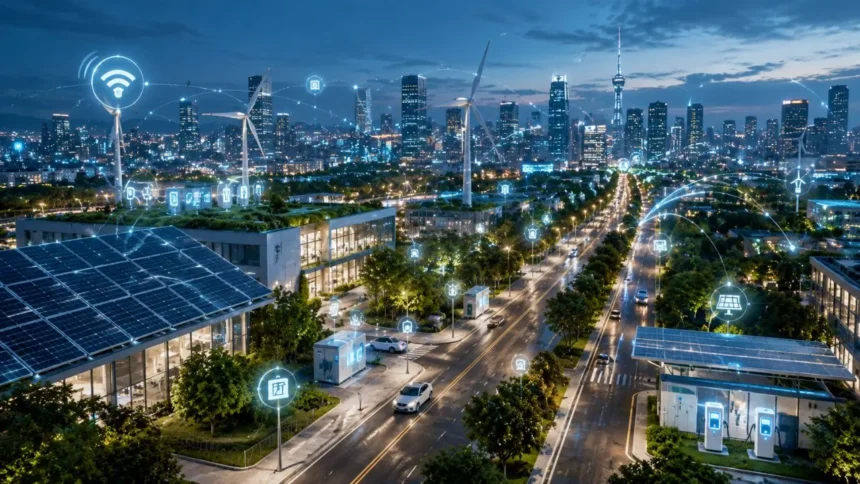
Our global urban centers are expanding at an unprecedented rate, placing immense pressure on regional electrical grids and municipal infrastructure. This rapid expansion demands a complete rethink of how we design, power, and manage municipal environments. The solution lies in the rise of smart cities connected urban ecosystems built on sustainable urban development and data-driven resource allocation.
At the center of this movement is the challenge of urban energy consumption. Traditional power delivery systems struggle to keep pace with the needs of dense populations, leading to high utility costs and increased pollution. By deploying smart city technology, municipalities can actively analyze, adapt, and optimize how power is used across entire metropolitan areas.
Transitioning to sustainable cities requires a blend of physical hardware and advanced digital tools. From the streetlights on your block to the water systems beneath your feet, every piece of smart infrastructure can play a role in lowering environmental impact. This guide explores the technologies, systems, and practical strategies driving this crucial urban transition.
What Are Smart Cities?
A smart city is an urban area that uses connected digital solutions and the Internet of Things (IoT) to improve the quality of life for its residents. Rather than managing utilities, transit, and public safety as separate systems, a smart city connects them into a unified, communicative network. This holistic approach allows municipal teams to monitor city health and make informed decisions in real time.
This digital transition is powered by a network of connected devices that continuously collect and transmit environmental data. These devices range from minor air-quality sensors on utility poles to massive diagnostic tools inside water treatment plants. Together, they turn static concrete infrastructure into a responsive, highly adaptable urban environment.
To process this massive wave of municipal data, smart cities rely on a combination of cloud computing and edge computing. While the cloud handles long-term storage and broad planning analytics, edge devices process data locally at the source. This local processing allows systems like traffic lights or hazard sensors to react instantly to changes, bypassing the delay of sending data to a distant server.
Ultimately, smart cities represent a major shift in smart urban planning. By using technology to optimize daily operations, cities can reduce waste, lower carbon emissions, and make better use of municipal funds. This digital integration makes our growing urban centers more livable, resilient, and prepared for future changes.
Why Energy Efficiency Matters in Smart Cities
Urban centers account for more than 70% of global carbon emissions, with building climate control and local transit networks driving the bulk of this footprint. Improving energy efficiency across these urban areas is essential for reducing air pollution and combatting climate change. By focusing on efficiency, growing metropolitan areas can expand without putting a strain on regional power grids.
For city administrators, reducing electricity consumption and municipal heating fuel use translates directly to major financial savings. Every kilowatt saved on public lighting or building climate control frees up valuable funding for other critical community services, like education, parks, and healthcare. This fiscal balance makes energy conservation a key pillar of long-term economic stability.
Additionally, focused energy management improves grid reliability and energy security for the entire community. By shaving down peak demand spikes, cities can avoid brownouts, blackouts, and the need to fire up expensive, highly polluting backup power plants. This resilience is especially critical as extreme weather events put more strain on regional energy systems.
Ultimately, high-efficiency initiatives are the foundation of green cities and net zero cities worldwide. By committing to progressive conservation targets, municipalities create healthier local environments with cleaner air and lower heat-island effects. This dedication to environmental sustainability ensures that cities remain comfortable and healthy places to live for generations to come.
How Smart Cities Use Technology to Reduce Energy Consumption
The pathway to reducing urban energy consumption relies on replacing manual schedules with responsive, automated systems. Instead of running heating systems or streetlights at a fixed rate, cities use live data to match resource use to actual human demand. This smart management ensures that energy is only spent when and where it is actively needed.
Deploying these energy-saving technologies starts with establishing a comprehensive digital network across municipal departments. This network uses advanced wireless protocols to connect water meters, parking structures, transit fleets, and public buildings. With this connection, systems can coordinate their actions to prevent energy peaks and eliminate wasted idle runtimes.
The integration of smart response technology plays a crucial role in these conservation efforts. For example, when sensors detect that a public building is empty, the HVAC and lighting systems instantly go into deep energy-saving modes. This automated adjustment prevents empty rooms from driving up municipal utility bills, keeping operations highly efficient.
At the same time, this digital transformation provides city planners with a highly detailed, real-time map of urban resource flows. This data allows administrators to spot invisible source leaks, identify inefficient public facilities, and test conservation policies before committing public funds. It replaces guesswork with precise, evidence-based urban management.
Smart Grids and Intelligent Energy Distribution
Traditional power grids are designed for one-way delivery, carrying electricity from massive, centralized power plants straight to end consumers. Modern smart grid technology upgrades this model into a bidirectional network that can share both power and real-time digital data. This upgrade is essential for managing the variable power outputs of clean energy sources like wind and solar.
These intelligent energy systems use automated distribution controls to balance electricity supply and demand across the city in real time. If a neighborhood experiences a sudden spike in power demand, the smart grid can instantly redirect electricity from areas with excess supply. This dynamic routing improves overall grid stability and reduces the risk of local power outages.
A key feature of these smart grids is their support for demand response programs, which incentivize consumers to adjust their power use during peak times. During hot afternoons, the grid can send digital requests to smart home systems to temporarily adjust cooling settings or delay EV charging. This automated shifting flattens peak demand, keeping the entire grid running smoothly.
Additionally, smart grids enable the creation of localized microgrids that can operate independently during regional power failures. These localized networks connect neighborhood solar arrays, backup batteries, and local businesses to keep essential services running during emergencies. This decentralized approach makes the city’s power grid highly resilient and secure.
IoT Sensors for Real-Time Energy Monitoring
The foundation of any smart energy initiative is the continuous deployment of high-precision IoT sensors across city infrastructure. These sensors collect real-time data on electricity use, ambient temperatures, and occupancy patterns. This stream of information provides municipal managers with a highly detailed, minute-by-minute view of city-wide resource use.
By using these advanced energy monitoring systems, utilities can track power flows down to individual buildings and public facilities. This real-time energy monitoring allows operators to spot unusual consumption spikes, trace power losses, and diagnose failing equipment before it breaks down. This proactive oversight reduces maintenance costs and prevents unexpected outages.
These sensors also provide citizens with detailed feedback on their own personal utility use through home portals. Residents can see which appliances consume the most electricity, track their daily spending, and adjust their habits to lower their monthly bills. This transparency helps the community work together to meet city-wide conservation goals.
Furthermore, integrating these sensors with smart home technology allows household appliances to run on autopilot. For example, a smart washing machine can wait for a signal from the local utility indicating that electricity rates are low before starting its cycle. This automated coordination takes the effort out of saving money and conserving energy.
Smart Street Lighting Systems
Public street lighting is often one of the largest single electricity expenses for municipal governments. Traditional streetlights run at full brightness all night long, wasting vast amounts of energy on empty roads and quiet sidewalks. Upgrading to smart lighting systems allows cities to cut this waste while keeping public spaces bright, welcoming, and safe.
The first step in this upgrade is replacing old, inefficient bulbs with low-energy LED street lighting. LEDs use up to 60% less energy than older sodium-vapor bulbs and last significantly longer, which immediately lowers city maintenance costs. This straightforward upgrade provides a quick financial return for cash-strapped local governments.
By adding wireless controllers to these installations, cities create fully connected smart street lights. These fixtures use built-in motion sensors to automatically dim when roads and sidewalks are empty, instantly brightening when they detect an approaching car, cyclist, or pedestrian. This responsive lighting keeps streets safe while cutting municipal energy costs.
Additionally, these smart lighting fixtures can serve as structural hubs for other valuable urban technologies. Municipalities can attach public Wi-Fi routers, air-quality monitors, traffic cameras, and EV chargers to existing light poles. This multi-use infrastructure saves public space, reduces installation costs, and streamlines city-wide connectivity.
Energy-Efficient Smart Buildings
Modern offices and residential towers are some of the largest energy consumers in any metropolitan area. To address this, developers are building smart buildings designed to monitor and manage their own resource footprints. These structures use advanced building materials, smart windows, and connected controls to keep indoor spaces comfortable with minimal energy use.
At the heart of these modern structures are automated building automation systems (BAS). These software platforms connect HVAC equipment, lighting networks, and security systems into a single dashboard. This integration lets the building transfer energy efficiently—such as recycling heat from computer servers to warm up the building’s water supply.
Inside these structures, smart thermostats learn daily work schedules and adjust temperatures based on whether rooms are actively being used. In empty conference rooms, the system can automatically dim the lights, close the motorized window blinds, and lower the climate control. This targeted management ensures energy is never wasted on unoccupied spaces.
Together, these technologies enable energy optimization at an impressive scale. When entire business districts use these coordinated systems, they can adjust their power use to prevent city-wide demand peaks. This shared flexibility reduces carbon emissions and makes the entire urban energy network more stable and affordable.
Artificial Intelligence for Energy Management
Integrating AI in smart cities is turning standard automation into highly adaptive, predictive urban management. While older systems follow simple, fixed schedules, artificial intelligence can analyze complex weather and usage data to make real-time operational decisions. This intelligent oversight keeps entire municipal networks running at peak efficiency.
By using advanced machine learning models, cities can analyze historical energy patterns to predict future utility demands. For instance, an AI system can anticipate a heatwave and pre-cool public buildings during the night when electricity is cheaper and cleaner. This proactive adjustment keeps indoor spaces comfortable while preventing grid strain during hot afternoons.
AI also plays a critical role in automated power management for local electrical grids. The system can monitor electricity output from thousands of neighborhood solar installations and wind turbines, automatically adjusting grid settings to prevent power surges. This rapid, automated balancing keeps local energy networks safe, stable, and highly reliable.
In the future, these intelligent systems will focus on automating preventative maintenance across public facilities. The software can monitor machinery performance, spot early warning signs of wear, and automatically schedule service before a breakdown occurs. This continuous, predictive care keeps city systems running smoothly and protects public infrastructure investments.
Renewable Energy Integration in Smart Cities
Transitioning away from fossil fuels requires cities to integrate large amounts of clean, local energy into their power grids. Smart cities make this transition possible by combining solar energy integration, wind power, and geothermal systems into their urban infrastructure. This localized production makes cities more self-sufficient and reduces their reliance on distant power plants.
Because clean energy sources like solar and wind energy depend on the weather, their power output can vary throughout the day. To manage these natural fluctuations, smart cities use high-capacity clean energy solutions like centralized battery systems. These systems store excess energy generated on sunny or windy days and release it during peak hours, keeping the power supply stable.
These advanced energy storage systems can be deployed at both the neighborhood level and within individual public buildings. During times of low demand, batteries absorb excess clean electricity directly from the local grid. When energy demand spikes, these battery networks can discharge their stored power, helping the community avoid using expensive fossil-fuel plants.
Additionally, these distributed power sources are connected using localized microgrids. These self-contained grids allow neighborhoods to generate, store, and share their own clean electricity locally. This local energy loop reduces power losses from long-distance transmission and ensures communities have reliable backup electricity during emergencies.
Smart Transportation and Reduced Fuel Consumption
Urban transportation is a major driver of global fuel use and tailpipe emissions. Smart cities tackle this challenge by developing comprehensive smart transportation networks that make moving around town clean and efficient. These networks combine low-emission public transit, active traffic management, and shared mobility systems to keep the city moving.
A key priority for modern transit planning is building out reliable EV charging infrastructure. By installing fast, convenient chargers in public lots and along curbsides, cities make it easy for residents to switch to electric vehicles. Many municipalities are also transitioning their own public bus and utility fleets to electric power, reducing local air pollution.
Cities are also deploying intelligent traffic management systems to keep vehicles moving and reduce fuel waste from idling cars. These systems use cameras and road sensors to analyze traffic flow, automatically adjusting stoplight patterns to clear bottlenecks and prevent gridlock. This smooth flow reduces fuel consumption and cuts down on frustrating travel delays.
Additionally, smart mobility programs make public transit a more appealing choice for daily commuters. Real-time transit tracking apps show riders exactly when their next bus or train will arrive, while connected ticketing systems make paying for trips quick and easy. These user-friendly details encourage people to leave their cars at home, reducing overall city traffic.
Smart Water Management to Save Energy
Treating, pumping, and heating water requires a massive amount of electricity, making water systems one of the largest energy drains for any city. Modern water management systems help cities address this hidden energy cost by using connected technology to reduce water waste. By conserving water, cities naturally reduce the electricity required to pump and process it.
Installing smart water meters is an essential step in identifying and reducing water waste. These digital meters track water consumption in real time, allowing utilities to spot hidden leaks in underground pipes and public facilities. Finding and fixing these leaks quickly prevents millions of gallons of treated water from going to waste.
Additionally, wastewater plants are finding innovative ways to turn sewage treatment into a source of clean energy. By using anaerobic digesters, these facilities can capture the biogas released during the treatment process and burn it to generate electricity. This green approach can allow treatment plants to produce enough clean power to run their own operations.
Together, these water and energy-saving measures make our public utilities more sustainable and affordable to run. By optimizing every stage of the water cycle, cities protect their local water resources while cutting down on municipal energy use. This dual benefit makes smart water management a highly rewarding investment for any green city.
Smart Waste Management and Energy Recovery
Traditional waste collection is often highly inefficient, with diesel garbage trucks driving set routes regardless of whether trash bins are actually full. Smart cities optimize this process by using connected smart waste management networks to reduce collection costs and fuel use. These systems use IoT sensors to keep trash collection efficient, organized, and clean.
By placing wireless fill-level sensors inside public trash bins, sanitation departments can monitor waste levels in real time. This data allows collection teams to skip empty bins and focus only on full ones, cutting truck travel times, fuel use, and vehicle wear. This efficient routing saves municipal funds and reduces local traffic congestion.
Cities are also investing in advanced waste-to-energy technology to safely convert non-recyclable trash into usable electricity and heat. Modern, clean-burning facilities can incinerate municipal waste at high temperatures, using the resulting steam to run electrical turbines. This process reduces the volume of waste sent to landfills while providing a reliable source of clean energy.
By combining efficient collections with advanced energy recovery, smart cities turn a major operational challenge into a valuable local resource. This closed-loop approach reduces landfill space, lowers greenhouse gas emissions, and generates clean, local energy. It represents a highly practical step toward building a sustainable, zero-waste urban economy.
The Role of Big Data and Predictive Analytics
The massive wave of information collected by connected city sensors is only valuable if it can be analyzed and used to make better decisions. This is where big data analytics and predictive algorithms come in, helping city planners spot hidden trends and coordinate municipal operations. These tools turn raw data into clear, actionable insights for city administrators.
By using advanced predictive analytics, cities can anticipate how weather changes, public holidays, and sporting events will affect local energy use. For instance, the system can predict public transit demands and adjust bus schedules automatically to prevent empty runs. This predictive management keeps city services running smoothly while cutting down on fuel and energy waste.
Additionally, planners are using digital twin technology to build highly detailed virtual models of entire cities. These digital twins let administrators simulate how new building projects, transit routes, or solar installations will impact the city’s energy grid. Testing these projects virtually first helps cities avoid costly construction mistakes.
Ultimately, these data tools allow municipalities to make smart, forward-looking decisions about their infrastructure investments. By understanding exactly how resources are used, planners can target their funding to projects that deliver the highest energy savings and community benefits. This strategic planning ensures that smart cities remain efficient and affordable over the long term.
Benefits of Energy-Efficient Smart Cities
The most immediate benefits of smart cities start with a massive, measurable carbon emissions reduction across all municipal departments. By optimizing energy use in public buildings, streetlights, and transit systems, cities can significantly lower their overall carbon footprints. This reduction is essential for meeting climate goals and building a cleaner future.
These energy-efficiency upgrades also deliver incredible financial savings for municipal governments and local businesses. Lowering utility bills and transit fuel costs frees up millions of dollars that can be reinvested directly into local community programs. This financial flexibility helps local economies thrive and makes cities more affordable places to live.
From an environmental standpoint, smart cities provide highly effective strategies, practical climate change solutions. By reducing air pollution, conserving fresh water, and minimizing landfill waste, these systems protect local ecosystems and keep urban spaces healthy. This focus on resource optimization ensures that cities remain comfortable, healthy, and resilient environments.
Finally, these advanced systems improve public health and comfort for every resident in the community. Cleaner air from reduced vehicle emissions, quieter streets from optimized transit, and reliable green energy grids support a higher quality of life. It turns our growing metropolitan areas into spaces focused on human well-being.
Challenges of Implementing Smart City Technologies
Despite the incredible benefits, building a fully connected city brings major technical, financial, and regulatory challenges. The most significant hurdle is often the high upfront cost of purchasing, installing, and maintaining the required software, sensors, and network equipment. Many local governments must rely on public-private partnerships to fund these large-scale infrastructure projects.
Data privacy and system security are also critical concerns for city administrators and residents alike. Because smart cities collect and process large amounts of data on daily habits and movements, protecting this information from cyberattacks is essential. Municipalities must invest in strong encryption, secure storage systems, and clear privacy policies to keep public data safe.
Device compatibility can also be a challenge, especially when trying to connect brand-new smart systems with older, legacy city infrastructure. Integrating these different tools often requires custom programming, which can increase setup costs and delay projects. To prevent these issues, cities must prioritize choosing open-standard, highly compatible hardware.
Finally, managing these advanced systems requires specialized technical training for municipal employees. City departments must hire or train staff to manage complex networks, analyze big data, and maintain sensitive electronic hardware. Building this local expertise is essential for keeping smart city systems running reliably over the long term.
Future Trends in Smart City Energy Management
The future of smart cities is focused on creating highly integrated, self-sustaining urban environments. A major trend is the development of net-zero districts that generate more clean energy than they consume over the course of a year. These districts combine rooftop solar, advanced insulation, and shared energy storage to achieve complete self-sufficiency.
We are also seeing exciting progress in vehicle-to-grid (V2G) technology, which connects parked electric cars directly to the local power grid. During peak hours, the grid can draw small amounts of stored electricity from connected vehicles to balance local demand. This shared battery network reduces the need for expensive public energy storage systems.
Another major smart city innovation is the development of advanced geothermal district heating networks. These systems pump water deep underground to absorb the earth’s natural warmth, distributing it through a network of pipes to heat entire neighborhoods. This clean heating solution reduces the need for fossil-fuel boilers and individual electric heaters.
Finally, future planning will focus heavily on creating highly adaptable, modular infrastructure that can grow alongside the community. By building flexible networks and adopting universal standards, cities can easily add new technologies as they emerge. This forward-looking design ensures that smart cities remain efficient, sustainable, and modern for decades to come.
Real-World Examples of Smart Cities Reducing Energy Consumption
When looking at successful examples of smart cities, Copenhagen, Denmark consistently stands out as a world leader in urban sustainability. The city uses a highly sophisticated district heating network that recycles excess heat from waste incinerators and local factories to warm 98% of its households. This cooperative heating loop keeps the city incredibly energy-efficient.
Singapore has also made incredible progress by using advanced digital twin models to plan and optimize its entire urban landscape. The city uses these virtual models to analyze wind patterns and solar potential, designing new buildings to maximize natural cooling and solar power generation. This smart planning has made Singapore one of the greenest and most modern cities in the world.
In Barcelona, Spain, the municipal government has installed thousands of connected streetlights equipped with motion sensors and dimming controls. These smart lights automatically dim when streets are quiet, reducing public lighting energy costs by roughly 30%. This straightforward upgrade saves the city money while keeping public spaces safe.
Meanwhile, Tokyo, Japan has pioneered strict, energy-efficient building codes that require modern high-rises to monitor and report their resource use. This data-driven policy, combined with advanced building automation, has allowed Tokyo to significantly lower its greenhouse gas emissions. This progress proves that even the largest metropolitan areas can successfully reduce their environmental footprints.
Frequently Asked Questions
What makes a city a “smart city”?
A city becomes a smart city when it integrates connected IoT sensors, digital communication networks, and artificial intelligence into its physical infrastructure. These tools collect and analyze real-time data to optimize public transit, coordinate waste collection, and manage water and power grids. This connected approach allows municipal teams to run the city efficiently and respond instantly to community needs.
How do smart streetlights save energy without making roads unsafe?
Smart streetlights use low-energy LED bulbs equipped with wireless controllers and motion sensors. The lights are programmed to automatically dim when roads and sidewalks are empty, instantly returning to full brightness the moment they detect a pedestrian or vehicle. This responsive lighting reduces municipal electricity bills while keeping public spaces bright, welcoming, and safe.
What is the role of smart home technology in a smart city?
Smart home technology serves as a localized endpoint for the wider smart city grid. By connecting home devices like smart thermostats and EV chargers to the local power utility, homes can automatically adjust their energy use during peak times. This localized flexibility helps balance electricity demand across the city, reducing utility costs for residents and preventing power grid strain.
How do smart cities generate their own clean energy?
Smart cities integrate renewable energy sources like solar panels, wind turbines, and waste-to-energy plants into their local infrastructure. They use localized microgrids and battery storage systems to capture this clean power and share it across neighborhoods. This distributed generation reduces reliance on distant fossil-fuel plants, keeps local grids stable, and protects communities from regional power outages.
Conclusion
Building energy-efficient smart cities is a highly practical and essential pathway toward sustainable urban growth. By combining connected IoT sensors, smart grids, and predictive data analytics, modern municipalities can dramatically reduce their energy footprints while supporting economic development. This digital transformation keeps our growing urban centers safe, resilient, and ready for the future.