

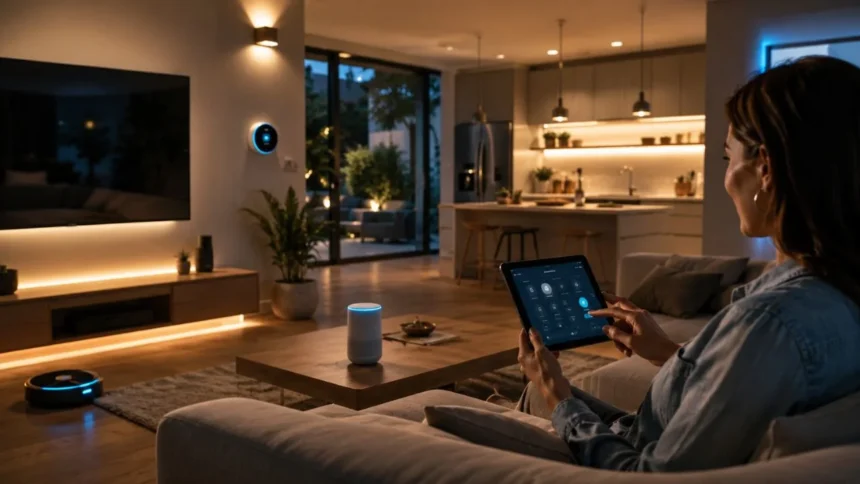
The modern household is undergoing a quiet but massive shift. Walking into a modern residence today often reveals an environment where devices work together to simplify daily chores, lower energy bills, and keep families safe. This shift is driven by smart home technology, which is quickly moving from a high-tech luxury to an everyday home standard.
If you have ever wondered how these devices work or if they are worth the investment, this guide explains everything. From basic home automation systems to advanced AI integration, you will learn how to turn your living space into an efficient, connected ecosystem that fits your daily habits.
What Is Smart Home Technology?
Smart home technology refers to a network of household appliances and systems that connect to the internet to let you monitor, automate, and control them from anywhere. Instead of adjusting every setting by hand, these tools use a central connection to communicate with each other. This setup lets you control everything through a smartphone app, a touchscreen panel, or simple voice commands.
At the core of this system is the Internet of Things (IoT), which is the network of physical gadgets that gather and share data over the web. These connected home devices range from small smart plugs to large kitchen appliances. Together, they create a unified ecosystem where your heating, lighting, and security tools can coordinate their actions without you needing to manage each one individually.
To make these gadgets work together, they use special communication languages called protocols, such as Wi-Fi, Zigbee, Thread, or Z-Wave. These protocols let a motion sensor tell a light bulb to turn on, or allow your phone to check if the front door is locked. This level of communication turns a collection of separate electronics into a truly cooperative, automated household.
With a well-designed setup, you can set up automated routines that fit your daily schedule. For example, your house can slowly raise the indoor temperature, turn on the kitchen lights, and start brewing your morning coffee the moment your alarm goes off. This seamless integration of daily tasks is what makes modern connected living so powerful.
Why Smart Home Technology Is Growing So Fast
The global demand for home automation systems is expanding rapidly, with millions of households adopting at least one smart device every year. This rapid growth is driven by better internet speeds, more affordable devices, and a shift toward energy conservation. Modern families want practical solutions that save time and reduce stress, and connected systems offer exactly that.
Another major driver of this growth is the rise of universal connectivity standards like Matter. In the past, devices from different brands rarely worked together, forcing homeowners to use multiple apps. Today, unified standards make it easy to pair different brands, allowing you to build a reliable system without worrying about brand compatibility.
At the same time, the steady drop in hardware costs has made these upgrades accessible to average homeowners, not just tech enthusiasts. Practical entry-level gadgets like smart plugs, entry sensors, and connected LED bulbs now cost very little. This low financial barrier allows anyone to test automation in one room before committing to a whole-house upgrade.
Finally, the shift toward remote work and flexible lifestyles has made people focus more on improving their living spaces. Since people spend more time at home, they want environments that are comfortable, safe, and highly functional. Investing in connected technology is now seen as a practical way to improve daily life while increasing property value.
How Smart Home Technology Will Change Everyday Life
Living in a fully automated home shifts your focus from manual chores to effortless comfort. Instead of checking every door lock and light switch before bed, a single command or automated schedule handles it for you. This transition changes your relationship with your living space, making your home feel more like an active assistant than a passive building.
Morning routines become much smoother when your house prepares itself for your day. Your bedroom lights can slowly mimic a natural sunrise, helping you wake up gently without a loud alarm. Meanwhile, the bathroom floor warms up, the kitchen smart speaker reads your daily calendar, and the thermostat sets the perfect temperature for your morning.
When you leave for work, the house goes into an energy-saving mode to prevent utility waste. The security system arms itself, the smart thermostat lowers the heating, and all non-essential appliances turn off. If a delivery driver arrives while you are out, you can speak to them through your video doorbell and unlock the front door remotely to let them leave the package inside.
In the evening, returning home is just as seamless and welcoming. As your car nears the driveway, geofencing technology recognizes your location, opening the garage door and disarming the alarm. The entryway lights turn on, and your favorite music playlist starts playing, creating a relaxing atmosphere the moment you step through the door.
Key Benefits of Smart Home Technology
The main reason people invest in smart living solutions is the immediate improvement in convenience. Being able to control your entire home from a single phone app or by speaking out loud eliminates dozens of small daily frustrations. Whether you want to dim the living room lights for a movie or double-check the front lock from your bed, these systems save you time and effort.
Another major benefit is the ability to customize your environment to match your specific preferences. You can create custom schedules, configure responsive lighting setups, and set automated temperature levels for different times of the day. This level of customization ensures your home always feels comfortable and welcoming, adapting to your mood and activities.
These systems also offer excellent accessibility benefits for elderly individuals or those with mobility challenges. Voice commands and automated routines allow users to manage their environment without needing to reach physical switches or heavy doors. This technology helps individuals maintain their independence and live safely in their own homes for longer.
Additionally, connected devices provide peace of mind through constant updates and real-time alerts. If a pipe leaks in the basement or a window is opened while you are away, your system sends an instant notification to your phone. This early warning lets you address minor household issues before they turn into costly repairs.
How Smart Homes Improve Safety and Security
Advanced smart security systems provide protection that goes far beyond traditional door locks and standard alarms. These modern setups connect cameras, motion sensors, and smart locks into a unified network that actively monitors your property. Instead of simply sounding an alarm during a break-in, these systems help prevent security issues before they happen.
Smart security cameras use on-device processing to distinguish between a family pet, a blowing tree branch, and an actual person on your property. If an unauthorized visitor approaches your doorway, the system can turn on outdoor floodlights and send an alert to your phone. This real-time visibility lets you monitor your home and react to potential issues from anywhere in the world.
Integrating connected locks into your security setup adds another layer of safety and daily convenience. You can generate unique, temporary entry codes for family members, guests, or service workers instead of hiding physical keys outside. The system logs every entry and exit, so you always know who is coming and going, and you can lock or unlock your doors remotely at any time.
These security networks also guard against environmental hazards like fire, smoke, and water damage. Smart smoke detectors can pinpoint the exact room where smoke is detected and send alerts to your phone, even if you are away. Connected water sensors can detect moisture near your washing machine or water heater, automatically shutting off the main water valve to prevent flooding.
Smart Home Technology for Health and Well-Being
Connected devices are playing an increasingly important role in supporting personal health and daily well-being. Modern systems can monitor indoor air quality, track sleep patterns, and manage lighting to support your natural circadian rhythm. These subtle environmental adjustments help reduce stress, improve sleep quality, and make your home a healthier place to live.
Smart lighting setups can automatically adjust their color temperature and brightness throughout the day. In the morning, the bulbs emit a cool, blue-toned light that helps you feel energized and alert. As evening approaches, the lights shift to a warm, amber glow, reducing blue light exposure and helping your body prepare for restful sleep.
Indoor air quality monitors track dust, allergens, and carbon dioxide levels in real time. If pollutants spike while you are cooking or cleaning, the monitor triggers your smart air purifier to clean the air. This automated response keeps your indoor air clean and healthy, which is especially helpful for anyone dealing with asthma or seasonal allergies.
These wellness systems also offer important tools for remote family care and independent senior living. Non-invasive motion sensors can learn an elderly relative’s daily habits and alert family members if they notice unusual changes, like a missed morning routine. Dedicated fall-detection sensors can also call for emergency help automatically, providing security for seniors living on their own.
Saving Energy and Reducing Utility Bills with Smart Homes
Building an energy-efficient home is one of the most practical and financially rewarding benefits of modern automation. Devices like smart thermostats, automated lighting, and connected plugs work together to eliminate energy waste. By matching your home’s energy use to your actual daily schedule, these tools lower your utility bills while reducing your carbon footprint.
A smart thermostat is one of the most effective tools for cutting heating and cooling costs. These devices learn your daily schedule and automatically adjust temperatures based on whether you are home, asleep, or away. This intelligent adjustment prevents you from wasting money heating or cooling an empty house while ensuring your living space is comfortable when you return.
Smart lighting systems also help reduce electricity waste by ensuring lights are only on when needed. Motion sensors can turn off lights in empty hallways, and automated schedules can turn off outdoor lights at sunrise. Switching to connected LED bulbs also lowers your energy use while giving you precise control over your home’s lighting.
Connected smart plugs let you monitor and manage energy use for older, non-smart appliances. You can set schedules to cut off power to devices that draw “vampire power” when turned off, like game consoles or coffee makers. These small, daily energy savings add up over the year, making your home more efficient and affordable to run.
The Role of Artificial Intelligence in Smart Homes
The integration of artificial intelligence is turning basic automated houses into highly intuitive, predictive living spaces. Early automation systems relied entirely on manual schedules and basic rules set by the user. Today, an AI smart home can analyze data from various sensors to learn your habits, predict your needs, and make adjustments automatically.
AI helps your smart devices understand context, allowing them to make smarter decisions on their own. Instead of turning on the heating at a fixed time every day, an AI-enabled thermostat looks at local weather forecasts and your recent habits to find the most efficient start time. This proactive management keeps your home comfortable while keeping your energy bills low.
Voice assistants are also becoming much more natural and helpful thanks to improvements in artificial intelligence. Modern assistants can understand complex, multi-step requests and follow conversational context without needing exact trigger words. This makes controlling your devices feel less like commanding a computer and more like talking to a helpful assistant.
In the future, AI will continue to focus on predictive maintenance and home health monitoring. Your HVAC system will be able to analyze its own performance, detect early signs of wear, and schedule a service appointment before a breakdown occurs. This level of automation will make home maintenance simple, reliable, and entirely stress-free.
Popular Smart Home Devices You Should Know
Starting your home automation journey is much easier when you know the most popular and reliable devices available. Voice assistants like Amazon Alexa, Google Assistant, and Apple Siri serve as the central control systems for most connected homes. These platforms let you manage all your different devices and run complex routines using simple voice commands.
For climate control, smart thermostats are highly recommended as an early upgrade for any household. These devices are easy to install, simple to control from your phone, and pay for themselves over time through energy savings. They provide an easy way to experience the comfort and cost savings of home automation.
Smart lighting is another great, customizable category that lets you easily change the look and feel of any room. Connected bulbs and switches let you dim lights, change colors, and set schedules to match your daily activities. They offer an easy, affordable way to start experimenting with automated routines.
To improve your home’s security, consider adding video doorbells, smart locks, and outdoor security cameras. These devices give you real-time monitoring, keyless entry, and instant motion alerts directly on your smartphone. They work together to keep your family safe and provide peace of mind whether you are home or away.
Challenges and Risks of Smart Home Technology
While connected living offers incredible benefits, it also brings important security and privacy challenges. Because these devices collect data on your daily habits and are connected to the internet, they can be targeted by hackers. Securing your home network and choosing reputable brands are essential steps to protecting your personal information.
Device compatibility can also be a challenge, especially when mixing older devices with newer systems. While standards like Matter are making this much easier, some older gadgets may still require separate apps or hubs to work. Checking compatibility before you buy new gear helps prevent setup headaches and keeps your system running smoothly.
Relying entirely on internet-connected devices also means a temporary web outage can disrupt your automation. If your Wi-Fi goes down, you might lose the ability to control your devices through your phone or voice assistant. To prevent issues, look for devices that offer local control, allowing them to work even without an active internet connection.
Finally, the upfront cost of high-end appliances and complex automation systems can be quite high. While basic gadgets are inexpensive, equipping an entire home with smart locks, cameras, and automated blinds requires a larger budget. Planning your upgrades in stages helps you build a great system without spending too much at once.
Future Trends in Smart Home Technology
The future of connected living is focused on creating simpler, highly integrated, and sustainable homes. A major trend is the shift toward local processing, where devices handle data inside your home rather than sending it to the cloud. This change makes your devices respond faster, keeps your data private, and ensures your system works during internet outages.
We are also seeing the rise of future smart homes designed to be entirely self-sustaining. These homes combine smart energy management tools with solar panels and home battery systems to optimize electricity use in real time. The system can run heavy appliances when solar energy is high and switch to battery power during peak utility rates.
We will also see deeper integration between connected homes and electric vehicles. Your home will monitor your car’s battery level, charging it when electricity rates are lowest and pre-conditioning the cabin temperature before you leave. This seamless connection makes managing your home and transportation simple and highly efficient.
Finally, health monitoring features will continue to expand into everyday household surfaces. Smart mirrors will check vital signs, sleep systems will track respiration, and bathroom fixtures will provide personalized wellness insights. These advances will turn our living spaces into active partners in supporting our long-term health.
How to Get Started with a Smart Home
Building your connected home does not require buying dozens of expensive gadgets all at once. The best approach is to start small with one or two simple devices that solve an everyday frustration. Starting with a smart speaker, a couple of connected light bulbs, or a smart plug lets you learn the basics of automation.
First, choose a primary ecosystem that fits the smartphones and computers you already use. Google Home, Amazon Alexa, and Apple Home are the three main options, and each has its own strengths. Sticking to one main ecosystem makes setting up routines and managing your devices much easier down the road.
Next, make sure your home’s Wi-Fi network is strong enough to handle multiple connected devices. As you add more gadgets, your standard router might struggle to keep up, causing slower response times. Upgrading to a modern mesh Wi-Fi system ensures stable coverage and fast connections for every device in your home.
When buying new gadgets, always look for the Matter logo on the packaging. This standard ensures the device will work with your chosen ecosystem and with other brands you might add later. Choosing compatible, secure devices helps you build a flexible system that can easily grow over time.
Is Smart Home Technology Worth the Investment?
Deciding if connected technology is worth the investment depends on your budget, your lifestyle, and what you want to achieve. For most homeowners, the daily convenience, lower utility bills, and improved security easily justify the initial setup costs. Starting with a few practical devices lets you enjoy these benefits without a large upfront payment.
From a business perspective, companies that specialize in installing, maintaining, or manufacturing these devices are experiencing incredible opportunities. Capitalizing on the surging demand for residential automation is a proven strategy for effective business growth in the tech and trade sectors. Contractors who adapt to these trends quickly set themselves apart from traditional competitors.
Additionally, adding connected features can make your property more attractive to future buyers. Many modern home buyers look for built-in security cameras, smart locks, and energy-efficient systems when shopping for a home. These upgrades can increase your home’s market value and help it sell faster in a competitive real estate market.
Ultimately, the biggest value of a connected home is the peace of mind and comfort it provides every day. Knowing your home is secure, your energy is managed, and your daily routines are simplified makes life easier. Starting with small, practical upgrades is the best way to experience these benefits for yourself.
Frequently Asked Questions
Do smart home devices work when the internet goes down?
Many basic functions like local light switches and physical keypads will still work manually without an internet connection. However, you will lose the ability to control devices through phone apps, voice assistants, or remote access until your connection is restored. Choosing devices that support local processing standards ensures your automated routines continue to run even during an internet outage.
Can smart home devices actually lower my monthly utility bills?
Yes, installing devices like smart thermostats, automated lighting, and smart plugs can noticeably reduce your monthly energy bills. By automatically turning off devices in empty rooms and managing your heating and cooling schedules, these systems prevent energy waste. Over the year, these small energy savings add up, helping you recover the initial cost of the devices.
How do I protect my connected devices from security threats?
To protect your system, always change the default passwords on every new device you install and enable two-factor authentication on your accounts. Keep your devices’ software updated to ensure you have the latest security patches, and use a strong, unique password for your home Wi-Fi network. Setting up a separate guest network for your connected devices is also a great way to keep your main personal data safe.
Do I need to run new wiring to make my home smart?
No, the vast majority of modern connected devices are entirely wireless and designed to fit into existing homes without any remodeling. Devices like smart bulbs, battery-powered security cameras, and adhesive sensors can be installed in minutes with simple tools. This makes it easy for renters and homeowners alike to upgrade their living spaces without expensive wiring projects.
Conclusion
Embracing smart home technology is a practical, step-by-step journey that can completely change how you interact with your living space. By starting with a few simple devices, choosing compatible standards, and focusing on practical upgrades, you can build a home that is safe, energy-efficient, and perfectly tailored to your daily habits. As the technology continues to improve, there has never been a better time to start building your own connected home.