

What Is Turbinado Sugar, and Why Do People Think It Is Healthier?
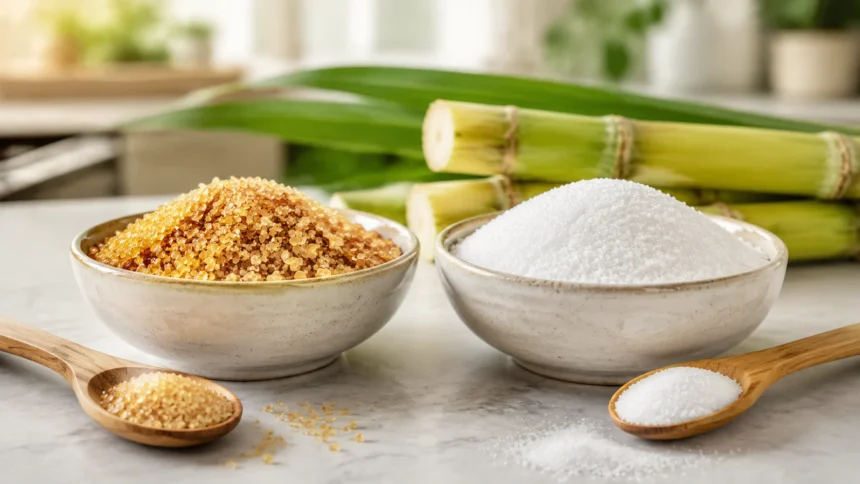
Turbinado sugar is a coarse, golden-brown sugar made from sugarcane juice. It is often described as raw cane sugar, although it is not completely raw in the strictest sense. During processing, sugarcane juice is extracted, clarified, evaporated, and spun in turbines to remove much of the liquid. This process leaves behind large crystals with a light coating of natural molasses. That molasses gives turbinado sugar its caramel-like flavor, pale brown color, and crunchy texture. Because it looks less refined than white sugar, many people assume it is automatically a healthier sweetener.
The word “turbinado” comes from the turbine-style spinning process used to separate the crystals. Compared with white granulated sugar, turbinado sugar goes through fewer refining steps and keeps a small amount of molasses. This is why it is sometimes marketed as natural sugar, raw sugar, or unrefined cane sugar. However, those terms can be confusing because turbinado sugar is still a form of added sugar. It is still mostly sucrose, which means the body digests it in a very similar way. The main difference is flavor, texture, color, and degree of processing.
Turbinado sugar has become popular because shoppers are paying closer attention to ingredient labels. Many people want alternatives to highly refined foods, and turbinado sugar fits that “less processed” image. It appears in coffee shops, baking recipes, oatmeal toppings, homemade scrubs, and packaged snacks. Its large crystals also make it attractive as a finishing sugar for muffins, cookies, and pies. In food marketing, its golden color can make products seem more wholesome or artisanal. Still, a natural appearance does not always mean a meaningful nutrition advantage.
The biggest reason people compare turbinado sugar vs white sugar is health perception. White sugar is usually seen as highly processed, while turbinado sugar seems closer to the original sugarcane plant. That comparison is partly fair because turbinado sugar retains some molasses and has a less uniform look. But nutritionally, both sweeteners deliver nearly the same calories and carbohydrates per teaspoon. Neither one provides fiber, protein, healthy fat, or significant vitamins. If you are choosing between them, the question is less about health benefits and more about how much added sugar you use overall.
A people-first way to understand turbinado sugar is to separate taste from nutrition. If you enjoy its mild molasses flavor, it can be a satisfying choice in small amounts. If you are using it because you believe it is a health food, the evidence is much less convincing. Turbinado sugar may feel more natural, but it still counts toward your daily added sugar intake. It can be part of a balanced diet, yet it should not be treated as a free pass. The healthiest choice is usually the one that helps you use sugar more intentionally.
Turbinado Sugar vs White Sugar: Nutrition, Calories, and Real Health Differences
Turbinado sugar and white sugar are very similar when you compare basic nutrition. A teaspoon of either one provides roughly the same amount of calories and sugar. Both are made primarily of sucrose, a simple carbohydrate that breaks down into glucose and fructose. That means both can raise blood sugar and contribute calories without adding much nutritional value. Turbinado sugar may contain tiny traces of minerals from molasses, such as calcium, potassium, and iron. However, the amounts are too small to make it a meaningful source of nutrients.
White sugar is refined until it becomes clean, white, and neutral in flavor. During that process, molasses is removed, leaving behind uniform crystals that dissolve easily. Turbinado sugar keeps a thin molasses coating, which explains its deeper taste and color. This difference can matter in recipes, especially when you want crunch or a warm caramel note. It does not create a major difference in how the body handles the sugar. For metabolism, dental health, and calorie intake, turbinado sugar and white sugar are much closer than many people expect.
Some people wonder whether turbinado sugar is better for blood sugar than regular sugar. The simple answer is that it should not be considered a blood-sugar-friendly sweetener. Because it is still mostly sucrose, it can affect glucose levels in a similar way to table sugar. People with diabetes, insulin resistance, or prediabetes should count it like any other added sugar. The larger crystals may make a spoonful seem more substantial, but that does not change the carbohydrate content much. Portion size matters more than the style of sugar you choose.
Another common claim is that turbinado sugar is healthier because it is less processed. Less processing can be meaningful for foods that keep fiber, antioxidants, protein, or healthy fats. In the case of sugar, the benefit is much smaller because the final product remains concentrated sweetness. Turbinado sugar does preserve some molasses flavor, but it does not preserve the whole sugarcane plant’s nutrition. It is not comparable to eating fruit, whole grains, or other naturally sweet foods with fiber. A less refined sugar is still an added sugar when used to sweeten food or drinks.
The real health difference comes from behavior, not chemistry. If turbinado sugar’s stronger flavor helps you use less, it may support better sugar habits. For example, a small sprinkle on plain oatmeal might feel more satisfying than stirring several teaspoons into sweetened cereal. The crunch can also make a modest amount feel more noticeable on baked goods. On the other hand, if you use it spoon-for-spoon just like white sugar, the health impact is nearly the same. The smarter question is not which sugar is perfect, but which choice helps you reduce excess added sugar.
Benefits, Drawbacks, and Best Uses of Turbinado Sugar in Everyday Eating
The main benefit of turbinado sugar is culinary rather than nutritional. Its coarse crystals add sparkle, crunch, and a mild molasses taste that white sugar does not provide. This makes it useful as a topping for muffins, quick breads, fruit crisps, cookies, and crème brûlée. It can also add depth to coffee, tea, yogurt bowls, and homemade granola. Because the flavor is more noticeable, some people find they need less to feel satisfied. Used thoughtfully, turbinado sugar can make simple foods feel more enjoyable without requiring a large amount.
Turbinado sugar also appeals to people who prefer short ingredient lists and recognizable pantry staples. It is often found in natural food stores and may be available in organic forms. For home cooks, it can feel like a more rustic sweetener than standard white sugar. It pairs well with cinnamon, vanilla, oats, nuts, apples, pears, chocolate, and warm spices. Its texture works especially well when sprinkled on top rather than fully mixed into batter. These qualities explain why many bakers keep it as a finishing sugar instead of an everyday replacement.
The drawbacks are important to understand before treating turbinado sugar as a healthy substitute. It is still calorie-dense, nutrient-poor, and easy to overuse in drinks and desserts. Added sugar intake can climb quickly when sweeteners appear in coffee, sauces, breakfast foods, snacks, and baked goods. Too much added sugar may make it harder to meet nutrition needs while staying within a healthy calorie range. It can also contribute to dental concerns when sugary foods are eaten frequently. Turbinado sugar does not avoid those concerns just because it is less refined.
Turbinado sugar may not work perfectly in every recipe that calls for white sugar. Its larger crystals dissolve more slowly, which can affect texture in cakes, frostings, custards, and delicate cookies. If a recipe depends on creaming butter and sugar, turbinado sugar may create a grainier result. It can also change the color and flavor of pale desserts because of its molasses notes. For toppings, crusts, and crunchy finishes, that difference is usually a strength. For smooth or precise baking, white sugar or superfine sugar may perform better.
The best way to use turbinado sugar is with intention and moderation. Think of it as a flavor ingredient, not a health supplement or nutritional upgrade. A small sprinkle can add texture to foods that are already nourishing, such as oatmeal, baked fruit, or plain Greek yogurt. You can also combine it with spices to make sweetness feel fuller without adding much more sugar. If you are trying to reduce added sugar, gradually lowering the amount you use is more effective than simply switching types. Turbinado sugar can have a place in your kitchen, but balance should lead the decision.
Is Turbinado Sugar Healthier Than White Sugar? The Practical Answer
Turbinado sugar is slightly less refined than white sugar, but it is not significantly healthier in a nutritional sense. It has a more complex flavor and a small amount of molasses, yet it remains mostly sucrose. The trace minerals it contains are not enough to turn it into a nutrient-rich sweetener. If you compare calories, carbohydrates, and blood sugar impact, the two are very similar. This does not mean turbinado sugar is bad or forbidden. It simply means its health halo should be kept in perspective.
For people trying to eat better, the bigger issue is total added sugar intake. Whether sugar comes from turbinado sugar, brown sugar, coconut sugar, honey, agave, or white sugar, it still adds sweetness and calories. Some sweeteners sound more natural, but the body still processes many of them in comparable ways. Whole foods like fruit are different because they bring fiber, water, vitamins, minerals, and fullness. That is why replacing candy with fruit is different from replacing white sugar with raw cane sugar. The source and the overall eating pattern both matter.
If you like turbinado sugar, there is no need to remove it completely from your diet. A realistic approach is to use it where it genuinely improves taste and texture. Save it for foods where the crunch matters, instead of mixing it invisibly into everything. Measure it rather than pouring freely, especially in coffee, tea, smoothies, and breakfast bowls. Small habits like using half a teaspoon less can add up over time. Enjoyment and awareness can work together when you are honest about portions.
People with specific health goals should be especially mindful. If you are managing diabetes, weight, triglycerides, fatty liver concerns, or dental health, turbinado sugar should be treated like regular added sugar. It is not a low-glycemic sweetener, a sugar-free option, or a meaningful mineral source. If you need personalized advice, a registered dietitian or healthcare professional can help match sugar choices to your needs. For most healthy adults, occasional use in modest amounts is generally reasonable. The key is not fear, but consistency and context.
So, is turbinado sugar healthier than white sugar? The fairest answer is “only slightly in processing, not meaningfully in nutrition.” It may taste better, look more natural, and work beautifully as a crunchy topping. But it should not be used as an excuse to consume more added sugar. Choose it when you value its flavor, not because you expect major health benefits. In everyday eating, the healthiest sugar is usually the one you use less often and in smaller amounts.
FAQs About Turbinado Sugar
Is turbinado sugar the same as raw sugar?
Turbinado sugar is often called raw sugar, but it is not completely raw. It is partially refined cane sugar that keeps some molasses, giving it a golden color and mild caramel flavor.
Is turbinado sugar better for diabetics than white sugar?
No, turbinado sugar is not a diabetes-friendly substitute for white sugar. It is still mostly sucrose and can raise blood sugar, so it should be counted as added sugar.
Can I replace white sugar with turbinado sugar in baking?
You can replace it in some recipes, especially toppings, crumbles, and cookies where crunch is welcome. For cakes, frostings, and delicate desserts, the larger crystals may affect texture.
Does turbinado sugar have minerals?
Turbinado sugar contains tiny traces of minerals from molasses. However, the amounts are too small to provide meaningful nutritional benefits in normal serving sizes.
What is the healthiest way to use turbinado sugar?
Use turbinado sugar in small measured amounts where its flavor and texture matter most. It works best as a finishing sugar on oatmeal, fruit, muffins, or lightly sweetened desserts.