
HHC vs THC: Key Differences, Effects & Risks
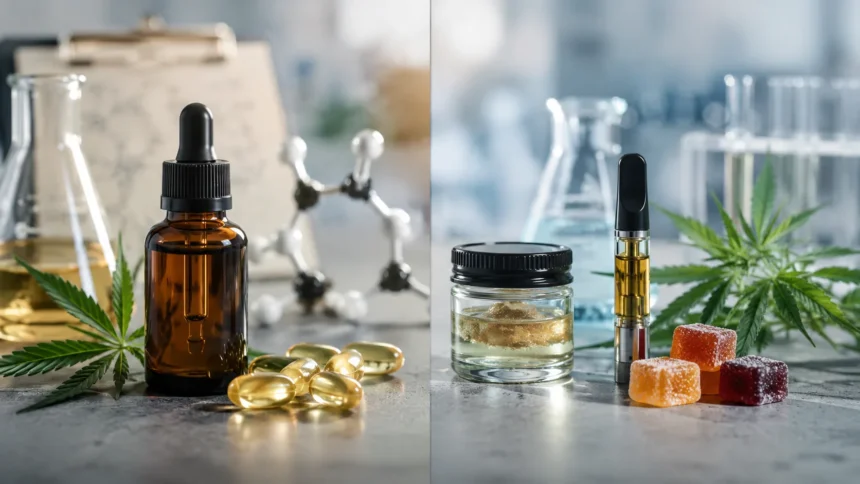
HHC and THC are closely related cannabinoids that can both produce psychoactive effects, yet they are not interchangeable substances. THC, especially delta-9 tetrahydrocannabinol, is the primary intoxicating cannabinoid naturally associated with cannabis, while HHC, or hexahydrocannabinol, is commonly produced commercially through chemical processing of cannabinoid material. Both interact with the body’s endocannabinoid system and may affect mood, perception, coordination, memory, and reaction time. However, considerably more research exists on THC than on HHC. That evidence gap makes claims about HHC’s potency, safety, and long-term effects much less certain.
Interest in HHC increased rapidly after hemp-derived intoxicating cannabinoids began appearing in gummies, vape products, oils, and other consumer products. HHC was sometimes promoted as a milder or legally safer alternative to traditional THC, but those claims often exceeded the available scientific evidence. Research now documents anxiety, dizziness, dissociation, cardiovascular symptoms, neurological effects, and even serious intoxications following HHC exposure. Legal rules have also changed significantly, particularly in the United States. This guide compares HHC vs THC based on their chemistry, psychoactive effects, risks, duration, product quality, drug testing, and current legal status.
What Are HHC and THC?
THC stands for tetrahydrocannabinol, a family of closely related cannabinoid compounds found in or associated with the cannabis plant. Delta-9 THC is the form most commonly meant when people simply say “THC,” and it produces most of the familiar intoxicating effects associated with cannabis. THC can influence memory, attention, coordination, decision-making, emotions, and reaction time because it acts on cannabinoid receptors in the brain and body. Products can contain very different concentrations, making their effects difficult to compare by product type alone. Higher THC concentrations generally increase the likelihood of stronger intoxication and overconsumption.
HHC stands for hexahydrocannabinol, a cannabinoid structurally related to THC. Although tiny amounts may occur naturally, the HHC found in commercial products is generally manufactured through chemical processes rather than extracted in meaningful quantities directly from cannabis. Modern production commonly starts with hemp-derived cannabinoid material and ultimately produces HHC through hydrogenation of THC-like compounds. Commercial HHC generally contains different stereoisomers, particularly 9R-HHC and 9S-HHC, which do not appear to have identical biological activity. Research suggests 9R-HHC is the more strongly psychoactive of the two forms.
Chemically, HHC can be thought of as a hydrogenated relative of THC because hydrogen atoms are added to the THC molecular structure. This modification changes certain chemical characteristics while preserving enough structural similarity for HHC to interact with cannabinoid receptors. That receptor activity explains why HHC can cause THC-like intoxication rather than behaving like non-intoxicating cannabidiol, or CBD. However, similar chemistry does not mean the substances produce identical effects in every person. Differences in molecular configuration, product composition, metabolism, and concentration can all influence the experience and potential risks.
The scientific knowledge surrounding the two compounds is also very different. THC has been studied for decades across areas including cognition, driving impairment, dependence, cardiovascular effects, mental health, pregnancy, pain, and therapeutic applications. Human HHC research remains comparatively limited, with much of the available evidence coming from laboratory studies, surveys, poison-center reports, clinical cases, and emerging observational research. A 2023 scientific review emphasized that human pharmacology and metabolism remained poorly characterized compared with THC. More recent reports have improved understanding, but major gaps remain regarding repeated exposure and long-term health outcomes.
The distinction matters because consumers sometimes assume a newer cannabinoid must simply be a weaker version of an older one. In reality, HHC products introduce additional uncertainties involving manufacturing chemistry, cannabinoid ratios, contaminants, labeling accuracy, and individual metabolism. THC also carries substantial risks, especially in high-concentration products, but its effects are supported by a much larger scientific evidence base. HHC therefore should not automatically be regarded as gentler, cleaner, or safer because it is less familiar. When comparing HHC vs THC, uncertainty itself is an important part of HHC’s risk profile.
HHC vs THC: Key Differences
The biggest difference between HHC and THC is how commercial products are typically produced. Delta-9 THC occurs naturally in cannabis and may be extracted or concentrated from the plant, while commercial HHC is usually considered a semi-synthetic or synthetic cannabinoid produced through chemical conversion. That distinction can influence regulatory status and product-quality concerns. Commercial HHC production may involve several chemical steps, catalysts, solvents, purification procedures, and cannabinoid intermediates. Poor manufacturing controls can therefore introduce uncertainties that are not obvious from a simple ingredient label.
Another difference involves the strength and predictability of psychoactive effects. Available preclinical evidence suggests HHC can activate CB1 cannabinoid receptors and produce effects resembling those of delta-9 THC, although HHC overall appears to be less potent in some studies. The 9R-HHC stereoisomer appears more active than 9S-HHC, meaning the ratio of these forms could influence how strongly an HHC product affects someone. Commercial labels rarely give consumers a complete picture of this chemistry. As a result, comparing an HHC percentage directly with a THC percentage may not reliably predict equivalent intoxication.
THC has a far more established evidence base regarding both desirable and undesirable effects. Researchers understand much more about how THC affects attention, memory, reaction time, mental health, cardiovascular function, dependence risk, and driving ability. HHC lacks comparable long-term epidemiological studies because widespread commercial exposure is relatively recent. This means statements that HHC is safer than THC cannot currently be supported confidently. Less evidence of harm should not be mistaken for evidence that less harm actually occurs.
Product regulation is another major difference consumers should understand. Cannabis products sold through regulated state markets may be subject to testing, labeling, packaging, and licensing requirements that vary by jurisdiction. HHC products historically appeared frequently in smoke shops, convenience stores, and online marketplaces operating outside traditional cannabis regulatory systems. That environment raised concerns about inaccurate cannabinoid concentrations and unwanted manufacturing residues. Even where a product carries a laboratory report, testing standards and enforcement may differ substantially. The chemical name on a package therefore tells only part of the safety story.
Legal status has also changed sharply and is particularly important for current comparisons. In the United States, DEA issued a final rule specifically listing HHC as a Schedule I controlled substance effective May 4, 2026, explaining that synthetically produced HHC already met the federal definition of controlled tetrahydrocannabinols. This means older claims that commercial HHC is federally legal simply because it originated from hemp are outdated. Delta-9 THC in marijuana also remains federally controlled, although state medical and adult-use cannabis laws vary. People should therefore check current jurisdiction-specific rules rather than relying on old articles or packaging claims.
How HHC and THC Affect the Body
Both HHC and THC produce many of their psychoactive effects through the body’s endocannabinoid system. This biological signaling network includes cannabinoid receptors known primarily as CB1 and CB2 receptors, along with naturally produced signaling molecules and enzymes. CB1 receptors are highly relevant to intoxication because they are widely distributed in areas of the nervous system involved in memory, movement, reward, coordination, and perception. Delta-9 THC acts as a partial agonist at cannabinoid receptors, particularly CB1. HHC appears to interact with the same receptor system, helping explain its THC-like psychoactive effects.
When these cannabinoids affect CB1 signaling in the brain, changes can occur in attention, short-term memory, perception, judgment, and reaction time. Some people report relaxation or euphoria, while others experience anxiety, confusion, panic, or paranoia. The response can change depending on cannabinoid concentration, previous experience, frequency of use, biology, and whether other substances are involved. THC effects are known to vary considerably across individuals and products. Emerging HHC reports suggest similarly variable responses, making a single description of the “HHC feeling” scientifically unreliable.
Cannabinoids can also influence the cardiovascular system. Cannabis containing THC can temporarily increase heart rate and may raise blood pressure shortly after exposure, while observational research has raised concerns about possible links with cardiovascular and vascular events. HHC poison-center data have likewise documented cardiovascular symptoms among reported exposures. In a 2025 Czech poison-center analysis involving HHC and a related cannabinoid, cardiovascular manifestations occurred in a substantial proportion of cases alongside neurological and gastrointestinal symptoms. These findings do not prove identical cardiovascular risk between HHC and THC, but they show that HHC is not physiologically inactive.
Metabolism also helps determine how long effects remain noticeable and how unpredictable they may become. THC is metabolized into several compounds, including psychoactive 11-hydroxy-THC following oral consumption, which contributes to the strong and prolonged effects that some people experience with edibles. HHC metabolism in humans is less comprehensively characterized, although newer toxicology work confirms that it is absorbed, crosses the blood-brain barrier, and undergoes liver metabolism. Differences among products and stereoisomers add further uncertainty. This limited knowledge makes precise HHC-to-THC equivalence claims especially unreliable.
Route of exposure can change effects for both cannabinoids without making one route risk-free. Inhaled products generally produce effects differently from swallowed products, while edibles can have delayed and unexpectedly prolonged intoxication. CDC notes that THC edibles may take 30 minutes to two hours to produce noticeable effects, increasing the possibility of excessive consumption before the initial dose is fully felt. HHC is also sold in edible and inhaled forms, with poison reports involving both routes. Regardless of cannabinoid, product form can significantly influence onset, duration, and risk.
HHC vs THC Effects
THC commonly produces relaxation, euphoria, altered sensory perception, changes in time perception, increased appetite, and reduced coordination. These effects can be enjoyable to some users but uncomfortable or impairing to others. THC may also cause dry mouth, red eyes, dizziness, anxiety, confusion, paranoia, or rapid heart rate. Stronger effects become more likely with high-concentration products or larger exposures. Because THC impairs memory, attention, judgment, and reaction time, activities such as driving become unsafe during intoxication.
Reported HHC effects overlap considerably with those associated with THC. Survey research involving HHC users has described relaxation and euphoria alongside adverse reactions, demonstrating that HHC can produce both desired and unwanted psychoactive effects. However, self-reported consumer experiences should not be treated as precise pharmacological measurements because products may differ substantially in composition. Individual expectations and previous cannabinoid exposure can also influence reported effects. The strongest conclusion supported by current evidence is that HHC is psychoactive and capable of producing meaningful cannabinoid intoxication.
Negative HHC experiences are becoming better documented as use has expanded. A 2025 survey of HHC users in Ireland found reports of anxiety or panic, faintness or dizziness, dissociation or depersonalization, hallucinations or psychosis, depression, and withdrawal symptoms. The study does not mean every HHC user will experience those outcomes, and its survey design has limitations. Nevertheless, the findings challenge marketing language portraying HHC as predictably mild. Responses can vary considerably, and unpleasant psychological effects appear possible even when products are sold commercially.
THC can similarly produce anxiety, paranoia, disorientation, and psychotic symptoms, particularly in susceptible individuals or with high-potency exposure. CDC states that cannabis use is associated with psychosis and schizophrenia, with stronger associations seen among people who begin younger or use more frequently. A 2025 systematic review of high-concentration THC products found consistently unfavorable associations with psychosis or schizophrenia and cannabis use disorder across many nontherapeutic studies. This does not mean THC inevitably causes these conditions in every individual. Instead, risk depends on exposure patterns, product potency, age, vulnerability, and other factors.
Neither HHC nor THC produces a universally predictable experience. The same person may react differently depending on product strength, route, setting, concurrent alcohol or medication use, sleep, anxiety level, tolerance, and product composition. This variability is particularly important with unregulated or mislabeled cannabinoid products. A product described as “mild HHC” can still produce unexpectedly strong effects if its concentration or stereoisomer profile differs from what the consumer expects. Comparing effects therefore requires more than simply asking which cannabinoid feels stronger.
Is HHC Stronger Than THC?
Current evidence does not support a simple statement that HHC is stronger than delta-9 THC. Early pharmacological research generally suggests HHC has THC-like activity but may have lower overall potency, while the 9R-HHC form appears substantially more active than the 9S form. Commercial HHC often contains a mixture of both stereoisomers, and manufacturers may not clearly report their proportions. This means one HHC product can differ noticeably from another even when the front labels show similar cannabinoid amounts. The unpredictability makes simple potency rankings misleading.
THC potency itself also varies enormously. Cannabis flower, concentrates, vape oils, edible products, and pharmaceutical cannabinoid formulations can contain very different quantities and concentrations of delta-9 THC. CDC notes that today’s high-concentration cannabis products can deliver much more THC than older forms of cannabis. Greater THC concentrations can increase intoxicating effects and contribute to overconsumption and cannabis use disorder risk. Therefore, comparing “THC” with “HHC” without knowing the actual products provides limited useful information.
Claims that HHC creates exactly a fixed percentage of THC’s effects should be treated skeptically. Numbers such as “70% as strong as THC” circulate widely online, but current human research does not provide a reliable universal conversion ratio. Differences in stereoisomers, purity, formulation, metabolism, and individual sensitivity make such precision unrealistic. Even standardized medications can affect people differently, and consumer cannabinoid products add another layer of variability. A responsible HHC vs THC comparison should therefore describe relative uncertainty rather than present a convenient but unsupported percentage.
Tolerance can further complicate perceptions of potency. Someone who frequently uses THC may respond differently from an individual with little or no cannabinoid exposure, making personal reports difficult to compare. CDC identifies previous cannabis experience, frequency of use, dose, product concentration, biology, and use of other substances as important factors affecting cannabis responses. Similar influences are likely relevant to HHC because it acts on overlapping cannabinoid pathways. Perceived strength therefore reflects both the substance and the person exposed to it.
The most useful takeaway is that HHC should not be treated as automatically weak simply because some evidence suggests lower potency than delta-9 THC. Serious effects and poison-center cases have occurred following HHC exposure, demonstrating that lower average potency does not equal harmlessness. The concentration in a particular product can overwhelm any general difference between the cannabinoids. Product quality and individual susceptibility also matter considerably. In safety terms, uncertainty about HHC strength can itself increase risk because consumers may not know what effect to expect.
HHC vs THC Side Effects
THC side effects can include impaired attention, slowed reaction time, reduced coordination, dizziness, dry mouth, increased heart rate, anxiety, panic, paranoia, and short-term memory difficulties. Strong intoxication may lead to severe confusion, vomiting, hallucinations, or behavior that increases the risk of accidents and injuries. Effects can be especially unpredictable with concentrated products and edibles. CDC emphasizes that THC is impairing regardless of the way cannabis is consumed. Using a legal or commercially available product therefore does not eliminate the possibility of significant impairment.
HHC side effects overlap with many of those associated with THC but remain less completely characterized. Reported reactions include dizziness, anxiety, panic, nausea, confusion, cardiovascular symptoms, dissociation, and psychiatric effects. A poison-center study published in 2025 found neurological manifestations in 74% of recorded HHC/HHC-P poisoning cases and cardiovascular symptoms in 43.1%, with some cases classified as severe. Most patients ultimately recovered, but many required physician intervention. These findings demonstrate that serious HHC intoxication can occur even though long-term population data remain limited.
A separately documented HHC intoxication case involved nausea, vomiting, slurred speech, confusion, rapid heart rate, dilated pupils, abnormal breathing, and a dissociative-like state after ingestion of a product containing analytically confirmed HHC. Symptoms resolved with supportive medical care, but the case illustrates how intense effects can become. Other published reports have described seizures, hallucinations, chest symptoms, movement abnormalities, and acute psychosis following HHC exposure. Individual case reports cannot determine how frequently these outcomes occur. They do, however, identify clinically plausible harms that consumers should not dismiss.
THC also carries risks associated with frequent or heavy exposure. Cannabis use disorder can involve craving, unsuccessful efforts to reduce use, tolerance, continuing despite problems, or using cannabis in hazardous situations. CDC estimates that about three in ten people who report cannabis use may have cannabis use disorder, although individual risk varies. Starting during adolescence and using cannabis more frequently are associated with greater risk. Higher-concentration THC products may also contribute to more severe cannabis use disorder symptoms.
HHC dependence and withdrawal are less well understood because research is newer. In one survey study, some participants who stopped using HHC reported withdrawal-like experiences, while the Irish survey also documented withdrawal symptoms among a smaller percentage of respondents. HHC’s activity at CB1 receptors provides a biological reason to take dependence potential seriously. However, researchers do not yet have enough evidence to estimate HHC use disorder rates as confidently as they can for cannabis. Marketing HHC as “non-addictive THC” would therefore be unsupported by current evidence.
Mental Health Risks of HHC and THC
THC can produce temporary anxiety, paranoia, confusion, or panic even in people without a diagnosed mental health condition. The likelihood and severity can increase with high-potency exposure, unfamiliar products, or individual susceptibility. Cannabis use has also been associated with psychosis and schizophrenia, although determining causation in every case is scientifically complex. CDC notes that the association is stronger when cannabis use begins earlier and occurs more frequently. People with existing psychotic disorders or strong vulnerability to psychosis may therefore face particularly important risks.
High-concentration THC products deserve additional attention because modern cannabis can deliver much greater cannabinoid exposure than earlier plant material. A 2025 systematic review covering 99 studies found that high-concentration THC exposure was frequently associated with unfavorable mental health outcomes, particularly psychosis or schizophrenia and cannabis use disorder. Evidence relating to anxiety and depression was more mixed and depended partly on population and therapeutic context. The researchers also noted limitations in the quality of many studies. Even so, the findings reinforce the importance of considering concentration when discussing THC risks.
HHC is increasingly associated with psychiatric adverse events as well. A 2025 clinical report examining psychosis admissions at an Irish hospital found HHC use preceding a notable number of psychotic admissions and first-episode psychosis cases. Because observational hospital data cannot prove that HHC alone caused every episode, the findings need careful interpretation. Nevertheless, they add to poison reports and survey evidence connecting HHC exposure with hallucinations, paranoia, and acute psychiatric symptoms. Researchers specifically emphasized the importance of asking about HHC use when evaluating new or relapsing psychosis.
People sometimes use cannabinoids because they believe they reduce anxiety or improve mood. Some individuals do report relaxation, but the relationship between cannabinoids and mental health is not reliably one-directional. A compound that feels calming at one exposure can produce panic, derealization, or paranoia under different circumstances. HHC user surveys illustrate this contrast, with relaxation and euphoria reported alongside anxiety and other negative psychological effects. Self-treatment of ongoing anxiety, depression, or trauma with poorly characterized cannabinoid products can therefore complicate symptoms rather than reliably address their cause.
Anyone experiencing hallucinations, severe paranoia, dangerous confusion, inability to stay awake, suicidal thoughts, or other major behavioral changes after cannabinoid exposure should receive prompt medical help. These symptoms should not be dismissed as simply being “too high,” particularly when the exact product composition is unknown. Emergency clinicians benefit from knowing the product name, packaging, approximate exposure time, and whether alcohol or other drugs may also be involved. HHC products may be difficult to identify with routine toxicology testing, which adds complexity. When severe psychiatric symptoms occur, safety and medical assessment are more important than identifying which cannabinoid was expected to be present.
Heart, Lung and Physical Health Risks
THC can increase heart rate and alter blood pressure shortly after exposure. CDC also notes potential associations between cannabis use and stroke, heart disease, and other vascular problems, although more research is required to understand causation and differences between consumption methods. Smoking creates additional cardiovascular and respiratory exposure because cannabis smoke contains many of the same harmful substances found in tobacco smoke. People with existing cardiovascular disease may therefore have particular reasons to discuss cannabis exposure with a clinician. Psychoactive effects can also make it harder to recognize or respond appropriately to concerning physical symptoms.
HHC may also affect cardiovascular function. Poison-center and case-report evidence has documented rapid heart rate, palpitations, chest-related complaints, and other cardiovascular manifestations after HHC exposure. These reports do not provide enough data to calculate long-term cardiovascular risk, but they demonstrate that HHC can produce meaningful physiological effects beyond changes in mood or perception. A lack of decades-long HHC cardiovascular research should therefore be viewed as uncertainty rather than reassurance. People with heart problems should be especially cautious about assuming a novel cannabinoid is safer because it is marketed as hemp-derived.
Smoking either cannabinoid introduces risks associated with combustion products in addition to the cannabinoid itself. Cannabis smoke contains toxic and cancer-causing chemicals, and secondhand cannabis smoke can expose other people to both harmful combustion products and THC. These respiratory concerns are separate from the direct pharmacological effects of cannabinoids. A product being “natural cannabis” does not make smoke harmless to the lungs. Similarly, converting cannabinoids chemically does not make inhaled HHC aerosols automatically cleaner or safer.
Vaping removes combustion but introduces a different set of concerns. Cannabis vape concentrates can contain highly concentrated cannabinoids as well as additives or contaminants, and vaping has previously been associated with serious lung injury. CDC states that scientists do not have enough evidence to declare one method of cannabis consumption universally safer than another. HHC vape products may carry additional uncertainty because manufacturing chemistry and product testing can vary. The absence of visible smoke should therefore not be interpreted as proof that an aerosol is harmless.
Edible products avoid direct smoke exposure but have their own safety problems. THC edibles can take considerably longer to produce noticeable effects and may remain active longer than expected, increasing the risk of accidental overconsumption. HHC poison-center data also include a large proportion of oral exposures, showing that edible HHC products can produce clinically important intoxication. Gummies and candies may additionally attract children if stored carelessly. Any psychoactive cannabinoid product should therefore be kept securely away from children and pets regardless of whether it is smoked, vaped, or eaten.
HHC and THC Product Quality Concerns
Product quality is one of the most important differences between known cannabinoid pharmacology and real-world consumer exposure. A label may state that a product contains HHC or THC, but the actual chemical composition can include multiple cannabinoids, degradation products, solvents, flavorings, or contaminants. This issue becomes particularly important when cannabinoids are produced through chemical conversion. Manufacturing quality determines whether unwanted reaction byproducts and residues are adequately removed. Consumers typically cannot evaluate that chemistry simply by looking at a gummy, cartridge, or bottle.
HHC manufacturing presents additional concerns because commercial production generally involves chemical transformation rather than simple extraction of naturally abundant HHC. Reviews describe modern HHC as a semi-synthetic cannabinoid commonly produced from hemp-derived cannabinoid starting materials through conversion and hydrogenation steps. The final product may contain different ratios of 9R-HHC and 9S-HHC along with other substances created during processing. Different ratios may influence psychoactivity because the two HHC stereoisomers appear to differ in potency. Without standardized manufacturing, two products carrying similar labels may not behave identically.
THC products are not automatically standardized either. CDC notes that the concentration or strength of THC can sometimes be difficult to determine and may be inaccurate on edible product labels. Cannabis concentrates may contain especially high THC levels, increasing both impairment and overconsumption risk. State-regulated markets may impose testing requirements, but standards differ between jurisdictions and cannot eliminate every labeling or contamination problem. Products obtained outside regulated systems introduce even greater uncertainty.
HHC’s rapid emergence created a market before extensive human safety data were available. That sequence is important because widespread consumer availability can make a product feel established even when scientific evaluation remains incomplete. HHC appeared internationally as a new psychoactive substance around 2021, while toxicology and clinical research developed afterward. More recent poisoning studies are now identifying harms that were not well documented during the early commercial period. Consumers should therefore avoid equating years on a retail shelf with years of rigorous medical evidence.
Product claims such as “lab tested,” “hemp derived,” “premium,” or “natural” should also be interpreted cautiously. Laboratory testing can be valuable when performed by credible independent facilities, but a certificate does not automatically prove long-term safety or legal status. Hemp origin likewise does not guarantee that the final psychoactive compound remains legally treated as hemp after chemical conversion. DEA’s 2026 HHC rule explicitly explains that chemically converted tetrahydrocannabinols do not qualify for the federal hemp exclusion simply because their starting material came from hemp. Marketing terminology should therefore never substitute for current regulatory information or toxicological evidence.
HHC vs THC and Drug Testing
THC drug testing is well established in workplaces, sports programs, treatment settings, and legal contexts. Many urine tests are designed to detect THC metabolites rather than measuring whether a person is currently intoxicated. Because metabolites can remain detectable after psychoactive effects have ended, a positive result does not necessarily mean someone is impaired at the moment of testing. Detection windows vary according to frequency of use, biology, sample type, and test sensitivity. People should therefore avoid interpreting a drug test as a simple real-time measure of cannabis impairment.
HHC creates additional uncertainty because routine testing methods were not originally designed specifically around widespread HHC use. Scientific reviews have noted challenges in detecting and distinguishing HHC and its metabolites with standard toxicological methods. More specialized analytical techniques are becoming available as forensic laboratories respond to the growth of semi-synthetic cannabinoids. This means test behavior may vary according to the assay being used. Consumers should not assume HHC is reliably invisible on drug screening simply because it is chemically different from delta-9 THC.
There is also concern about cross-reactivity between metabolites of closely related cannabinoids and tests designed to detect cannabis exposure. Commercial HHC products may additionally contain THC or other cannabinoids, intentionally or unintentionally, creating another possible pathway to a positive result. Label accuracy cannot always rule out such exposure. For someone whose employment, athletic eligibility, probation status, immigration process, or medical care depends on drug testing, assuming an HHC product is “test safe” could have serious consequences. Product marketing should not be relied upon for guarantees about laboratory results.
Testing complexity also affects healthcare. Someone presenting with severe intoxication after HHC exposure may not receive a routine test result that clearly identifies the responsible compound. Clinicians may therefore depend heavily on patient history, packaging information, symptoms, and specialized toxicology when available. A 2025 analytically confirmed HHC intoxication report illustrates the value of advanced laboratory analysis in identifying HHC stereoisomers after significant neurological and cardiovascular symptoms. Accurate disclosure to healthcare professionals can therefore be especially important with novel cannabinoids.
The practical conclusion is that neither HHC nor THC should be considered compatible with situations requiring guaranteed negative cannabinoid testing. THC is obviously likely to create testing problems, while HHC remains too chemically related and inconsistently manufactured to promise otherwise. Testing technology also continues to evolve as laboratories develop methods for newly popular cannabinoids. What escaped a particular assay several years ago may not escape a newer one. Anyone subject to formal drug testing should rely on the relevant testing policy rather than online claims about loopholes.
Is HHC Legal? HHC vs THC Laws in 2026
HHC’s U.S. legal position changed significantly in 2026. On May 4, 2026, the Drug Enforcement Administration published a final rule specifically listing hexahydrocannabinol in Schedule I of the federal Controlled Substances Act. DEA explained that HHC was already federally controlled because it meets the definition of synthetically produced tetrahydrocannabinols, and the new rule gave HHC its own specific listing and drug code. The action directly undermines older marketing claims that HHC is federally lawful whenever its starting material comes from hemp. As of August 2026, those older descriptions should be treated as outdated.
DEA’s reasoning is particularly relevant to the “hemp-derived HHC” phrase often used on product labels. The federal hemp definition excluded qualifying tetrahydrocannabinols in or derived from the cannabis plant under certain conditions, but DEA states that tetrahydrocannabinols created through chemical conversion are synthetically produced. According to the 2026 rule, those chemically converted substances do not qualify for the federal hemp exclusion merely because hemp provided the original cannabinoid material. This distinction is easy to miss when reading older HHC articles written around the 2018 Farm Bill. Current federal guidance is therefore more restrictive than many legacy webpages suggest.
Delta-9 THC remains complicated because federal and state cannabis laws do not always align. Marijuana and its delta-9 THC remain federally controlled, while many states operate medical or adult-use cannabis programs under their own laws. Hemp rules also distinguish certain low-THC plant material and products from marijuana, although federal definitions have continued to evolve. Consumers should not assume that state-legal cannabis changes federal controlled-substance law. Similarly, possessing a commercially packaged cannabinoid does not itself prove that the product is legal in a particular jurisdiction.
Internationally, HHC regulation has also tightened. In March 2025, the United Nations Commission on Narcotic Drugs voted to place HHC in Schedule II of the 1971 Convention on Psychotropic Substances. DEA cited that international scheduling decision as part of the background for its 2026 rule. Individual countries may implement international controls through different domestic legal systems and timelines. Someone traveling with HHC or THC products can therefore face very different legal consequences when crossing borders.
Anyone researching HHC legality should pay particular attention to publication dates. Articles written in 2022, 2023, or 2024 may accurately describe the situation that existed when they were published but can now provide incorrect legal guidance. Federal rules, state cannabis laws, intoxicating-hemp restrictions, and international controls can all change. The safest interpretation is that HHC is federally Schedule I in the United States as of 2026, while additional state restrictions or cannabis laws may also apply. For legal decisions, current official government sources are more reliable than product pages or old “HHC legal states” lists.
Is HHC Safer Than THC?
There is currently no strong scientific basis for declaring HHC safer than THC. THC has substantial documented risks, including impairment, anxiety, dependence, cardiovascular effects, accidental poisoning, and associations with psychosis, particularly with frequent or high-concentration exposure. HHC may sometimes be described as milder, but its smaller research base prevents reliable long-term comparisons. A substance does not become safer simply because fewer decades of data exist. In evidence-based risk assessment, major unanswered questions are themselves a reason for caution.
HHC also introduces manufacturing uncertainties that may not be captured by comparisons of the pure molecules. Commercial HHC is generally produced through chemical conversion and may contain varying proportions of stereoisomers and unintended substances. If purification and quality control are poor, product-related risks can extend beyond HHC’s pharmacological activity. THC products can also be contaminated or mislabeled, particularly outside regulated markets, but HHC’s conversion chemistry adds another variable. Comparing safety therefore requires consideration of both the cannabinoid and the finished product.
Recent HHC poisoning evidence makes simplistic safety claims especially difficult to defend. Poison-center cases have included neurological, cardiovascular, gastrointestinal, and psychiatric symptoms, with some exposures classified as severe. Clinical reports have also described dissociative symptoms, acute psychosis, hallucinations, seizures, and other concerning reactions. These events may not represent typical HHC use, but they prove that clinically significant toxicity is possible. HHC should therefore not be marketed or understood as a risk-free version of THC.
THC does have one relative advantage from a scientific perspective: researchers know much more about it. Decades of study provide better information about impairment, dependence, pregnancy, cognition, mental health, cardiovascular effects, and patterns of repeated use. That knowledge does not make THC harmless, but it makes many of its risks easier to characterize. HHC’s long-term neurological, psychiatric, cardiovascular, and dependence effects remain less certain. Choosing the substance with fewer published risks can therefore be misleading when the reason fewer risks are documented is simply that less research exists.
People with a history of psychosis, severe anxiety reactions, cardiovascular disease, substance use disorder, pregnancy, or other important health concerns should be particularly cautious with psychoactive cannabinoids. Combining cannabinoids with alcohol or other drugs can further increase impairment and create unpredictable interactions. Driving, operating machinery, supervising children, or performing safety-sensitive work while intoxicated can endanger both the user and others. If cannabinoid exposure causes chest pain, seizures, severe confusion, loss of consciousness, hallucinations, or dangerous behavior, urgent medical assessment is appropriate. Safety should be based on actual impairment and health risk rather than whether a package says HHC or THC.
Conclusion
The HHC vs THC comparison begins with an important similarity: both are psychoactive cannabinoids capable of altering perception, judgment, memory, coordination, and mood. Delta-9 THC is naturally abundant in cannabis and has been researched extensively, while commercial HHC is generally produced through chemical conversion and remains much less studied in humans. HHC appears to act through cannabinoid pathways similar to THC, particularly CB1 receptors. That receptor activity explains why its effects can resemble cannabis intoxication. The scientific differences between the two are meaningful, but neither compound should be considered harmless.
THC generally has better-characterized effects and risks because decades of research have examined cannabis exposure across large populations. Known concerns include impaired driving ability, anxiety, paranoia, cannabis use disorder, cardiovascular effects, poisoning, and associations with psychosis. Higher-concentration THC products may increase several of those risks. Cannabis smoke introduces additional respiratory hazards, while edibles can produce delayed and unexpectedly prolonged intoxication. The fact that cannabis is legal for adults in some jurisdictions does not eliminate those health concerns.
HHC presents a different problem because scientific uncertainty combines with meaningful evidence of harm. Surveys and poison-center studies have documented anxiety, dizziness, dissociation, cardiovascular symptoms, psychiatric reactions, and clinically important intoxications. Case reports have also linked HHC exposure with severe neurological and psychiatric effects. These outcomes do not prove HHC is more dangerous than THC overall, but they clearly contradict descriptions of it as a harmless substitute. Much more research is needed before long-term HHC safety can be characterized confidently.
Legal differences have also narrowed substantially. HHC was previously marketed in the United States as a hemp-derived alternative existing in a federal legal gray area, but DEA specifically listed HHC as a Schedule I controlled substance effective May 4, 2026. Delta-9 THC in marijuana also remains federally controlled despite state-level medical and adult-use cannabis laws. Anyone reading older HHC guides should therefore check when the information was published. Legal status can change faster than cannabinoid marketing pages are updated.
Ultimately, asking whether HHC or THC is “better” misses the most important issue. HHC offers less scientific certainty, while THC carries a better-documented set of psychoactive and health risks. Neither should be used under the assumption that being hemp-derived, plant-related, commercially packaged, or legally available somewhere makes intoxication safe. Product concentration, manufacturing quality, health history, concurrent substances, and frequency of exposure all influence risk. A careful understanding of those factors provides a far more useful comparison than marketing claims about which cannabinoid produces the smoother or safer experience.
FAQs About HHC vs THC
What is the main difference between HHC and THC?
THC, particularly delta-9 THC, occurs naturally in cannabis in significant amounts, while most commercial HHC is produced through chemical conversion and hydrogenation. HHC is less extensively studied, making its long-term health effects considerably less certain.
Does HHC get you high like THC?
Yes, HHC is psychoactive and can produce THC-like changes in mood, perception, coordination, and cognition. Its strength can vary because commercial HHC contains different stereoisomer ratios and product concentrations.
Is HHC stronger than THC?
Available research generally suggests HHC may be less potent than delta-9 THC overall, but there is no reliable universal conversion ratio. The 9R form of HHC appears more psychoactive than the 9S form, making commercial product strength difficult to predict.
Is HHC safer than THC?
There is not enough evidence to conclude that HHC is safer. HHC has been associated with anxiety, dizziness, cardiovascular symptoms, dissociation, psychosis, and clinically significant poisoning, while its long-term effects remain inadequately studied.
Can HHC cause anxiety or paranoia?
Yes. Surveys and clinical reports have documented anxiety, panic reactions, hallucinations, dissociation, and psychotic symptoms following HHC exposure, although individual responses vary considerably.
Can THC cause addiction?
Cannabis use disorder can occur with repeated cannabis use and may involve craving, tolerance, unsuccessful attempts to stop, or continuing despite problems. Risk is higher among people who start young, use frequently, or consume high-concentration THC products.
Will HHC show up on a drug test?
HHC should not be assumed to be safe from drug testing because closely related metabolites, cross-reactivity, product contamination, and evolving laboratory methods can affect results. Anyone subject to formal cannabinoid testing should avoid relying on marketing claims that HHC is undetectable.
Is HHC legal in the United States in 2026?
Federally, DEA specifically listed HHC as a Schedule I controlled substance effective May 4, 2026. Older articles describing HHC as federally legal because it is hemp-derived no longer accurately reflect DEA’s current position.
Which has been studied more, HHC or THC?
THC has been studied far more extensively across cognition, dependence, mental health, cardiovascular effects, pregnancy, driving, and therapeutic use. HHC human research remains comparatively limited because widespread commercial exposure is much newer.
Can HHC or THC affect driving ability?
THC can impair reaction time, attention, coordination, decision-making, and other abilities needed for safe driving. Because HHC produces similar cannabinoid intoxication, driving or operating machinery while affected by HHC should also be considered unsafe.