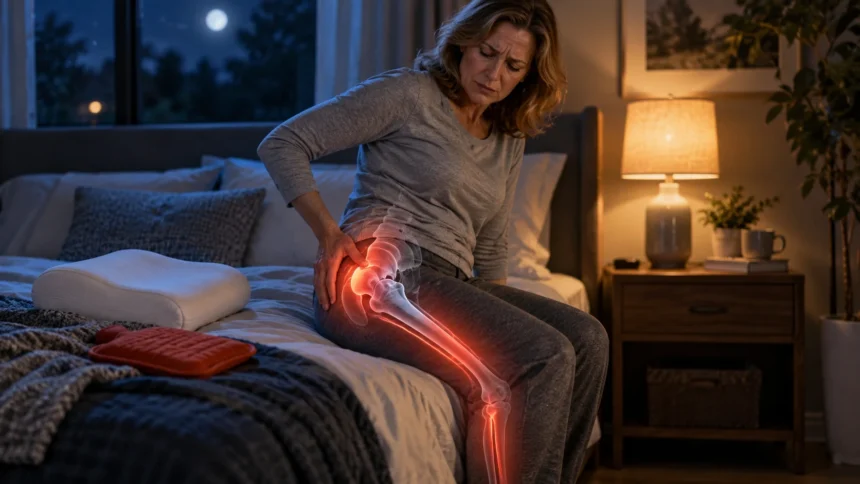
Hip pain that travels down the leg at night can make it difficult to fall asleep, stay comfortable, or find a position that does not aggravate symptoms. Some people feel a dull ache along the outer thigh, while others experience burning, tingling, or sharp pain that extends toward the knee, calf, or foot.
There are several possible causes, including irritated nerves, tendon problems, bursitis, arthritis, muscle tension, or conditions involving the lower back. Nighttime discomfort may become more noticeable because of sleeping position, reduced movement, or pressure placed directly on sensitive tissues while lying down.
Occasional mild discomfort may improve with simple changes, but persistent or worsening pain deserves attention. Understanding where the pain begins, how far it travels, and whether numbness, weakness, swelling, or back pain is present can help determine what may be contributing and when medical evaluation is appropriate.
What Can Hip Pain Down the Leg at Night Mean?
Pain that begins around the hip and travels down the leg does not always come directly from the hip joint. Nerves, tendons, muscles, the lower back, and nearby soft tissues can all create pain that feels as though it starts in the hip. The direction and quality of the discomfort often provide useful clues.
Pain on the outer side of the hip and thigh may be related to gluteal tendons or irritation around the greater trochanter. Burning or electric pain traveling below the knee can suggest nerve involvement. Deep groin pain, stiffness, or reduced hip movement may point more toward the joint itself.
Nighttime symptoms can sometimes feel stronger because you are no longer distracted by daytime activity. Certain sleeping positions can also compress sensitive areas or place the lower back and hip in positions that aggravate symptoms. Persistent night pain should be evaluated rather than assumed to be caused only by sleeping posture.
Sciatica and Nerve-Related Leg Pain
Sciatica describes pain associated with irritation of the sciatic nerve or nerve roots that contribute to it. Symptoms may begin in the lower back or buttock and travel through the thigh toward the calf or foot. Burning, tingling, numbness, or electric-like sensations are more suggestive of nerve involvement than a simple muscle ache.
Certain sleeping positions can make nerve-related symptoms more noticeable. Lying with the lower back twisted, keeping one leg extended awkwardly, or remaining in one position for hours may increase irritation. Some people also notice that symptoms become worse after prolonged sitting during the day and then continue into the night.
Nerve pain should be assessed promptly if it is accompanied by significant weakness, difficulty controlling the leg, or progressive numbness. Sudden loss of bladder or bowel control or numbness around the groin or saddle area requires urgent medical attention because these symptoms can indicate serious nerve compression.
Greater Trochanteric Pain and Gluteal Tendon Problems
Pain on the outside of the hip is often associated with structures around the greater trochanter, the bony area you can feel on the side of your upper thigh. Gluteal tendon irritation and nearby bursal tissues can become sensitive, especially after increased walking, running, stair climbing, or prolonged pressure.
Night pain is common when lying directly on the affected side because body weight compresses sensitive tissues. Some people also feel pain when lying on the opposite side if the upper leg drops inward and places tension through the hip. Discomfort may spread down the outer thigh but often does not extend all the way to the foot.
Treatment usually focuses on reducing aggravating pressure and gradually strengthening the hip muscles. Avoid repeatedly stretching aggressively into painful positions because compression can sometimes worsen lateral hip symptoms. A physical therapist can help determine whether gluteal tendons, bursae, or another structure is responsible for the pain pattern.
Hip Arthritis and Joint-Related Pain
Hip arthritis can cause aching, stiffness, and reduced movement that may become noticeable at night. The discomfort often occurs in the groin or front of the hip, although pain can also spread into the thigh or toward the knee. Some people experience stiffness after sitting or first getting out of bed.
Arthritis-related symptoms may become worse after a very active day or after remaining still for several hours. Turning over in bed can feel uncomfortable because the hip joint moves under load. Limited range of motion, difficulty putting on shoes, or discomfort getting into a car can provide additional clues.
Joint pain should not be diagnosed based on location alone because several conditions can produce similar symptoms. A healthcare professional may examine hip movement, strength, walking patterns, and tenderness before deciding whether imaging is useful. Treatment may include exercise, activity changes, medication, physical therapy, or other options depending on severity.
Muscle, Tendon, and Overuse Causes
Muscles and tendons around the hip can become irritated after unusual activity, repeated exercise, or a sudden increase in training. Running farther than usual, beginning a new workout, climbing many stairs, or returning to exercise after a long break can overload tissues that are not yet adapted.
Pain from overuse may feel more noticeable at night after a physically demanding day. The hip or thigh can feel sore, tight, or tender, particularly when you roll onto the affected side or stretch the area. Symptoms may improve with gentle movement and become worse again after repeated loading.
Periods of illness or reduced activity can also affect strength and exercise tolerance when you return to normal routines. If discomfort developed alongside broader recovery issues, information about lingering symptoms may provide useful general context. However, hip pain should still be assessed based on its own specific pattern and severity.
How Sleeping Position Can Affect Hip and Leg Pain
Sleeping directly on a painful hip can increase pressure on already sensitive tendons, bursae, and joints. Side sleepers may notice symptoms shortly after lying down or wake later because the area becomes increasingly uncomfortable. Repeated compression for several hours can be more irritating than brief pressure during daytime activities.
If you sleep on your side, placing a pillow between your knees may help keep the hips and spine in a more neutral position. Some people find it more comfortable to sleep on the unaffected side with enough support to stop the upper leg from dropping inward. A pillow under the knees can sometimes help when sleeping on your back.
There is no single perfect sleeping position for every cause of hip pain. Experiment with comfortable support rather than forcing yourself into a posture that increases symptoms. If changing position makes little difference and pain regularly wakes you from sleep, professional assessment can help identify whether something beyond simple pressure is involved.
How to Relieve Hip Pain Down the Leg at Night
For mild symptoms without warning signs, start by reducing activities that clearly aggravate the pain. You may need to shorten walks, reduce high-impact exercise, or temporarily avoid movements that repeatedly trigger discomfort. Complete inactivity is rarely necessary, but staying within a tolerable level can help irritated tissues settle.
Heat may help when stiffness or muscle tension is prominent, while a cold pack can feel useful after activity or when the area feels irritated. Always protect your skin and limit exposure to avoid burns or cold injury. Gentle movement before bed may also feel better than going directly from several hours of sitting to lying still.
Over-the-counter pain medicine may be appropriate for some people, but it is not suitable for everyone. Medical conditions, pregnancy, allergies, or other medications can affect what is safe. If you regularly need medication just to sleep because of hip or leg pain, consider arranging an evaluation rather than relying on repeated self-treatment.
When Should You See a Doctor?
Arrange a medical appointment if hip pain repeatedly wakes you at night, continues for more than a couple of weeks, or becomes progressively worse. Pain that interferes with walking, work, exercise, or sleep deserves proper assessment. Persistent symptoms are easier to treat when the underlying cause is identified rather than guessed.
Seek prompt medical care after a significant fall or injury if you cannot bear weight, the hip looks abnormal, or pain is severe. Fever, redness, major swelling, unexplained weight loss, or severe pain that does not change with position can also warrant medical evaluation.
Urgent attention is important for new leg weakness, significant numbness, loss of bladder or bowel control, or numbness around the groin. Sudden leg swelling, especially with chest pain or shortness of breath, also requires emergency assessment because it may indicate a serious circulation problem.
How Hip and Leg Pain May Be Diagnosed
A healthcare professional will usually ask where the pain begins, where it travels, and whether it feels aching, burning, sharp, or numb. They may also ask about lower-back pain, recent injuries, exercise changes, sleep position, and whether symptoms occur during walking, sitting, or climbing stairs.
The physical examination may include testing hip movement, muscle strength, reflexes, sensation, balance, and tenderness. These findings help distinguish between joint problems, tendon irritation, muscular pain, and nerve-related symptoms. Imaging is not always required, especially when the history and examination strongly suggest a common musculoskeletal cause.
X-rays may sometimes help evaluate joint or bone problems, while MRI or other tests may be considered when nerve compression, tendon injury, or another condition is suspected. The appropriate investigation depends on symptoms and examination findings. Treatment should be based on the likely cause rather than on imaging findings alone.
Conclusion
Hip pain down the leg at night can come from several different sources, including irritated nerves, gluteal tendons, bursae, arthritis, or overworked muscles. The location, quality, and direction of pain can provide useful clues, particularly when combined with information about back pain, numbness, weakness, or activity changes.
Simple adjustments such as reducing aggravating activities, changing sleeping position, and using appropriate pillow support may improve mild symptoms. Gentle activity and gradual strengthening can also be helpful depending on the cause. Persistent night pain should not simply be ignored or repeatedly treated without understanding why it keeps returning.
Seek professional evaluation if symptoms continue, worsen, or interfere with normal walking and sleep. Severe pain after injury, neurological changes, fever, major swelling, or circulation-related symptoms require faster attention. Identifying the cause is the most reliable way to choose safe treatment and return to comfortable movement.
FAQs
Why does my hip pain travel down my leg at night?
Pain may travel because irritated nerves, tendons, or other tissues can refer discomfort into the thigh or lower leg. The exact pattern depends on whether the source is the hip, lower back, or surrounding soft tissues.
Is hip pain at night a sign of sciatica?
It can be, especially when pain is burning, electric, or associated with tingling or numbness below the knee. However, several hip conditions can create similar symptoms, so persistent pain should be assessed.
What is the best sleeping position for hip pain?
Many people feel better on their back with support under the knees or on the unaffected side with a pillow between the legs. The best position is whichever reduces pressure and keeps symptoms manageable.
When should I worry about hip pain at night?
Seek medical advice for persistent, worsening, or severe night pain, especially with weakness, numbness, fever, major swelling, or unexplained weight loss. Sudden neurological or circulation-related symptoms require urgent care.
Can hip tendons cause pain down the leg?
Yes. Gluteal tendon problems can cause pain along the outer hip and thigh, sometimes extending toward the knee. Pain that travels farther down the leg with tingling or numbness may suggest nerve involvement.