

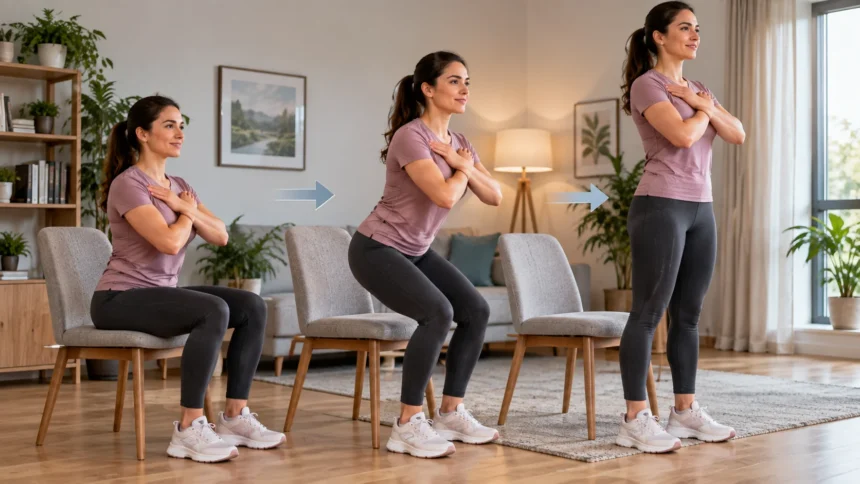
The sit to stand exercise is one of the simplest ways to build practical lower-body strength. It involves rising from a chair to a standing position and then sitting back down with control. Although the movement looks basic, it trains many of the same muscles you use for walking, climbing stairs, getting out of a car, and completing everyday activities.
This exercise is often used in fitness, rehabilitation, mobility training, and programs for older adults because it can be adjusted to different ability levels. You do not need complicated equipment, and a sturdy chair is usually enough to get started. The challenge can also be increased gradually as your strength and confidence improve.
Good technique matters because rushing the movement or relying too heavily on momentum can reduce its benefits. This guide explains how to perform sit to stands correctly, which muscles they work, common mistakes to avoid, useful variations, and when discomfort may mean you should stop and seek professional advice.
What Is the Sit to Stand Exercise?
The sit to stand exercise involves moving from a seated position into standing and then returning to the chair under control. It closely resembles a bodyweight squat, but the chair provides a clear starting and finishing point. This makes the movement easier to understand for beginners who are not yet comfortable with traditional squats.
Because the exercise copies an everyday movement, it is considered highly functional. Getting up from a sofa, toilet, dining chair, or car all requires similar coordination between the hips, knees, ankles, and trunk. Improving this pattern can make routine tasks feel easier and more controlled.
Sit to stands can be performed with or without using the hands for support. Beginners may use armrests when needed, while stronger individuals can cross their arms or hold light resistance. The height of the chair can also be adjusted to make the exercise easier or more challenging.
Benefits of Sit to Stand Exercises
Sit to stands strengthen the muscles used for everyday mobility. The quadriceps, glutes, hamstrings, calves, and core all contribute to rising from a chair. Building strength in these areas can improve your ability to stand, walk, climb stairs, and move between different positions more confidently.
The movement also trains balance and coordination. Your body must shift weight forward before extending the hips and knees to reach standing. Repeating this pattern teaches you to control your center of gravity, which can be particularly valuable for people working on mobility or reducing fear around standing movements.
Another benefit is convenience. You can perform sit to stands almost anywhere with a stable chair and enough space to move safely. This makes the exercise useful for home workouts, rehabilitation programs, office movement breaks, or people who do not have access to gym equipment.
How to Do the Sit to Stand Exercise Correctly
Begin by sitting near the front half of a sturdy chair with your feet approximately hip-width apart. Place your feet flat on the floor and position them slightly behind your knees if comfortable. Keep your chest upright and look forward rather than allowing your head to drop excessively.
Lean your torso slightly forward from the hips and press through your feet. Tighten your abdominal muscles gently, then extend your hips and knees until you are standing tall. Avoid throwing your upper body forward or using sudden momentum to force yourself out of the chair.
To sit back down, push your hips backward and bend your knees slowly. Lower yourself toward the chair until you make controlled contact with the seat instead of dropping onto it. Pause briefly, reset your posture, and repeat the movement using the same controlled technique.
Proper Sit to Stand Form
Good form begins with stable foot placement. Your knees should generally follow the direction of your toes rather than collapsing noticeably inward as you rise. Keeping your feet firmly planted provides a stronger base and makes it easier for the hips and thighs to contribute effectively.
Think about standing by driving the floor away rather than pulling yourself upward with your back. Your hips and knees should straighten together as you reach the top. Once standing, avoid leaning excessively backward or pushing your hips far forward simply to feel as though the repetition is finished.
Control is equally important on the way down. Lowering slowly trains the muscles differently and can make the exercise more effective. If you repeatedly collapse into the chair, reduce the number of repetitions or use a slightly higher seat until you can maintain better control.
Choosing the Right Chair Height
Chair height can significantly change how difficult the sit to stand exercise feels. A higher chair usually requires less hip and knee movement, making it easier for beginners or people with reduced lower-body strength. A lower chair increases the distance you must move and generally requires more strength and mobility.
Choose a chair that allows both feet to remain flat on the floor. Your knees should be comfortably bent, and you should not feel as though you are trapped in an unusually deep position. Avoid unstable chairs, rolling office chairs, or seats that can slide backward while you are standing.
As you become stronger, you can gradually use a slightly lower chair rather than immediately adding heavy resistance. Small changes in height can make the movement noticeably harder. Progress only when you can complete your current version with good control and without increasing pain.
What Muscles Does Sit to Stand Work?
The quadriceps at the front of the thighs play a major role in straightening the knees as you stand. The gluteal muscles also contribute strongly by extending the hips. These muscle groups work together to generate much of the force needed to lift your body from the chair.
The hamstrings and calves provide additional support during the movement. Your core muscles help stabilize the trunk so your upper body remains controlled instead of collapsing forward. Small muscles around the hips and ankles also contribute to balance as your weight shifts from sitting to standing.
Because so many muscle groups work together, sit to stands are more than just a leg exercise. They train coordination between multiple joints and muscle groups during a practical movement pattern. This makes them useful for general strength, mobility, and functional fitness programs.
Common Sit to Stand Mistakes
One common mistake is using excessive momentum. Swinging the arms aggressively or throwing the upper body forward may help you stand, but it reduces the amount of controlled work performed by the legs. If you need momentum to complete every repetition, consider using a higher chair or temporary hand support.
Another mistake is allowing the knees to collapse inward. This can happen when the hips are weak, the stance is poorly positioned, or the movement is too challenging. Slow down, keep your feet stable, and focus on letting your knees track comfortably in the same general direction as your toes.
Dropping quickly into the chair is also common. The lowering phase should remain controlled because it trains strength and balance. If you repeatedly fall into the seat, perform fewer repetitions or make the exercise easier until you can lower yourself without losing control.
Sit to Stand Variations for Beginners
Beginners can use their hands on the armrests or thighs for additional assistance. The goal is not to avoid using the legs completely, but to reduce the amount of force required while learning the movement. Over time, gradually decrease the amount of help provided by the arms.
Using a higher chair is another effective modification. Adding a firm cushion to the seat can reduce the range of motion and make standing easier. As strength improves, you can remove the cushion and return to the original chair height.
You can also practice partial repetitions by standing from a higher surface and sitting back down slowly. This allows you to focus on balance and control without struggling through a deep starting position. Progress should feel challenging but manageable rather than painful or unstable.
How to Make Sit to Stands Harder
Once basic repetitions become easy, try completing the exercise without using your hands. Crossing your arms over your chest increases reliance on the lower-body muscles. Slowing the lowering phase to three or four seconds can also make the exercise more demanding without adding extra weight.
Another progression is adding resistance. Holding a light dumbbell, kettlebell, or other safe weight close to your chest increases the load on the legs and hips. Begin conservatively and maintain the same controlled movement pattern rather than allowing the added weight to pull you forward.
More advanced variations include using a lower chair, adding pauses, or performing carefully selected single-leg progressions. These versions require considerably more strength and balance. They are not necessary for everyone, and beginners should master standard sit to stands before attempting more difficult options.
How Many Sit to Stands Should You Do?
The right number of repetitions depends on your fitness level, goals, and current ability. Beginners may start with one or two sets of five to ten controlled repetitions. The movement should feel challenging enough to require effort without causing major technique breakdown or excessive fatigue.
For general strength, you can gradually increase the number of repetitions or sets as the movement becomes easier. Another option is to keep repetitions moderate and increase difficulty by lowering the chair or adding resistance. Progressing one variable at a time makes it easier to see how your body responds.
Quality is more important than chasing a high repetition count. Ten controlled repetitions are usually more useful than twenty rushed ones performed with poor balance. Stop the set when you can no longer rise or lower yourself with the same level of control.
When Should You Stop the Exercise?
Mild muscle effort in the thighs and hips is expected, but sharp or sudden pain is not. Stop the exercise if you experience significant pain in the knees, hips, back, or ankles. Dizziness, chest pain, severe shortness of breath, or a feeling that you may fall also require immediate attention.
Pain around the pelvis or urinary symptoms should not automatically be assumed to come from sit to stand exercises. If you experience burning or discomfort when urinating, this guide on painful urination explains several possible causes that may need separate medical evaluation.
Persistent joint pain, swelling, new weakness, or worsening symptoms after exercise are also reasons to seek professional advice. A physical therapist or healthcare professional can determine whether your technique needs modification or whether another condition may be affecting your ability to perform the movement safely.
Who Can Benefit From Sit to Stand Training?
Older adults often use sit to stands because the exercise directly supports everyday independence. Being able to rise from a chair comfortably is important for moving around the home and participating in daily activities. Practicing the movement can strengthen the muscles involved while also improving confidence.
The exercise can also benefit beginners who are building strength before progressing to traditional squats. Because the chair provides a clear depth target, it can make bodyweight training feel less intimidating. People returning to exercise after a period of inactivity may also find the movement practical.
Sit to stands are frequently included in rehabilitation programs, but individual needs vary. Someone recovering from surgery, injury, or a significant medical condition should follow professional guidance before beginning. The exercise is simple, but the appropriate height, repetitions, and level of assistance should match the person’s current ability.
Conclusion
The sit to stand exercise is a simple but effective way to strengthen the legs, hips, and core while practicing an important everyday movement. Proper technique involves stable foot placement, a controlled forward weight shift, strong hip and knee extension, and a slow return to the chair.
Beginners can make the exercise easier by using a higher seat or temporary hand support. As strength improves, you can progress by removing assistance, slowing the movement, lowering the chair, or adding resistance. Gradual progression helps maintain good technique while continuing to challenge the muscles.
Stop if the movement causes sharp pain, dizziness, or significant instability, and seek guidance when symptoms persist. When performed correctly and matched to your ability level, sit to stands can be a practical addition to strength, mobility, rehabilitation, and healthy aging programs.
FAQs
What is the sit to stand exercise good for?
Sit to stands strengthen the thighs, glutes, and core while improving balance and functional mobility. They can make everyday tasks such as getting out of a chair or climbing stairs easier.
How many sit to stands should a beginner do?
A beginner can start with around five to ten controlled repetitions for one or two sets. Increase gradually only when the movement feels comfortable and your technique remains consistent.
Should I use my hands during sit to stands?
Using your hands is fine when you need assistance. As your strength improves, gradually reduce hand support so your legs perform more of the work.
Can sit to stands help strengthen the knees?
Yes. The exercise strengthens muscles that support the knees, particularly the quadriceps and glutes. However, significant knee pain should be assessed before continuing or increasing the exercise.
Are sit to stands safe for older adults?
They can be very useful for older adults when performed with an appropriate chair height and level of support. People with balance problems, recent injuries, or medical concerns may need professional guidance.