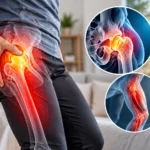


An MPFL tear can cause sudden knee pain, swelling, instability, and a feeling that the kneecap may shift out of place. The medial patellofemoral ligament, or MPFL, is an important structure that helps keep the kneecap centered as the knee bends and straightens. Injuries often occur when the kneecap moves forcefully toward the outside of the knee.
Some MPFL injuries happen during sports, falls, or sudden twisting movements, while others occur after a kneecap dislocation. The severity can range from mild stretching to a partial or complete tear. Understanding how the injury occurs can help you recognize symptoms and choose appropriate next steps for recovery.
Treatment depends on the extent of the injury, whether the kneecap remains stable, and whether dislocations continue to happen. Many people improve with activity modification, rehabilitation, and gradual strengthening, while recurrent instability may require specialist evaluation. This guide explains common causes, symptoms, diagnosis, relief tips, exercises, and when to seek medical care.
What Is an MPFL Tear?
The medial patellofemoral ligament is a band of connective tissue located on the inner side of the knee. It connects the kneecap, or patella, to the inner portion of the thigh bone and helps prevent the kneecap from sliding too far outward. This ligament is particularly important during the early part of knee bending.
An MPFL tear happens when the ligament is overstretched or damaged, commonly during a lateral patellar dislocation. When the kneecap moves suddenly toward the outside of the knee, the MPFL can be placed under significant tension. The injury may involve small fiber damage, a partial tear, or complete disruption of the ligament.
The injury does not always occur alone. Cartilage, bone, and other supporting structures around the knee may also be affected during a dislocation. For this reason, significant swelling, severe pain, or repeated kneecap instability deserves professional assessment rather than being treated as a simple muscle strain.
What Causes an MPFL Tear?
A kneecap dislocation is one of the most common causes of MPFL injury. This may happen when the knee twists while the foot remains planted, particularly during sports that involve cutting, pivoting, or sudden changes in direction. The kneecap can shift laterally and stretch or tear the ligament on the inner side.
Direct impact may also cause the kneecap to move out of its normal position. Contact sports, falls, or a force applied to the inside of the knee can push the patella outward. The amount of ligament damage depends on the direction, speed, and force of the injury as well as individual knee anatomy.
Some people have structural factors that make patellar instability more likely. A shallow groove for the kneecap, differences in leg alignment, ligament laxity, or certain anatomical variations can increase the risk of recurrent dislocation. These factors do not guarantee an MPFL tear, but they may make instability more likely.
Common Symptoms of an MPFL Tear
Pain along the inner side of the kneecap is a common symptom after an MPFL injury. Swelling may develop quickly, particularly when the injury follows a full patellar dislocation. Some people also notice tenderness when pressing the area between the inner kneecap and the nearby thigh bone.
A feeling of instability is another important symptom. The kneecap may feel as if it wants to slide outward when walking, bending the knee, or changing direction. Some people become hesitant to fully bend or straighten the leg because they are worried the kneecap might move again.
Bruising, stiffness, reduced range of motion, and difficulty bearing weight can also occur. Symptoms vary depending on the severity of the injury and whether other knee structures were damaged. Repeated episodes of giving way or dislocation suggest that the knee may need more detailed assessment.
MPFL Tear vs Patellar Dislocation
A patellar dislocation and an MPFL tear are closely related but are not exactly the same thing. A dislocation describes the kneecap moving out of its normal position, usually toward the outside of the knee. An MPFL tear refers specifically to injury of the ligament that normally helps resist that outward movement.
Because the MPFL is one of the main restraints against lateral patellar movement, it is commonly injured when the kneecap dislocates. However, the exact location and degree of damage can vary. Some people experience one traumatic dislocation and recover well, while others develop repeated instability over time.
Recognizing the difference matters because treatment should address both the ligament injury and the overall stability of the kneecap. Simply reducing pain does not always restore confidence or movement control. Rehabilitation often includes strengthening and stability work designed to improve how the entire knee and leg function together.
How Is an MPFL Tear Diagnosed?
Diagnosis usually begins with a discussion about how the injury occurred and what symptoms developed afterward. A healthcare professional may ask whether the kneecap visibly moved out of place, whether it was reduced, and whether similar episodes happened previously. The location of pain, swelling, and instability also provides useful clues.
Physical examination may include checking knee range of motion, tenderness, swelling, and kneecap stability. The clinician may gently assess how the patella moves and whether certain positions create apprehension. Strength and alignment of the hip, thigh, knee, and lower leg may also be evaluated.
Imaging may be recommended when the injury is significant or when associated damage is suspected. X-rays can help identify fractures or alignment concerns, while MRI may provide more detailed information about the MPFL and surrounding soft tissues. Imaging decisions depend on the examination, symptoms, and injury history.
Can an MPFL Tear Heal Without Surgery?
Many first-time MPFL injuries can be treated without surgery, particularly when the kneecap remains reasonably stable afterward. Conservative treatment may include temporary activity modification, bracing in some cases, swelling control, and progressive rehabilitation. The goal is to restore comfortable movement, strength, and confidence without repeatedly provoking instability.
Physical therapy often focuses on strengthening the quadriceps, hips, and other muscles that influence knee control. Balance and movement training may also help the leg respond more effectively during walking, stairs, and sport. Recovery usually progresses gradually rather than relying on complete rest until all symptoms disappear.
Surgery may be considered when dislocations keep happening, instability remains significant, or structural problems increase the risk of recurrence. The decision depends on age, activity level, anatomy, injury severity, and previous treatment. A knee specialist can help determine whether conservative care remains appropriate or whether surgical stabilization should be discussed.
How to Reduce Pain and Swelling After an MPFL Tear
Early relief often begins with reducing activities that clearly aggravate the injured knee. Avoid repeated twisting, deep bending, running, or jumping during the painful stage. Gentle movement may still be appropriate, but the knee should not be repeatedly pushed into positions that create sharp pain or a sense of instability.
Cold packs may help reduce discomfort and temporary swelling. Wrap ice or a cold pack in a cloth and apply it for a short, comfortable period rather than directly against the skin. Elevating the leg after activity may also help when swelling is noticeable, particularly during the early recovery period.
Compression or a supportive knee brace may be recommended in some situations, especially after patellar dislocation. However, brace type and duration should match the injury rather than being chosen randomly. Too much restriction for too long can contribute to stiffness and muscle weakness, so professional guidance can be useful.
Gentle Exercises for an MPFL Tear
Quadriceps contractions can help maintain thigh muscle activity while the knee is still sensitive. Sit or lie with the leg supported, tighten the muscles at the front of the thigh, and gently press the knee toward the surface. Hold briefly before relaxing and avoid forcing the exercise if it increases kneecap pain.
Straight-leg raises may be added when they can be performed without the knee bending unexpectedly. Tighten the thigh first, lift the leg a short distance, and lower it slowly. Good control matters more than lifting high or completing many repetitions, particularly during the early stages of rehabilitation.
As symptoms improve, exercises such as bridges, controlled sit-to-stands, and supported mini-squats may be introduced. Progress should depend on stability, swelling, and movement quality. If the kneecap feels as though it is shifting or the knee repeatedly gives way, exercise intensity should be reduced and reassessed.
Why Quadriceps Strength Matters
The quadriceps muscles help straighten the knee and contribute to control of the kneecap during movement. After an MPFL injury, swelling and pain can reduce quadriceps activation surprisingly quickly. This weakness may make the knee feel less stable even after the most intense pain has improved.
Rebuilding quadriceps strength is therefore a common part of rehabilitation. Early exercises may be simple and low-load, while later stages can include squats, step-ups, and controlled resistance work. Exercise progression should focus on smooth knee tracking and good control rather than adding weight as quickly as possible.
The quadriceps are only one part of the rehabilitation process. Hip muscles, calf strength, balance, and coordination also affect how the leg moves. A complete program usually addresses the entire lower limb so the knee is not expected to manage all movement demands by itself.
How Hip Strength Supports Knee Stability
Hip muscles help control the position of the thigh during walking, running, jumping, and changing direction. Weak or poorly coordinated hip muscles can make it harder to maintain consistent lower-limb alignment. Strengthening the glutes and surrounding hip muscles may therefore complement knee-specific rehabilitation after an MPFL injury.
Bridges, side-lying leg raises, and controlled lateral movements are common options. These exercises can often be modified easily based on pain and ability. As recovery advances, single-leg tasks may be used to challenge balance and coordination in ways that more closely resemble everyday activities or sport.
Pain can sometimes be felt across several connected areas of the lower body rather than remaining isolated to one joint. If discomfort extends beyond the knee, understanding patterns of hip and leg pain can help provide broader context. Persistent spreading pain or nerve-like symptoms should still be assessed appropriately.
Exercises and Movements to Avoid Early On
Deep squats, twisting movements, sudden direction changes, and high-impact jumping may place excessive demand on an unstable knee during early recovery. Returning to these activities too quickly can increase pain or create another episode of patellar instability. Rehabilitation should first rebuild basic strength and controlled movement.
Running should also be delayed until walking, stairs, and lower-level strengthening can be performed comfortably. A knee that still swells significantly or feels unstable during ordinary movement is usually not ready for high-impact activity. Progressing too quickly can create setbacks and reduce confidence.
Avoid repeatedly testing whether the kneecap will move out of place. Pushing the patella aggressively or forcing the knee into uncomfortable positions does not provide useful training. Stability improves through progressive strengthening, coordination, and controlled exposure to activity rather than repeated self-testing.
How Long Does an MPFL Tear Take to Heal?
Recovery time depends on how severe the tear is and whether the injury occurred with a dislocation or other knee damage. Mild injuries may improve substantially within several weeks, while more significant tears can take several months. Rehabilitation progress is often more useful than following a fixed calendar.
Swelling, strength, knee motion, and confidence should gradually improve over time. A person who can walk comfortably but still lacks strength or control may not yet be ready for sport. Returning to activity is usually based on function rather than simply waiting for a certain number of weeks.
Surgical reconstruction usually involves a longer structured rehabilitation process. Recovery includes restoring range of motion, strength, balance, and sport-specific control in stages. The surgeon and rehabilitation team typically guide progression based on healing, symptoms, and functional testing.
Can an MPFL Tear Cause Long-Term Problems?
Some people recover after a single injury without major ongoing problems. Others develop recurrent patellar instability, especially when anatomical factors make the kneecap more likely to move outward. Repeated dislocations can interfere with confidence, activity, and overall knee function.
Cartilage may also be damaged during repeated patellar dislocations. This can contribute to persistent pain or joint irritation over time. For this reason, recurring instability should not be ignored simply because the kneecap goes back into place on its own.
Early rehabilitation and appropriate follow-up can help reduce unnecessary weakness and movement avoidance. People with repeated dislocations may need a more detailed evaluation to identify contributing structural factors. Treatment decisions should consider long-term stability as well as short-term pain relief.
When Can You Return to Sports After an MPFL Tear?
Return to sports should happen gradually and only after basic function has recovered. You should generally be able to walk, climb stairs, and perform controlled strength exercises without major pain or instability. Knee swelling should also be minimal and predictable rather than repeatedly increasing after activity.
Later stages may include jogging, lateral movements, jumping, and cutting drills. These tasks place greater demand on the kneecap and supporting muscles, so they should be introduced step by step. Good control during simple movements should come before high-speed or unpredictable sports activity.
A physical therapist or sports medicine professional can use strength and functional testing to guide return-to-play decisions. Feeling better does not always mean the knee has regained full capacity. Returning too early may increase the risk of another dislocation and another injury to the MPFL.
When Should You See a Doctor for an MPFL Tear?
Seek medical assessment if your kneecap dislocated, even if it returned to position afterward. A clinician can check for ligament damage, fractures, cartilage injury, and ongoing instability. Significant swelling, bruising, or inability to bend the knee normally should also be evaluated.
Urgent assessment is appropriate when the kneecap remains visibly out of position, the knee appears deformed, or you cannot bear weight after a major injury. Severe pain, numbness, or loss of circulation to the lower leg also requires immediate attention. Do not attempt forceful manipulation when a serious injury is suspected.
Recurrent episodes of the kneecap slipping or giving way should also be discussed with a specialist. Ongoing instability can affect confidence and may increase the risk of further joint damage. Early evaluation makes it easier to determine whether rehabilitation, bracing, or surgical stabilization is most appropriate.
Conclusion
An MPFL tear commonly occurs when the kneecap dislocates or shifts forcefully toward the outside of the knee. Symptoms may include inner knee pain, swelling, tenderness, stiffness, and a feeling that the patella is unstable. The severity of the injury can range from mild ligament damage to a complete tear.
Many first-time injuries can improve with conservative treatment, including activity modification, swelling management, and progressive rehabilitation. Strengthening the quadriceps, hips, and lower leg can help restore movement control and confidence. Recovery should progress gradually, especially before returning to running, jumping, or cutting sports.
Persistent instability, repeated dislocations, severe swelling, or difficulty bearing weight should be assessed by a healthcare professional. Some people may need imaging or surgical evaluation when instability continues. Identifying the severity of the injury and rebuilding strength properly can support safer long-term knee function.
FAQs
Can an MPFL tear heal on its own?
Some first-time or partial MPFL injuries can improve with conservative care and rehabilitation. Recovery depends on injury severity, kneecap stability, anatomy, and whether repeated dislocations continue to occur.
What does an MPFL tear feel like?
An MPFL tear may cause pain along the inner kneecap, swelling, tenderness, stiffness, and instability. Some people also feel as though the kneecap may shift outward or give way.
Is walking okay with an MPFL tear?
Gentle walking may be possible when pain and stability allow. If walking causes significant limping, swelling, or a feeling that the kneecap is slipping, reduce activity and seek professional assessment.
How long does an MPFL tear take to recover?
Recovery may take several weeks to several months depending on injury severity and treatment. Surgical cases generally require a longer rehabilitation period with progressive strengthening and functional training.
Does every MPFL tear need surgery?
No. Many first-time MPFL injuries are treated without surgery. Surgery may be considered for repeated patellar dislocations, persistent instability, or structural factors that make recurrence more likely.