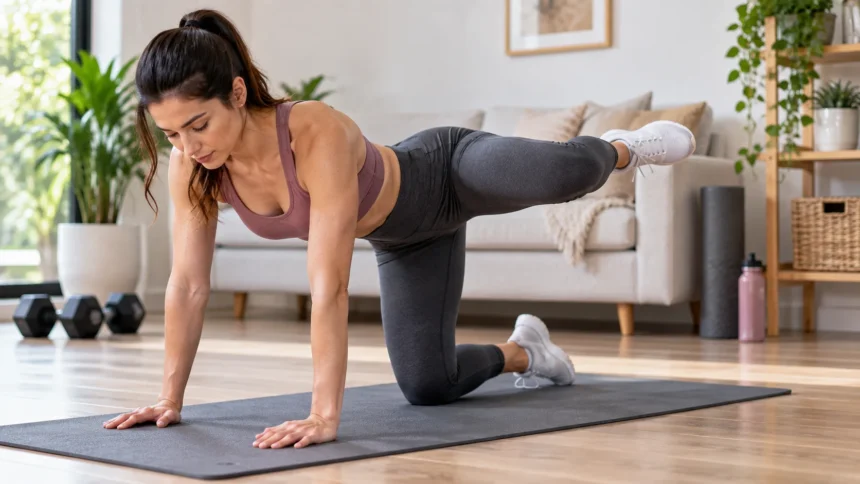
The fire hydrant workout is a simple bodyweight exercise that targets the hips and glutes while challenging core stability. It is commonly used in lower-body workouts, warm-ups, and mobility routines because it requires no equipment and can be adapted for different fitness levels. Despite its unusual name, the movement can be highly effective when performed with controlled form.
Fire hydrants are especially useful for strengthening the muscles that move the leg outward and stabilize the pelvis. However, swinging the leg too high or rotating the torso can reduce the quality of the exercise. Learning the correct setup, range of motion, and progression can help you get more benefit while avoiding unnecessary strain.
What Is a Fire Hydrant Exercise?
A fire hydrant is a quadruped exercise performed on your hands and knees. From this position, you lift one bent leg out to the side while keeping your pelvis relatively level. The movement resembles the position a dog might take next to a fire hydrant, which is where the exercise gets its name.
The primary movement is hip abduction, meaning the thigh moves away from the center of the body. Your hip muscles create this motion while the core and supporting leg help keep the rest of your body stable. Because the exercise is performed without standing, it allows you to focus closely on hip movement and control.
Fire hydrants can be performed with only body weight or made harder using resistance bands or ankle weights. Beginners can use a smaller range and slower repetitions, while more experienced exercisers can add resistance or combine the exercise with other glute movements. The goal should always remain controlled hip motion rather than simply lifting the knee as high as possible.
What Muscles Do Fire Hydrants Work?
Fire hydrants mainly target the gluteus medius and gluteus minimus, which are located along the outer portion of the hip. These muscles help move the leg sideways and stabilize the pelvis during activities such as walking, running, and standing on one leg. Strengthening them can support better lower-body control.
The gluteus maximus may also contribute, depending on how the exercise is performed. Although it is best known for hip extension, parts of the muscle can assist with hip abduction and stabilization. This is why fire hydrants often create a noticeable burning sensation around the side and back of the hip.
Your abdominal and back muscles also work isometrically to keep your torso from rotating. The supporting shoulder, arm, and opposite hip contribute to stability as well. This makes the fire hydrant more than a simple glute exercise because several muscle groups must coordinate to keep the movement smooth and controlled.
Benefits of the Fire Hydrant Workout
One of the main benefits of fire hydrants is improved hip stability. The gluteus medius helps keep the pelvis level when you walk, climb stairs, or balance on one leg. Training this muscle can improve control during many everyday movements and lower-body exercises.
Fire hydrants can also help strengthen the muscles responsible for moving the leg outward. This may complement exercises such as squats, lunges, step-ups, and running, which require the hips to stay stable under load. Stronger lateral hip muscles may make it easier to maintain alignment during more complex movements.
Another advantage is convenience. Fire hydrants can be performed almost anywhere without equipment, making them useful for home workouts and short mobility sessions. They can also be adapted easily, allowing beginners and experienced exercisers to adjust the exercise according to their current strength and movement control.
How to Do Fire Hydrants With Proper Form
Start on your hands and knees with your hands under your shoulders and your knees under your hips. Keep your spine in a comfortable neutral position and gently brace your abdominal muscles. Your head should stay aligned with your spine rather than dropping toward the floor or lifting excessively.
Keeping your knee bent at roughly 90 degrees, slowly lift one leg out to the side. Stop before your pelvis begins rotating or your lower back starts twisting to create extra range. Pause briefly at the top, then lower the knee back toward the starting position with the same level of control.
Repeat the movement for the desired number of repetitions before switching sides. Breathe normally and avoid holding your breath as you concentrate on balance. The movement should come primarily from the hip, so a smaller range with stable form is more useful than lifting the knee very high by rotating your entire body.
Common Fire Hydrant Mistakes
One common mistake is allowing the torso to rotate as the leg lifts. When this happens, part of the movement comes from the spine and pelvis instead of the hip. Keep your chest facing the floor and imagine balancing an object across your lower back to encourage more stable positioning.
Another mistake is arching the lower back excessively. This often happens when people try to lift their leg higher than their hip mobility allows. Gently engaging the core and using a smaller range can help keep the movement focused on the glutes rather than creating unnecessary extension through the lumbar spine.
Moving too quickly can also reduce the effectiveness of the exercise. Swinging the leg uses momentum and makes it harder to maintain pelvic control. Slow repetitions allow you to feel the hip muscles working and make it easier to notice when your form begins to change because of fatigue.
Fire Hydrant Variations for Beginners and Advanced Levels
Beginners can start with a smaller range of motion and focus on maintaining a stable torso. You do not need to lift the knee to hip height for the exercise to be useful. Even a modest outward movement can challenge the glute muscles when performed slowly and with good alignment.
Once the basic version feels comfortable, you can add a pause at the top of each repetition. Holding the lifted position for two or three seconds increases the time the muscles remain under tension. This progression can make the exercise harder without requiring additional equipment.
More advanced variations include straightening the leg after lifting it or combining the movement with a hip extension. These changes increase coordination demands and may challenge the glutes differently. Add only one progression at a time so you can maintain control instead of turning the exercise into a fast, uncontrolled leg swing.
Fire Hydrants With a Resistance Band
A resistance band placed around the thighs can make fire hydrants considerably more challenging. Position the band above the knees and begin in the same hands-and-knees position. As you lift one leg outward, the band creates extra resistance that the hip muscles must overcome.
Choose a resistance level that allows you to maintain the same controlled technique used during the bodyweight version. If the band causes you to twist your pelvis or shorten the movement dramatically, it may be too strong. Progressing gradually helps keep the exercise focused on the intended muscles rather than compensatory movement.
Resistance bands are especially useful when the bodyweight version no longer feels challenging. They can increase muscular effort without requiring heavy gym equipment. However, more resistance is only beneficial when you can continue moving smoothly, keeping your core engaged and your hips relatively level throughout each repetition.
How Many Fire Hydrants Should You Do?
Beginners can start with 8 to 12 repetitions per side for one or two sets. This amount is usually enough to practice the movement and create muscular effort without excessive fatigue. Rest briefly between sets if your hip muscles or supporting arms begin to tire.
As your strength improves, you can gradually increase to 12 to 20 repetitions or add another set. You can also progress by slowing the lowering phase, adding a pause, or using a resistance band. Increasing difficulty in small steps is generally more effective than performing very high repetition counts with poor form.
Fire hydrants can be performed two or three times per week within many strength or mobility programs. They may also be used more frequently as a light activation exercise if they remain comfortable. The best frequency depends on your total training load and how your hips respond to other lower-body exercises.
How to Add Fire Hydrants to Your Workout
Fire hydrants work well near the beginning of a lower-body workout as part of a glute activation sequence. They can be paired with bridges, bodyweight squats, lateral band walks, or hip mobility exercises. Performing them before heavier movements can help you practice hip control without creating excessive fatigue.
You can also use fire hydrants as an accessory exercise after your main strength movements. For example, complete squats, deadlifts, or lunges first, then use fire hydrants to target the outer glute muscles more directly. This approach works well when your main goal is building hip strength and muscular endurance.
If you experience persistent pelvic discomfort or unusual tension during lower-body exercise, it may be worth learning about pelvic floor tension as one possible factor among many. Fire hydrants should feel like muscular work around the hips, not sharp pelvic pain, pressure, or worsening discomfort.
Best Practices for Better Results
Focus on controlled movement rather than trying to complete repetitions quickly. A steady lifting phase, brief pause, and slow return can increase muscular engagement while making it easier to maintain good technique. This approach also reduces the temptation to use momentum when your glutes begin to fatigue.
Train both sides evenly unless a healthcare professional has recommended otherwise. One hip may initially feel stronger or easier to control, which is common. Starting with the weaker side and matching the same number of repetitions on the stronger side can help keep your workout balanced.
Combine fire hydrants with other movement patterns instead of relying on them as your only glute exercise. Squats, bridges, hip hinges, step-ups, and lateral movements train the lower body in different ways. A varied program generally provides a more complete strength stimulus than repeating one isolation exercise every session.
When to Modify or Avoid Fire Hydrants
Fire hydrants may need modification if you experience wrist, shoulder, knee, or hip discomfort while performing the exercise. Padding under the knees can make the starting position more comfortable, and placing the forearms on a raised surface may reduce pressure on the wrists. Adjust the setup rather than forcing yourself through an uncomfortable position.
People recovering from hip surgery, pelvic injury, or a significant lower-back problem should follow professional guidance before adding the exercise. The hip abduction movement may not be appropriate during every stage of rehabilitation. A physiotherapist can determine whether a modified range or different exercise is safer for your current condition.
Stop if the exercise causes sharp pain, numbness, significant clicking with discomfort, or symptoms that spread into the leg. Normal muscular fatigue around the glutes is expected, but pain is not something to push through. Persistent symptoms deserve assessment rather than simply increasing stretching or continuing the movement repeatedly.
Conclusion
The fire hydrant workout is a simple but effective way to strengthen the outer glutes and improve hip stability. It requires minimal space and no equipment, making it easy to add to home or gym routines. The exercise can also be progressed gradually using pauses, resistance bands, or more advanced variations.
Proper form matters more than how high you can lift your knee. Keep your torso stable, avoid twisting the pelvis, and move slowly through a comfortable range. Controlled repetitions help place more emphasis on the glute muscles while reducing unnecessary compensation through the lower back.
For the best results, combine fire hydrants with other lower-body strength and mobility exercises. Use a progression that matches your current ability and allow enough recovery between challenging sessions. If the movement causes persistent hip, pelvic, or back pain, stop and seek appropriate guidance before continuing.
FAQs
Are fire hydrants good for your glutes?
Yes. Fire hydrants mainly target the gluteus medius and other hip stabilizers. They can help strengthen the outer glutes and improve pelvic control when performed slowly with proper technique.
How many fire hydrants should beginners do?
Beginners can start with 8 to 12 repetitions per side for one or two sets. Use a controlled range and increase repetitions only when you can maintain stable hips and good form.
Should I use a resistance band for fire hydrants?
A resistance band can make the exercise harder once the bodyweight version feels easy. Choose light resistance first and avoid using a band that causes your pelvis to rotate or your form to break down.
Why do I feel fire hydrants in my lower back?
You may be lifting the leg too high or allowing the pelvis to rotate. Reduce the range, engage your core, and keep the movement focused on the hip rather than arching your lower back.
Can I do fire hydrants every day?
Light fire hydrants may be performed frequently if they remain comfortable, but daily training is not necessary for most people. Two or three focused sessions per week can fit well into a balanced program.