Hip internal rotation is the movement that turns the thigh inward toward the center of the body. It happens during everyday actions such as walking, running, changing direction, sitting, and certain sports movements. Although it receives less attention than hip flexion or extension, internal rotation plays an important role in smooth movement and lower-body coordination.
Limited or uncomfortable hip internal rotation can sometimes affect how the pelvis, knees, and lower back move. However, everyone has a different natural range based on anatomy, mobility, activity level, and previous injuries. Understanding what hip internal rotation is, which muscles are involved, and how to train it safely can help you make better decisions about mobility and exercise.
What Is Hip Internal Rotation?
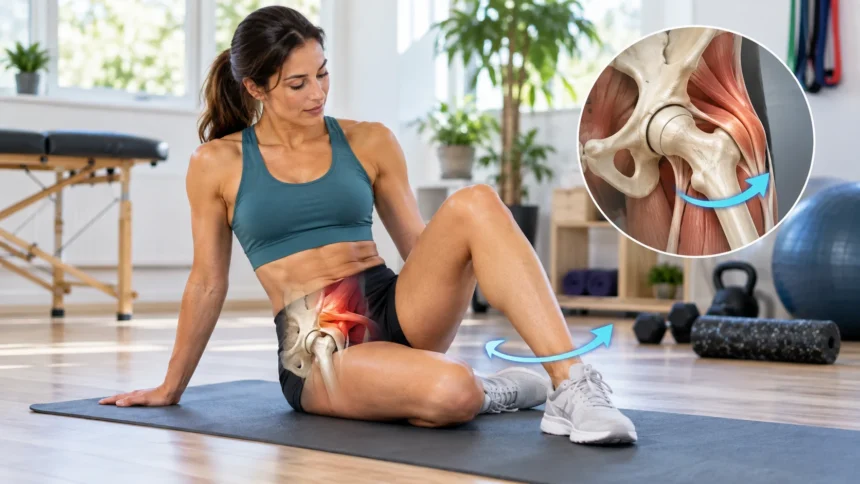
Hip internal rotation occurs when the thigh bone turns inward within the hip joint. If you sit with your knees bent and move your foot outward while keeping your thigh relatively still, your hip is rotating internally. The movement may look small, but it contributes to many larger actions involving the lower body.
The hip joint is a ball-and-socket joint formed by the head of the femur and the pelvis. This structure allows movement in several directions, including flexion, extension, abduction, adduction, and rotation. Internal rotation is therefore one component of normal hip mobility rather than an isolated movement used only during exercise.
The amount of rotation available varies between individuals. Bone structure, joint shape, muscle tension, and movement habits can all influence the range. A person with less internal rotation is not automatically injured, especially when they can walk, exercise, and perform daily activities without discomfort or major compensation.
Why Hip Internal Rotation Matters
Hip internal rotation contributes to normal walking mechanics by allowing the pelvis and thigh to move efficiently with each step. As the body shifts over the supporting leg, a small amount of rotation occurs naturally at the hip. This helps distribute movement across the lower body rather than forcing every adjustment to occur at the knee or lower back.
The movement is also important during running, squatting, cutting, and changing direction. Athletes often need controlled rotation when transferring force through the hips and legs. Good mobility alone is not enough, because the surrounding muscles also need enough strength and coordination to control the available range.
Internal rotation can also influence exercises such as lunges, squats, and single-leg movements. When the hip cannot move comfortably, the body may adapt by rotating through the pelvis, foot, or knee. These adaptations are not always harmful, but repeated discomfort or major movement limitations may be worth assessing more closely.
What Muscles Control Hip Internal Rotation?
Several muscles contribute to hip internal rotation depending on the position of the hip. Parts of the gluteus medius and gluteus minimus can help rotate the thigh inward, particularly when the hip is flexed. The tensor fasciae latae also contributes to internal rotation and helps stabilize the pelvis during standing and walking.
Certain adductor muscles may assist as well, especially when the hip is positioned in flexion. Muscle function can change depending on joint angle, which is why one muscle should not be viewed as the only internal rotator. Hip movement is usually produced through coordination between several muscles rather than one structure working alone.
The deep muscles around the hip also help maintain joint stability as rotation occurs. Strong muscles are important, but excessive tension or poor coordination can sometimes limit movement. This is why mobility exercises often work best when combined with strengthening rather than relying only on prolonged stretching.
What Is a Normal Hip Internal Rotation Range?
There is no single perfect amount of hip internal rotation that every person needs. Range of motion can differ because of age, anatomy, training background, and the position used during measurement. One hip may also naturally have slightly more rotation than the other without causing symptoms.
Clinicians often assess hip rotation with the hip bent or while a person lies in a specific position. Measurements can provide useful information, but the number should be interpreted alongside pain, strength, movement quality, and daily function. A smaller measurement alone does not necessarily mean something is wrong.
Functional movement is often more important than achieving a specific flexibility target. If your hip rotates comfortably enough for your activities and you have no pain, aggressively trying to gain extra range may be unnecessary. Concerns become more relevant when limited rotation is painful, noticeably worsening, or affecting walking and exercise.
What Causes Limited Hip Internal Rotation?
Muscle stiffness can contribute to a feeling of limited rotation, particularly after long periods of sitting or reduced activity. The tissues around the hips may feel less comfortable moving through larger ranges when they have remained in similar positions for many hours. Gentle movement often helps temporary stiffness improve.
Joint anatomy can also influence available rotation. The shape and orientation of the femur and hip socket differ naturally between people, meaning some individuals simply have more internal or external rotation than others. Stretching cannot completely change these structural differences, which is why mobility goals should remain realistic.
Previous injury, arthritis, joint irritation, or certain hip conditions may reduce movement as well. Pain can cause the body to guard the area and avoid specific ranges. Persistent loss of movement, especially when accompanied by groin pain, catching, or difficulty walking, is a good reason to seek professional assessment.
Signs Your Hip Internal Rotation May Be Limited
You may notice difficulty turning the thigh inward while sitting or performing certain mobility drills. One side may feel noticeably stiffer than the other, or you may feel a firm restriction before reaching the same range. Some people also notice discomfort in the groin, outer hip, or buttock when rotating inward.
Limited rotation can sometimes become noticeable during squats, lunges, running, or sports that involve direction changes. The knee or foot may move differently as the body searches for another way to complete the motion. These patterns do not automatically mean internal rotation is the problem, but they can provide useful information.
Pain in several joints can sometimes indicate that more than one area needs attention. If you are also dealing with symptoms elsewhere, such as finger joint pain, consider whether the issues are separate or part of a broader pattern. Persistent multi-joint symptoms are worth discussing with a healthcare professional.
Hip Internal Rotation Exercises
A seated internal rotation drill is one of the simplest ways to practice the movement. Sit upright with both knees bent and your feet flat on the floor, then gently move one foot outward while keeping the knee relatively still. Stop when you feel mild tension or reach your comfortable end range.
Another option is a controlled 90/90 hip rotation exercise. Sit with both knees bent and allow the legs to rotate from one side toward the other without forcing the movement. Keep your torso upright as much as possible and use your hands for support if you need help maintaining balance.
You can also practice internal rotation while lying on your back with your knees bent. Allow one thigh to rotate inward slowly while keeping the movement comfortable and controlled. These drills should feel like mobility practice rather than aggressive stretching, so avoid pushing into sharp or pinching pain.
Strengthening Hip Internal Rotation
Strengthening can help you control the range of motion you already have. One simple exercise involves sitting with your knees bent and using a light resistance band attached around the ankle. Move the foot outward slowly, which creates internal rotation at the hip, then return with control.
Start with light resistance because the muscles involved in rotation may fatigue quickly. Perform a small number of controlled repetitions rather than forcing the movement through a large range. The goal is to improve muscular control around the joint, not to create the strongest possible contraction immediately.
Hip strength should also include other movement patterns such as extension, abduction, and flexion. Bridges, step-ups, lateral band walks, and controlled squats can complement rotation work. A balanced program generally supports hip function more effectively than focusing on one movement direction in isolation.
Common Hip Internal Rotation Mistakes
One common mistake is forcing the hip into a deeper range because the other side appears more flexible. Natural asymmetry is common, and the stiffer side may not need to match the opposite hip exactly. Pushing aggressively can irritate the joint, particularly when the restriction feels hard or produces pinching discomfort.
Another mistake is allowing the pelvis to move excessively during mobility drills. If your entire pelvis rotates, it can appear that the hip has gained more range even though much of the motion comes from elsewhere. Keeping your trunk and pelvis relatively stable makes it easier to assess and train the hip itself.
People may also focus entirely on stretching while ignoring strength. Increased range without enough control may not improve movement quality. Combining mobility with gradual strengthening helps teach the muscles to use and stabilize the range you develop instead of simply making the joint feel temporarily looser.
Best Practices for Improving Hip Rotation
Warm up with gentle movement before attempting deeper mobility exercises. Walking, easy cycling, bodyweight squats, or simple hip circles can help the area feel more prepared. Once you are warm, perform internal rotation drills slowly and avoid bouncing at the end of your available range.
Consistency matters more than long mobility sessions. A few minutes of controlled practice several times per week may be enough to improve comfort and awareness. Track how the movement feels rather than measuring progress only by how far your leg can rotate.
Stop exercises that consistently produce sharp groin pain, catching, or worsening symptoms. Some limitations are influenced by joint structure rather than muscle stiffness, which means more stretching is not always the answer. A physiotherapist or other qualified professional can help determine whether mobility, strength, or another issue deserves more attention.
When Hip Internal Rotation Needs Professional Attention
Seek assessment if hip rotation becomes suddenly limited after an injury or if you cannot comfortably put weight through the leg. Significant swelling, severe pain, or inability to move the hip normally can indicate a problem that should not be managed solely with home mobility exercises.
Persistent groin pain, catching, locking, or repeated clicking with discomfort also deserves attention. These symptoms may involve structures inside or around the hip joint and can require a more detailed examination. A clinician can assess range, strength, movement patterns, and other possible sources of pain.
Professional guidance can also be useful when one hip gradually becomes much stiffer than the other. Progressive loss of motion may occur with arthritis or other joint conditions. Early assessment can help identify the cause and create a plan that supports comfortable movement without repeatedly forcing a restricted joint.
Conclusion
Hip internal rotation is a normal movement that helps the thigh rotate inward and contributes to walking, running, squatting, and changing direction. The amount of rotation varies naturally between people, so there is no single ideal range that everyone must achieve. Comfortable movement and good control are generally more important than flexibility alone.
Mobility exercises can help when stiffness is related to muscles or movement habits, while strengthening improves control of the available range. Seated rotations, 90/90 movements, and light resistance exercises can all be useful when performed slowly. Avoid forcing the hip through sharp pain or trying to make both sides perfectly symmetrical.
If hip rotation becomes painful, suddenly restricted, or associated with groin pain, catching, or difficulty walking, professional assessment is appropriate. Some limitations come from anatomy or joint conditions that cannot be changed through stretching alone. Understanding this difference can help you train more effectively and avoid unnecessary irritation.
FAQs
What is hip internal rotation?
Hip internal rotation is the movement that turns the thigh inward toward the body’s center. It occurs during walking, running, squatting, and many other lower-body movements that require controlled hip motion.
How can I improve hip internal rotation?
Gentle mobility drills, controlled 90/90 rotations, and light strengthening exercises may help. Progress gradually and avoid forcing the hip into painful or pinching positions simply to achieve a larger range.
Why is my hip internal rotation limited?
Limited rotation may result from muscle stiffness, joint anatomy, previous injury, arthritis, or temporary guarding. Some people naturally have less rotation, so reduced range does not automatically indicate a problem.
Is limited hip internal rotation bad?
Not necessarily. Limited range becomes more relevant when it causes pain, affects walking or exercise, or continues getting worse. Comfortable function usually matters more than reaching a specific mobility measurement.
When should I see a professional for hip rotation pain?
Seek assessment if rotation causes persistent groin pain, locking, significant catching, sudden loss of motion, or difficulty bearing weight. These symptoms may require more than stretching or general mobility exercises.