What Is a Herniated Disc and How Does It Affect Movement?
A herniated disc occurs when the soft inner material of a spinal disc pushes through a weakened or damaged outer layer. Spinal discs act as cushions between the bones of your spine and help absorb pressure during movement. When a disc becomes herniated, it may irritate nearby nerves and cause pain, stiffness, or discomfort.
Herniated discs commonly affect the lower back, although they can also develop in the neck. Some people experience localized back pain, while others notice tingling, numbness, or pain that travels into the legs or arms. The severity of symptoms depends on the location of the disc problem and whether nearby nerves are affected.
Everyday movements such as bending, sitting, walking, and lifting may become uncomfortable when a disc is irritated. However, avoiding all physical activity is usually unnecessary and may contribute to muscle weakness over time. Appropriate herniated disc physical exercise can help maintain movement, support spinal stability, and gradually improve your ability to perform everyday activities.
Why Is Physical Exercise Important for a Herniated Disc?
Physical exercise plays an important role in managing many cases of herniated disc pain. Gentle movement helps maintain flexibility, supports circulation, and prevents muscles from becoming excessively stiff during recovery. A carefully selected exercise program may also improve the strength of muscles responsible for supporting the spine during normal daily activities.
Regular movement can help improve coordination between the abdominal muscles, back muscles, and hips. These muscle groups work together to stabilize the spine when walking, standing, or changing positions. Building better muscular support may reduce unnecessary strain during movement and make everyday tasks feel more comfortable as symptoms gradually improve.
Exercise can also improve confidence in movement after a painful back episode. Many people become afraid of bending or walking because they expect these activities to worsen their symptoms. A gradual rehabilitation program helps individuals understand which movements are comfortable while encouraging a safe return to normal activity without unnecessary bed rest.
Benefits of Herniated Disc Physical Exercise
One important benefit of herniated disc physical exercise is improved spinal support. Strengthening the deep abdominal muscles and surrounding stabilizers can help distribute physical demands across different muscle groups. Better muscular endurance may make activities such as standing, walking, and household tasks easier to manage without placing excessive stress on already sensitive areas.
Gentle exercise also helps maintain mobility in the hips and surrounding joints. When people experience back pain, they often limit movement, which can lead to additional stiffness and reduced physical confidence. Appropriate stretching and controlled mobility exercises can help preserve comfortable movement without forcing the spine into positions that aggravate symptoms.
Another benefit is improved general fitness during the recovery process. Walking and other low-impact activities support cardiovascular health, circulation, and overall physical well-being. Although exercise cannot guarantee that a herniated disc will heal faster, it can contribute to better daily functioning, improved activity tolerance, and long-term management of recurring back discomfort.
How to Prepare Before Starting Herniated Disc Exercises
Before beginning a herniated disc exercise routine, consider the location and severity of your symptoms. Exercises that feel comfortable for one person may worsen pain for another because disc injuries affect people differently. A healthcare professional or physical therapist can help identify suitable movements, particularly when symptoms include radiating pain, numbness, or weakness.
Choose a comfortable exercise area with enough space to move without unnecessary distractions. A supportive exercise mat may make floor-based movements more comfortable, while stable furniture can provide balance assistance when needed. Wear clothing that allows natural movement and avoid equipment that forces your back into awkward positions during rehabilitation exercises.
Start with gentle activity and pay attention to how your symptoms respond. Mild muscular effort may be expected, but sharp pain or increasing symptoms traveling into an arm or leg are reasons to stop. Seek urgent medical attention for new bladder or bowel control problems, numbness around the groin, or rapidly worsening leg weakness.
Walking as a Gentle Exercise for Herniated Disc Recovery
Walking is often one of the most accessible physical activities for people managing a lumbar herniated disc. It encourages natural movement without requiring specialized equipment or complicated exercise techniques. Short, comfortable walks can help maintain general conditioning while reducing the inactivity that sometimes develops after an episode of lower back pain.
Begin with a walking duration that feels manageable, even if that means only a few minutes. Keep your steps relaxed and allow your arms to move naturally without forcing an exaggerated posture. Increase your walking distance gradually as your tolerance improves, rather than pushing through discomfort to reach a predetermined daily target.
Walking on a level, stable surface may feel more comfortable than using steep hills or uneven pathways. Supportive footwear can also help maintain balance and reduce unnecessary strain during movement. If walking increases radiating leg pain, numbness, or weakness, stop the activity and discuss your symptoms with a qualified healthcare professional.
Pelvic Tilt Exercise for Gentle Core Activation
The pelvic tilt is a gentle exercise that may help improve awareness and control of the muscles around the lower back and abdomen. It involves small movements of the pelvis while lying in a supported position. When performed comfortably, this exercise encourages coordination between the abdominal muscles and the surrounding spinal stabilizers.
To begin, lie on your back with your knees bent and your feet resting flat on the floor. Gently tighten your abdominal muscles and tilt your pelvis until your lower back moves slightly closer to the floor. Keep the movement small, breathe normally, and release the position slowly without forcing your spine into an uncomfortable range.
Start with a few controlled repetitions and focus on smooth movement rather than speed. Avoid pressing your lower back forcefully against the floor or holding your breath during the exercise. If the movement increases back pain or causes symptoms to travel farther down your leg, stop and ask a physical therapist whether it suits your condition.
Bird Dog Exercise for Spinal Stability
The bird dog exercise is commonly used in rehabilitation programs to improve coordination and spinal stability. It activates muscles around the abdomen, hips, and lower back while encouraging controlled movement of the arms and legs. This exercise may be suitable for some people with herniated discs once they can comfortably tolerate a hands-and-knees position.
Begin on your hands and knees with your wrists beneath your shoulders and your knees beneath your hips. Gently engage your abdominal muscles while keeping your spine in a comfortable, neutral position. Slowly extend one arm forward, return it to the floor, and repeat with the opposite arm before progressing to leg movements.
As your control improves, a physical therapist may recommend extending the opposite arm and leg together. Keep your hips level and avoid twisting your body or lifting your limbs excessively high. Perform only a few slow repetitions initially, and stop if you notice increasing discomfort, radiating pain, or difficulty maintaining balance.
Glute Bridge Exercise for Hip and Back Support
The glute bridge is a strengthening exercise that primarily targets the gluteal muscles around the hips. These muscles contribute to pelvic control and support everyday movements such as standing, climbing stairs, and walking. Improving hip strength may help some individuals distribute movement demands more comfortably, although bridges are not suitable during every stage of disc recovery.
Begin by lying on your back with your knees bent and your feet flat on the floor. Gently tighten your abdominal and buttock muscles before slowly lifting your hips a comfortable distance. Keep your shoulders supported, avoid excessive arching through the lower back, and lower your hips with control rather than dropping suddenly.
Start with a small number of repetitions that do not increase your symptoms. Focus on lifting through your hips instead of pushing your lower back into an exaggerated arch. If this exercise causes sharp discomfort or increasing leg symptoms, discontinue it and ask a healthcare professional about alternative hip-strengthening movements.
Gentle Prone Press-Up Exercise for Some Herniated Discs
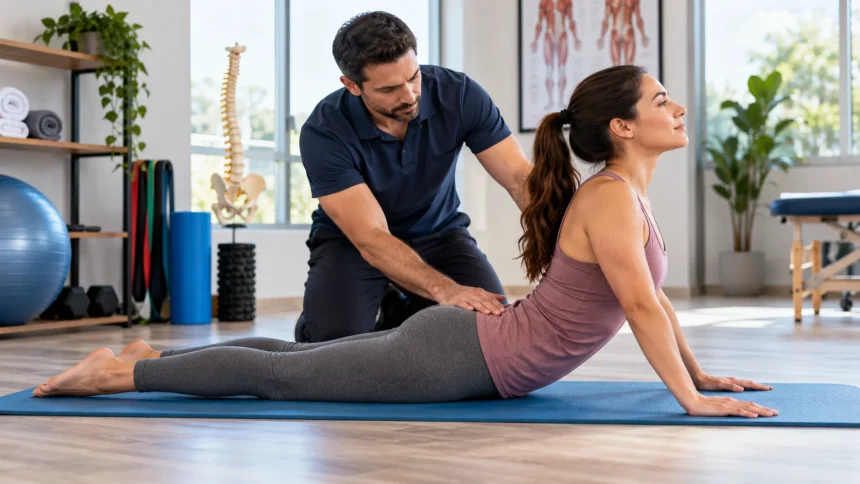
The prone press-up is an extension-based movement sometimes recommended for people with certain types of lumbar disc symptoms. It involves gently extending the lower back while the hips remain supported on the floor. However, spinal extension does not benefit everyone, and this exercise should be selected according to your symptoms and professional assessment.
Begin by lying on your stomach in a comfortable position with your forearms near your chest. If this position feels comfortable, gently raise your upper body using your forearms while keeping your pelvis relaxed against the surface. Move only within a comfortable range, avoid forcing the extension, and lower your upper body slowly.
Some individuals notice that extension movements reduce symptoms traveling into the leg, while others experience increased discomfort. Pain that spreads farther down the leg is a warning that the movement may not be appropriate. Avoid continuing the exercise when symptoms worsen, and seek guidance from a physical therapist before repeating it.
Hamstring and Hip Flexor Stretching for Better Mobility
Tightness around the hips and thighs can sometimes make everyday movement feel more restricted when dealing with lower back pain. Gentle flexibility exercises may help maintain comfortable motion without requiring repeated bending through the spine. However, stretching should not be forced, especially when a herniated disc is associated with nerve irritation or radiating leg symptoms.
A supported hamstring stretch can be performed while lying on your back with one knee bent. Slowly raise the other leg while keeping the knee slightly bent and supporting the thigh with your hands or a towel. Stop before feeling nerve-like pain, tingling, or an uncomfortable pulling sensation traveling down the leg.
For hip flexor mobility, a gentle standing stretch may be more comfortable than kneeling on the floor. Step one foot slightly backward while holding stable furniture, keeping your trunk upright and moving within a comfortable range. Avoid excessive lower back arching, and remember that stretching is optional if it increases symptoms.
Exercises and Movements to Avoid With a Herniated Disc
Certain movements may place uncomfortable demands on an irritated spinal disc, particularly during an active pain episode. Heavy lifting, repeated loaded bending, and forceful twisting can aggravate symptoms in some individuals. These activities are not permanently prohibited for everyone, but they may need temporary modification until strength, movement tolerance, and symptom control improve.
Traditional sit-ups and aggressive toe-touch stretches may also be uncomfortable for people with certain lumbar disc problems. These exercises can involve substantial spinal flexion or tension through sensitive nerve structures. Instead of assuming that every familiar exercise is safe, choose movements based on comfort, controlled technique, and recommendations from your rehabilitation professional.
High-impact activities such as jumping or intense running may need adjustment when they consistently increase pain. However, avoiding all challenging exercise indefinitely can contribute to unnecessary fear and reduced physical conditioning. A gradual return to more demanding activity is often possible with appropriate guidance, symptom monitoring, and progressive strength development.
Common Mistakes During Herniated Disc Exercise
One common mistake is attempting too many repetitions before the body has adapted to regular movement. People sometimes believe that exercising harder will produce faster recovery, even when symptoms are already irritated. Gradual progression is generally more useful because it allows muscles and sensitive tissues to adapt without repeatedly triggering uncomfortable symptoms.
Another mistake involves using poor technique or forcing movements beyond a comfortable range. For example, aggressively arching the lower back during a bridge or twisting during a bird dog can reduce exercise control. Keeping movements slow and deliberate makes it easier to notice changes in symptoms and adjust the exercise appropriately.
Ignoring warning signs is another problem that can interfere with recovery. Temporary muscular tiredness differs from increasing nerve pain, new numbness, or progressive weakness that requires medical attention. Exercise should support everyday functioning, not become a test of pain tolerance, so adjust activities whenever symptoms indicate that your current routine is unsuitable.
How to Build a Safe Herniated Disc Exercise Routine
A practical herniated disc exercise routine should begin with activities that match your current physical ability. Gentle walking, comfortable core activation, and selected mobility exercises may provide a useful starting point. The exact combination depends on symptom location, severity, medical history, and the movements that your healthcare professional considers appropriate.
Rather than performing every exercise at once, select a small number of comfortable movements and practice them consistently. Allow time between strengthening sessions when muscles need recovery, and include gentle daily movement when tolerated. Gradually increase repetitions, duration, or difficulty only when your current activity level does not cause a meaningful increase in symptoms.
Your routine should also consider the physical demands of your everyday schedule. Someone who spends long hours sitting may benefit from regular movement breaks, while another person may need guidance for lifting or standing tasks. Consistency, comfortable movement, and appropriate progression matter more than following an identical exercise plan every day.
How Long Does Recovery Take With Physical Exercise?
Recovery from a herniated disc varies depending on the severity of symptoms, nerve involvement, and individual health factors. Many people experience meaningful improvement over several weeks with conservative treatment, although some require longer rehabilitation periods. Exercise may support recovery, but it should be considered part of a broader management plan rather than a guaranteed cure.
Some individuals notice improved walking tolerance or reduced stiffness relatively early in their rehabilitation. Others experience fluctuating symptoms, with comfortable days followed by temporary discomfort after increased activity. These changes do not always indicate additional damage, but persistent worsening pain or neurological symptoms should be evaluated by a healthcare professional.
Long-term improvement often involves gradually rebuilding strength, maintaining regular activity, and developing confidence in everyday movement. A personalized physical therapy program may help identify exercises that match changing symptoms and functional goals. When pain remains severe, symptoms continue progressing, or conservative management is unsuccessful, additional medical assessment may be necessary.
Tips to Protect Your Back During Daily Activities
Small adjustments to daily habits can make movement more comfortable while recovering from a herniated disc. Avoid staying in the same sitting or standing position for excessively long periods when this increases discomfort. Taking regular movement breaks allows you to change positions and may help reduce the stiffness associated with prolonged inactivity.
When lifting everyday objects, keep the load close to your body and choose a movement pattern that feels stable. Avoid combining heavy lifting with sudden twisting, especially when symptoms remain sensitive. Depending on the task, bending through the hips and knees may help distribute effort, but no single posture guarantees complete protection from back pain.
Adequate sleep, comfortable positioning, and regular physical activity also support overall recovery. Some people find placing a pillow beneath or between their knees helpful when resting, depending on their preferred sleeping position. Focus on sustainable habits and gradual movement improvements rather than trying to maintain a perfectly straight spine throughout the day.
Conclusion
Herniated disc physical exercise can play a valuable role in improving mobility, maintaining strength, and supporting everyday function. Gentle walking, selected core exercises, and comfortable hip movements may be useful parts of a rehabilitation program. The most suitable exercises depend on your symptoms, physical abilities, and individual medical needs rather than a single routine that works for everyone.
Correct technique and gradual progression are essential for a comfortable exercise experience. Movements should remain controlled, and exercises that cause increasing nerve symptoms should be stopped and reassessed. A qualified physical therapist can help you select appropriate activities, modify difficult movements, and build confidence as your physical capacity improves.
Recovery takes time, and progress may differ from one person to another. Staying reasonably active while respecting symptoms can help maintain physical conditioning and support long-term back health. With appropriate medical guidance and a personalized exercise approach, many individuals can gradually return to comfortable daily movement and activities they enjoy.
Frequently Asked Questions
1. What Is the Best Physical Exercise for a Herniated Disc?
Walking is often a good starting activity because it supports gentle movement and general fitness. However, the best exercise depends on your symptoms, and a physical therapist can recommend suitable strengthening and mobility exercises.
2. Can Exercise Make a Herniated Disc Worse?
Some exercises can aggravate symptoms, particularly when they involve uncomfortable loading or forced movements. Stop exercises that increase radiating pain, numbness, or weakness, and seek professional guidance before continuing.
3. How Often Should I Exercise With a Herniated Disc?
Gentle activities such as walking may be performed regularly when comfortable. Strengthening exercise frequency depends on your condition, recovery stage, and tolerance, so follow a personalized rehabilitation plan.
4. Can a Herniated Disc Heal Without Surgery?
Many people with herniated discs improve without surgery through time, appropriate activity, physical therapy, and other conservative treatments. However, severe or progressive neurological symptoms may require urgent medical evaluation.
5. Is Walking Better Than Bed Rest for a Herniated Disc?
For most people, comfortable walking and gradual activity are preferable to prolonged bed rest. Short rest periods may help during severe pain episodes, but extended inactivity can contribute to stiffness and reduced physical conditioning.