

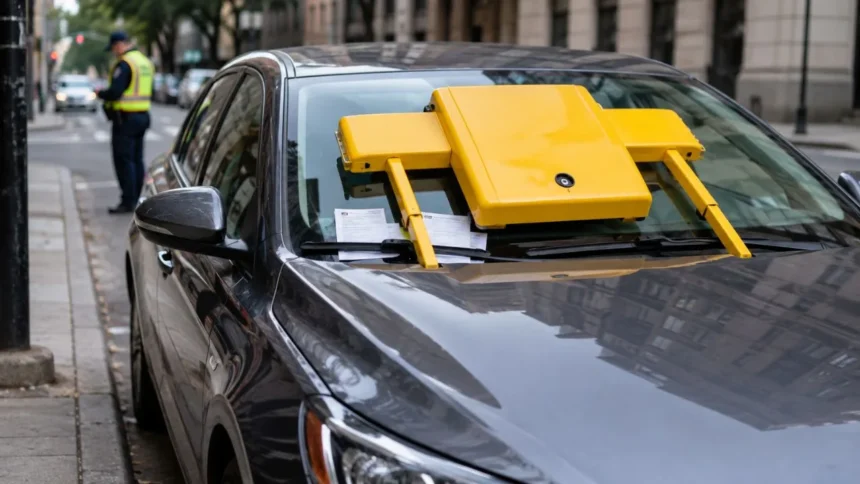
Windshield Boot: How It Works and Why Drivers Get One
A windshield boot is a vehicle immobilisation device placed across the driver’s side of a car’s windscreen. Instead of locking a wheel like a traditional parking boot, it blocks the driver’s view so the vehicle cannot be operated safely. The best-known commercial version is called the Barnacle.
Parking authorities, universities and private property managers may use the device to enforce parking rules or collect unpaid fines. Depending on local policy, a driver might receive one for repeated unpaid tickets, unauthorised campus parking, violating private-property rules or leaving a vehicle in a prohibited location.
Powerful suction cups attach the device to the glass, while electronic controls help activate and monitor it. Some models include location tracking, movement detection and a tamper alarm. These features discourage drivers from moving the car or trying to force the device off without authorisation.
Finding a windshield boot on your car can be stressful, but damaging it or driving with it attached may make the situation worse. The safest response is to read the official notice, verify the enforcement agency, follow the release process and document the incident if you believe the immobilisation was incorrect.
What Is a Windshield Boot?
The term “windshield boot” commonly refers to a large panel that attaches to the outside of a vehicle’s windscreen. It performs the same basic function as a wheel clamp by preventing practical vehicle use, but it immobilises the car by obstructing the driver’s field of vision.
Many people also call the device a Barnacle because that is the brand name of a widely used system. Although the terms are often used interchangeably, Barnacle is a specific commercial product, while windshield boot can be used more generally to describe this type of windscreen-mounted parking device.
The panel is usually brightly coloured so drivers can see immediately that their vehicle has been immobilised. It commonly displays a device number, a telephone number, a QR code or written instructions explaining how to contact the responsible parking authority and begin the release process.
A windshield boot is not a normal parking ticket placed under a wiper. It is an active vehicle immobilisation measure. The driver must resolve the required payment, arrangement or administrative issue before the authority releases the device or provides the code needed for authorised removal.
How the Device Works
A parking officer first confirms the vehicle and violation details through the enforcement system. The officer activates the device, records information connected to the vehicle and positions the unfolded panel across the windscreen. Powerful suction cups then secure it to the glass.
Once attached, the panel blocks enough of the forward view to make normal driving unsafe and generally unlawful. Unlike a wheel clamp, it does not physically stop the wheels from turning. Its effectiveness comes from making it impossible for a driver to see the road properly.
The device may contain GPS or other location-monitoring technology, along with sensors that detect movement or tampering. Attempting to drive the vehicle or force the panel away from the windscreen may activate a loud alarm and notify the enforcement system.
When the issue is resolved, the device releases its suction through an authorised process. In many programmes, the driver receives an unlock code after payment. In others, a parking officer returns to remove the windshield boot. The exact process depends on the organisation using it.
Why Drivers Get One
Unpaid parking citations are one of the most common reasons a driver receives a windshield boot. Fort Collins, for example, may immobilise a vehicle when fines are not paid or contested within its stated period, while Tucson uses the device for vehicles with three or more unpaid parking citations.
A city may also use a windshield device against a vehicle that is currently parked illegally. New York City states that Barnacles may be applied to vehicles in locations such as bus stops, bike lanes, sidewalks or areas close to fire hydrants.
Universities can use the device when students, employees or visitors repeatedly violate campus parking rules. A car might be immobilised because it has accumulated unpaid citations, lacks a valid permit or is parked in a restricted campus area. Each institution sets its own thresholds and release fees.
Private car parks and property operators may also use vehicle immobilisation where local law and posted parking terms permit it. Because the authority, notice requirements and allowable fees vary by location, drivers should review the signs, citation and local rules before assuming that every windshield boot follows the same policy.
Windshield Boot vs Wheel Boot
A traditional wheel boot is a heavy metal clamp attached to a tyre or wheel. It physically prevents the wheel from rotating normally. A windshield boot is attached to the glass and prevents driving by covering the view through the windscreen.
Installing a wheel clamp may require an officer to kneel near traffic and work around the tyre. A windshield-mounted system can be carried to the car and applied while the officer remains standing, which may reduce lifting demands and exposure to moving vehicles.
Wheel boots may require an enforcement employee or contractor to return with tools for removal. Some windshield systems allow authorised self-release after payment, which can help drivers regain access outside normal office hours. Fort Collins, for example, offers a self-release process during nights and weekends.
However, neither option guarantees immediate release in every city. New York City’s NYPD Barnacle programme assigns an agent to remove the device after payment, while several university and municipal programmes issue a code that lets the motorist detach and return it.
Suction and Electronic Controls
The device uses commercial suction cups to form a strong seal against the windscreen. The enforcement officer places the panel on suitable glass and activates the system so the cups hold it securely. Correct installation is important because the windscreen must support the pressure without existing damage being worsened.
Electronic locking mechanisms maintain the device’s secured state until the correct release process is completed. In self-release programmes, the motorist typically enters a code through a keypad after making the required payment or arrangement. The suction may take several seconds to release fully.
Location and status features allow an enforcement team to identify where active devices have been deployed. Motion detection may also alert the system when a driver tries to move the vehicle. These controls make the unit more than a simple plastic panel attached with ordinary suction cups.
The technology does not mean that every system operates identically. Device generations, municipal software and local enforcement arrangements can differ. Drivers should follow the information displayed on the specific device rather than relying on instructions found for another city or university.
What to Do First
Do not enter the vehicle and attempt to drive with the windshield boot attached. The panel blocks a critical part of the road view, and moving the car can activate an alarm or lead to towing, additional charges and penalties for interfering with an immobilisation device.
Read every notice attached to the vehicle and device. Look for the name of the city, university, parking company or enforcement department, along with the device number, citation information, payment instructions and deadline before towing may occur.
Verify the payment channel before entering card information. Use the telephone number, QR code or official website stated on the physical notice, but confirm that it genuinely belongs to the authority involved. Parking-payment scams may imitate official messages or send drivers to fraudulent pages.
Take photographs of the car, device, nearby signs, parking bay, permit and citation. These records may become useful if you believe the vehicle was legally parked, payment had already been made, the number plate was recorded incorrectly or the required warnings were missing.
How Legal Removal Works
In a self-release programme, the driver usually scans the displayed QR code or calls the telephone number printed on the device. The system requests a device number or vehicle details and then shows the outstanding citations, deployment fee, deposit or other amount required for release.
After the authorised payment is processed, the motorist may receive a numerical release code. The code is entered into the keypad, and the device unlocks or reduces its suction. Rutgers advises users to allow up to 30 seconds for release before gently lifting the unit from the windscreen.
Some programmes do not allow motorist removal. In New York City’s NYPD programme, payment leads to a traffic agent being assigned to remove the Barnacle when the motorist is present. Drivers should therefore never assume that payment automatically authorises self-removal.
Follow every displayed instruction in the correct order. Keep payment confirmation, release messages and photographs until the device has been removed and returned. Contact the listed enforcement office immediately when a valid code does not work or the device remains attached after the expected release period.
Returning the Device
Many windshield-boot programmes require the motorist to return the released unit to a designated drop box. The device usually folds to make it easier to carry. The official instructions should identify the return location, time limit and any refundable deposit connected to the unit.
Return deadlines vary. Fort Collins requires its Barnacle to be placed in the specified drop box within 24 hours, while San Diego State University requires return within 12 hours. Other organisations may provide different time limits.
A refundable device deposit may be included in the release payment. Rutgers currently lists a refundable device-return deposit alongside a non-refundable deployment charge, while San Diego State warns that failing to return its device can result in loss of the deposit.
Photograph the unit inside the authorised drop box or obtain another form of return confirmation where available. This provides evidence that you met the deadline and can help resolve a disagreement if the system later shows that the device was not returned.
Fees and Deadlines
There is no universal windshield-boot fee. Charges are determined by the city, university or parking operator and may include unpaid citations, late penalties, an immobilisation fee, a service charge and a refundable equipment deposit.
Fort Collins currently lists an immobilisation fee in addition to unpaid fines, while Rutgers lists separate deployment and refundable device-deposit charges. New York City states that its NYPD Barnacle removal fee is $185, although programme charges can be revised.
The time allowed before towing also varies significantly. Tucson states that vehicles remaining immobilised for 48 hours will be towed, Fort Collins may impound a vehicle after more than 72 hours, and New York’s NYPD process can tow after two hours.
Because towing adds further charges and inconvenience, drivers should read the notice as soon as they find it. Even when they plan to dispute the original ticket, they may need to complete a separate release process first to prevent the vehicle from being removed.
Can You Dispute It?
The right to dispute a parking violation depends on the authority and the stage of enforcement. Some organisations require citations to be challenged before they become overdue, while others continue to provide an administrative hearing or appeal process after immobilisation.
Removing the device and disputing the underlying ticket may be separate actions. New York City explains that a driver can reclaim a vehicle immobilised by the NYPD without immediately paying the violation that caused the action, but the ticket must still be paid or disputed within the applicable period.
Useful evidence may include photographs of parking signs, proof of payment, a valid permit, time-stamped receipts, accessible-parking credentials or records showing that the number plate does not match the cited vehicle. Submit the evidence through the official process rather than arguing only with an enforcement officer at the scene.
Do not ignore deadlines while preparing a dispute. Late fees, towing or loss of appeal rights may continue even when you believe the citation is incorrect. Ask the issuing organisation whether payment is required before appeal and whether a successful challenge will produce a refund.
Why You Should Not Force It Off
Trying to pry, cut or detach a windshield boot without authorisation can damage the device or the windscreen. The University of Kansas warns that improper removal may damage the glass, while Washington University advises that forcing the unit off can trigger its alarm and tracking features.
Unauthorised removal may also violate local law or parking regulations. Fort Collins identifies tampering with or moving an immobilisation device before official release as an offence, and the University of California, Davis prohibits removing, damaging or interfering with a boot or Barnacle.
Damaging the unit may leave the driver responsible for repair or replacement costs in addition to the original fines. It can also weaken an otherwise valid challenge by creating a separate dispute over property damage or interference with enforcement.
Online videos claiming to defeat the system should not be treated as legal removal instructions. Even when a physical workaround appears possible, using it may activate an alarm, damage the vehicle and expose the driver to additional charges or legal consequences.
Could It Damage the Windshield?
A correctly installed device is designed to attach to automotive glass without harming a healthy windscreen. The manufacturer presents the system as an alternative intended to reduce the wheel or rim damage sometimes associated with traditional clamps.
Existing chips or cracks require special attention because strong suction places stress on the glass. Manufacturer guidance for enforcement staff says the windscreen should be checked for existing damage before placement.
If you notice new cracking or other damage, photograph it before touching the device. Include wide photographs showing the full windscreen and close-ups of the affected area. Report the issue to the parking authority and your insurer according to their required procedures.
Do not attempt to release pressure manually because you are worried about a crack. Contact the authority shown on the notice and explain the condition of the glass. An authorised employee can advise whether a technician should remove the unit.
Why Authorities Use It
A windshield boot is lighter and easier for an officer to carry than many traditional wheel clamps. It can also be installed without kneeling next to the wheel in traffic, which is one reason municipalities have tested the device as an alternative to conventional booting.
The system may reduce the need for immediate towing. When a car is not creating an urgent safety problem, immobilisation allows it to remain in place while the driver resolves the violation. Towing may still occur when the deadline expires or the vehicle is in a dangerous location.
Self-release can also extend service outside ordinary office hours. Drivers in participating programmes may pay electronically, receive a code and remove the device without waiting for a towing contractor or enforcement worker to arrive.
Authorities can track active devices through connected software and reuse them after return. This creates a digital enforcement system that combines visible immobilisation, payment processing and device management rather than relying only on paper citations.
How Drivers Can Avoid One
Pay or dispute parking citations before their deadlines. An ignored ticket may collect penalties, enter judgment or contribute to the number of violations required for immobilisation. Keep confirmation whenever you pay online because processing errors or delays can occur.
Update the address connected to your vehicle registration so notices reach you. Drivers sometimes discover old citations only after penalties have increased because letters were sent to a previous address. Regularly checking the official ticket portal can reveal unpaid balances earlier.
Read parking signs carefully, especially on campuses, privately managed properties and streets with time-based restrictions. Confirm that mobile or meter payments cover the correct number plate, zone and parking period before leaving the vehicle.
Resolve repeated permit or citation problems rather than waiting for another warning. Payment plans may be available in some jurisdictions for qualifying debts, but the driver must normally arrange them before enforcement progresses to immobilisation or towing.
Frequently Asked Questions
What is a windshield boot called?
The best-known windshield boot is called the Barnacle. It is a windscreen-mounted vehicle immobilisation device that blocks the driver’s view instead of locking the wheel.
Why did my car get a windshield boot?
Common reasons include repeated unpaid parking tickets, illegal parking, permit violations or unauthorised use of private or university parking. The exact reason should appear on the device or attached notice.
Can I drive with a windshield boot attached?
No. The device obstructs the view needed to drive safely and may activate an alarm when the vehicle moves. Driving with it attached could also lead to towing or additional penalties.
Can I remove a windshield boot myself?
Only when the issuing authority’s instructions specifically permit self-release. You may need to pay or arrange the outstanding balance, receive a code and return the device by a stated deadline.
How long do I have before the car is towed?
The deadline depends on the local programme and can range from a few hours to several days. Read the notice immediately because some illegally parked vehicles can be towed without a standard waiting period.
Conclusion: Responding to a Windshield Boot
A windshield boot immobilises a vehicle by attaching to the windscreen and blocking the driver’s view. It is commonly used as an alternative to a wheel clamp or immediate towing and may include suction locks, electronic controls, movement sensors and location tracking.
Drivers can receive one because of unpaid citations, prohibited parking or repeated violations of municipal, campus or private-property rules. The reason, fee and release procedure depend on the organisation applying the device, so instructions from a different area may not apply.
The safest response is to avoid driving, read the notice and verify the issuing authority. Complete the authorised release process, save all receipts and return the device within the stated deadline when self-release is permitted.
Never force the panel away from the glass or rely on unofficial removal tricks. Document the parking location and challenge the citation through the formal process when you believe it was issued incorrectly. Acting quickly can prevent extra fees, equipment charges and towing.