
Kitchen Accent Wall: Stylish Ideas to Transform Your Space
A kitchen accent wall can completely change how your space feels without requiring a full renovation. By giving one wall a different color, texture, pattern, or material, you create an instant focal point that makes the kitchen feel more intentional. Whether your style is modern, farmhouse, rustic, minimalist, or traditional, the right feature wall can add personality while still complementing cabinets, countertops, flooring, and appliances.
Unlike decorating every wall with bold finishes, an accent wall concentrates visual interest in one carefully selected area. This makes it especially useful in kitchens where cabinetry and appliances already take up significant visual space. A thoughtfully designed accent wall can make a small kitchen feel more distinctive, give an open-plan kitchen clearer definition, or bring warmth to a neutral room without making the overall design feel overwhelming.
Modern kitchen wall ideas also go far beyond simply choosing a contrasting paint color. Homeowners are experimenting with wood slats, decorative tile, natural stone, brick, wallpaper, paneling, textured finishes, and even functional storage displays. These materials allow you to introduce depth and character while connecting your feature wall with other elements already present throughout the room.
The best kitchen accent wall should feel like part of the kitchen rather than an unrelated decoration. Color balance, durability, lighting, wall placement, and maintenance all matter when making your choice. This guide explores practical kitchen feature wall ideas, materials, colors, styling techniques, and common mistakes so you can create a wall that looks beautiful and works naturally within everyday kitchen life.
Why a Kitchen Accent Wall Can Change the Entire Room
Kitchens contain many permanent visual elements, including cabinetry, countertops, appliances, and flooring, which sometimes leave little room for personal expression. An accent wall gives you an opportunity to introduce something different without changing expensive fixtures. Even a simple painted feature wall can provide contrast that makes white cabinets, natural wood finishes, or metallic hardware stand out more clearly.
A feature wall can also establish a visual hierarchy inside the kitchen. Instead of allowing every surface to compete for attention, one intentionally designed wall becomes the focal point while surrounding elements provide balance. This approach works particularly well in minimalist kitchens, where a textured or colored wall prevents a clean design from appearing overly plain or unfinished.
Kitchen wall decor can also influence the perceived proportions of the room. Dark colors may make a large open kitchen feel warmer and more intimate, while lighter feature walls can maintain spaciousness in smaller kitchens. Vertical wood panels or wallpaper patterns may visually increase height, while horizontal details can make narrow areas appear wider.
Perhaps most importantly, an accent wall offers flexibility. Paint, wallpaper, artwork, shelving, and certain wall panels can be updated more easily than cabinets or countertops. That makes the feature wall a practical place to experiment with current interior design trends while keeping the expensive foundation of your kitchen timeless and adaptable.
How to Choose the Best Wall for an Accent
The most successful kitchen accent wall usually sits in a location that naturally attracts attention when someone enters the room. Look around your kitchen from the main doorway or adjacent living area and notice which wall your eyes reach first. A blank wall behind a dining table, breakfast nook, open shelves, or freestanding furniture often provides an ideal location for creating visual impact.
Walls already dominated by upper cabinets may not always be the strongest candidates because there is limited visible surface available. Instead, consider an uninterrupted wall where color, wallpaper, paneling, or stone can be appreciated properly. If your kitchen has an architectural element such as a chimney breast, recessed niche, or range wall, emphasizing that structure can also create a natural focal point.
In open-concept layouts, the accent wall can help visually define where the kitchen begins and ends. A contrasting wall near the dining area, kitchen island, or breakfast space can establish subtle boundaries without requiring partitions. Choosing a wall visible from multiple areas of the home can also make the design feel connected with surrounding rooms.
Before committing, consider practical conditions around the wall as well. Areas directly beside sinks or cooking surfaces may experience grease, moisture, and frequent cleaning, making delicate wallpaper or untreated wood less suitable. Matching your chosen decorative material with the wall’s exposure to heat, water, and everyday activity will help preserve its appearance over time.
Kitchen Accent Wall Paint Colors That Make an Impact
Paint remains one of the easiest and most affordable ways to create a kitchen feature wall. Deep shades such as forest green, charcoal, navy blue, burgundy, and earthy brown can provide dramatic contrast against white or cream cabinetry. These richer colors often work particularly well in kitchens with natural wood, brass hardware, stone countertops, or warm lighting.
If you prefer an airy interior, muted shades can create distinction without producing strong contrast. Sage green, dusty blue, warm beige, terracotta, and soft greige provide visual interest while maintaining a relaxed atmosphere. These kitchen wall colors pair especially well with contemporary, Scandinavian, transitional, and modern farmhouse interiors where subtle warmth is often preferred.
Consider existing undertones before selecting your accent wall color. A warm cream kitchen may look more balanced with olive green, rust, or clay than with an icy blue. Similarly, cool gray cabinets often coordinate naturally with navy, blue-green, or charcoal. Looking at cabinetry, countertop veining, flooring, and backsplash colors together can prevent unwanted clashes.
Always test paint samples on the actual wall before choosing your final shade. Kitchen lighting changes throughout the day, and artificial lighting can make colors appear dramatically different after sunset. Observe samples during morning, afternoon, and evening conditions to understand how the color interacts with natural light, cabinet finishes, and surrounding surfaces.
Create Warmth With a Wood Accent Wall
Wood introduces natural warmth and texture that painted surfaces cannot fully replicate. Vertical wood slats, reclaimed boards, tongue-and-groove paneling, or decorative timber panels can make a kitchen feel more inviting while adding architectural character. Wood accent walls work especially well in neutral kitchens where cabinetry and countertops need additional depth and visual contrast.
Light woods such as oak, ash, and maple suit Scandinavian and contemporary kitchens because they maintain a fresh appearance. Medium and darker wood tones can create greater richness in traditional, industrial, or luxury interiors. Choosing a wood tone that echoes flooring, bar stools, shelving, or cabinetry can help the feature wall feel intentionally connected to the entire space.
Vertical slat walls have become particularly popular because their narrow repeating lines create subtle texture without overwhelming the kitchen. They can be installed behind dining benches, breakfast areas, or open shelving to establish a sophisticated backdrop. Slatted designs also visually emphasize ceiling height, making them useful in rooms where you want to create a taller-looking appearance.
Because kitchens experience humidity and occasional splashes, proper treatment is essential when using real wood. Sealed finishes make surfaces easier to wipe clean and help protect against moisture. For areas requiring greater durability, wood-effect porcelain tiles, waterproof panels, or high-quality laminate alternatives can provide a similar appearance with less maintenance.
Use Tile for a Durable Kitchen Feature Wall
Tile can transform an ordinary kitchen wall into a striking decorative feature while offering excellent durability. Rather than limiting tile to the traditional backsplash area, extending it across an entire wall creates a stronger architectural statement. Subway tiles, handmade-look ceramics, patterned encaustic designs, terrazzo, and large-format porcelain can all create dramatically different visual effects.
Glossy tiles reflect light and can help smaller kitchens feel brighter, particularly when positioned opposite windows. Matte finishes create a softer, more contemporary look while textured tiles introduce additional depth. Handmade or irregular tiles are especially effective when you want the kitchen to feel relaxed, artisanal, and slightly less uniform.
Patterned tile provides another way to introduce personality without adding extra decorative accessories. Geometric patterns, Mediterranean motifs, subtle botanical designs, and checkerboard arrangements can turn an empty wall into a central design feature. When using a strong tile pattern, keeping cabinets and countertops relatively simple often produces the most balanced result.
Practicality is one of tile’s strongest advantages in kitchen design. Most properly installed kitchen tiles resist moisture, stains, and everyday splashes while remaining relatively easy to clean. For walls near cooking or preparation zones, this durability can make tile a more practical long-term option than materials requiring frequent maintenance.
Add Character With a Brick or Stone Accent Wall
Brick gives a kitchen immediate texture and architectural personality. Exposed brick works particularly well in industrial, rustic, farmhouse, and urban-inspired interiors, where its imperfect surface creates contrast against polished countertops and modern appliances. Depending on the surrounding colors, brick can make the room feel cozy, historic, relaxed, or deliberately raw.
If genuine exposed brick is unavailable, brick slips or high-quality veneer products can create a similar effect without requiring major structural changes. Whitewashed brick provides a softer look suitable for coastal or farmhouse kitchens, while traditional red brick introduces warmth. Dark or gray brick finishes can complement contemporary kitchens with black fixtures and streamlined cabinetry.
Natural stone offers a different type of visual richness. Limestone, stacked stone, slate, and stone veneer can turn a plain wall into a sophisticated focal point. Stone works especially well when repeated elsewhere through countertops, flooring, fireplaces, or exterior architectural elements, creating continuity between different parts of the property.
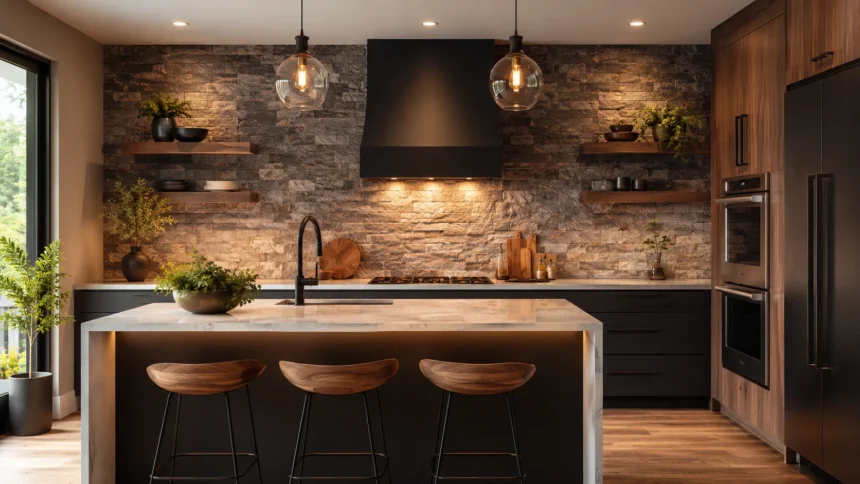
Both brick and stone contain natural variation, so surrounding surfaces should usually remain relatively restrained. Too many competing textures can make the kitchen feel visually crowded. Combining a textured masonry wall with simple cabinetry, understated lighting, and minimal accessories allows the natural material to become the feature rather than compete with other details.
Try Wallpaper for a Creative Kitchen Accent Wall
Wallpaper allows you to introduce patterns and imagery that would be difficult to achieve with paint alone. Botanical prints, geometric designs, vintage patterns, abstract graphics, and subtle textures can dramatically personalize a kitchen. A wallpaper accent wall is particularly effective behind a breakfast nook, dining table, coffee station, or other area away from heavy cooking activity.
Large botanical patterns can create an energetic statement, while small repeating motifs provide quieter visual detail. Neutral textured wallpapers can imitate linen, plaster, or natural fibers, giving minimalist kitchens additional depth without introducing strong color. Choosing a pattern that reflects the scale of your room helps prevent the design from feeling disproportionately large or excessively busy.
For kitchens, material selection matters because walls may experience moisture and cleaning. Washable vinyl or moisture-resistant wallpaper is generally better suited to practical areas than delicate paper-based coverings. Positioning wallpaper away from direct heat, steam, or frequent splashing will also help maintain its appearance and reduce unnecessary maintenance.
Peel-and-stick wallpaper can be useful for renters or homeowners who enjoy changing their decor periodically. It allows you to experiment with bold patterns without making a highly permanent commitment. Proper surface preparation is still important, however, because smooth, clean walls generally produce a more polished result and better adhesion.
Create a Functional Accent Wall With Open Shelving
An accent wall does not need to be purely decorative. Open shelves can transform an empty kitchen wall into a combination of storage and visual display. Floating wood shelves, metal brackets, or built-in shelving provide space for everyday dishes, glassware, cookbooks, plants, ceramics, and carefully selected decorative pieces.
The background behind open shelving can strengthen the feature wall even further. Consider painting it a darker color, installing patterned tile, adding wood paneling, or using textured wallpaper. The shelves then create layers against the decorative surface, giving the wall greater depth while maintaining useful storage.
Successful shelf styling depends on restraint. Instead of filling every available space, leave gaps between objects so individual pieces remain visible. Mixing practical items with a few decorative elements creates a relaxed, lived-in appearance while preventing the shelving from looking like purely ornamental display space disconnected from the kitchen.
Repeating colors and materials elsewhere in the kitchen makes the shelf wall feel cohesive. For example, wooden shelves can echo cutting boards or stools, while black brackets can connect with cabinet handles and light fixtures. Small design repetitions like these help transform separate decorative choices into a unified kitchen interior.
Design an Accent Wall Around the Dining Area
Many kitchens include a small dining table, breakfast nook, or built-in bench, making this area an excellent location for a feature wall. Because it sits slightly away from the busiest food-preparation zones, you have greater freedom to experiment with paint, wallpaper, artwork, paneling, or other decorative materials that may not suit areas directly beside the stove.
A darker painted wall behind a dining table can visually anchor the furniture and create a cozy atmosphere. In smaller kitchens, softer shades such as sage, warm beige, muted blue, or pale terracotta can define the eating area while maintaining openness. Adding artwork or decorative lighting can reinforce the space as a distinct dining zone.
Wall paneling is another effective option behind kitchen dining areas. Board-and-batten, beadboard, vertical paneling, or simple molding can introduce architectural character even in newly built homes. Painting the paneling in the same shade as the wall creates subtle texture, while contrasting colors can produce a more pronounced feature.
Built-in banquette seating can become particularly striking when combined with an accent wall. Upholstery, wall color, cushions, lighting, and artwork can be coordinated to create a comfortable destination within the kitchen. This approach turns an otherwise practical dining corner into a deliberately designed focal point with both style and function.
How to Style a Small Kitchen Accent Wall
Small kitchens benefit from feature walls when the design enhances the room rather than visually shrinking it. Choosing one defined area keeps decorative interest concentrated instead of spreading multiple patterns across limited surfaces. A wall behind a dining table, shelving unit, or compact breakfast bar can provide enough impact without making the kitchen feel cluttered.
Lighter colors are a dependable choice, but small spaces do not necessarily require completely pale palettes. A deep green, navy, or charcoal wall can create impressive contrast when balanced by light cabinets and adequate natural illumination. Dark shades often work best when the surrounding surfaces remain simple and reflective enough to preserve visual openness.
Vertical patterns can also be particularly useful in compact kitchens. Narrow wall paneling, vertical wallpaper stripes, or tall decorative arrangements encourage the eye to travel upward, which can make ceilings appear higher. Keeping countertop accessories minimal further allows the feature wall to stand out without adding unnecessary visual noise.
Mirrors and reflective finishes can provide another solution when natural light is limited. A carefully positioned mirror, glossy tile surface, or subtly reflective wall treatment can bounce light through the room. Combined with a controlled color palette, these details allow a small accent wall to feel distinctive without sacrificing brightness.
Modern Kitchen Accent Wall Ideas for Open-Plan Homes
Open-plan kitchens need design elements that visually connect the cooking area with living and dining spaces. A thoughtfully selected feature wall can establish the kitchen’s identity without using physical barriers. Repeating colors from nearby furniture, rugs, artwork, or upholstery can create a smooth transition between connected zones.
Large open rooms can accommodate stronger materials and deeper colors than many compact kitchens. Floor-to-ceiling stone, bold wood paneling, charcoal paint, or oversized tiles can create enough visual weight to balance large islands and expansive cabinetry. The increased scale prevents dramatic materials from appearing disproportionate within the room.
However, continuity remains important. If the kitchen opens directly into a living room, consider how the accent wall appears from different viewpoints. A design that looks attractive while standing beside the kitchen island should also feel appropriate when viewed from the sofa, dining table, or entryway.
Lighting can strengthen the connection between the feature wall and surrounding architecture. Pendant lights, wall sconces, under-shelf lighting, or directional ceiling lights can highlight texture and deepen shadows across stone, brick, and wood surfaces. Layered lighting allows the accent wall to remain visually interesting during both daylight and evening hours.
Kitchen Accent Wall Ideas for Different Interior Styles
Modern kitchens often benefit from simple accent walls with controlled texture. Wood slats, concrete-inspired finishes, large-format tile, black paneling, or muted earthy paint colors complement flat-panel cabinets and streamlined hardware. Keeping decorative details minimal allows material quality and clean lines to become the main visual attraction.
Farmhouse kitchens naturally pair with shiplap, beadboard, brick, reclaimed wood, and warm neutral paint. Sage green, creamy white, muted blue, and earthy beige can complement shaker cabinets and traditional fixtures. Adding open shelves or vintage-inspired artwork can enhance the relaxed character without making the kitchen feel overly themed.
Industrial interiors suit exposed brick, concrete effects, charcoal paint, metal shelving, and darker wood finishes. These materials complement stainless steel appliances and black hardware particularly well. Introducing warm wood or soft lighting alongside industrial textures prevents the overall kitchen from becoming visually cold or overly harsh.
Traditional and transitional kitchens can use molding, decorative paneling, subtle wallpaper, stone, or sophisticated paint colors. Deep blue, olive green, warm taupe, and burgundy can create elegant contrast against classic cabinetry. Choosing restrained patterns and timeless materials helps ensure the feature wall remains relevant even as decorating trends change.
How to Coordinate Your Accent Wall With Cabinets and Countertops
Cabinets occupy a large percentage of the kitchen’s visual field, so they should influence your accent wall decision. White cabinets provide flexibility and work with almost any accent color, from subtle sage to dramatic charcoal. Wood cabinetry generally pairs best with colors and textures that complement its undertone rather than closely matching it.
Countertops provide another useful source of color inspiration. If your stone countertop contains gray, green, beige, or warm brown veining, selecting one of those secondary tones for the feature wall can create subtle coordination. This technique allows the design to feel connected without making every surface exactly the same color.
Hardware and fixtures can also help tie the room together. Black cabinet handles may coordinate with dark picture frames or shelf brackets, while brass faucets can be echoed through lighting and decorative accessories. Small material repetitions create consistency and make the kitchen accent wall appear deliberately integrated into the broader design.
Avoid trying to match every finish perfectly. Interior spaces often feel richer when related colors and materials have slight variation rather than exact duplication. Aim for complementary relationships between the feature wall, cabinets, countertops, floor, and hardware so each element contributes something distinctive while still supporting the overall palette.
Common Kitchen Accent Wall Mistakes to Avoid
One common mistake is selecting a wall simply because it is empty rather than because it naturally functions as a focal point. An accent wall should strengthen the room’s architecture and guide attention toward an attractive area. Highlighting an awkward or visually insignificant wall may instead draw attention toward features you would rather minimize.
Using too many bold materials can also weaken the effect. Patterned countertops, dramatic backsplash tile, colorful cabinets, patterned flooring, and a heavily decorated feature wall may compete rather than complement one another. If your kitchen already contains several statement surfaces, a subtle painted or paneled accent wall may create better balance.
Ignoring maintenance requirements is another frequent issue. Natural wood, porous stone, and certain wallpapers may require additional care in areas exposed to grease, moisture, or steam. Choosing appropriate finishes and positioning delicate materials away from high-activity zones can help your wall remain attractive for much longer.
Finally, avoid following a trend that does not suit the permanent elements of your home. A feature wall should enhance your kitchen’s architecture, cabinetry, and lifestyle rather than exist purely because a particular material is currently popular. Designs connected to your personal style usually remain enjoyable longer than trend-driven choices selected without considering the surrounding space.
Final Thoughts on Creating the Perfect Kitchen Accent Wall
A thoughtfully designed kitchen accent wall can make a surprisingly large difference without requiring major remodeling. Whether you choose paint, wallpaper, wood, tile, brick, stone, or decorative paneling, focusing attention on one wall gives your kitchen a clearer focal point and stronger sense of personality.
Start by identifying the wall that naturally attracts attention and evaluating its practical conditions. Then consider how colors and materials will interact with cabinets, countertops, flooring, lighting, and nearby rooms. Taking these existing elements into account makes it easier to create a feature that feels intentionally integrated rather than added afterward.
Remember that dramatic does not always mean better. Sometimes a muted sage wall, subtle vertical paneling, or simple open shelving delivers more visual impact than an extremely bold pattern. The best feature wall creates contrast while still allowing other important kitchen elements to remain part of the overall design.
Ultimately, your kitchen should reflect how you actually live and what you enjoy seeing every day. Choose materials that suit your maintenance preferences, colors that make the room feel comfortable, and details that complement your home’s personality. With thoughtful planning, an accent wall can become one of the most memorable features in your entire kitchen.
Frequently Asked Questions
What is the best wall to use as a kitchen accent wall?
Choose the wall that naturally catches your eye when entering the kitchen. Walls behind dining areas, open shelving, breakfast nooks, or ranges often make effective focal points.
What color is best for a kitchen accent wall?
Popular choices include sage green, navy blue, charcoal, terracotta, warm beige, and forest green. The best shade should complement your cabinets, countertops, flooring, and lighting.
Are kitchen accent walls still in style?
Yes. Modern feature walls increasingly use texture and natural materials such as wood, stone, tile, paneling, and subtle wallpaper rather than relying only on contrasting paint.
Can you have an accent wall in a small kitchen?
Absolutely. A carefully chosen feature wall can add character without overwhelming a small kitchen. Light colors, vertical patterns, controlled contrast, and simple styling work particularly well.
Should a kitchen accent wall be darker than the other walls?
Not necessarily. Darker colors create stronger contrast, but lighter colors, textured finishes, wallpaper, wood, and tile can also define an accent wall without using a significantly darker shade.