

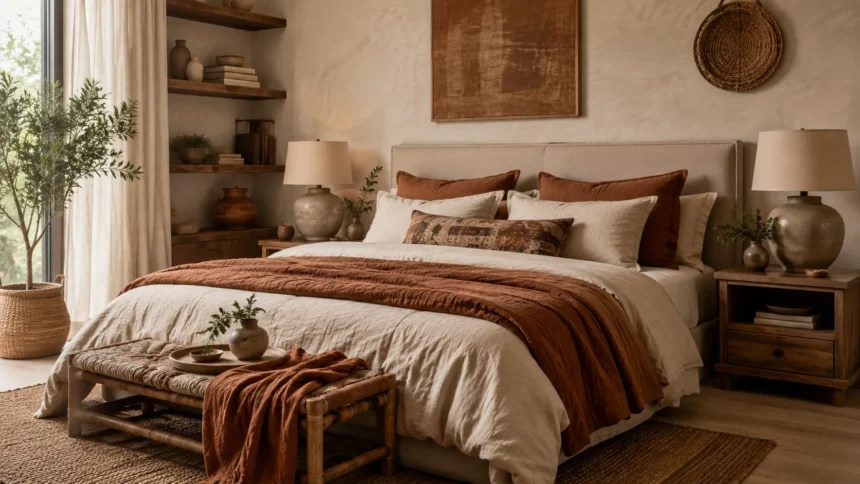
Earth Tone Bedroom: Warm, Natural Ideas for a Calm Space
An earth tone bedroom brings the quiet beauty of nature indoors through warm, grounded colors, tactile materials, and a relaxed decorating style. Shades inspired by soil, sand, stone, clay, wood, and greenery can make a bedroom feel comfortable without appearing dull. From soft beige and warm taupe to terracotta, olive green, rust, and chocolate brown, earth-inspired colors create an inviting foundation for both modern and traditional interiors.
Unlike highly saturated color schemes, earthy bedroom colors tend to feel easy on the eyes and adaptable across changing trends. They can create warmth in a minimalist room, soften a modern bedroom, or reinforce the natural character of rustic and bohemian interiors. Because these colors are drawn from landscapes and organic materials, they often work naturally together without requiring complicated color coordination.
Creating an earthy bedroom is not simply about painting the walls brown or beige. Texture, lighting, bedding, furniture, plants, artwork, rugs, and natural materials all influence how successfully the palette comes together. Linen, wood, wool, rattan, stone, cotton, and ceramics can add depth so that neutral colors feel layered rather than flat or unfinished.
The goal is to build a bedroom that feels calm, comfortable, and personal rather than overly styled. This guide explores earth tone bedroom colors, natural bedroom decor, furniture choices, bedding, textures, lighting, small-space ideas, and styling mistakes to avoid. Whether you want a complete makeover or a few subtle changes, these ideas can help you create a warmer and more grounded sleeping space.
Why Earth Tone Bedrooms Feel So Relaxing
Earth tones are associated with familiar natural environments, including forests, deserts, mountains, beaches, and fields. Colors such as beige, brown, green, clay, and muted ochre tend to feel visually softer than highly saturated shades. In a bedroom, where rest is the primary purpose, this restrained color family can create a quieter backdrop that supports a more peaceful atmosphere.
Another advantage of an earthy bedroom palette is its warmth. Bright white and cool gray bedrooms can sometimes feel stark when there are few textures or natural materials present. Introducing caramel brown, mushroom beige, warm cream, olive, or terracotta immediately softens the room and gives furniture, textiles, and artwork a more comfortable visual setting.
Earth tones also offer considerable flexibility because most shades can function almost like neutrals. Olive green can pair with cream, walnut, black, tan, or rust, while terracotta works beautifully with beige, natural wood, and muted green. This makes it easier to layer multiple colors without creating the chaotic appearance that can sometimes result from brighter palettes.
The timeless quality of natural colors also makes them useful for bedrooms designed to last beyond a single decorating trend. Furniture and permanent finishes can remain neutral while smaller details such as cushions, throws, artwork, and bedding provide seasonal variation. This approach creates a room that feels current while remaining easy to refresh when your preferences eventually change.
Best Colors for an Earth Tone Bedroom
Warm beige is one of the easiest starting points for an earth-inspired bedroom because it provides softness without making the space feel dark. Sand, oatmeal, camel, and mushroom tones can be used on walls, bedding, rugs, or curtains. These colors also provide an excellent background for stronger accents such as olive, rust, chocolate brown, and burnt orange.
Terracotta brings more personality while remaining firmly connected to a natural palette. Inspired by sun-baked clay, it introduces warmth that works especially well with cream bedding, light wood furniture, and woven textures. Muted versions of terracotta can cover larger wall areas, while richer rust or brick shades may work better as accents through pillows, blankets, or artwork.
Olive and sage green are popular choices for people who want a calming bedroom with a stronger connection to nature. Sage provides a lighter, softer appearance, while olive feels deeper and more sophisticated. Both shades coordinate beautifully with brown furniture, linen fabrics, clay accessories, jute rugs, and warm neutral walls.
Chocolate brown, charcoal brown, ochre, clay pink, taupe, and muted mustard can add additional depth to an earthy color palette. Instead of using every shade equally, choose one dominant neutral and two or three supporting colors. This creates enough variation to keep the room visually interesting while maintaining the calm, cohesive atmosphere associated with earth tone interior design.
How to Build a Balanced Earthy Color Palette
A successful color scheme usually begins with one dominant shade that covers the largest surfaces in the bedroom. This might be warm white, beige, taupe, soft olive, or muted clay. Keeping the main backdrop relatively restrained gives you flexibility to introduce darker colors through furniture, textiles, artwork, and decorative details without overwhelming the room.
Next, choose one or two secondary shades that create gentle contrast. A beige bedroom could include olive green and rust, while a sage bedroom might use camel and dark brown. These secondary tones can appear through bedding, curtains, rugs, cushions, or an accent chair, allowing the palette to feel layered rather than dominated by a single color.
Darker accents provide visual structure. Walnut furniture, black lighting, espresso-colored frames, or deep brown cushions can ground a room filled with lighter neutrals. The key is to use dark shades intentionally rather than covering every surface, particularly if the bedroom has limited natural light or relatively compact dimensions.
Finally, introduce small variations within each color family instead of matching everything exactly. Cream, ivory, oatmeal, and beige can sit together comfortably, while multiple shades of green or brown create greater depth. This subtle variation makes an earth tone bedroom look collected and natural rather than overly coordinated like a furniture showroom.
Choose the Right Earth Tone Bedroom Walls
Wall color has a major influence because it surrounds every other decorative element in the bedroom. Warm neutrals such as beige, greige, mushroom, sand, and soft cream provide a versatile background that works with nearly every earthy accent. These lighter colors are particularly useful in small rooms or bedrooms with limited daylight because they maintain a brighter overall appearance.
If you want more personality, consider sage, olive, muted terracotta, or clay-toned walls. These colors establish the earthy theme immediately while remaining softer than brighter greens or oranges. Pairing a stronger wall color with neutral bedding and natural wood furniture can prevent the room from feeling overly saturated.
A darker accent wall can create depth behind the bed. Chocolate brown, deep olive, warm charcoal, or burnt umber can provide an attractive backdrop for a light upholstered or wooden headboard. Keeping the remaining walls lighter allows the feature wall to become a focal point without visually reducing the entire room.
Paint is not the only way to create an earthy wall treatment. Limewash-inspired finishes, textured plaster, wood paneling, botanical wallpaper, or natural-looking wall coverings can introduce movement and dimension. Subtle variations in texture make neutral walls more interesting while reinforcing the organic, imperfect qualities commonly found in natural landscapes.
Bring in Natural Wood Furniture
Wood is one of the most effective materials for creating a warm and grounded bedroom. Bed frames, nightstands, dressers, benches, and shelving in oak, walnut, pine, or teak can immediately strengthen an earthy interior. Visible grain and natural color variation provide texture that works especially well alongside simple bedding and muted wall colors.
Light oak and ash are excellent choices for Scandinavian or minimalist earth tone bedrooms because they provide warmth without making the space visually heavy. Medium woods work comfortably across modern, transitional, and bohemian interiors. Dark walnut or espresso finishes can create richer contrast, particularly when paired with lighter walls and bedding.
You do not need to purchase a perfectly matching furniture collection. In fact, combining slightly different wood tones can make a bedroom feel more natural and lived-in. The easiest approach is to repeat each wood tone at least once or connect different pieces through similar undertones so that the variation appears intentional rather than accidental.
Furniture shape matters as much as color. Rounded corners, simple silhouettes, woven headboards, and softly finished surfaces often complement the relaxed character of earthy interiors. Avoid filling the room with too many bulky pieces; allowing some open floor and wall space helps natural materials stand out while preserving the peaceful quality of the bedroom.
Layer Earth Tone Bedding for a Cozy Look
The bed is usually the largest visual element in a bedroom, making bedding an important part of the color scheme. Start with a neutral base such as cream, oatmeal, beige, or warm white sheets and duvet covers. These softer shades create a clean foundation while leaving plenty of room for deeper earth-tone accents.
Add layers through throws, quilts, coverlets, and cushions in terracotta, olive, rust, camel, clay, or chocolate brown. Using several related shades instead of one exact color can make the bed feel more relaxed and luxurious. For example, olive pillows can sit alongside beige linen and a rust-colored throw without looking overly coordinated.
Texture is equally important. Linen, brushed cotton, waffle weaves, wool, boucle, and quilted fabrics can create visual richness even when every textile stays within a neutral color family. Mixing smooth and textured materials gives the bed greater depth and prevents an all-beige bedroom from feeling plain.
Keep decorative cushions controlled rather than filling the entire bed with accessories that need to be removed every night. Two or three complementary cushions and one carefully draped throw are often enough. The most successful cozy earth tone bedroom balances appearance with everyday comfort so the bed remains practical as well as attractive.
Use Natural Textures to Add Depth
Earth-inspired interiors rely heavily on texture because many of the colors are intentionally subtle. A bedroom containing only smooth beige surfaces can feel flat despite having an attractive palette. Natural textures introduce shadow, variation, and tactile interest, helping neutral colors appear richer and more intentional.
Rattan, cane, jute, seagrass, linen, wool, and unfinished wood work particularly well within this decorating style. Consider a woven pendant light, cane headboard, jute area rug, linen curtains, wool blanket, or rattan storage basket. Each element adds a slightly different surface while maintaining the connection to natural materials.
Ceramics and stone can provide another layer of texture through lamps, trays, vases, or decorative objects. Matte pottery in clay, cream, charcoal, or sand-colored finishes can look especially effective on wooden nightstands. Travertine, marble, or stone-inspired accessories can introduce a cooler contrast while still remaining grounded in the natural palette.
The key is to combine textures without making every item highly detailed. If the rug has a strong weave and the headboard is heavily textured, simpler bedding may provide needed balance. A mixture of rough, soft, matte, and smooth surfaces makes the room interesting while preserving the understated character of earth tone decor.
Add an Earth Tone Accent Wall Behind the Bed
The wall behind the bed is a natural location for a stronger color because it already functions as the visual center of most bedrooms. Painting it olive green, terracotta, warm brown, or muted clay can frame the bed while giving the room additional personality. Light bedding provides attractive contrast against these deeper shades.
Wood paneling offers another way to create an earth-inspired focal point. Vertical timber slats, tongue-and-groove boards, or simple wooden panels introduce warmth while highlighting the height of the room. Choosing a wood tone that relates to your furniture keeps the wall connected with the rest of the design.
Textured finishes such as limewash or plaster-style paint can create subtle tonal movement without adding patterns. These surfaces work particularly well in minimalist bedrooms where you want visual interest without excessive decoration. Their imperfect appearance reinforces the organic character associated with natural interior design.
Wallpaper can also work when the pattern remains connected to the palette. Botanical prints, abstract landscapes, subtle leaves, and organic shapes in beige, olive, rust, or brown can become striking bedroom features. Keeping surrounding bedding and furniture simple ensures the accent wall remains the primary visual element.
Decorate With Plants and Botanical Elements
Plants are one of the most direct ways to reinforce the connection between an earth tone bedroom and nature. Green foliage creates refreshing contrast against beige, cream, terracotta, and brown surfaces. Even one well-positioned plant on a dresser, bedside table, or floor can make a neutral bedroom feel more lively and complete.
Choose plants according to the actual light conditions in the room rather than appearance alone. Bedrooms with brighter indirect daylight may accommodate a wider range of houseplants, while lower-light rooms require more adaptable varieties. Proper plant placement helps maintain healthy foliage and prevents greenery from becoming a short-lived decorative accessory.
If maintaining live plants is impractical, dried branches, grasses, eucalyptus-style stems, or preserved botanical arrangements can create a similar organic effect. Tall dried stems in a ceramic vase can fill an empty corner while maintaining the muted, natural palette. These arrangements also work well in minimalist rooms where a large leafy plant might feel too visually dominant.
Botanical artwork provides another option. Landscape photography, pressed-leaf-inspired prints, abstract nature artwork, or simple line drawings can reinforce the theme without turning the bedroom into a literal nature display. Wood, brown, black, or warm metallic frames can tie the artwork into other materials already used throughout the room.
Choose Lighting That Makes Earth Tones Feel Warmer
Lighting can dramatically influence how earthy colors appear. Warm neutrals and clay shades may look inviting in softer illumination but noticeably cooler under harsh lighting. Layering several light sources gives you greater control over the atmosphere while making colors and natural textures look more dimensional.
Bedside lamps create pools of softer light and are useful for evening reading. Ceramic, stone, wood, woven, or linen lamp bases and shades can also contribute to the decorative palette. Wall-mounted sconces are another practical choice when nightstands are small or you prefer a cleaner bedside arrangement.
Pendant lights and ceiling fixtures can provide a stronger decorative statement. Woven shades made from rattan or similar materials introduce texture and interesting shadows, while simple metal fixtures can add contemporary contrast. Avoid choosing fixtures solely because they look natural; they should also provide appropriate illumination for the size and function of the bedroom.
Natural daylight should be considered as part of the lighting plan. Linen or cotton curtains can soften incoming light while maintaining privacy and visual warmth. Layering lightweight curtains with blackout panels or blinds provides flexibility, allowing you to enjoy daylight during the day while creating a darker sleeping environment at night.
Earth Tone Bedroom Ideas for Small Spaces
Small bedrooms can use earthy colors successfully without feeling dark or cramped. Begin with lighter shades such as cream, sand, warm white, mushroom, or pale sage across the largest surfaces. These tones preserve visual openness while still providing more warmth and personality than stark white.
Introduce deeper colors through smaller items rather than covering every wall. An olive headboard, terracotta blanket, walnut nightstand, or chocolate brown cushions can create contrast without visually reducing the room. Using one or two strong accents generally produces a calmer result than combining several dark colors in a limited space.
Furniture with exposed legs can help maintain a sense of openness because more floor remains visible. Wall-mounted nightstands, narrow dressers, and floating shelves can also reduce visual bulk. Choosing furniture that provides hidden storage keeps everyday belongings controlled, allowing the earthy color palette and natural textures to remain the focus.
Mirrors can reflect daylight and visually increase depth when positioned thoughtfully. A large mirror with a thin wood or dark metal frame can function as both a practical accessory and decorative element. Keeping surfaces relatively uncluttered is especially important because excessive accessories can quickly make a small earth tone bedroom feel crowded.
Create a Modern Earth Tone Bedroom
A modern earthy bedroom combines natural warmth with simple silhouettes and controlled decoration. Begin with clean-lined furniture, uncomplicated bedding, and a restrained palette of beige, brown, green, or clay. This provides the warmth associated with organic interiors while maintaining the uncluttered appearance of contemporary design.
Architectural textures can replace excessive accessories. A wood slat wall, textured plaster finish, upholstered headboard, or large natural-fiber rug can create visual interest without filling every surface with objects. This approach works particularly well when you want the bedroom to feel sophisticated but still relaxed and comfortable.
Black or dark metal details can sharpen the palette. Thin-framed lighting, curtain rods, furniture legs, or artwork frames provide contrast against softer neutrals and natural woods. These darker accents help prevent a modern neutral bedroom from becoming overly beige while maintaining a clean, structured appearance.
Keep decorative objects intentional. One substantial ceramic vase, a sculptural lamp, a large piece of artwork, and a few carefully chosen books often have more impact than numerous small accessories. Negative space is important in modern bedrooms because it allows materials, furniture proportions, and texture to become noticeable.
Design a Boho Earth Tone Bedroom
Bohemian interiors naturally suit earthy palettes because both styles celebrate texture, craftsmanship, and natural materials. Warm beige walls, terracotta textiles, rattan furniture, woven rugs, and greenery can create a layered bedroom that feels relaxed and personal. Unlike minimalist interiors, boho bedrooms can accommodate more pattern and decorative detail.
Patterns should still share related colors to prevent visual clutter. Kilim-inspired rugs, block-print cushions, patterned quilts, and embroidered textiles can work together when they repeat shades of rust, brown, cream, mustard, or olive. Maintaining a consistent color family allows several patterns to coexist without competing excessively.
Handmade-looking accessories can strengthen the character of the room. Woven baskets, ceramic vessels, macramé-style textures, carved wooden pieces, and handmade textiles introduce imperfections that help the space feel collected rather than commercially matched. Combining new items with vintage-style pieces can create additional depth.
Balance is still important. If bedding contains several patterns, keep the walls and curtains relatively simple. If a large rug provides strong visual detail, choose quieter accessories elsewhere. The goal is to create richness through layering while maintaining enough calm for the bedroom to remain comfortable and restful.
Create a Minimalist Earth Tone Bedroom
Minimalist earth tone interiors demonstrate that a simple bedroom does not need to feel cold. Warm neutrals, natural wood, soft textiles, and carefully selected furniture can provide enough visual interest without requiring many decorative items. The focus shifts from quantity toward texture, proportion, material quality, and useful objects.
Begin with a limited palette, perhaps warm white, beige, medium wood, and one darker accent. Repeating these shades through bedding, furniture, curtains, and artwork creates visual continuity. Minor variations in fabric and material keep the room interesting even when very few colors are used.
Choose furniture that provides adequate storage so everyday clutter can remain hidden. A platform bed with drawers, streamlined dresser, built-in wardrobe, or closed bedside cabinet can preserve a calm environment. Clear surfaces allow natural materials and architectural details to receive more attention.
Avoid interpreting minimalism as removing everything personal. A favorite photograph, handmade ceramic object, meaningful book, or single artwork can provide character without disrupting the clean atmosphere. A successful minimalist earthy bedroom should feel intentional and comfortable rather than empty or staged.
Rugs and Curtains for an Earthy Bedroom
A rug can visually anchor the bed while adding softness underfoot. Jute and sisal offer strong natural texture, while wool and cotton rugs provide a softer feel. Neutral geometric designs, faded traditional patterns, or simple solid rugs in beige, rust, olive, and brown can all complement an earth-inspired palette.
Choose rug size carefully because an undersized rug can make furniture appear disconnected. Ideally, the rug should extend beyond the sides of the bed enough to remain visible and useful. In smaller bedrooms, runners beside the bed can provide softness without requiring one large floor covering.
Curtains are equally important because they occupy a significant amount of vertical space. Linen-look panels, cotton curtains, and warm neutral fabrics reinforce the natural character of the bedroom. Cream, oatmeal, taupe, muted green, or clay-toned curtains can either blend into the walls or introduce gentle contrast.
Installing curtains slightly above and beyond the window frame can make windows appear larger while helping the room feel taller. If complete darkness is important for sleep, combine decorative curtains with blackout blinds or lined panels. This maintains the relaxed visual effect without compromising practical light control.
Earth Tone Bedroom Decor That Adds Personality
Decor should support the bedroom rather than overpower it. Instead of covering every surface, select pieces that introduce meaningful color, texture, or shape. Ceramic vases, wooden bowls, woven baskets, sculptural lamps, candles, and books can add character while remaining connected to the natural palette.
Artwork offers an opportunity to introduce slightly stronger colors. Abstract landscapes, botanical imagery, desert scenes, mountains, and organic shapes can reinforce the earth-inspired theme. Oversized artwork above the bed or dresser often looks more purposeful than a collection of unrelated small prints.
Mirrors can add both practicality and decorative interest. Rounded shapes soften rooms with rectangular furniture, while wooden frames connect naturally with other organic materials. Antique-inspired brass or bronze frames can introduce warmth without feeling overly polished when used sparingly.
Personal objects should not be excluded simply because they do not perfectly match the palette. A bedroom should still reflect the person who uses it. The strongest interiors combine a consistent design direction with photographs, books, souvenirs, or meaningful objects that prevent the room from looking like an impersonal showroom.
Common Earth Tone Bedroom Mistakes to Avoid
Using too much of one beige or brown shade can make the bedroom appear flat rather than calming. Earth tone decorating depends on subtle variation, so mix lighter and darker values along with different textures. Cream bedding, walnut furniture, an olive throw, and a jute rug create considerably more depth than repeating the same beige everywhere.
Another mistake is choosing only dark earth tones in a room with limited natural light. Deep brown, olive, charcoal, and rust can create beautiful contrast, but using them across every large surface may make a compact room feel visually heavy. Balancing deeper shades with lighter walls, bedding, or flooring maintains brightness.
Too many rustic materials can also make an earthy bedroom feel overly themed. Reclaimed wood, woven furniture, stone, clay, jute, and botanical patterns do not all need to appear together. Combining a few natural textures with clean contemporary elements usually creates a more balanced and versatile interior.
Finally, avoid copying a specific trend without considering your daily needs. A low platform bed, open wardrobe, or heavily layered bedding may look attractive in photographs but might not suit your lifestyle. Successful bedroom design combines appearance with storage, comfort, maintenance, lighting, and the routines you actually follow every day.
Final Thoughts on Creating an Earth Tone Bedroom
An earth tone bedroom works because it combines warmth, simplicity, and the familiar colors of the natural world. Beige, terracotta, olive, brown, clay, taupe, and cream can create a peaceful foundation while natural materials provide the depth needed to keep neutral interiors visually interesting.
Start with the largest elements, including walls, bedding, flooring, and furniture, before purchasing decorative accessories. Establishing the main color palette first makes it easier to choose rugs, curtains, artwork, lighting, and smaller pieces that genuinely complement the room rather than compete with it.
Texture is often more important than adding additional colors. Linen bedding, wooden furniture, woven baskets, wool rugs, ceramics, and soft curtains can transform a simple neutral room into a layered, inviting space. Small variations in tone and material create richness while preserving the calm atmosphere.
Most importantly, create a bedroom that feels comfortable to you. Earth tones provide a flexible framework rather than a strict formula, so you can make the room modern, minimalist, rustic, bohemian, or traditional. When natural colors, useful furniture, comfortable textiles, and personal details work together, the result feels grounded, welcoming, and easy to live with.
Frequently Asked Questions
What colors are considered earth tones for a bedroom?
Earth tones include beige, cream, taupe, terracotta, rust, olive green, sage, ochre, clay, camel, and brown. These shades are inspired by natural landscapes and materials.
What colors go well with an earth tone bedroom?
Warm white, black, muted green, rust, terracotta, cream, and natural wood tones pair beautifully with earthy palettes. Choose two or three supporting shades for a balanced look.
How can I make an earth tone bedroom look modern?
Use clean-lined furniture, simple bedding, natural wood, textured walls, and restrained decor. Black accents and sculptural lighting can add modern contrast without losing warmth.
Are earth tones good for a small bedroom?
Yes. Lighter earth tones such as sand, mushroom, cream, and pale sage can keep a small bedroom airy while deeper shades work effectively as controlled accents.
How do I make an earthy bedroom feel cozy?
Layer linen or cotton bedding, wool throws, textured rugs, warm lighting, wooden furniture, and soft curtains. Mixing natural textures creates warmth without requiring excessive decoration.