

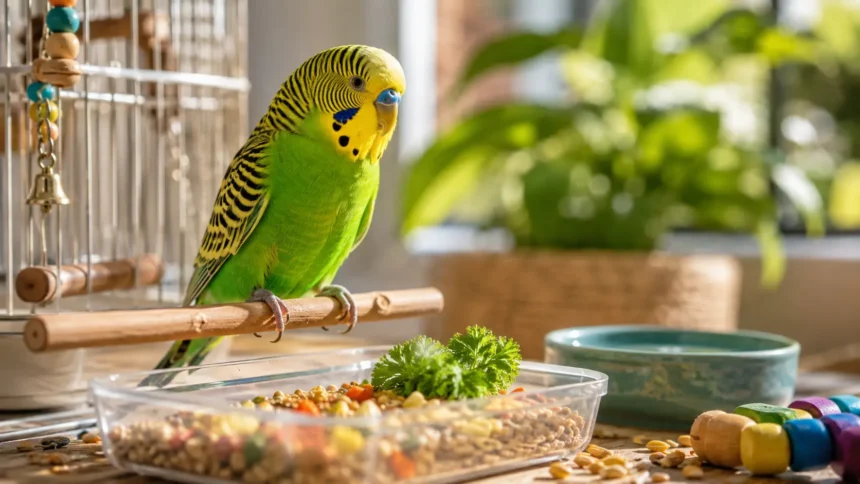
Parakeet Care Guide: Diet, Lifespan & Personality
Parakeets are small, colorful, intelligent birds that can bring remarkable energy and personality into a home. In many countries, the word “parakeet” can describe several small long-tailed parrots, but pet owners often use it specifically for the budgerigar, or budgie. These compact parrots are popular because they are social, relatively affordable to keep, capable of learning words, and adaptable to many households. Their small size, however, should never be mistaken for simple care requirements. A healthy parakeet needs nutritious food, room to move, regular social interaction, mental stimulation, safe housing, and preventive veterinary care. Understanding these needs before bringing a bird home can make the difference between basic survival and a genuinely good quality of life.
A well-cared-for parakeet may remain part of the family for many years, which makes ownership a meaningful long-term commitment. Their daily routine involves much more than refilling a seed dish and occasionally cleaning a cage. Parakeets are active flock animals with strong instincts to fly, forage, chew, communicate, explore, and interact socially. Owners who provide opportunities for these natural behaviors generally have happier and more engaging companion birds. Diet is especially important because traditional seed-only feeding can contribute to nutritional deficiencies and obesity over time. Housing, sleep, enrichment, cleanliness, and early recognition of illness are equally important. This parakeet care guide explains what beginners need to know about diet, lifespan, personality, behavior, housing, health, training, and everyday care.
What Is a Parakeet?
A parakeet is generally a small or medium-sized parrot characterized by a relatively slender body and long tail feathers. Many different parrot species can technically be called parakeets, including ring-necked parakeets, monk parakeets, and several Australian species. In everyday pet terminology, however, “parakeet” most frequently refers to the budgerigar, whose scientific name is Melopsittacus undulatus. Budgies originated in Australia, where wild populations move across large areas according to rainfall, temperature, and food availability. Their natural lifestyle helps explain why pet parakeets are energetic, highly social, and strongly motivated to fly and forage. Most of the care recommendations in this guide therefore focus on budgerigars commonly kept as household pets.
Wild budgerigars are usually green and yellow because these colors provide effective camouflage in their natural surroundings. Selective breeding has produced pet parakeets in an impressive variety of colors, including blue, white, gray, violet, yellow, green, and combinations featuring different markings. Color differences do not fundamentally change the everyday care needs of the bird, although certain selectively bred lines may vary somewhat in body size or health characteristics. Adult budgies are compact parrots, generally measuring around seven inches from head to tail, although larger exhibition-type birds can be noticeably heavier and broader. Their lightweight bodies are designed for quick movement and efficient flight. This physical design makes regular opportunities for movement especially important in captivity.
Male and female parakeets can often be distinguished by examining the cere, which is the fleshy area directly above the beak containing the nostrils. Mature males commonly develop a blue or purplish cere, while females often show whitish, tan, brown, or pale blue coloration depending on age and reproductive condition. Young birds can be more difficult to identify because their cere coloration changes as they mature. Other visual clues, including forehead markings and eye development, can sometimes provide information about approximate age. Nevertheless, color mutations can make traditional visual indicators less reliable in some individual birds. Owners should therefore avoid making health or breeding decisions based solely on assumptions about sex or age obtained from appearance.
Parakeets possess many characteristics associated with larger parrots despite their considerably smaller bodies. They can solve simple problems, recognize routines, learn sounds, investigate new objects, and develop preferences for particular people, foods, activities, or toys. Some individuals learn extensive vocabularies, while others communicate mainly through chirps, whistles, body movements, and flock calls. Their intelligence means that an unstimulating environment can become frustrating even when food, water, and shelter are available. A spacious enclosure alone does not satisfy every behavioral requirement because mental engagement and social interaction remain essential parts of good parakeet care. Treating the bird as an intelligent companion rather than a decorative cage pet creates a much stronger foundation for responsible ownership.
Another important characteristic of parakeets is their status as prey animals in the wild. Because vulnerable birds instinctively avoid showing weakness, pet parakeets may appear relatively normal during the early stages of illness. This makes attentive observation particularly important for owners because subtle behavioral changes can sometimes provide the first warning that something is wrong. Reduced eating, unusual quietness, persistent feather fluffing, sleeping excessively, breathing changes, altered droppings, or spending unusual amounts of time on the cage floor deserve attention. Learning what is normal for an individual bird makes abnormal behavior much easier to recognize. A good parakeet owner therefore becomes familiar not only with feeding and cleaning routines but also with the bird’s ordinary personality, activity level, appetite, vocalizations, and daily habits.
Parakeet Personality and Behavior
The typical parakeet personality combines curiosity, sociability, intelligence, energy, and occasional stubbornness. Healthy birds often begin the morning with lively chatter and continue communicating periodically throughout the day. Some are adventurous and investigate new toys almost immediately, whereas more cautious individuals may observe unfamiliar objects for several days before approaching them. Neither reaction automatically indicates a better or worse personality because individual temperaments vary substantially. Genetics, early socialization, previous experiences, housing conditions, age, and the owner’s behavior can all influence how confident a bird becomes. Giving a new parakeet time to adjust without forcing interaction usually creates a better foundation for trust than attempting immediate physical handling.
Parakeets are flock-oriented birds, so social contact plays an important role in their emotional wellbeing. A single bird can develop a strong relationship with its human caretaker when that person provides frequent interaction, training, enrichment, and companionship throughout the day. Owners who are away for long periods may consider keeping compatible parakeets together because another bird can provide valuable species-appropriate communication and companionship. Keeping two birds does not mean they will automatically reject human interaction, although they may naturally direct more social behavior toward one another. Introducing birds should be handled carefully because compatibility cannot simply be assumed. Sufficient space, multiple resources, proper quarantine procedures, and gradual introductions help reduce conflict and health risks when adding another bird.
Vocal communication is one of the most recognizable parts of parakeet behavior. Their normal sounds include chirping, chattering, whistles, contact calls, and occasional louder bursts of noise, especially during active periods. Some males become particularly enthusiastic mimics and may learn human words, household noises, whistles, or repeated phrases. Females can also learn sounds and words, although talking ability varies far more between individuals than simple stereotypes suggest. A quiet parakeet is not necessarily unhappy, but a normally vocal bird that suddenly becomes unusually silent may deserve closer observation. Owners should appreciate natural bird sounds before adopting because attempting to suppress ordinary vocal behavior can create stress and unrealistic expectations.
Body language helps owners understand whether their parakeet feels relaxed, interested, frightened, tired, territorial, or uncomfortable. A relaxed bird may preen, softly chatter, stretch its wings, grind its beak before sleeping, or rest comfortably on one foot. A nervous bird may become unusually still, lean away, tighten its feathers against its body, move rapidly around the cage, or attempt to escape an approaching hand. Biting can occur when subtler warning signals have been ignored, particularly when a bird feels cornered or threatened. Punishing a bite generally does not address the reason behind the behavior and may damage trust. Instead, owners should identify triggers, respect personal space, reinforce calm interaction, and teach cooperative behavior through patient positive reinforcement.
Hormonal behavior can temporarily change a parakeet’s personality and should be managed rather than interpreted as deliberate bad behavior. Some birds become more territorial, protective of particular spaces, interested in nesting areas, or unusually focused on another bird, person, toy, or reflective surface. Dark enclosed spaces resembling nests may encourage breeding behavior, particularly in females, so unnecessary nest-like objects should usually be avoided. Excessive handling around the back or body may also stimulate sexual behavior because parrots generally reserve this type of contact for mates. Head and cheek scratches are normally more appropriate when the bird willingly accepts touch. Maintaining sufficient sleep, controlling environmental triggers, and consulting an avian veterinarian when reproductive problems develop can help owners manage hormonal periods safely.
Creating the Ideal Parakeet Cage and Home
Choosing an appropriate parakeet cage is one of the most important decisions an owner makes because the enclosure influences exercise, safety, sleep, feeding, and daily behavior. Width is particularly valuable because budgies naturally benefit from horizontal movement rather than simply climbing up and down a tall narrow enclosure. The cage should be large enough for the bird to fully extend its wings and move comfortably between perches without constantly striking toys or cage bars. Larger flight-style cages are generally preferable when household space allows, particularly for multiple birds. Bar spacing must also be narrow enough to prevent the bird from pushing its head through and becoming trapped. Secure doors and sturdy construction provide additional protection against accidental escapes or injuries.
The cage location matters almost as much as the cage itself. Parakeets generally enjoy being part of household activity, so an isolated room with little interaction is rarely ideal. At the same time, constant heavy traffic, loud disturbances, or unpredictable activity can make a nervous bird feel vulnerable. Positioning part of the enclosure near a solid wall can create a sense of security while still allowing the bird to observe family life. Direct exposure to drafts, strong air-conditioning, heaters, intense afternoon sunlight, or constantly fluctuating temperatures should be avoided. Kitchens are particularly unsuitable because cooking fumes, smoke, aerosolized oils, and overheated cookware can create serious respiratory hazards for birds with highly sensitive respiratory systems.
Perches should encourage natural foot movement rather than forcing a parakeet’s feet into the same position throughout the day. Using several bird-safe natural branches with varying diameters allows the toes and feet to grip differently as the bird moves around the cage. Smooth identical dowel perches throughout the enclosure provide less variation and may contribute to pressure on the same areas of the feet. Abrasive perch covers should not be relied upon as a substitute for nail care because overly rough surfaces can irritate delicate foot tissue. Perches should also be arranged so the bird can travel between them without overcrowding the center of the enclosure. Keeping perches away from directly above food and water containers helps reduce contamination from droppings.
A parakeet cage should contain stimulating objects without becoming so cluttered that the bird has little space to move. Useful enrichment can include swings, shreddable materials, climbing opportunities, chewable bird-safe items, and simple foraging activities. Toys should be selected for an appropriately small bird because large gaps, loose fibers, sharp components, exposed wires, or easily detachable pieces may create entanglement or ingestion hazards. Every toy should be inspected regularly because even a safe product can become dangerous after repeated chewing and wear. Some birds enthusiastically investigate new objects, while others initially regard them with suspicion. Introducing unfamiliar enrichment gradually and observing the bird’s reaction allows stimulation to increase without unnecessarily overwhelming a cautious parakeet.
Sleep is another frequently overlooked part of the cage environment. Most parakeets benefit from a consistent period of roughly 10 to 12 hours of quiet, darkness, and uninterrupted rest each night. A television playing late into the evening or frequent movement around the cage can interfere with normal sleep even when the bird appears to be resting. The household routine should therefore include a predictable bedtime and calm sleeping environment. Some owners cover part or all of the cage at night, while others use a separate quiet sleeping area, depending on what makes the individual bird comfortable. The important factors are darkness, ventilation, security, consistency, and freedom from repeated nighttime disturbances rather than following one rigid sleeping method.
What Should a Parakeet Eat?
A healthy parakeet diet should provide balanced nutrition rather than relying exclusively on a traditional bowl of seeds. Seeds are appealing because budgies naturally enjoy them, but many common seed mixtures are calorie-dense and do not provide ideal levels of every vitamin, mineral, amino acid, and other nutrient needed for long-term health. Birds offered unlimited seed may selectively eat their favorite high-fat varieties while ignoring less preferred components. Over time, this selective feeding can contribute to excess weight and nutritional deficiencies. A formulated diet designed specifically for small parrots can provide a more consistent nutritional foundation. Dietary changes should be made gradually because a bird unfamiliar with pellets may not immediately recognize them as food.
Fresh vegetables can add variety, moisture, micronutrients, texture, and valuable foraging opportunities to a parakeet’s daily menu. Suitable choices can include leafy greens, broccoli, carrots, bell peppers, peas, herbs, and other bird-safe vegetables served in manageable pieces. Different preparation styles sometimes help reluctant birds experiment with unfamiliar foods, so owners can try finely chopped vegetables, larger pieces attached to cage bars, or mixed fresh-food presentations. New foods may require repeated exposure before a cautious parakeet decides to taste them. Removing a food after one rejection can therefore create the false impression that the bird will never eat it. Fresh foods should be washed carefully and removed before they spoil, particularly in warm environments where bacterial growth occurs quickly.
Fruit can be offered as part of a varied diet, but it should generally represent a smaller proportion than vegetables because many fruits contain relatively high levels of natural sugar. Small portions of berries, melon, mango, apple without seeds, or other bird-safe fruits can provide useful variety and make excellent training rewards. Portion size matters because a tiny parakeet does not require the same quantity that appears small on a human plate. Millet is another favorite food and can be highly useful during taming or positive reinforcement training. However, constant unrestricted access can make it less valuable as a reward while contributing additional calories. Treat foods are most useful when they complement a balanced diet rather than replacing nutritionally important foods.
Owners must also understand which foods and household substances can be dangerous to parakeets. Avocado, chocolate, alcohol, caffeine-containing drinks, and foods containing unsafe amounts of salt or other unsuitable ingredients should not be offered. Fruit pits and certain seeds can contain compounds that make them inappropriate for birds, so fruit should be prepared properly before serving. Human snack foods are generally poor choices because their salt, fat, sugar, seasonings, or processing may be unsuitable for such a small animal. Owners should verify unfamiliar foods before sharing them rather than assuming that something healthy for humans must also be safe for birds. Good parakeet nutrition depends just as much on preventing dangerous exposures as it does on providing nutritious ingredients.
Fresh, clean drinking water must be available every day regardless of what foods the bird eats. Water dishes can become contaminated remarkably quickly by food, feathers, droppings, or normal bird activity, so they should be checked frequently rather than simply refilled when empty. Containers should be washed properly to prevent slippery biofilm from developing on interior surfaces. Supplements should not automatically be added to drinking water because they can alter taste, reduce consumption, deteriorate over time, or make accurate dosing difficult. A balanced diet generally reduces the need for indiscriminate vitamin supplementation unless an avian veterinarian identifies a specific requirement. Regularly observing appetite and water consumption can also help owners notice potentially important changes in a parakeet’s health.
Daily Parakeet Care and Cleaning
Good parakeet care depends on consistency more than complicated routines. Each morning, owners should check that the bird appears alert, responsive, and interested in normal activities before refreshing food and drinking water. Feeding containers should be examined carefully because empty seed husks can sometimes make a dish appear fuller than it actually is. Droppings, appetite, posture, breathing, and general activity can provide useful clues about the bird’s condition. A few minutes of observation during routine feeding can reveal subtle changes that might otherwise remain unnoticed. Daily care should also include some form of social interaction or enrichment because emotional needs cannot be postponed until cage-cleaning day. Predictable routines can help parakeets feel secure while giving owners a reliable baseline for detecting behavioral changes.
Food and water dishes require frequent cleaning because organic residue creates conditions in which microorganisms can multiply. Fresh produce should never remain in the cage indefinitely, especially during hot weather, and leftovers should be removed once they are no longer fresh. Cage liners provide an easy way to observe droppings and should be replaced regularly so waste does not accumulate underneath the bird. Plain paper-based liners can make changes in stool appearance easier to notice than heavily textured substrates. The cage floor, bars, grate, perches, and surrounding surfaces should receive routine cleaning according to how quickly they become dirty. Multiple birds generally create more food debris, feathers, dust, and droppings, making more frequent cleaning necessary.
Cleaning products must be chosen carefully because birds have sensitive respiratory systems and can be affected by fumes that seem minor to humans. Strong perfumes, aerosol sprays, harsh fumes, scented disinfectants, air fresheners, and similar products should not be used casually around an occupied bird enclosure. When a deeper cleaning product is necessary, the bird should be protected from fumes and all surfaces should be thoroughly rinsed and completely dry before normal use resumes. Owners should always follow the product’s safety instructions rather than mixing household chemicals together. Ventilation is important, but placing the parakeet directly in a strong draft is not an appropriate substitute. Simple regular cleaning often prevents the need for aggressive chemical use in the first place.
Bathing is another normal part of parakeet care, although individual preferences vary considerably. Some birds enthusiastically splash in a shallow bird bath, while others prefer bathing in wet leafy vegetables or gentle misting with plain clean water. A parakeet should never be forced into water because doing so can create fear and unnecessary stress. Bathing opportunities are best provided when the environment is comfortably warm and the bird has enough time to dry naturally before bedtime. Soap, human shampoo, perfume, or other grooming products should not be applied to healthy feathers. Parakeets maintain their plumage through natural preening, so the owner’s role is primarily to provide safe bathing opportunities and a clean environment.
Routine household safety should be considered part of daily care because many common objects can become hazardous once a parakeet is allowed outside its cage. Windows and doors should be secured before flight time, ceiling fans should be switched off, and other pets should be safely separated. Open toilets, uncovered water containers, hot appliances, candles, exposed electrical cords, toxic plants, and small chewable objects may also create risks. Birds should never be trusted unsupervised around cats or dogs simply because the animals appear friendly during previous interactions. Even playful behavior can cause severe injury to a very small bird. Creating a bird-safe room before opening the cage makes supervised exercise considerably safer and allows both the parakeet and owner to relax.
Exercise, Enrichment and Training
Flight is one of the most natural forms of exercise for a parakeet, which makes movement opportunities an important component of physical and psychological health. A spacious cage can encourage short flights, but supervised time in a properly bird-proofed room provides considerably more freedom for many household birds. The area should be secured before the cage door opens because frightened parakeets can move remarkably quickly and may collide with windows or escape through unnoticed openings. Beginners should establish basic trust before expecting a newly adopted bird to return willingly to its cage. Training the bird to step onto a hand or handheld perch can make transitions much easier. Patience is more effective than chasing, which can damage trust and make future handling difficult.
Mental exercise deserves the same attention as physical activity because parakeets spend much of their natural lives searching for resources, communicating, exploring, and responding to changing surroundings. A cage containing only food, water, and one plastic toy offers limited opportunities for these behaviors. Foraging activities can encourage birds to work gently for portions of their food by searching through safe materials or investigating simple puzzle-style setups. Shreddable paper, bird-safe plant materials, natural chew items, swings, and climbing opportunities can provide additional stimulation. Enrichment should match the bird’s confidence and experience rather than becoming unnecessarily difficult. The goal is to create enjoyable challenges that encourage natural behavior without producing persistent frustration or fear.
Toy rotation can help preserve novelty, although owners do not need to replace everything on a rigid schedule when the bird remains actively engaged with particular favorites. Some parakeets form strong preferences for certain swings or chewing materials and may become stressed when every familiar item suddenly disappears. A balanced approach involves keeping important familiar objects while periodically introducing or exchanging other enrichment options. All toys should be checked for damage, especially frayed fibers, exposed wire, sharp edges, cracked plastic, or loops capable of trapping toes or heads. Bells and metal components also deserve inspection because construction quality varies greatly. Safety matters more than quantity, so a few carefully selected items are preferable to an overcrowded collection of questionable accessories.
Training provides both enrichment and practical communication between the owner and parakeet. Step-up training is particularly useful because it teaches the bird to move voluntarily onto a finger or handheld perch, making routine handling easier. Positive reinforcement works well because desirable behaviors can be rewarded with tiny pieces of a favorite treat, verbal praise, or access to something the bird enjoys. Training sessions should be brief enough that the parakeet remains interested rather than becoming tired or irritated. Birds should be allowed to move away when uncomfortable, especially during early trust-building sessions. Progress may initially consist of nothing more than calmly eating near the owner’s hand, but those small successful experiences can gradually develop into confident interaction.
Teaching words and sounds can be another enjoyable enrichment activity, although owners should avoid judging the quality of their relationship by whether the bird learns human speech. Repeating short phrases in a clear, enthusiastic voice during predictable situations can make particular sounds easier for a parakeet to associate with attention or events. Some birds begin mimicking quickly, while others never become strong talkers despite excellent care and socialization. Whistling, chirping back to the bird, target training, recall exercises, and simple movement cues can provide equally valuable interaction. Training should remain voluntary and rewarding rather than becoming a performance requirement. A confident parakeet that enjoys communicating naturally is far more important than achieving a particular vocabulary.
Parakeet Health, Lifespan and Veterinary Care
Parakeet lifespan varies according to genetics, diet, veterinary care, environment, reproductive history, accident prevention, and other health factors. Many pet budgerigars live somewhere around seven to fifteen years, although individual birds may live shorter or considerably longer lives. A low-quality diet, chronic obesity, exposure to toxins, untreated disease, repeated reproductive stress, and household accidents can reduce longevity. Conversely, balanced nutrition, suitable exercise, safe housing, proper sleep, enrichment, and timely medical care support healthier aging. Prospective owners should therefore think of adopting a parakeet as a commitment that may extend well beyond a decade. Their inexpensive purchase price compared with larger parrots does not make their health or welfare less important.
Finding an experienced avian veterinarian before an emergency occurs is one of the most useful preparations a new owner can make. Birds have anatomical and medical needs that differ substantially from dogs and cats, so a general pet clinic may not always offer the same level of bird-specific experience. A wellness examination after adoption can establish a baseline and provide an opportunity to discuss nutrition, weight, parasite concerns, behavior, and housing. Regular veterinary assessments become increasingly valuable as the bird ages or develops chronic conditions. Owners should also know which nearby facility handles bird emergencies outside normal business hours. Searching for urgent veterinary care after a critically ill parakeet begins deteriorating wastes valuable time that could have been saved through advance planning.
Early illness in parakeets can be difficult to recognize because birds may instinctively conceal weakness. Warning signs can include decreased appetite, noticeable weight loss, unusual sleepiness, persistent fluffing, sitting low on a perch, reduced vocalization, vomiting, balance problems, abnormal droppings, tail movement associated with breathing, open-mouth breathing, nasal discharge, or spending prolonged periods on the cage floor. Any substantial change from the bird’s normal behavior deserves attention, particularly if several symptoms appear together. Respiratory difficulty, uncontrolled bleeding, severe injury, seizures, collapse, suspected poisoning, or inability to perch can require urgent veterinary assessment. Owners should not delay treatment simply because the bird occasionally appears better. Small birds can deteriorate rapidly once illness becomes advanced.
Monitoring body weight can provide useful health information because significant weight changes may occur before obvious visual differences become noticeable beneath feathers. A small digital scale capable of measuring grams can allow owners to establish an individual bird’s normal weight when used consistently and without causing excessive stress. The trend matters more than comparing every bird with a single ideal number because body size varies between individuals and varieties. Sudden or progressive unexplained weight loss should be discussed with an avian veterinarian. Weight gain can also indicate nutritional or reproductive concerns and should not automatically be considered harmless. Combining weight monitoring with observations of appetite, droppings, activity, feather condition, and behavior provides a clearer picture than relying on appearance alone.
Preventive health care also involves controlling environmental hazards that can cause sudden illness without warning. Smoke, tobacco products, aerosol sprays, strong fragrances, overheated non-stick materials, toxic metals, unsafe plants, cleaning fumes, and certain cooking vapors can be especially dangerous to birds. Household air quality deserves serious attention because the avian respiratory system is exceptionally efficient and sensitive. Parakeets should also be protected from extreme temperatures and direct exposure to heating or cooling vents. Newly acquired birds should be kept appropriately separated from existing birds until health risks have been assessed and introductions are safe. Prevention may seem less dramatic than medical treatment, but eliminating everyday hazards is one of the most effective ways to support a long parakeet lifespan.
Building a Strong Bond With Your Parakeet
Bonding usually begins with helping a new parakeet feel safe rather than immediately trying to touch it. Moving into an unfamiliar cage surrounded by unknown people, sounds, and routines can be stressful even for a normally confident bird. During the first days, owners can spend time nearby, speak calmly, perform necessary cage maintenance gently, and allow the bird to observe without constant pressure. Quick movements directly toward the bird may trigger defensive reactions because hands can appear threatening until positive associations develop. Food rewards can gradually make human presence more appealing. Trust grows most effectively when the parakeet repeatedly discovers that interacting with its owner leads to predictable, safe, and pleasant experiences.
Hand taming should proceed at a pace the individual bird can tolerate comfortably. An owner might begin by placing a hand near the cage without attempting contact, then gradually progress toward offering treats through the bars or inside the enclosure. Once the bird confidently approaches, step-up training can be introduced using a finger or small handheld perch. Attempting to grab a frightened parakeet for routine bonding usually works against the goal because restraint can confirm the bird’s fear of hands. Emergencies may occasionally require handling, but ordinary socialization should emphasize voluntary participation whenever possible. A bird that chooses to approach its owner generally develops more durable confidence than one trained primarily through forced compliance.
Consistency is important because parakeets quickly learn household patterns and human reactions. Short daily interactions often produce better results than one long training session followed by several days with little attention. Owners can talk to the bird during food preparation, practice simple cues, provide supervised flight time, or offer a favorite treat after calm interaction. Progress may fluctuate, particularly following environmental changes, hormonal periods, illness, or frightening experiences. Temporary hesitation does not necessarily mean the bond has disappeared. Returning to familiar positive exercises and allowing the bird to regain confidence can usually be more productive than increasing pressure in an attempt to recover previous behavior quickly.
Respecting boundaries is equally important once a parakeet becomes friendly. Some birds enjoy head scratches while others prefer interacting without being touched at all, and both relationships can still be meaningful. Owners should watch body language rather than assuming that a tame bird automatically wants constant physical contact. Following a bird around with a hand, repeatedly touching it after it moves away, or trapping it against cage bars can turn interaction into something the bird learns to avoid. Allowing the parakeet to say “no” encourages voluntary communication and can actually increase confidence around people. Good bonding therefore involves listening to the bird’s behavior instead of simply teaching the bird to obey human requests.
Strong relationships also develop through shared activities rather than handling alone. A parakeet may enjoy sitting nearby while its owner works, practicing recall between short distances, investigating a play area, learning sounds, or eating a tiny portion of bird-safe food during social time. These experiences allow companionship to become part of ordinary life instead of limiting interaction to cage maintenance. Owners eventually learn subtle individual preferences, such as favorite toys, preferred rewards, comfortable perching locations, and particular vocal responses. That familiarity makes parakeet ownership considerably more rewarding while also improving the owner’s ability to notice health or behavioral changes. The best bond is ultimately built through trust, communication, consistency, and respect rather than dominance.
Is a Parakeet the Right Pet for You?
Parakeets can make excellent companion animals for people who appreciate active, intelligent pets and are prepared to meet their daily requirements. Their relatively small size makes them practical for many apartments and homes where a larger parrot would be difficult to accommodate. However, small size does not mean a parakeet can spend its entire life inside a tiny decorative cage. Owners need space for an appropriately sized enclosure, safe exercise opportunities, food preparation, cleaning, enrichment, and storage of bird supplies. They must also be comfortable with feathers, discarded food, occasional mess around the cage, and regular vocalization. Considering these everyday realities before adoption prevents disappointment after the excitement of bringing the bird home fades.
Time is another important consideration because parakeets require daily attention regardless of whether the owner feels busy. Food and water need checking, the cage requires routine maintenance, and a social bird needs companionship or interaction. A person who frequently travels must arrange competent care from someone who understands birds instead of assuming that filling several food dishes will be sufficient. Owners working long hours may need to plan carefully for social enrichment and could potentially consider compatible bird companionship. Even then, multiple birds still require human care, observation, cleaning, veterinary treatment, and appropriately sized housing. Parakeet ownership works best when their needs are incorporated realistically into the household schedule rather than treated as optional entertainment.
Financial planning also deserves consideration despite parakeets being relatively inexpensive to purchase. The bird itself may cost far less than its long-term care, particularly when cage equipment, quality food, enrichment, veterinary examinations, emergency treatment, and replacement supplies are considered. Choosing an undersized cage or poor-quality food simply to reduce initial costs can compromise welfare and potentially increase future health expenses. Owners should identify an avian veterinarian and consider how unexpected medical bills would be handled before adopting. Replacing damaged toys, perches, and cage accessories is also part of responsible ownership rather than a one-time expense. A realistic budget makes it easier to provide consistent care throughout the parakeet’s life.
Household compatibility should be assessed carefully when children, cats, dogs, or other pets are present. Children can enjoy observing and gently interacting with parakeets, but adults must remain responsible for care, handling, cleaning, and veterinary decisions. Small birds are physically fragile, so squeezing, chasing, or accidental impacts can cause serious injuries. Predatory pets create another level of risk even when they usually behave calmly around the cage. Physical separation and direct supervision remain important because instinctive reactions can occur suddenly. Households using frequent aerosols, scented products, indoor smoke, or unsafe cookware may also require lifestyle changes. Preparing the environment before adoption is considerably easier than discovering incompatible habits after the bird arrives.
For the right household, living with a parakeet can become surprisingly interactive and rewarding. These small parrots often reveal individual personalities that are far more complex than new owners expect, ranging from fearless explorers to gentle observers and enthusiastic chatterers. Their intelligence encourages owners to become active participants in feeding, training, environmental enrichment, and communication rather than passive caretakers. Providing excellent care does require daily commitment, but the reward can be years of lively companionship and continually changing behavior to observe. Prospective owners should focus less on whether parakeets are “easy pets” and more on whether their natural needs fit the household’s lifestyle. When those needs are respected, a parakeet can thrive as an engaging companion rather than simply existing as a bird in a cage.
Frequently Asked Questions About Parakeets
How long do parakeets live?
Pet budgerigars commonly live around seven to fifteen years, although lifespan varies considerably between individuals. Genetics, nutrition, veterinary care, exercise, safe housing, and prevention of accidents all influence how long a parakeet may live.
What is the best diet for a parakeet?
A balanced diet should generally combine an appropriate formulated food with bird-safe vegetables, controlled portions of seeds, occasional fruit, and fresh drinking water. Seed-only feeding is not considered an ideal long-term diet because birds may selectively consume high-calorie seeds while missing important nutrients.
Can a parakeet learn to talk?
Yes, many parakeets can imitate human speech, whistles, and household sounds, and some individuals develop surprisingly large vocabularies. Talking ability varies significantly, however, so a parakeet should never be purchased with the expectation that it will definitely learn words.
Should I keep one parakeet or two?
A single parakeet can thrive when it receives substantial daily human companionship, stimulation, and interaction. Two compatible birds can provide valuable social companionship for each other, particularly in households where people are away for significant portions of the day, but they still require attentive human care.
How can I tell if my parakeet is happy?
A comfortable parakeet commonly eats normally, explores its surroundings, preens, chirps, plays, stretches, interacts socially, and maintains an alert posture during active periods. Because personality differs between birds, the most useful indicator is understanding your own parakeet’s normal behavior and recognizing meaningful changes from that baseline.