

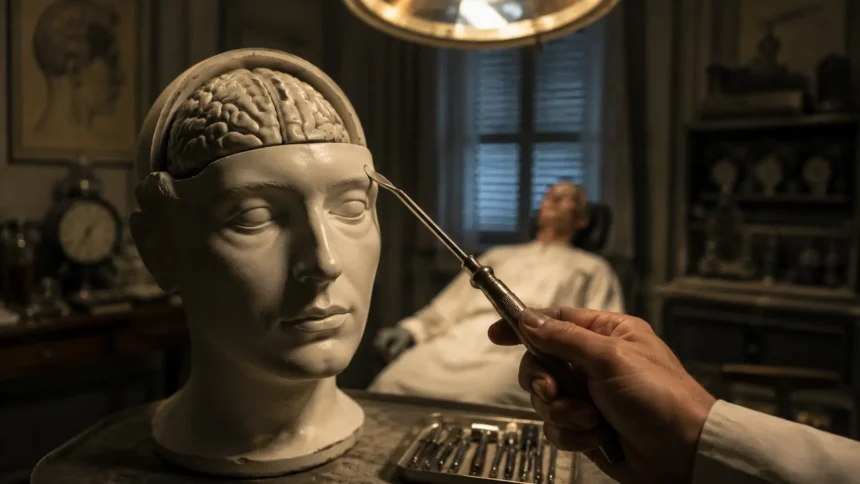
Lobotomy Meaning: History, Procedure & Why It Ended
The word lobotomy refers to a historical form of psychosurgery in which doctors intentionally cut or disrupted connections within the brain, particularly pathways involving the frontal lobes. The procedure became one of the most controversial treatments in the history of psychiatry because it was performed on thousands of people with serious mental health conditions during the twentieth century. At the time, physicians had few effective treatments for illnesses such as severe depression, schizophrenia, obsessive-compulsive symptoms, and extreme agitation. Some doctors believed altering connections in the frontal portion of the brain could reduce emotional distress or disruptive behavior. Although certain patients appeared calmer afterward, many experienced profound and permanent changes in personality, motivation, judgment, and independence. Today, lobotomy is remembered largely as a warning about the consequences of using invasive medical treatments before their long-term effects are adequately understood.
Understanding the meaning of lobotomy requires looking beyond the dramatic images and stories often associated with the procedure. It was not simply the removal of a portion of the brain, as the name sometimes leads people to assume. Instead, most forms of lobotomy attempted to sever connections between parts of the frontal lobes and deeper brain structures believed to influence emotions and behavior. Different techniques were developed over time, including the prefrontal lobotomy and the particularly controversial transorbital lobotomy. These operations were performed using surgical instruments inserted through openings in the skull or, in some techniques, through the eye socket. Because neuroscience was far less developed at the time, doctors had only a limited understanding of how disrupting these complex neural networks could affect an individual’s identity and cognitive abilities.
The rise of lobotomy occurred during an era when psychiatric hospitals were overcrowded and treatment options were extremely limited. Before modern psychiatric medications became available, doctors relied on approaches such as prolonged hospitalization, electroconvulsive therapy, insulin coma therapy, and other experimental treatments. Families and institutions sometimes faced situations in which individuals experienced severe psychosis, aggression, suicidal behavior, or disabling emotional distress with little prospect of improvement. Against this background, lobotomy was initially promoted as a potential solution for patients who had not responded to other available treatments. Reports that some patients became easier to manage contributed to its rapid adoption in certain countries. However, reducing visible distress or agitation did not necessarily mean that the person’s underlying mental illness had been successfully treated.
The medical and ethical standards surrounding lobotomy changed dramatically as evidence of its risks accumulated. Patients could develop apathy, emotional flattening, impaired judgment, reduced initiative, seizures, infections, cognitive problems, and serious disability following surgery. Some people became unable to return to independent work, relationships, or ordinary daily activities. Others experienced significant personality changes that family members described as making them seem like a different person. Death was also a possible complication, especially during an era when neurosurgery, infection control, and postoperative care were less advanced than they are today. These outcomes eventually contributed to growing criticism from psychiatrists, neurologists, patients, families, journalists, and medical ethicists.
Modern psychiatry no longer uses the classic lobotomy techniques that became common during the mid-twentieth century. The introduction of effective psychiatric medications, advances in psychotherapy, improved understanding of brain function, stronger standards for informed consent, and increasing recognition of patient rights all contributed to the procedure’s decline. Highly specialized forms of modern neurosurgery may still be considered in exceptionally rare cases of severe treatment-resistant psychiatric illness, but they bear little resemblance to historical lobotomy. Contemporary procedures use precise imaging, strict ethical oversight, carefully selected patients, and targeted approaches designed to minimize damage to healthy brain tissue. Learning about lobotomy therefore provides valuable insight into both the development of mental health treatment and the importance of balancing innovation with safety, evidence, and respect for human dignity.
What Is a Lobotomy?
A lobotomy is a form of historical brain surgery designed to interrupt nerve pathways in the frontal regions of the brain. The frontal lobes play important roles in planning, decision-making, emotional regulation, social behavior, motivation, personality, and impulse control. Early proponents of psychosurgery believed that certain psychiatric symptoms resulted from abnormal or overly intense connections between the frontal cortex and deeper brain structures. By cutting some of these connections, they hoped to reduce severe anxiety, emotional distress, obsessive thinking, aggression, or psychosis. The approach was based on a simplified understanding of brain function that later proved inadequate. Modern neuroscience has demonstrated that mental health conditions involve complicated interactions among brain networks, biology, psychology, environment, and individual life experiences.
The term lobotomy is sometimes used interchangeably with leucotomy, although the words have somewhat different historical origins. Portuguese neurologist António Egas Moniz initially called his procedure a prefrontal leucotomy, referring to the cutting of white-matter connections in the frontal region. American neurologist Walter Freeman and neurosurgeon James Watts later developed and promoted variations that became widely known as prefrontal lobotomy. Freeman eventually popularized an even faster approach called the transorbital lobotomy. These procedures differed in their surgical techniques, but they shared the general intention of disrupting frontal brain connections. As the term became widely known, “lobotomy” eventually became the common public label for several related forms of historical psychosurgery.
The operation was fundamentally different from simply removing a tumor, damaged tissue, or clearly defined diseased structure. Mental health disorders do not usually exist as isolated pieces of abnormal brain tissue that can simply be cut away. Lobotomy instead damaged functional connections that were part of normal brain systems as well as pathways believed to contribute to psychiatric symptoms. This explains why the procedure could reduce emotional intensity while simultaneously harming initiative, judgment, social awareness, and personality. In some cases, doctors interpreted a quieter or less distressed patient as evidence of therapeutic success. From a modern perspective, however, reduced emotional expression could reflect neurological impairment rather than genuine psychological recovery.
The meaning of lobotomy also changed as public understanding of psychiatric care evolved. During its early years, some physicians regarded the operation as an innovative treatment for otherwise severe and untreatable illness. Later, accounts from patients and families increasingly emphasized its disabling consequences and the lack of meaningful consent in many cases. The procedure became associated with institutional control, medical overconfidence, and the vulnerability of psychiatric patients. Popular books, films, documentaries, and historical investigations further shaped its reputation. Today, the word “lobotomy” often carries a strongly negative meaning because it symbolizes an irreversible intervention performed during an era when medicine had fewer safeguards and limited knowledge of the brain.
It is important to distinguish historical lobotomy from modern neurological and psychiatric procedures. Neurosurgery has advanced enormously since the middle of the twentieth century, allowing physicians to identify very small structures and networks with sophisticated imaging and computer-guided technology. Rare contemporary procedures for severe neurological or psychiatric disorders may target highly specific brain circuits rather than broadly destroying frontal connections. Deep brain stimulation, for example, can alter neural activity through implanted electrodes without recreating a classic lobotomy. Such treatments are considered only under strict medical criteria and are not routine approaches to common mental health conditions. Calling every modern psychiatric brain intervention a lobotomy therefore creates an inaccurate impression of how contemporary treatment works.
The History of Lobotomy and How It Became Popular
The history of lobotomy began during a period of intense experimentation in neurology and psychiatry. In the early twentieth century, scientists were increasingly interested in whether specific areas of the brain controlled particular behaviors, emotions, and mental functions. Psychiatric hospitals were also struggling with large populations of patients experiencing severe mental illnesses for which effective treatments were scarce. Long-term institutionalization was common, and some patients spent years or decades inside hospitals. Physicians therefore searched urgently for treatments that might reduce psychosis, agitation, severe depression, or behavioral disturbances. This medical environment created conditions in which experimental brain surgery could appear more acceptable than it would under modern standards.
In 1935, Portuguese neurologist António Egas Moniz developed a procedure intended to interrupt connections between the frontal lobes and other parts of the brain. Working with surgeon Pedro Almeida Lima, Moniz initially experimented with injecting alcohol into frontal white matter before developing an instrument called a leucotome. The device was used to create small lesions within frontal brain tissue. Moniz reported that some psychiatric patients showed improvement after the procedure, although the methods used to evaluate success would not meet today’s research standards. Long-term complications and personality changes were not fully appreciated in many early reports. Nevertheless, his work attracted international attention and helped establish psychosurgery as a seemingly legitimate medical field.
The procedure gained particular momentum in the United States through the efforts of Walter Freeman and James Watts. Freeman was an enthusiastic promoter who believed psychosurgery could help large numbers of institutionalized psychiatric patients. Together with Watts, he initially performed a surgical technique that required access through openings in the skull. Freeman later sought a quicker and simpler method that could be performed without a traditional operating room. His solution was the transorbital lobotomy, which involved passing an instrument through the thin bone above the eye socket. This technique greatly increased the speed with which lobotomies could be performed and played a significant role in the procedure’s expansion.
Freeman traveled extensively to hospitals and medical institutions demonstrating the transorbital procedure. His highly public approach helped transform lobotomy from a specialized neurosurgical intervention into a treatment performed in a wide variety of psychiatric settings. Thousands of procedures were eventually conducted in the United States, while variations were also performed in several other countries. Patients undergoing lobotomy included people diagnosed with schizophrenia, severe depression, obsessive-compulsive symptoms, anxiety, chronic pain, and various behavioral problems. Some historical records also reveal cases in which standards for selecting patients were extremely broad. The resulting variation in diagnosis and surgical technique made it difficult to determine who genuinely benefited and who experienced harm.
One of the most striking events in the history of lobotomy occurred when Moniz received the Nobel Prize in Physiology or Medicine in 1949 for his work related to prefrontal leucotomy. At the time, the award reflected optimism among parts of the medical community about psychosurgery as a treatment for severe psychiatric disorders. In later decades, however, the legacy of the award became controversial as the harms and ethical problems surrounding lobotomy became more widely recognized. The episode illustrates how medical treatments can receive prestigious endorsement before their long-term consequences are completely understood. It also demonstrates why contemporary medicine places greater emphasis on controlled clinical trials, patient-reported outcomes, independent review, and long-term follow-up before accepting invasive treatments.
How Was a Lobotomy Performed?
There was no single universal lobotomy procedure because techniques changed considerably during the years when psychosurgery was practiced. One early method, the prefrontal lobotomy, usually involved creating openings in the skull through which surgical instruments could reach the frontal portions of the brain. Surgeons then cut or damaged white-matter pathways connecting parts of the prefrontal cortex with other brain regions. The exact location and amount of tissue disrupted could vary significantly between practitioners. Brain imaging capable of guiding surgeons with today’s level of precision did not exist. As a result, the effects were difficult to predict, and two patients undergoing apparently similar operations could experience dramatically different outcomes.
The original leucotomy developed by Moniz involved making lesions in frontal white matter. Early procedures experimented with alcohol injections intended to destroy selected nerve fibers before Moniz and his colleagues began using a specialized instrument. The leucotome contained a mechanism capable of cutting circular sections of brain tissue after being inserted through holes drilled in the skull. The basic theory was that interrupting fixed patterns of neural activity might relieve psychiatric symptoms. However, scientists did not yet understand the detailed functions of the frontal networks being disrupted. Consequently, the procedure could damage pathways involved in normal emotion, planning, motivation, attention, judgment, and interpersonal behavior.
Freeman and Watts later modified the operation into what became known as the standard prefrontal lobotomy. Their technique involved inserting surgical instruments into both frontal lobes and moving them through brain tissue to interrupt neural connections. Because the operation required neurosurgical expertise and access through the skull, it still depended on a relatively formal surgical setting. Freeman eventually became dissatisfied with these limitations because he wanted psychosurgery to be available in psychiatric hospitals without neurosurgeons. This goal led him toward the development of the transorbital approach. The new method would become the most visually recognizable and controversial form of lobotomy in popular history.
A transorbital lobotomy involved inserting a narrow surgical instrument through the upper part of the eye socket and passing it through the thin orbital bone toward the frontal brain. The instrument was then moved in directions intended to sever connections within the frontal lobes. Freeman developed tools specifically for this procedure after initially experimenting with an instrument inspired by an ice pick, which is why transorbital lobotomy is sometimes called an “ice-pick lobotomy.” In some settings, electroconvulsive treatment was used to render the patient unconscious before the procedure. The operation could be completed rapidly compared with conventional neurosurgery. Its speed, however, did not make the neurological changes precise or predictable.
The lack of precision was one of the central medical problems with historical lobotomy. Surgeons could not directly observe every connection they were cutting, and individual anatomy varies from person to person. Small differences in instrument position or movement could potentially affect different brain networks and produce different consequences. Serious complications could include bleeding, infection, seizures, neurological disability, cognitive impairment, and death. Even when patients survived without an obvious surgical emergency, lasting personality and functional changes could emerge afterward. Modern brain surgery relies on vastly more precise imaging, surgical planning, monitoring, ethical safeguards, and knowledge of neural circuitry, highlighting how technologically limited historical lobotomy truly was.
Why Did Doctors Use Lobotomies?
To understand why doctors used lobotomies, it is necessary to consider the state of psychiatric medicine before modern medications became widely available. Hospitals cared for many people with severe schizophrenia, depression, mania, obsessive symptoms, and other disabling psychiatric conditions. Some patients experienced hallucinations, delusions, self-harm, extreme anxiety, agitation, or aggressive behavior that could persist for years. Doctors had relatively few treatments capable of producing reliable long-term improvement. Psychotherapy could help some individuals but was difficult to provide effectively to people experiencing profound psychosis or severe institutional disability. Lobotomy emerged in this environment as an experimental attempt to relieve suffering that existing treatments could not adequately control.
Institutional conditions also influenced the adoption of lobotomy. Psychiatric hospitals in many regions were overcrowded, understaffed, and responsible for patients requiring intensive long-term care. Treatments that appeared capable of reducing agitation or making patients easier to manage could therefore seem attractive to administrators and clinicians. A person who became quieter after surgery might require less supervision, even if that apparent improvement resulted from reduced motivation or emotional responsiveness. This created an important ethical problem because institutional convenience could be confused with genuine improvement in the patient’s quality of life. Modern mental health care places much greater emphasis on functional recovery, autonomy, personal goals, and the patient’s own experience of treatment outcomes.
Some physicians sincerely believed that lobotomy could provide relief for individuals experiencing unbearable psychiatric symptoms. Historical reports describe patients whose anxiety, emotional torment, or agitation appeared to decrease significantly after surgery. These observations encouraged doctors to continue experimenting with psychosurgery and contributed to enthusiastic medical publications. However, early evaluations often lacked randomized comparison groups, standardized outcome measures, long-term monitoring, and rigorous assessment of cognitive or personality changes. A treatment could therefore be labeled successful simply because a patient was calmer or could leave the hospital. Today’s clinical research standards require a much broader evaluation of benefits, harms, functioning, and quality of life.
Social attitudes toward mental illness also played an important role. People with serious psychiatric conditions frequently had fewer legal protections and less influence over medical decisions than patients generally have today. Families, hospital administrators, guardians, or doctors sometimes made decisions with limited participation from the person undergoing treatment. Women and other socially vulnerable patients could be judged according to behavioral expectations that reflected the culture of the period rather than strictly medical criteria. Historical cases have raised serious concerns about whether certain individuals truly required such drastic treatment. These issues helped make lobotomy a major case study in the development of modern ideas about informed consent and psychiatric patient rights.
The widespread use of lobotomy was therefore not caused by a single factor. It resulted from a combination of limited treatment options, incomplete neuroscience, institutional pressures, professional enthusiasm, dramatic claims of success, and weaker ethical safeguards. Medical practitioners were attempting to address real and often devastating illnesses, but the intervention they adopted carried consequences they did not fully understand. The story demonstrates that good intentions alone cannot establish whether a medical treatment is appropriate. Effective care also requires convincing evidence, careful risk assessment, respect for individual autonomy, and reliable monitoring of long-term outcomes. Those principles became increasingly important as the limitations and harms of lobotomy became impossible to ignore.
Effects, Risks and Consequences of Lobotomy
The effects of lobotomy varied considerably between patients, partly because the amount and location of brain tissue damaged differed between procedures. Some individuals appeared less anxious, less agitated, or less emotionally distressed following surgery. These changes were initially interpreted by advocates as evidence that the operation had successfully treated psychiatric disease. However, emotional calmness could be accompanied by apathy, diminished initiative, reduced curiosity, and a loss of normal emotional responsiveness. A person might no longer express severe distress because the brain systems supporting motivation and emotional engagement had been disrupted. This distinction between symptom reduction and neurological impairment became increasingly important as doctors gained more experience with long-term outcomes.
Changes in personality were among the most troubling consequences reported after lobotomy. Family members sometimes described previously energetic or independent individuals as passive, indifferent, childish, socially inappropriate, or emotionally flat after the procedure. People could lose the ability to plan effectively, understand social consequences, maintain employment, or manage complex daily responsibilities. Because the frontal lobes contribute heavily to executive function, disrupting their connections could alter abilities that are fundamental to personal independence. Some patients required rehabilitation or continued institutional care despite being considered behaviorally improved. Such outcomes challenged the idea that reducing difficult psychiatric symptoms automatically represented meaningful recovery.
Cognitive difficulties could also occur after psychosurgery. Problems with attention, planning, problem-solving, memory, judgment, and abstract thinking were described in some patients. The severity ranged from subtle impairment to substantial disability, depending on the procedure and individual response. Certain people retained basic intellectual abilities while losing initiative or the capacity to use those abilities effectively in everyday life. This phenomenon could make a patient appear outwardly capable during a simple examination while struggling significantly in real-world situations. Modern neuropsychology recognizes that intelligence, motivation, executive function, emotional processing, and social judgment depend on overlapping but distinct brain networks.
Lobotomy also carried the immediate physical risks associated with invasive brain surgery. Bleeding inside the skull, infection, seizures, injury to unintended brain structures, and complications related to anesthesia or postoperative care were possible. Some patients died as a result of the procedure or its complications. Others developed epilepsy or lasting neurological problems. These dangers were particularly significant because operations were being performed during a period when antibiotics, brain imaging, surgical monitoring, and intensive care were far less advanced. The rapid transorbital method raised additional concerns because the instrument passed through the eye socket into brain tissue without the controlled visualization expected in modern neurosurgery.
The consequences of lobotomy extended beyond physical and cognitive complications to questions of identity, dignity, and autonomy. Patients who survived could experience permanent changes in emotional life that affected marriages, friendships, family relationships, work, and personal aspirations. For some, the operation reduced symptoms they had found intolerable, but for others the price was a profound loss of independence or personality characteristics. Historical medical records often emphasized whether patients were easier to care for rather than describing their own views of the outcome. Contemporary medicine increasingly recognizes patient-reported quality of life as an essential measure of treatment success. This shift is one reason the history of lobotomy remains highly relevant to discussions about medical ethics today.
Why Did Lobotomies Stop?
Lobotomies declined for several reasons rather than ending through a single ban or discovery. By the late 1940s and 1950s, doctors were accumulating more evidence that the procedure could cause serious and irreversible neurological consequences. Reports of personality changes, cognitive impairment, seizures, disability, and death weakened earlier enthusiasm. Critics argued that the definition of a successful operation was sometimes too narrow because a quiet or compliant patient was not necessarily a healthy patient. Medical professionals also became increasingly uncomfortable with the unpredictable nature of the procedure. As knowledge about frontal-lobe function expanded, deliberately damaging large neural pathways appeared more difficult to justify.
One of the most important reasons for the decline was the arrival of psychiatric medications. During the 1950s, antipsychotic drugs began transforming the treatment of schizophrenia and other severe psychiatric disorders. Additional medications for depression, anxiety, bipolar disorder, and other conditions were developed over subsequent decades. These treatments were not free from risks or side effects, but they did not require permanently destroying brain tissue. Medication also allowed many patients to receive treatment outside long-term psychiatric institutions. As doctors gained alternatives for managing severe symptoms, the perceived need for irreversible psychosurgery decreased dramatically.
Changing standards of medical ethics contributed to the decline as well. Growing attention to informed consent emphasized that patients should understand the expected benefits, possible harms, and alternatives before undergoing treatment. This principle was particularly important for psychiatric patients whose ability to refuse treatment had historically been limited. Public awareness of abusive or coercive medical practices increased pressure for stronger oversight. Courts, professional organizations, hospitals, and governments gradually developed more formal protections for vulnerable patients. A procedure capable of permanently changing personality and brain function faced increasing ethical scrutiny under these evolving standards.
Professional attitudes toward mental health treatment also changed. Psychiatry increasingly incorporated pharmacology, evidence-based psychotherapy, community care, rehabilitation, and more sophisticated diagnostic approaches. Researchers developed improved methods for evaluating treatments through controlled trials and standardized outcome measures. The idea that severe psychiatric illness could be solved through broad disruption of frontal brain pathways became scientifically outdated. Even physicians who continued to explore psychosurgery moved toward more targeted approaches. The crude anatomical assumptions underlying classical lobotomy therefore became incompatible with the rapidly developing understanding of neural networks and psychiatric disease.
By the later twentieth century, classic prefrontal and transorbital lobotomies had largely disappeared from mainstream medical practice. Their decline did not mean that every psychiatric disorder had become easy to treat, since many patients continued to experience severe and treatment-resistant illness. Instead, medicine concluded that the risks and irreversible consequences of traditional lobotomy outweighed its uncertain benefits. Today, historical lobotomy techniques are not considered appropriate standard psychiatric treatment. Modern interventions emphasize evidence, reversibility where possible, precise targeting, ongoing monitoring, and patient participation in treatment decisions. The end of widespread lobotomy therefore represents both a scientific transition and an important transformation in medical ethics.
Lobotomy vs Modern Psychosurgery
Modern psychosurgery should not be confused with the broad and imprecise lobotomy procedures performed during the twentieth century. Neuroscientists now understand far more about how networks of brain regions communicate to produce emotion, cognition, behavior, and movement. Contemporary procedures can use magnetic resonance imaging, computer guidance, electrophysiological monitoring, and other technologies to identify highly specific targets. Doctors do not simply cut large areas of frontal white matter in an attempt to suppress psychiatric symptoms. Instead, rare interventions focus on carefully selected circuits thought to contribute to severe treatment-resistant illness. The difference in precision is one of the most important distinctions between historical and modern approaches.
Deep brain stimulation is one example of a modern technique sometimes discussed in connection with psychiatric neurosurgery. It involves surgically implanting electrodes into specific brain regions and delivering controlled electrical stimulation through an implanted device. Unlike a traditional lobotomy, deep brain stimulation generally does not depend on destroying a broad region of brain tissue. The stimulation can be adjusted, and the device can potentially be turned off or removed. The technique is established for certain neurological movement disorders and has also been investigated for selected severe psychiatric conditions. Its use involves specialist assessment and careful weighing of potential benefits against surgical and psychological risks.
Some highly targeted lesion procedures also exist for a small number of patients with extremely severe, treatment-resistant psychiatric disorders. Techniques may focus on carefully defined neural circuits rather than indiscriminately disrupting the frontal lobes. Such procedures are uncommon and generally considered only after multiple evidence-based treatments have failed. Candidates typically undergo extensive psychiatric, neurological, psychological, and ethical evaluation before surgery is considered. Follow-up may continue for years to assess effectiveness and potential complications. These safeguards contrast sharply with periods of lobotomy history when operations could be performed rapidly and with far less standardized patient selection.
Modern care also places greater emphasis on informed consent. Patients considering an invasive neurological treatment are expected to receive detailed explanations of the procedure, uncertainty, risks, alternatives, and likely recovery process. Independent oversight may be required, particularly when treatments are experimental or involve vulnerable populations. Researchers must follow formal ethical rules governing study design and participant protection. Clinical outcomes are evaluated using standardized measures rather than simply observing whether someone appears calmer after treatment. These practices reflect lessons learned from numerous historical medical controversies, including the experience of lobotomy.
Calling modern targeted neurosurgery a lobotomy can therefore be misleading. Both involve interventions involving the brain, but their scientific foundations, precision, technologies, ethical safeguards, and treatment goals differ substantially. The historical lobotomy was based on broad disruption of frontal connections at a time when those neural systems were poorly understood. Contemporary approaches attempt to influence narrowly defined circuits while preserving as much normal brain function as possible. Even modern procedures carry meaningful risks and are reserved for unusual clinical circumstances. Their existence does not represent a return of classic lobotomy but rather demonstrates how dramatically neuroscience and medical ethics have evolved.
What the History of Lobotomy Teaches Us Today
One of the most important lessons from lobotomy is that medical enthusiasm should always be supported by strong evidence. Early positive reports created optimism that psychosurgery could transform the lives of people with severe psychiatric conditions. However, many assessments of success did not adequately measure long-term cognitive, emotional, and functional consequences. Treatments can appear effective when researchers focus on a narrow outcome while overlooking other forms of harm. Contemporary clinical trials therefore evaluate multiple measures, including symptoms, adverse effects, functioning, and quality of life. Long-term follow-up is especially important when an intervention creates permanent changes to the body or brain.
The history also highlights the importance of informed consent and patient autonomy. Many people who underwent lobotomy lived in institutions where they had relatively little control over major decisions affecting their medical care. In some historical circumstances, family members, guardians, or physicians authorized irreversible procedures on behalf of patients. Modern ethics recognizes that individuals should participate meaningfully in decisions whenever they have the capacity to do so. When capacity is impaired, additional safeguards are required to protect the person’s interests and rights. The more invasive and irreversible a treatment is, the more carefully consent, alternatives, uncertainty, and potential consequences must be considered.
Another lesson involves how society defines successful mental health treatment. A person becoming quieter or easier to supervise does not necessarily mean that their health or quality of life has improved. Meaningful recovery can include relationships, independence, emotional range, employment, personal goals, physical health, and participation in the community. Modern psychiatric care increasingly attempts to incorporate the patient’s priorities when measuring outcomes. This approach contrasts with institutional models that may prioritize convenience or behavioral control. The history of lobotomy demonstrates why treatment should serve the person receiving care rather than primarily making that person easier for others to manage.
Lobotomy also illustrates the importance of understanding uncertainty in medicine. Doctors in the early twentieth century were working with incomplete scientific knowledge, just as modern medicine continues to face unanswered questions today. Scientific progress requires experimentation, but responsible experimentation needs boundaries, independent review, transparent reporting, and careful assessment of harm. Treatments should be modified or abandoned when evidence shows that risks outweigh benefits. Professional prestige or widespread popularity should never make a medical approach immune from reassessment. Science advances not only by discovering new treatments but also by recognizing when previously accepted ideas were mistaken.
Finally, the history of lobotomy encourages a more compassionate understanding of both psychiatric patients and medical progress. People who underwent the procedure were individuals dealing with illnesses, disabilities, family pressures, and institutional systems that often offered few good choices. Their experiences should not be reduced to sensational stories about bizarre medical practices. At the same time, acknowledging the limited options available to earlier physicians does not require ignoring preventable harm or ethical failures. Studying lobotomy allows modern medicine to understand how scientific optimism, social pressure, inadequate evidence, and limited patient protections can interact. Remembering those lessons can help support safer, more respectful, and more evidence-based mental health care.
Frequently Asked Questions About Lobotomy
What is the simple meaning of a lobotomy? A lobotomy was a historical type of brain surgery in which doctors deliberately cut or damaged connections involving the frontal lobes in an attempt to reduce severe psychiatric symptoms. The procedure could produce major and permanent changes in personality, motivation, judgment, and cognitive function.
Is a lobotomy still performed today? Classic prefrontal and transorbital lobotomies are no longer used as standard psychiatric treatments. Rare forms of highly targeted modern neurosurgery may be considered for carefully selected treatment-resistant conditions, but these procedures are much more precise and operate under very different scientific and ethical standards.
Why was the lobotomy considered successful at first? Some patients appeared less anxious, agitated, psychotic, or emotionally distressed after surgery, which early doctors interpreted as improvement. Later experience revealed that apparent calmness could sometimes result from apathy, emotional flattening, or neurological impairment rather than genuine recovery.
Who made the lobotomy famous? António Egas Moniz developed the early prefrontal leucotomy, while Walter Freeman and James Watts helped popularize variations of the procedure in the United States. Freeman later became particularly associated with the transorbital lobotomy, which could be performed more quickly than conventional neurosurgery.
Why did doctors stop doing lobotomies? Lobotomies declined because of serious complications, unpredictable results, ethical concerns, improved understanding of brain function, and the development of psychiatric medications and other treatments. As safer and more evidence-based options became available, the risks of permanently damaging frontal brain connections became increasingly difficult to justify.