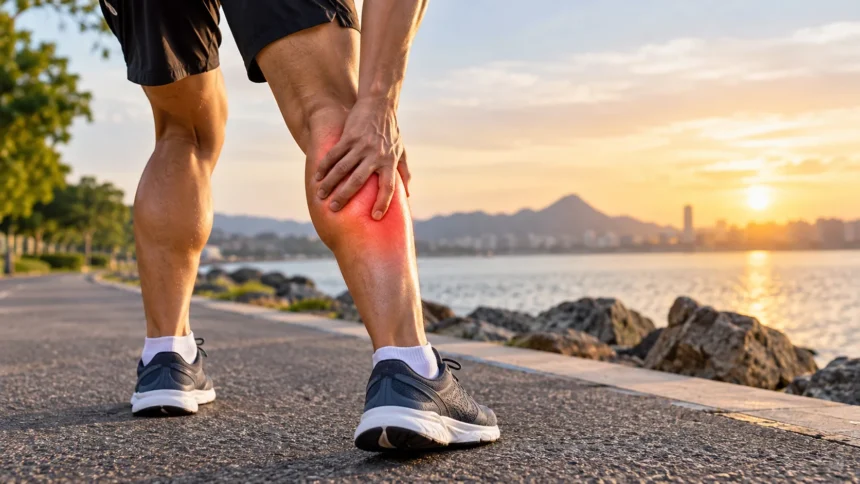
Calf tightness can feel like stiffness, pulling, pressure, or reduced flexibility in the muscles at the back of the lower leg. It may appear after exercise, long periods of sitting, increased walking, or changes in your usual activity level. In many cases, the sensation is temporary and improves with gentle movement, recovery, and appropriate stretching.
However, tight calves are not always caused by one simple problem. Muscle fatigue, limited ankle mobility, dehydration, training changes, nerve irritation, or circulation-related conditions can sometimes contribute to similar sensations. Understanding when calf tightness is likely related to everyday activity and when additional symptoms need attention can help you respond more appropriately.
What Does Calf Tightness Feel Like?
Calf tightness usually creates a sensation of stiffness or tension in the muscles behind the lower leg. You may notice it while walking, climbing stairs, bending your ankle, or stretching your leg. Some people describe the calf as feeling shortened or unusually firm, particularly after sitting still or completing a demanding workout.
The sensation can affect one calf or both legs and may be constant or appear only during certain movements. Mild tightness often improves as the muscles warm up, while exercise-related soreness may become more noticeable several hours after activity. The exact pattern can provide useful clues about what may be contributing to the discomfort.
Calf tightness is different from sudden severe pain, although the two can occasionally occur together. A simple feeling of muscular tension is usually less concerning than swelling, significant tenderness, warmth, discoloration, or sudden difficulty walking. Paying attention to these accompanying symptoms is important when deciding whether self-care or professional assessment is more appropriate.
Common Causes of Tight Calf Muscles
One of the most common causes of calf tightness is muscular fatigue. Walking farther than usual, running, climbing hills, standing for extended periods, or increasing your workout intensity can place additional demand on the gastrocnemius and soleus muscles. These muscles may temporarily feel stiff as they recover from unfamiliar or repetitive activity.
Long periods of inactivity can also make the calves feel tight. Sitting at a desk, traveling for several hours, or remaining in one position may reduce normal movement through the ankles and lower legs. When you stand and begin walking again, the muscles can initially feel stiff until regular movement returns.
Footwear and walking mechanics may contribute as well. Shoes with a significant heel, limited support, or a different shape from what you normally wear can change how your calves work. Sudden changes in running surfaces, exercise technique, or daily walking volume can similarly increase muscular demand and leave the lower legs feeling unusually tight.
Can Exercise Cause Calf Tightness?
Exercise-related calf tightness is common, especially when training volume increases quickly. Running, jumping, skipping, hiking, and calf raises all require repeated contractions of the lower-leg muscles. If your muscles are not accustomed to the workload, temporary stiffness and soreness may develop during the hours or days following the session.
Delayed onset muscle soreness can also create a feeling of tightness after unfamiliar exercise. This often becomes noticeable the day after training and may last for several days while the muscles recover. Gentle movement usually feels more comfortable than complete inactivity, although intense exercise may need to be reduced temporarily if the calves remain significantly sore.
Training progression is important for preventing repeated episodes of excessive tightness. Instead of dramatically increasing running distance, workout duration, or resistance at once, make smaller changes over time. Adequate rest between demanding sessions can also help the calf muscles adapt to higher workloads without constantly feeling fatigued or restricted.
How Ankle Mobility Affects Calf Tightness
The calf muscles play an important role in ankle movement, particularly when you point the foot downward or push off the ground while walking. If ankle mobility is limited, everyday activities may require the calf muscles to work differently. This can create a sensation of stiffness even when there is no major injury.
Limited ankle dorsiflexion, which is the ability to bring the shin forward over the foot, can influence movements such as squatting, climbing stairs, and running. Tight calf muscles themselves can contribute to reduced ankle motion, creating a cycle where stiffness and limited mobility occur together. Controlled mobility exercises may help improve movement gradually.
Ankle mobility should be improved without aggressively forcing the joint. Gentle calf stretches, controlled ankle movements, and strength exercises through a comfortable range can be useful. If one ankle is significantly more restricted than the other or mobility continues worsening, a physiotherapist or healthcare professional can help identify whether another issue is limiting movement.
Dehydration, Cramps, and Calf Tightness
Some people associate calf tightness with dehydration because fluid balance and electrolytes are involved in normal muscle function. Heavy sweating during exercise, hot weather, illness, or inadequate fluid intake may contribute to muscle fatigue or cramping in certain situations. However, not every tight or cramping calf is caused by dehydration.
Muscle cramps involve sudden, involuntary contractions that can create intense pain and temporary hardness within the muscle. They often affect the calves at night or during demanding physical activity. Fatigue, exercise intensity, individual susceptibility, and several other factors can contribute, which means simply drinking more water does not always prevent every episode.
Maintaining normal hydration is still an important part of overall health and exercise recovery. Drink according to your needs, particularly when you are active in warm conditions or losing significant fluid through sweat. Frequent unexplained cramps, especially when combined with weakness or other symptoms, should be discussed with a healthcare professional rather than automatically blamed on hydration.
Can Sitting Too Long Make Calves Feel Tight?
Extended sitting reduces how often your ankle and calf muscles move through their normal ranges. During long desk sessions, flights, or car journeys, your lower legs may remain almost completely still for hours. When you eventually stand up, the calves can feel stiff because they have not been contracting and lengthening regularly.
Simple movement breaks can help reduce this temporary stiffness. Standing, walking briefly, performing gentle ankle circles, or repeatedly lifting your heels and toes can encourage movement through the lower legs. These small activities are particularly useful during long workdays when a full exercise session is not practical.
However, prolonged immobility is also relevant because it can increase the risk of certain circulation problems in susceptible individuals. New one-sided calf swelling, warmth, redness, or significant pain should not be dismissed as ordinary stiffness. These symptoms require prompt medical assessment, especially after long travel, surgery, hospitalization, or another period of reduced mobility.
Stretching for Tight Calves
A basic wall calf stretch can target the larger gastrocnemius muscle. Place your hands against a wall, step one foot backward, and keep the rear heel on the ground while gently leaning forward. Keep the back knee relatively straight and stop when you feel comfortable tension through the upper portion of the calf.
Bending the back knee slightly while keeping the heel down changes the emphasis toward the deeper soleus muscle. Move slowly into the stretch and avoid bouncing or forcing the ankle beyond a comfortable range. Holding a mild stretch for approximately 20 to 30 seconds can be a practical starting point for many people.
Stretching can be included as part of broader mobility work rather than treating one muscle in isolation. Tightness can occur in different areas of the body, including the shoulders and neck area, so a balanced routine often includes several regions. Stop any stretch that causes sharp pain, numbness, or worsening symptoms.
Strengthening Exercises for Calf Tightness
Strengthening the calves can sometimes be just as important as stretching them. Muscles that fatigue easily may feel tight during activities because they are working close to their current capacity. Gradually improving strength and endurance can help your calves tolerate walking, running, stairs, and other repetitive movements more comfortably.
Calf raises are one of the simplest strengthening exercises. Stand near a stable surface, slowly rise onto the balls of your feet, pause briefly, and lower your heels with control. Start with both legs and gradually progress toward single-leg variations only when you can maintain balance and complete the movement without pain.
Strength work should be introduced progressively rather than performed aggressively when the calf is already irritated. Begin with manageable repetitions and allow recovery between sessions. Combining calf strengthening with exercises for the feet, ankles, hips, and overall lower body can create a more balanced approach to movement and reduce excessive dependence on one muscle group.
Calf Tightness After Running
Runners commonly experience calf tightness because the lower-leg muscles help absorb force and propel the body forward with every stride. Increasing mileage, adding speed sessions, running uphill, or changing footwear can significantly increase calf workload. Even experienced runners can develop temporary tightness when training changes happen faster than their tissues can adapt.
A proper warm-up can make the first part of a run feel more comfortable. Begin with several minutes of easy walking or jogging before increasing intensity, and include controlled ankle or leg movements when appropriate. After training, gentle walking and normal movement can help your body transition gradually out of the session.
Recurring tightness during every run deserves closer attention. It may indicate that training load, recovery, strength, footwear, or running mechanics need adjustment. Pain that becomes progressively sharper, changes your running form, or appears suddenly should not be treated as normal tightness because conditions such as calf strains can require a different recovery approach.
When Calf Tightness Could Be a Muscle Strain
A calf strain occurs when muscle fibers are overloaded or overstretched. Unlike general tightness, a strain may cause a sudden sharp sensation during running, jumping, accelerating, or changing direction. Some people describe feeling as though they were struck in the back of the leg even though there was no external impact.
Mild strains can cause soreness, tenderness, and discomfort when pushing through the foot. More significant injuries may make walking difficult and can sometimes produce bruising or swelling. Continuing intense exercise through these symptoms can delay recovery, so temporarily reducing activities that clearly increase pain is usually sensible.
Recovery time varies according to the severity of the injury. Gentle movement may gradually be reintroduced as symptoms improve, followed by progressive strengthening and return to normal activities. If you cannot walk comfortably, experience substantial swelling, or are unsure whether the problem is a strain or another condition, professional assessment can provide clearer guidance.
When Calf Tightness May Be Related to Nerves
Not every tight feeling comes directly from the calf muscles. Nerves traveling from the lower back through the leg can sometimes create sensations that people interpret as tightness, pulling, burning, or tension. These symptoms may occur with back discomfort or travel into the thigh, calf, ankle, or foot.
Nerve-related symptoms can differ from ordinary muscular stiffness because they may include tingling, numbness, sensitivity, or electric-like sensations. Certain sitting positions or spinal movements may also change the symptoms more noticeably than stretching the calf itself. Aggressive stretching is not always helpful when nerve irritation is contributing to the problem.
If calf tightness repeatedly appears with numbness, weakness, altered sensation, or pain traveling from the back or buttock, consider seeking medical or physiotherapy assessment. A professional examination can help identify whether muscles, joints, nerves, or another structure are contributing and guide an appropriate treatment or rehabilitation approach.
When Calf Tightness Could Be a Circulation Problem
Circulation-related conditions can sometimes produce calf discomfort that feels different from ordinary muscular tightness. Reduced blood flow to the legs may cause aching, cramping, or heaviness during walking that improves after stopping to rest. Persistent or recurring symptoms with activity should be evaluated rather than managed only with stretching.
A blood clot in a deep vein, known as deep vein thrombosis, can also affect the calf. Possible signs include new one-sided swelling, warmth, tenderness, skin color changes, or unexplained pain. Not everyone experiences exactly the same symptoms, which is why concerning changes should be assessed promptly rather than diagnosed at home.
Seek urgent medical care if calf symptoms occur with sudden shortness of breath, chest pain, coughing blood, fainting, or severe breathing difficulty. These symptoms may indicate a serious complication requiring immediate treatment. Although most everyday calf tightness is not caused by a blood clot, knowing the warning signs helps distinguish routine muscular discomfort from potentially urgent problems.
Best Practices for Preventing Calf Tightness
Gradually increasing physical activity is one of the most effective ways to reduce exercise-related calf overload. Whether you are beginning running, hiking, gym training, or a new sport, allow time for your muscles and tendons to adapt. Large increases in distance, intensity, hills, or jumping can challenge the calves more than expected.
Regular movement throughout the day can also help prevent stiffness associated with inactivity. Take short walking breaks, change sitting positions, and move your ankles periodically when working for long hours. If your lifestyle involves both prolonged sitting and intense workouts, these simple habits can help create a better balance between activity and recovery.
Combine flexibility with strength rather than relying on stretching alone. Strong calves, good ankle mobility, appropriate footwear, adequate recovery, and sensible training progression all contribute to comfortable lower-leg function. Persistent tightness despite these adjustments may be worth discussing with a healthcare professional, particularly when symptoms consistently affect only one side or interfere with daily activities.
Conclusion
Calf tightness is commonly related to muscle fatigue, prolonged sitting, exercise changes, limited ankle mobility, or temporary stiffness. In many cases, symptoms improve with gentle movement, appropriate stretching, gradual strengthening, and sufficient recovery. Looking at recent changes in your activity level can often provide useful clues about why the calves feel unusually tense.
The best approach usually combines several strategies rather than repeatedly stretching one area. Gradual training progression, strength exercises, movement breaks, mobility work, and comfortable footwear can all influence how the lower legs feel. Pay attention to whether symptoms improve with normal movement or continue becoming more intense, frequent, or difficult to explain.
New swelling, warmth, redness, severe pain, significant weakness, numbness, or breathing symptoms should not be treated as ordinary calf tightness. These signs may require prompt medical evaluation. When tightness persists without a clear reason or consistently limits walking and exercise, professional assessment can help identify the underlying cause and guide appropriate next steps.
FAQs
Why do my calves always feel tight?
Persistent calf tightness may be related to repetitive activity, prolonged sitting, limited ankle mobility, muscular fatigue, or training habits. If it continues despite sensible stretching and strengthening, consider having the problem professionally assessed.
Is walking good for tight calves?
Gentle walking can help ordinary stiffness by encouraging muscle and ankle movement. However, stop or reduce activity if walking causes sharp pain, increasing swelling, significant weakness, or symptoms that become progressively worse.
Should I stretch my calves every day?
Gentle daily calf stretching can be appropriate for many people when it feels comfortable. Avoid forcing the stretch, and combine flexibility work with strengthening and regular movement for a more balanced approach.
Why are my calves tight after running?
Running places repeated demand on the calf muscles, particularly after increases in mileage, speed, hills, or training intensity. Temporary tightness may reflect fatigue, while persistent or sharp pain may require further assessment.
When should I worry about calf tightness?
Seek medical attention for sudden one-sided swelling, warmth, redness, severe pain, unexplained weakness, or significant tenderness. Emergency care is especially important if calf symptoms occur with chest pain or sudden difficulty breathing.