

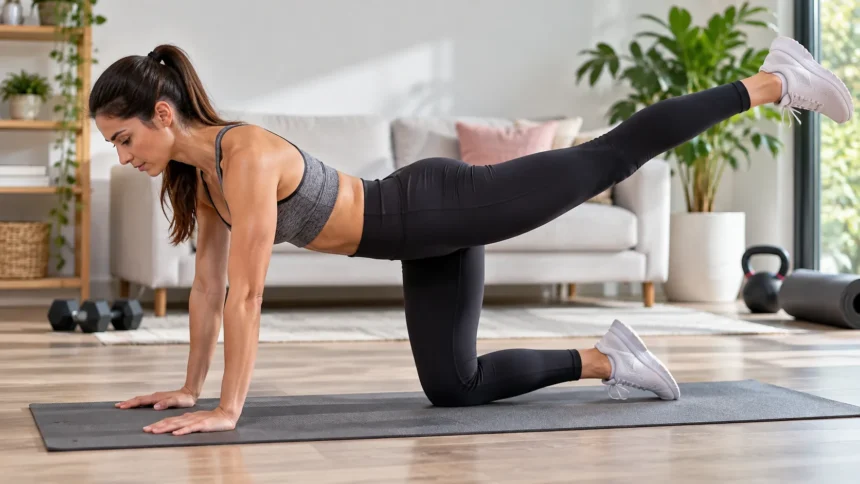
Hip extension is a fundamental movement used during walking, running, climbing stairs, lifting, and many strength exercises. It happens when the thigh moves backward relative to the pelvis or when the hips move from a flexed position toward neutral. Training this movement can strengthen the glutes and hamstrings while supporting better lower-body control during everyday activities.
Hip extension exercises range from simple bodyweight bridges to more demanding movements such as hip thrusts and Romanian deadlifts. The best exercise depends on your current strength, mobility, equipment, and goals. Learning proper form and progressing gradually can help you train the hip muscles effectively without relying excessively on the lower back.
What Is Hip Extension?
Hip extension occurs when the angle at the front of the hip increases and the thigh moves behind the body. You use this motion every time you push the ground away while walking, stand up from a bent position, or drive your hips forward during certain exercises. It is one of the major movement patterns of the hip joint.
The opposite movement is hip flexion, which brings the thigh closer toward the torso. Activities such as sitting, lifting your knee, and stepping upward involve hip flexion, while pushing yourself upright or moving the leg backward requires extension. Healthy movement usually depends on having both adequate mobility and muscular control in these directions.
Hip extension should come primarily from the hip rather than excessive arching of the lower back. When people lack strength, mobility, or awareness, they may compensate through the lumbar spine. Learning to keep the pelvis controlled while the glutes and hamstrings produce movement can make hip extension exercises safer and more productive.
What Muscles Are Used During Hip Extension?
The gluteus maximus is the primary muscle responsible for powerful hip extension. It becomes highly active during movements such as climbing stairs, rising from a squat, sprinting, jumping, and performing hip thrusts. Developing this muscle can improve your ability to generate force while also supporting stability around the pelvis and lower body.
The hamstrings also contribute to hip extension because they cross the back of the hip and knee. These muscles assist the glutes during exercises such as Romanian deadlifts, good mornings, and certain bridge variations. Their contribution can change depending on knee position, exercise technique, resistance, and the specific movement being performed.
Other muscles around the hips and trunk help stabilize your pelvis while the main hip extensors work. The abdominal muscles, smaller gluteal muscles, and spinal stabilizers all contribute to controlling body position. Effective hip extension therefore depends not only on powerful glutes but also on coordinated movement between the hips, pelvis, core, and legs.
Benefits of Hip Extension Exercises
Hip extension exercises can strengthen the glutes and hamstrings, two major muscle groups involved in lower-body movement. Stronger hip extensors may make walking uphill, climbing stairs, lifting objects, running, and standing from a low position feel easier. They can also support performance in strength exercises such as squats, deadlifts, and lunges.
Training hip extension can also improve control of the pelvis during movement. When the glutes and surrounding muscles work effectively, the hips have a stronger foundation for activities involving the knees and lower legs. This can be useful for athletes as well as people who simply want more strength and confidence during everyday movement.
Another benefit is exercise variety because hip extension can be trained using body weight, resistance bands, machines, dumbbells, or barbells. Beginners can start with simple bridge movements while experienced lifters can progressively increase resistance. This flexibility makes hip extension training easy to include in home workouts, gym programs, rehabilitation plans, or general fitness routines.
Glute Bridge for Hip Extension
The glute bridge is one of the simplest hip extension exercises for beginners. Lie on your back with your knees bent and feet flat on the floor, roughly hip-width apart. Brace your midsection gently, press through your feet, and lift your hips until your body forms a relatively straight line from your shoulders toward your knees.
At the top, focus on squeezing your glutes without aggressively arching your lower back. Your ribs should remain controlled instead of flaring upward as your hips rise. Pause briefly, then lower your hips toward the floor with control and repeat while maintaining consistent alignment through your knees, hips, and feet.
If the basic bridge becomes easy, you can add resistance using a band or weight placed comfortably across the hips. Single-leg bridges can also increase difficulty, although they require greater pelvic stability. Progress only when you can keep both sides of the pelvis controlled rather than twisting or dropping as you perform the movement.
Hip Thrusts for Stronger Glutes
Hip thrusts use a similar movement pattern to bridges but usually allow greater range and resistance. Position your upper back against a stable bench with your feet planted firmly on the floor. Lower your hips under control, then drive through your feet and extend the hips until your torso and thighs approach a straight line.
Your chin can remain slightly tucked while your ribs stay controlled throughout the exercise. Avoid throwing your head backward or excessively arching your spine at the top. The goal is to finish the movement by extending the hips and contracting the glutes rather than gaining extra height by moving through the lower back.
Beginners can practice hip thrusts using body weight before adding external resistance. Dumbbells, barbells, resistance bands, or machines can increase the challenge as strength improves. Start with loads that allow smooth repetitions and a controlled lockout instead of choosing heavy resistance that causes bouncing, uneven movement, or loss of pelvic position.
Standing Hip Extension Exercise
Standing hip extension is a convenient exercise that can be performed using body weight or a resistance band. Stand upright while holding a stable surface if necessary, then move one leg backward without leaning your torso significantly forward. Keep the movement controlled and return the leg slowly instead of allowing momentum to swing it back and forth.
The range does not need to be large for the glutes to work. Once the leg moves behind the body, excessive motion may start coming from the lower back instead of the hip. Keeping your pelvis relatively level and your abdominal muscles gently engaged can make it easier to isolate the intended movement.
Resistance bands can make standing hip extension more challenging without requiring heavy gym equipment. Attach the band securely and increase resistance gradually as your control improves. This variation can work well in warm-ups, home workouts, or accessory training alongside squats, lunges, bridges, and other lower-body strengthening movements.
Quadruped Hip Extension and Donkey Kicks
Quadruped hip extension, commonly called a donkey kick, is performed from a hands-and-knees position. Place your hands under your shoulders and knees under your hips, then gently brace your core. Lift one leg backward while keeping the knee bent, stopping before your lower back begins to arch noticeably or your pelvis rotates.
The exercise should feel controlled rather than like a large kicking motion. Think about using your glute to move the thigh while keeping your trunk relatively still. A smaller movement with stable positioning is usually more effective than lifting the leg very high by twisting the hips or extending through the spine.
You can make the movement harder by adding a resistance band or using a cable attachment in a gym. However, additional resistance only helps when you can preserve good technique. Beginners should first learn to control their pelvis and maintain even pressure through both hands before increasing load or performing more demanding variations.
Romanian Deadlifts for Hip Extension Strength
Romanian deadlifts train hip extension through a hip-hinge pattern and strongly involve the glutes and hamstrings. Begin standing with a weight held close to your thighs, soften your knees slightly, and push your hips backward. Lower the weight while maintaining a long spine and stop when you reach a comfortable range without losing control.
To return to standing, press your feet into the floor and drive your hips forward while keeping the weight close to your body. Avoid turning the movement into a squat by bending your knees excessively. The emphasis should remain on moving the hips backward and forward while the hamstrings and glutes control the movement.
Start with light resistance until the hip-hinge pattern feels natural. Dumbbells can be easier for beginners before progressing to a barbell or heavier loads. If you notice repeated lower-leg stiffness during training, reviewing factors that contribute to calf tightness may also help you understand how different parts of the lower body respond to exercise.
Common Hip Extension Mistakes
One common mistake is excessively arching the lower back at the end of the movement. This often happens when people try to achieve a larger range than their hips can comfortably provide. Instead, stop when the hips reach a strong, controlled position and avoid forcing additional movement through the lumbar spine.
Another mistake is performing repetitions too quickly. Fast, uncontrolled movement can make it easier to rely on momentum rather than muscular effort, especially during bridges, standing extensions, and donkey kicks. Slowing the lifting and lowering phases can improve body awareness while helping you maintain better control of your pelvis and trunk.
Using too much resistance too soon can also interfere with proper form. Heavy loads may cause uneven movement, shortened range, or excessive compensation through the back and knees. Choose resistance that allows you to feel the intended muscles working while completing every repetition with consistent technique and controlled breathing.
Best Practices for Hip Extension Training
Begin with exercises you can perform comfortably and progress only after the basic movement feels controlled. Two or three hip extension exercises within a lower-body workout are often enough for general strength training. Your exact volume should depend on your experience, goals, recovery, and the other exercises included in your weekly program.
Allow the muscles time to recover between demanding training sessions. The glutes and hamstrings may feel mildly fatigued after challenging workouts, particularly when you introduce a new exercise or increase resistance. Gradual increases in weight, repetitions, or difficulty are usually more sustainable than making several major changes to your program at once.
Pay attention to the difference between muscular effort and pain. Fatigue or a mild working sensation is expected, but sharp pain, significant joint discomfort, numbness, or unusual weakness should not be ignored. Adjust the exercise or seek professional guidance if symptoms persist, particularly when they interfere with normal walking, training, or daily activities.
Conclusion
Hip extension exercises can strengthen the glutes and hamstrings while supporting better lower-body control during walking, running, lifting, and other activities. Movements such as glute bridges, hip thrusts, standing extensions, donkey kicks, and Romanian deadlifts all train the same general movement pattern in slightly different ways.
Proper technique should remain the priority regardless of which exercise you choose. Keep the pelvis controlled, avoid excessive lower-back arching, and use a range of motion you can manage comfortably. Starting with simpler movements and gradually adding resistance can help you build strength without sacrificing form.
A balanced training routine should combine hip extension work with other lower-body movements, mobility exercises, and adequate recovery. Strong hips are useful, but they function as part of a larger movement system involving the core, knees, ankles, and feet. Consistent practice and sensible progression can help make your hip extension training more effective over time.
FAQs
What is the best exercise for hip extension?
There is no single best exercise for everyone. Glute bridges are beginner-friendly, while hip thrusts and Romanian deadlifts allow greater resistance and may be more suitable as strength improves.
How often should I train hip extension?
Many people can train hip extension two or three times per week as part of a balanced strength program. Recovery needs vary depending on exercise intensity, training experience, and total weekly workload.
Do hip extension exercises strengthen the glutes?
Yes. The gluteus maximus is a major hip extensor and works strongly during bridges, hip thrusts, deadlifts, and similar movements. The hamstrings and other stabilizing muscles also contribute.
Why do I feel hip extensions in my lower back?
You may be extending through your lower back instead of controlling movement at the hips. Reduce the range, brace your core, and focus on squeezing your glutes without excessive spinal arching.
Are hip extension exercises good for beginners?
Yes. Beginners can start with bodyweight glute bridges or standing hip extensions before progressing to resistance bands, hip thrusts, and deadlift variations as strength and movement control improve.