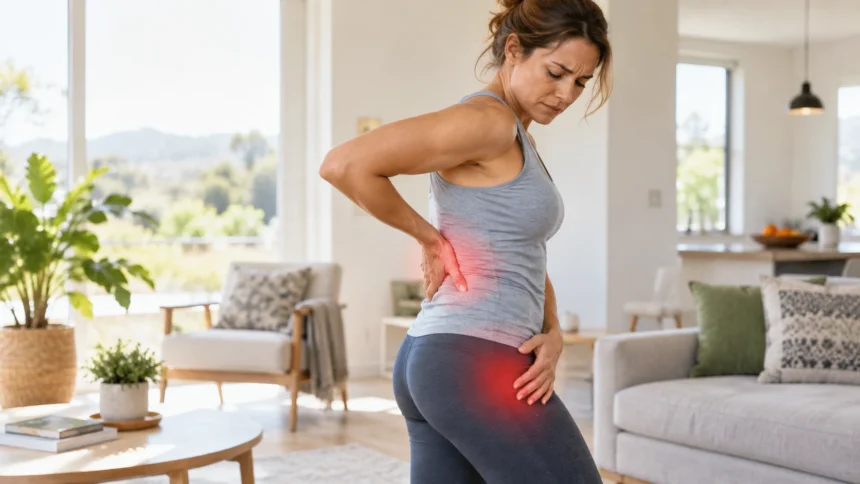
Hip and lower back pain often occur together because the muscles, joints, nerves, and connective tissues in these areas work closely during everyday movement. Discomfort may develop after lifting, sitting for long periods, exercising, or making a sudden movement. In many cases, symptoms improve with gentle activity, gradual strengthening, and changes to habits that repeatedly aggravate the area.
The location of pain does not always reveal exactly where the problem begins. Hip conditions can sometimes feel like back pain, while irritation in the lower spine may create discomfort around the buttock, hip, or leg. Understanding common causes, helpful relief strategies, and warning signs can help you respond more appropriately without assuming every ache has the same explanation.
Understanding Hip and Lower Back Pain
The lower back includes the lumbar spine, surrounding muscles, ligaments, joints, and nerves. The hips sit directly below this region and connect the pelvis with the upper legs. Because these areas share muscles and movement patterns, stiffness or weakness in one region can influence how the other feels during walking, bending, lifting, and sitting.
Pain may remain around the lower back and outer hip, or it may spread toward the buttock, groin, thigh, or leg. Some people describe a dull ache, while others notice stiffness, sharp discomfort, or pulling during specific movements. Paying attention to the exact location and activities that change symptoms can provide useful information about possible causes.
Temporary discomfort after unfamiliar activity is common and does not always indicate a serious injury. However, pain that persists, worsens steadily, or occurs alongside weakness, numbness, fever, or other unusual symptoms deserves professional assessment. The overall symptom pattern matters more than simply labeling discomfort as hip pain or lower back pain.
Common Causes of Hip Lower Back Pain
Muscle strain is one of the most common reasons for pain around the hip and lower back. Lifting something heavy, twisting suddenly, exercising harder than usual, or repeating the same movement can fatigue or irritate surrounding muscles. Symptoms may feel sore, tight, or painful when bending, standing from a chair, or changing positions.
Joint-related problems can also contribute. The lumbar facet joints, sacroiliac joints, and hip joints all participate in lower-body movement and can become sensitive for different reasons. Osteoarthritis, repetitive stress, previous injuries, and age-related changes may influence how comfortable these areas feel during activity.
Nerve irritation is another possible source of symptoms, particularly when pain travels beyond the hip into the leg. Conditions involving spinal discs or narrowing around spinal nerves can create pain, tingling, or numbness. Because several conditions can produce overlapping symptoms, persistent pain is best evaluated based on movement, medical history, and accompanying signs.
Muscle Strain and Overuse
Muscles around the lower back, hips, and buttocks help stabilize the pelvis and spine during nearly every movement. A sudden increase in lifting, running, gardening, sports, or other physical activity can exceed what these tissues are currently accustomed to. The result may be temporary soreness, stiffness, or a strained feeling around one or both sides.
Muscular pain often changes with movement and may feel more noticeable during bending, twisting, or rising after sitting. The area can also feel tender when pressed, particularly after an obvious increase in activity. Mild strains commonly improve gradually as the irritated tissues recover and normal movement is reintroduced at a comfortable level.
Complete bed rest is usually unnecessary for ordinary muscular discomfort and can sometimes leave the body feeling stiffer. Gentle walking and normal daily movement within tolerable limits may be easier than remaining still all day. Avoid repeatedly performing movements that sharply increase pain, and gradually return to more demanding activities as symptoms settle.
Sacroiliac Joint and Pelvic Discomfort
The sacroiliac joints connect the lower spine to the pelvis and sit near the upper buttock region. Irritation around these joints can sometimes create one-sided pain near the lower back, buttock, or back of the hip. Symptoms may become noticeable during prolonged standing, stair climbing, turning in bed, or moving from sitting to standing.
Sacroiliac discomfort can be difficult to distinguish from muscular or lumbar pain without an examination. Several structures are located close together, and symptoms may overlap considerably. For this reason, it is better to avoid assuming the sacroiliac joint is responsible simply because pain occurs close to that part of the pelvis.
Gentle strengthening of the hips and trunk may help support pelvic control in some people, depending on the underlying cause. Exercises should be chosen according to individual symptoms rather than using aggressive stretches automatically. Persistent one-sided pain, especially when it interferes with walking or sleep, can benefit from assessment by a qualified healthcare professional.
Hip Joint Problems That Can Affect the Lower Back
Problems within the hip joint can sometimes cause discomfort that spreads toward the lower back, buttock, or groin. Osteoarthritis, irritation around the joint, or reduced hip mobility may change the way you walk or move. When the hip does not move comfortably, the lower back may compensate during bending, climbing stairs, or getting in and out of a chair.
Hip-related pain is often felt toward the groin or front of the thigh, although symptoms vary between individuals. Some people also notice stiffness after sitting or difficulty rotating the leg. Activities involving deep hip bending, prolonged walking, or putting on shoes and socks may make joint-related symptoms more noticeable.
Improving hip strength and movement can sometimes reduce unnecessary stress around the surrounding areas. However, forcing a stiff or painful hip through large ranges is not always helpful. If hip motion becomes increasingly limited or pain persists despite sensible activity changes, professional assessment can help determine whether the joint itself is contributing.
Nerve Irritation and Pain That Travels Down the Leg
Nerve irritation from the lower spine can produce symptoms that extend beyond the back and hip. Pain may travel through the buttock into the thigh, calf, foot, or toes, sometimes following a fairly consistent path. People may describe burning, electric, shooting, tingling, or numb sensations rather than the aching quality commonly associated with muscular pain.
Sciatica is a term often used when symptoms follow the sciatic nerve pathway into the leg. However, not every pain that reaches the buttock or thigh is sciatica. An examination may be needed to distinguish nerve-related symptoms from problems involving muscles, joints, or other tissues around the lower back and hip.
Changes farther down the leg can also provide useful clues. For example, repeated lower-leg or toe cramps may have several possible causes and should not automatically be blamed on the back. When cramping occurs with numbness, weakness, or radiating pain, professional evaluation may help identify whether nerve involvement is present.
How Sitting and Daily Habits Affect Symptoms
Long periods of sitting can make the hips and lower back feel stiff, particularly when you remain in one position for several hours. The issue is not always that sitting itself is harmful, but that the body receives very little movement variation. Muscles and joints may feel uncomfortable when you finally stand after being relatively still.
Changing position regularly can help reduce this feeling of stiffness. Stand, walk briefly, or adjust your seated position throughout the day rather than trying to maintain one supposedly perfect posture for hours. A comfortable chair and work setup can also reduce excessive reaching, twisting, or leaning during repeated tasks.
Daily habits outside work matter as well. Sleep position, exercise volume, carrying heavy bags, and repeated lifting can all influence how the area feels. Looking for patterns is often more useful than blaming one posture, because hip and lower back symptoms usually develop from a combination of workload, recovery, movement, and individual sensitivity.
At-Home Relief for Hip Lower Back Pain
Gentle movement can be a useful starting point for mild, uncomplicated pain. Short walks, comfortable position changes, and easy mobility exercises may help prevent excessive stiffness. Avoid forcing yourself through sharp pain, but do not assume that every ache requires complete inactivity unless a healthcare professional has specifically advised rest.
Heat may feel soothing for muscular stiffness, while some people prefer a cold pack shortly after a minor strain or flare-up. Either method should be used with a protective layer between the skin and the temperature source. The goal is temporary comfort rather than assuming heat or cold will correct the underlying cause of persistent symptoms.
Over-the-counter pain medicines may help some people, but they are not appropriate for everyone because health conditions, allergies, pregnancy, or other medications can affect safety. Follow the product instructions and consult a healthcare professional or pharmacist when unsure. Repeatedly masking worsening pain without understanding its cause is not a substitute for appropriate evaluation.
Stretches and Exercises That May Help
Gentle hip flexor, glute, and hamstring stretches can be useful when these movements feel comfortable. Hold each position without bouncing and stop before mild tension becomes sharp pain. Stretching should make movement feel easier rather than leaving the hip or lower back noticeably more irritated afterward.
Strengthening is equally important because the glutes, trunk, and surrounding muscles help support the pelvis and spine. Bridges, bird dogs, controlled sit-to-stand movements, and other simple exercises can gradually improve strength. Start with manageable repetitions and increase difficulty only when you can perform the movement without worsening your symptoms.
There is no single exercise that works for every type of hip and back pain. A movement that feels helpful for muscular stiffness may aggravate symptoms involving a sensitive nerve or joint. If one exercise repeatedly increases pain, stop forcing it and choose a more comfortable option while considering professional advice for persistent symptoms.
When to Seek Medical Attention
Seek medical assessment when pain is severe, persistent, or progressively worsening rather than gradually improving. Significant pain after a fall, collision, or other injury also deserves attention, particularly if standing or walking becomes difficult. New symptoms that repeatedly wake you from sleep or interfere substantially with everyday activity should not simply be ignored.
Urgent evaluation is important if back or hip pain occurs with new loss of bladder or bowel control, numbness around the groin or saddle area, or significant weakness in the legs. These symptoms can indicate serious nerve compression and require prompt medical care. Rapidly worsening neurological symptoms should not be managed with stretching or home remedies alone.
Fever, unexplained weight loss, serious illness, or a history of cancer may also change how back pain should be evaluated. Most hip and lower back pain is not caused by a dangerous condition, but warning signs matter. When symptoms feel unusual, severe, or different from previous episodes, seeking appropriate medical guidance is the safer approach.
Conclusion
Hip and lower back pain can develop from muscle strain, joint irritation, reduced mobility, prolonged sitting, or nerve-related conditions. Because the hip, pelvis, and lumbar spine work closely together, discomfort can sometimes spread between these areas. Understanding what movements affect your symptoms can provide helpful clues about possible contributing factors.
Mild symptoms often respond to gentle activity, gradual strengthening, comfortable stretching, and avoiding sudden increases in physical workload. Changing positions throughout the day can also reduce stiffness associated with prolonged sitting. The goal is usually to keep moving within tolerable limits instead of forcing painful exercises or remaining completely inactive.
Persistent pain, significant weakness, numbness, severe injury, or changes in bladder and bowel control require medical attention. No single stretch or home remedy is appropriate for every cause of pain. If symptoms continue interfering with walking, sleep, work, or exercise, professional assessment can help identify the likely source and guide more appropriate care.
FAQs
Can hip problems cause lower back pain?
Yes. Reduced hip mobility or painful hip movement can change how the pelvis and lower back move during everyday activities. This compensation may contribute to discomfort around the lumbar or buttock region.
Why does my lower back pain spread into my hip?
Pain can spread because muscles, joints, and nerves around the lower spine and pelvis are closely connected. Nerve irritation or referred pain may cause discomfort to be felt beyond its original source.
Is walking good for hip and lower back pain?
Gentle walking can be helpful for many mild cases because it encourages movement without requiring intense effort. Reduce the distance or stop if walking consistently causes sharp or rapidly worsening pain.
Should I stretch when my hip and lower back hurt?
Gentle stretching may help when it feels comfortable, but it should not be forced. Stop stretches that increase sharp pain, numbness, tingling, or symptoms traveling farther into the leg.
When is hip and lower back pain serious?
Seek urgent care for severe weakness, loss of bladder or bowel control, saddle numbness, major trauma, or rapidly worsening neurological symptoms. Persistent or unexplained pain should also be professionally assessed.