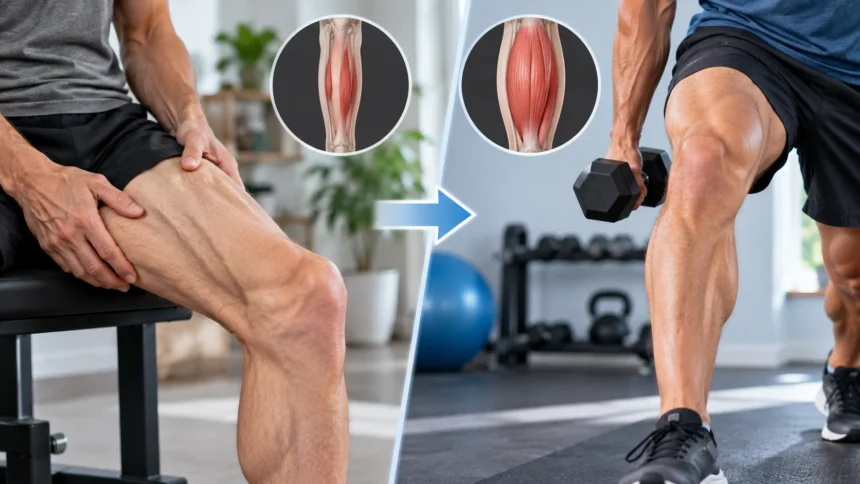
Muscle atrophy happens when muscle tissue becomes smaller and weaker over time. It may develop after prolonged inactivity, injury, illness, nerve damage, aging, or certain medical conditions. In many cases, especially when muscle loss is related to disuse, strength and muscle size can improve with appropriate exercise, nutrition, rehabilitation, and treatment of the underlying cause.
Whether muscle atrophy can be reversed depends on why it developed and how long the problem has been present. Some forms respond well to progressive strength training, while others linked to serious nerve or neurological conditions may be more difficult to recover from completely. Recognizing the symptoms early and getting appropriate medical guidance can improve the chances of preserving or rebuilding muscle function.
What Is Muscle Atrophy?
Muscle atrophy refers to a decrease in muscle size caused by the loss or shrinkage of muscle fibers. The affected area may look smaller than before and may also feel weaker during everyday tasks. Atrophy can occur in one muscle group, one side of the body, or multiple areas depending on the underlying cause.
Muscles normally adapt to how much they are used. When a muscle receives less physical demand for an extended period, the body may reduce some of the tissue because it is no longer required at the same level. This explains why muscles can become noticeably smaller after prolonged bed rest, immobilization, or wearing a cast.
Not all muscle atrophy is caused by inactivity. Damage to nerves, chronic disease, inadequate nutrition, and certain neurological disorders can also contribute. Because different causes require different treatment approaches, identifying why the muscle is shrinking is an important part of deciding whether and how function may be restored.
Can Muscle Atrophy Be Reversed?
Many cases of disuse muscle atrophy can improve significantly when the affected muscles begin working again. Progressive resistance training, physical therapy, and adequate nutrition can stimulate muscle tissue to adapt and become stronger. Improvement usually happens gradually, so consistent rehabilitation is more important than trying to regain lost strength through very intense exercise immediately.
Recovery is often more complicated when atrophy results from nerve damage. Muscles rely on nerve signals to contract and maintain normal function, so significant or permanent nerve injury may limit how much strength returns. Treatment may focus on restoring nerve function where possible, maintaining mobility, and preventing further loss while the underlying condition is managed.
Age, overall health, duration of inactivity, and severity of muscle loss also influence recovery. Someone who has been inactive for several weeks may respond differently from someone with years of progressive weakness. Early evaluation and appropriately designed rehabilitation generally provide a better opportunity to preserve muscle and regain useful function.
Common Causes of Muscle Atrophy
Physical inactivity is one of the most common causes of muscle loss. Bed rest, hospitalization, a sedentary lifestyle, or immobilizing a limb after injury can reduce the workload placed on muscles. Without regular resistance or weight-bearing activity, muscle fibers may gradually decrease in size and become less capable of producing force.
Aging can also contribute to progressive loss of muscle mass and strength, sometimes referred to as sarcopenia. Hormonal changes, reduced physical activity, lower protein intake, and other age-related factors can all play a role. Regular resistance training and adequate nutrition can help reduce the rate of age-related muscle decline in many adults.
Other causes include neurological disorders, nerve injuries, chronic illnesses, severe malnutrition, and prolonged inflammation. Some medications or medical treatments may also affect muscle tissue. Because muscle loss can sometimes signal an underlying health condition, unexplained or rapidly progressing atrophy should be assessed rather than assumed to be caused by inactivity alone.
Symptoms of Muscle Atrophy
Visible muscle shrinkage is one of the clearest signs of atrophy. One arm, leg, shoulder, or other body area may appear smaller than the corresponding side. Clothing may fit differently, or a previously well-defined muscle may look flatter or less developed after a period of inactivity or illness.
Weakness is another common symptom and may appear before dramatic visual changes become obvious. Activities such as climbing stairs, lifting objects, rising from a chair, carrying groceries, or reaching overhead may become more difficult. People may also notice faster fatigue because weakened muscles cannot tolerate the same workload they previously managed.
Balance changes, reduced coordination, or difficulty walking can sometimes occur when lower-body muscles are affected. If muscle loss is related to nerve problems, symptoms may also include numbness, tingling, twitching, or altered reflexes. These additional signs are important because they may indicate that the problem involves more than simple physical inactivity.
Disuse Atrophy From Inactivity
Disuse atrophy develops when muscles are not challenged regularly enough to maintain their previous size and strength. It can happen during prolonged bed rest, after surgery, or when an injured limb is protected for several weeks. Even healthy people can lose strength relatively quickly when normal movement is significantly reduced.
The good news is that this type of muscle loss is often responsive to gradual reconditioning. Once normal movement is medically appropriate, strength training and functional activities can encourage the muscle fibers to rebuild. Rehabilitation usually begins with manageable resistance before progressing toward heavier or more demanding exercises as strength and control improve.
Trying to return immediately to your previous workout level can create unnecessary soreness or injury risk. Muscles, tendons, joints, and coordination all need time to adapt after prolonged inactivity. A structured progression based on current ability is generally more effective than attempting to compensate for several weeks of muscle loss in only a few intense sessions.
Neurogenic Muscle Atrophy
Neurogenic atrophy occurs when nerves responsible for activating muscles become damaged or impaired. Because muscles depend on these electrical signals to contract, reduced nerve input can lead to weakness and shrinking. This type of atrophy may develop after nerve injuries or in association with certain neurological or spinal conditions.
The pattern may differ from ordinary disuse atrophy because weakness can progress more quickly or affect specific muscles supplied by a damaged nerve. Twitching, numbness, tingling, reduced sensation, or changes in reflexes may also occur. These symptoms deserve medical assessment because restoring muscle function depends partly on whether nerve function can recover.
Treatment varies significantly depending on the cause and extent of nerve damage. Physical therapy may help preserve mobility and strengthen muscles that still receive adequate nerve signals, while medical treatment addresses the underlying neurological issue. Recovery can range from substantial improvement to limited restoration when nerve damage is severe or permanent.
How Strength Training Helps Rebuild Muscle
Resistance training is one of the most important tools for rebuilding muscle after inactivity when exercise is medically appropriate. Muscles respond to progressively increasing resistance by adapting and producing more force. Exercises may begin with body weight, light resistance bands, or supervised movements before progressing to heavier resistance as strength improves.
The program should target the muscles that have become weak while also maintaining balanced movement throughout the body. For example, upper-body rehabilitation may include rows, light pressing, and controlled mobility movements such as wall slides when shoulder movement and control are appropriate. Lower-body programs may use sit-to-stands, bridges, step-ups, or supported squats.
Progressive overload is important, but it does not mean adding large amounts of resistance every workout. Small increases in repetitions, range of motion, resistance, or exercise difficulty can provide enough stimulus for adaptation. Good technique and adequate recovery should remain priorities because weakened muscles may fatigue more quickly during the early stages of rehabilitation.
Nutrition and Muscle Recovery
Muscle rebuilding requires enough energy and nutrients to support tissue repair and adaptation. Protein is particularly important because it provides amino acids used to build and maintain muscle tissue. Foods such as eggs, dairy products, fish, poultry, meat, legumes, soy, and other protein-rich options can contribute to daily intake.
Total calorie intake matters as well. Someone eating far less energy than their body requires may struggle to regain muscle even while exercising regularly. A balanced diet containing carbohydrates, healthy fats, vitamins, minerals, and adequate protein supports both training performance and recovery after rehabilitation or strength sessions.
People recovering from serious illness, surgery, significant weight loss, or malnutrition may need individualized nutrition guidance. Older adults may also benefit from discussing protein intake and overall diet with a qualified healthcare or nutrition professional. Supplements are not automatically necessary, particularly when nutritional needs can be met through regular food.
Physical Therapy for Muscle Atrophy
Physical therapy can be particularly helpful when muscle atrophy follows surgery, injury, hospitalization, or a neurological condition. A therapist can evaluate strength, mobility, balance, and functional limitations before choosing exercises appropriate for the person’s current ability. This reduces the chance of using movements that are too difficult or poorly matched to the underlying problem.
Therapy may include strengthening, range-of-motion work, walking practice, balance exercises, and functional tasks such as standing from a chair. The exact program depends on which muscles are affected and why the atrophy occurred. Progress is usually adjusted according to strength gains, symptom response, and improvements in everyday activities.
For people with severe weakness, rehabilitation may initially focus on assisted movement rather than conventional gym exercises. As control returns, resistance can gradually increase. The objective is not simply making the muscle look larger but restoring useful function, endurance, coordination, and confidence during daily movement.
How Long Does It Take to Reverse Muscle Atrophy?
Recovery time varies considerably because muscle atrophy has many different causes. Mild disuse atrophy after several weeks of inactivity may begin improving once regular resistance exercise resumes. More severe muscle loss or atrophy associated with long-term illness can require months of progressive rehabilitation before major functional changes become noticeable.
Strength may sometimes improve before muscle size visibly changes. Early gains can occur because the nervous system becomes more efficient at recruiting available muscle fibers during exercise. Over time, consistent resistance training can stimulate structural changes that increase muscle size as well as the ability to generate force.
Comparing recovery timelines with someone else is rarely useful because age, health, training history, nutrition, and the cause of atrophy all matter. Track functional improvements such as easier walking, stronger lifting, or better balance instead. Slow but consistent progress is often more meaningful than expecting rapid visual changes.
Best Practices for Rebuilding Lost Muscle
Start from your current ability rather than the level of fitness you had before the muscle loss occurred. Choose exercises you can perform with controlled technique and gradually increase the challenge. Training too aggressively at the beginning may cause excessive soreness, fatigue, or injury that interrupts the consistency required for recovery.
Include adequate recovery between demanding sessions. Muscles adapt during the period after training, so repeating intense exercises every day is not always necessary. Sleep, regular meals, hydration, and a balanced training schedule all contribute to how well the body responds to progressive strength work.
Consistency matters more than occasional extreme effort. A manageable program performed over many weeks generally produces better results than repeatedly stopping and restarting because sessions are too difficult. If weakness is significant or associated with illness, surgery, pain, or neurological symptoms, professional guidance can make progression safer and more appropriate.
When Muscle Atrophy Needs Medical Attention
Unexplained muscle loss should be discussed with a healthcare professional, particularly when it develops without an obvious period of inactivity. Rapid shrinking of one limb or muscle group may indicate a nerve, neurological, metabolic, or other medical problem. Early investigation can help identify conditions that may require specific treatment beyond exercise.
Seek evaluation when atrophy occurs with numbness, tingling, muscle twitching, coordination problems, or progressive weakness. Difficulty swallowing, speaking, breathing, or walking also deserves prompt medical attention. These symptoms may indicate involvement of nerves or other systems and should not be treated simply by increasing exercise.
Significant weight loss, persistent fatigue, chronic illness, or appetite changes alongside muscle loss are also important to report. A healthcare provider may use a physical examination, blood tests, nerve studies, imaging, or other evaluations depending on the situation. Identifying the underlying cause is essential for choosing the most appropriate treatment.
Conclusion
Muscle atrophy can often be improved, particularly when it develops because of inactivity, immobilization, or reduced physical demand. Progressive strength training, adequate nutrition, and gradual return to activity can help muscles regain size and function. The amount of recovery varies according to the cause, duration, severity, age, and overall health of the individual.
Muscle loss caused by nerve damage or progressive medical conditions may be more difficult to reverse completely. Even in these situations, rehabilitation can sometimes help preserve mobility, maintain remaining strength, and improve everyday function. Treatment should focus on both the underlying cause and the functional problems created by muscle weakness.
Anyone experiencing unexplained or rapidly worsening muscle loss should seek professional evaluation rather than relying solely on exercise. Early diagnosis can identify whether inactivity, nutrition, nerve problems, or another condition is involved. With appropriate treatment and consistent rehabilitation, many people can make meaningful improvements in strength, movement, and independence.
FAQs
Can muscle atrophy completely go away?
Disuse atrophy can often improve substantially with progressive resistance training and adequate nutrition. Complete recovery depends on the amount of muscle lost, duration of inactivity, age, health, and whether nerve damage is present.
How do you rebuild an atrophied muscle?
Rebuilding usually involves gradually increasing muscle activity through resistance exercises, functional movement, and appropriate rehabilitation. Adequate protein, calories, recovery, and treatment of the underlying cause are also important.
How long does it take to rebuild muscle after atrophy?
Recovery may take several weeks to months depending on severity and cause. Strength can begin improving before visible muscle size returns, especially when training is consistent and the underlying problem has been addressed.
Can older adults reverse muscle atrophy?
Older adults can often improve muscle strength and mass through appropriately designed resistance training and adequate nutrition. Progress may be slower, and medical or professional supervision may be useful when health conditions are present.
When should I worry about muscle loss?
Seek medical advice for unexplained, rapid, or one-sided muscle loss, especially with weakness, numbness, twitching, coordination problems, or difficulty walking. These symptoms may indicate an underlying condition requiring further evaluation.