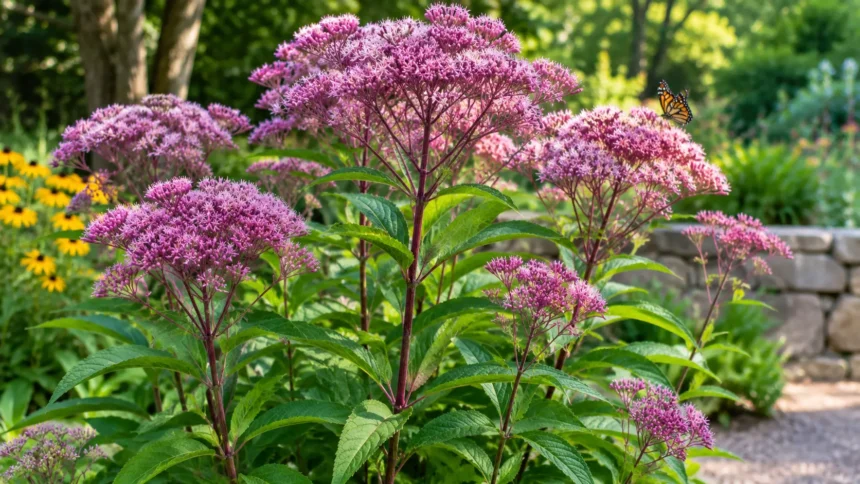
Joe Pye weed is a beautiful flowering perennial known for its tall stems, large clusters of pinkish-purple flowers, and ability to attract butterflies and bees. This North American native wildflower adds height, color, and natural beauty to gardens, particularly during late summer when many other plants begin to fade. Despite its name, Joe Pye weed is a valued ornamental plant rather than simply an unwanted garden weed.
Whether you want to create a pollinator-friendly garden, fill a moist planting area, or add striking flowers to your landscape, Joe Pye weed is worth considering. Its attractive foliage, impressive height, and relatively simple care requirements make it suitable for many garden settings. This guide explains how to identify Joe Pye weed, understand its growing requirements, and maintain healthy plants throughout the seasons.
What Is Joe Pye Weed?
Joe Pye weed is the common name for several herbaceous perennial plants belonging to the genus Eutrochium. These plants are members of the Asteraceae family, which also includes daisies and sunflowers. They are native to parts of North America and commonly grow in moist meadows, woodland edges, and areas near streams.
The plant is particularly recognizable for its upright growth habit and large clusters of small flowers. Depending on the species, mature plants may reach approximately three to ten feet tall. Their flowers typically appear in shades of dusty pink, mauve, or purple, creating an attractive display during the warmer months.
Although Joe Pye weed was previously classified within the genus Eupatorium, several species are now recognized under Eutrochium. Older plant labels and gardening publications may still use the original botanical names. Understanding this distinction can help gardeners identify plants correctly when purchasing seeds, researching varieties, or comparing nursery descriptions.
How to Identify Joe Pye Weed
Joe Pye weed identification begins with examining its height, stems, leaves, and flower clusters. The plant usually develops strong, upright stems that support large groups of flowers near their tops. Many species form substantial clumps, making mature plants easy to recognize in natural meadows and garden borders.
The leaves are generally long, pointed, and arranged in groups around the stem. This arrangement is called a whorl, and several leaves may emerge from the same level. Their edges are often toothed, while the leaf surfaces range from smooth to slightly textured depending on the species.
The flowers provide one of the clearest identification features during summer and early autumn. Numerous tiny tubular flowers gather into large, rounded or somewhat flattened clusters that appear soft and fluffy. After flowering, the plant produces small seeds with fine bristles that help them travel with the wind.
Joe Pye Weed Flowers, Leaves, and Stems
Joe Pye weed flowers are composed of numerous small disk florets rather than the large individual petals found on many familiar garden flowers. These florets gather into showy clusters at the tops of tall stems. Their colors usually range from pale pink to lavender-purple, depending on the species and growing conditions.
The foliage also contributes to the plant’s ornamental appeal throughout the growing season. Leaves are typically green, elongated, and arranged in distinctive whorls around the stems. Their toothed edges and noticeable veins create an attractive texture even before the flower buds begin opening.
Stem characteristics are especially useful when identifying different Joe Pye weed species. Some varieties have green stems with purple coloring around the leaf nodes, while others display purple spots or more uniformly colored stems. Hollow-stemmed species can also be distinguished by the structure of their mature stems.
Popular Types of Joe Pye Weed
Several Joe Pye weed species are commonly grown in gardens and natural landscapes. Spotted Joe Pye weed, known scientifically as Eutrochium maculatum, features pinkish-purple flower clusters and stems with purple coloring or spots. It typically prefers consistently moist soil and grows well in sunny locations.
Sweet Joe Pye weed, or Eutrochium purpureum, is another popular species. It usually has green stems with purple coloring near the leaf nodes and produces softly rounded flower clusters. This variety naturally occurs in woodland edges and other habitats where partial shade and suitable soil moisture are available.
Hollow Joe Pye weed, Eutrochium fistulosum, can become particularly tall and impressive. Its hollow stems and large lavender-pink flower clusters make it a distinctive garden plant. Shorter selections, including compact cultivated varieties, are also available for gardeners who want similar flowers without the height of larger species.
Where Does Joe Pye Weed Grow Naturally?
Joe Pye weed is native to eastern and central regions of North America, although the natural distribution varies between species. It commonly grows in moist meadows, open woodlands, stream banks, and wetland edges. These habitats provide the soil moisture and seasonal conditions that support its vigorous growth.
In natural environments, the plant often appears alongside native grasses and other flowering perennials. Its tall stems rise above surrounding vegetation, making the flowers visible to visiting pollinators. Some species prefer open sunshine, while others tolerate partially shaded woodland settings.
Gardeners can recreate similar conditions by choosing locations with adequate sunlight and reliable moisture. Rain gardens, pond edges, and naturalized borders are often suitable planting areas. Selecting a species native to your region can also help support local ecological relationships and improve the plant’s suitability for the surrounding environment.
Sunlight Requirements for Joe Pye Weed
Most Joe Pye weed species grow well in full sun or partial shade. A sunny location generally encourages strong stems and generous flower production when soil moisture is sufficient. However, the ideal amount of sunlight depends on the species and local climate conditions.
In warmer climates, some varieties benefit from light afternoon shade, particularly when the soil dries quickly. Species naturally associated with woodland edges may tolerate more shade than plants found in open wetlands. Excessive shade can sometimes result in reduced flowering or taller, less sturdy stems.
Before planting, observe how sunlight moves across your garden throughout the day. Choose a location that matches the requirements of the species you intend to grow. Maintaining adequate moisture is particularly important when Joe Pye weed receives strong afternoon sunlight during hot summer weather.
Best Soil Conditions for Growing Joe Pye Weed
Joe Pye weed generally prefers fertile soil that remains consistently moist during the growing season. Many species naturally thrive in rich meadow soil, streamside habitats, and damp garden areas. However, the exact soil requirements vary, and some species tolerate a broader range of conditions.
Adding compost may help improve soil structure and support healthy root development, especially in garden beds with poor organic matter content. Soil should provide enough moisture without creating unsuitable conditions for the chosen variety. Most Joe Pye weeds grow successfully in slightly acidic to neutral soil, although tolerance varies.
The most important consideration is matching the soil to the selected species. Spotted and hollow Joe Pye weed generally appreciate moist to wet conditions, while some other varieties tolerate somewhat better-drained sites. Choosing an appropriate planting location makes long-term care easier and reduces unnecessary watering problems.
How to Plant Joe Pye Weed Successfully
Spring and autumn are often suitable times to plant Joe Pye weed, depending on regional temperatures and growing conditions. These seasons generally provide opportunities for roots to establish before periods of extreme heat or cold. Container-grown plants can sometimes be planted during other suitable weather conditions.
Begin by choosing a location with enough space for the plant’s mature height and spread. Dig a hole approximately as deep as the root ball and wider than the container. Place the plant at its original growing depth, refill the hole with soil, and gently firm the surrounding area.
Water thoroughly after planting to help settle the soil around the roots. Apply a layer of organic mulch to help maintain moisture while keeping it away from direct contact with the stems. Larger varieties need generous spacing so their foliage can develop without overcrowding neighboring plants.
How Often Should You Water Joe Pye Weed?
Watering is particularly important during the first growing season because newly planted Joe Pye weed needs time to establish its root system. Keep the surrounding soil consistently moist without following a rigid watering schedule. The appropriate frequency depends on rainfall, temperature, soil type, and plant size.
Established plants may tolerate brief periods of reduced moisture, but many varieties perform best when the soil does not dry out completely. During hot weather, leaves may begin drooping if available moisture becomes insufficient. Checking the soil before watering is more useful than assuming every plant requires the same amount.
Mulching can help reduce evaporation and maintain more consistent soil conditions. Organic materials such as shredded leaves or composted bark may be suitable for garden beds. However, excessive moisture can cause problems for varieties planted in poorly suited conditions, so watering should reflect the needs of the particular species.
Does Joe Pye Weed Need Fertilizer?
Joe Pye weed usually does not require heavy fertilization when grown in reasonably fertile soil. Its natural habitats often provide enough nutrients to support strong seasonal growth. In garden settings, compost and appropriate soil care may be sufficient to maintain healthy foliage and flowering.
Excessive fertilizer can encourage lush growth that becomes difficult for tall stems to support. Plants receiving more nutrients than necessary may develop additional foliage without a corresponding improvement in flowering. Fertilizer should therefore be used according to actual soil needs rather than as a routine requirement.
A soil test can help determine whether nutrient deficiencies require attention. If the soil is already fertile and plants appear healthy, additional feeding may provide little benefit. Maintaining appropriate sunlight, moisture, and growing space is generally more important than applying large amounts of fertilizer.
How to Prune and Maintain Joe Pye Weed
Joe Pye weed is a herbaceous perennial, meaning its above-ground stems usually die back after the growing season. New growth emerges from the established root system when suitable conditions return. This natural cycle makes seasonal pruning relatively straightforward for most garden varieties.
Gardeners can cut back old stems in late winter or early spring before vigorous new growth begins. Leaving stems standing through winter may provide structure and habitat for beneficial insects. When trimming, avoid damaging new shoots developing near the crown of the plant.
Very tall varieties may occasionally need support, particularly when grown in shade or exposed to strong winds. Some gardeners reduce stem height earlier in the growing season to encourage a more compact shape, although flowering may be delayed. Pruning needs depend on the variety and the appearance you want to maintain.
How to Propagate Joe Pye Weed
Joe Pye weed can be propagated through seeds, division, and sometimes stem cuttings. Seed propagation is useful for gardeners interested in establishing native plant areas or growing several plants. However, seeds may require a period of cold, moist conditions before germination, depending on the species.
To grow Joe Pye weed from seed, follow the germination requirements for the variety you have selected. Some gardeners sow seeds outdoors during autumn to allow natural winter conditions to support germination. Plants grown from seed may take additional time to reach flowering maturity.
Division provides another practical method for increasing established plants. Mature clumps can be carefully separated during an appropriate dormant or early growth period, then replanted in suitable soil. Each division should contain healthy roots and growing points, and newly divided plants need consistent moisture while becoming established.
Common Joe Pye Weed Pests and Diseases
Joe Pye weed is generally a relatively resilient garden perennial when planted in suitable conditions. However, it can occasionally experience problems involving insects, fungal diseases, or environmental stress. Regular observation helps gardeners notice unusual changes before they become significant.
Powdery mildew may appear as a pale, powdery coating on leaves, particularly when environmental conditions encourage fungal growth. Providing adequate spacing and airflow can help reduce some problems. Removing heavily affected plant material may also be useful when appropriate, although treatment needs depend on the severity.
Deer and other wildlife may browse developing stems or leaves in certain locations. Damage varies considerably between gardens and growing seasons. Maintaining healthy soil conditions, avoiding unnecessary overcrowding, and identifying problems accurately are usually better starting points than applying treatments without knowing the cause.
Why Joe Pye Weed Is Excellent for Pollinators
One of the biggest advantages of Joe Pye weed is its ability to attract pollinating insects. The large flower clusters provide accessible nectar resources during late summer and early autumn. Butterflies, bees, and other beneficial insects frequently visit the flowers when conditions are suitable.
Joe Pye weed can be particularly valuable because it blooms when some earlier-season wildflowers have finished flowering. Including it alongside spring and early-summer plants helps extend the availability of floral resources. Native species can contribute to diverse planting areas that support local wildlife.
The mature seed heads can also provide food for certain birds, while remaining stems may contribute to overwintering habitat for insects. These ecological benefits make Joe Pye weed a strong candidate for wildlife-friendly landscapes. Planting several compatible native species together can provide even greater seasonal variety.
Landscaping Ideas With Joe Pye Weed
Joe Pye weed is especially effective toward the back of perennial borders because many varieties grow quite tall. Its upright stems and large flower clusters create height and visual structure. Placing shorter flowering plants in front helps create a layered garden arrangement.
The plant also works well in rain gardens and naturalistic landscapes where soil moisture remains relatively consistent. It can be combined with native asters, goldenrods, ironweed, and ornamental grasses to create seasonal color. These combinations provide contrasting flower shapes, textures, and growth habits.
For smaller gardens, compact Joe Pye weed selections can provide similar visual appeal without occupying as much space. Check the mature size before purchasing because different varieties vary considerably in height and spread. Thoughtful placement allows the plant to become a focal point without overwhelming nearby vegetation.
Conclusion
Joe Pye weed is an attractive North American perennial known for its tall growth, pinkish-purple flowers, and value to pollinators. Its distinctive whorled leaves, upright stems, and large flower clusters make it relatively easy to recognize. Different species provide options for moist meadows, woodland edges, and ornamental garden borders.
Growing Joe Pye weed successfully begins with choosing the right species and planting location. Most varieties appreciate adequate sunlight, consistently moist soil, and enough room to reach their mature size. Seasonal pruning, occasional maintenance, and appropriate watering can help keep established plants healthy.
Whether you want to support butterflies, create a naturalistic landscape, or add late-season color, Joe Pye weed offers several benefits. Its combination of ornamental beauty and ecological value makes it a worthwhile addition to many gardens. With suitable growing conditions, this hardy perennial can return and flower for years.
Frequently Asked Questions
Is Joe Pye weed a perennial or an annual?
Joe Pye weed is a herbaceous perennial that returns from its established root system each growing season. Its above-ground stems usually die back during winter before new growth appears in spring.
Does Joe Pye weed need full sun?
Most Joe Pye weed species grow well in full sun to partial shade. Adequate sunlight generally supports flowering, while some varieties appreciate light shade in particularly warm climates.
How tall does Joe Pye weed grow?
Joe Pye weed commonly reaches approximately three to ten feet tall, depending on the species and growing conditions. Compact cultivated varieties remain shorter and may be more suitable for smaller gardens.
Does Joe Pye weed attract butterflies?
Yes, Joe Pye weed is an excellent nectar plant for butterflies and many other pollinating insects. Its large flower clusters provide valuable late-season floral resources in suitable native and ornamental gardens.
When should you cut back Joe Pye weed?
Joe Pye weed can be cut back in late winter or early spring before new growth begins. Leaving old stems through winter may provide habitat for insects and additional seasonal garden interest.