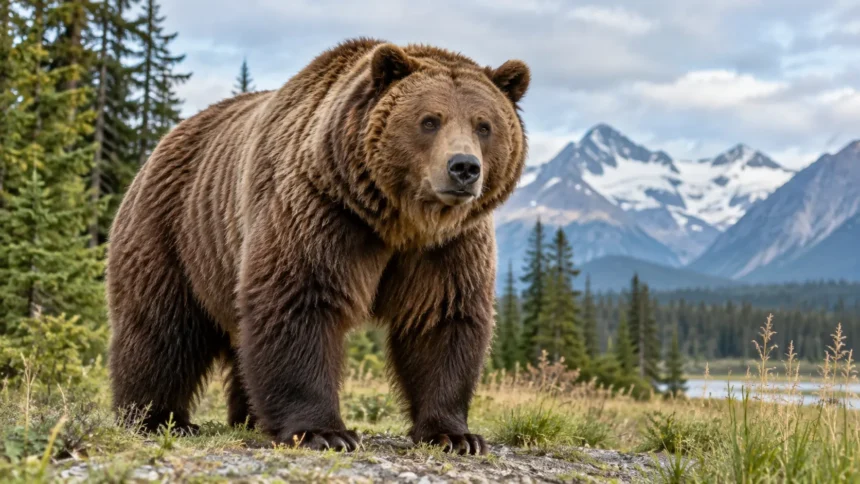
Bears are among the most powerful land mammals, but their size can vary dramatically depending on species, sex, age, habitat, and food availability. Some adult bears weigh less than an average person, while the largest species can reach well over 1,000 pounds. Understanding bear weight helps explain how these animals move, hunt, survive harsh climates, and compete for resources.
There is no single answer to how much a bear weighs because eight living bear species occupy very different environments. Even two bears of the same species can have major differences in body mass. Seasonal feeding also matters, particularly for bears that gain substantial fat before winter dormancy or hibernation.
This guide explores average bear weight, differences between males and females, the heaviest species, seasonal changes, and other factors that determine body size. It also explains why reported bear weights can differ so much and what those numbers actually tell us about an animal.
How Much Does a Bear Weigh?
Bear weight ranges from roughly 50 pounds in some small adult sun bears to more than 1,000 pounds in exceptionally large polar bears and brown bears. Most species fall somewhere between these extremes. Because bears continue developing for several years, mature adults usually weigh considerably more than juveniles living in the same habitat.
Sex creates another major difference in adult body weight. Male bears are generally heavier and more muscular than females, particularly among larger species such as polar bears, brown bears, and American black bears. In some populations, an adult male may weigh significantly more than a female even when both animals have access to similar food resources.
Weight also fluctuates throughout an individual bear’s life. An animal may gain or lose dozens, or even hundreds, of pounds depending on the season and species. For this reason, figures given for average bear weight should be treated as useful ranges rather than exact numbers applying to every individual.
Average Weight of Different Bear Species
American black bears commonly weigh roughly 100 to 600 pounds as adults, although large males can exceed that range. Females are typically smaller than males, and populations living in highly productive habitats may grow considerably larger. Their flexible diet helps black bears survive across forests, mountains, wetlands, and regions close to human development.
Brown bears show an even wider weight range because the species includes populations living in very different environments. Interior grizzly bears may weigh a few hundred pounds, while coastal brown bears with access to abundant salmon can become substantially heavier. Large adult males in productive coastal areas sometimes approach or exceed 1,000 pounds under exceptional conditions.
Other species are generally smaller. Giant pandas commonly weigh around 150 to 300 pounds, while sloth bears and spectacled bears often fall within a few hundred pounds. Sun bears are the smallest bear species, whereas polar bears rank among the heaviest, demonstrating just how diverse body size can be across the bear family.
Which Bear Species Weighs the Most?
Polar bears are among the world’s largest living terrestrial carnivores and are often the heaviest bear species overall. Adult males commonly weigh several hundred pounds and can reach approximately 800 to 1,300 pounds or more in particularly large individuals. Females are much smaller, although their weight can increase significantly while pregnant and preparing for denning.
Large coastal brown bears can rival polar bears in size. Kodiak bears, a population of brown bears found on islands in Alaska, are especially famous for their impressive body mass. Mature males can reach very high weights because their environment provides rich seasonal food sources that allow them to accumulate substantial fat and muscle.
Determining which individual bear is truly the heaviest can be difficult because exceptional records are not representative of normal adults. Measurement methods, seasonal condition, age, and whether an animal was weighed directly can also affect reported figures. Average size and exceptional maximum size should therefore be considered separately when comparing bear species.
Male vs Female Bear Weight
Male bears are usually considerably larger than females of the same species. This difference is known as sexual dimorphism and is particularly noticeable among brown and polar bears. Larger male body size can provide advantages when competing with other males and establishing access to breeding opportunities during the reproductive season.
Female bears generally have lighter frames, although healthy females still possess impressive strength relative to their body size. Their energy demands can change dramatically during pregnancy, nursing, and periods when they are caring for cubs. Females must balance maintaining their own body condition with producing enough energy to support developing young.
The exact difference between male and female bear weight varies by species and population. A male American black bear, for example, may weigh substantially more than an adult female living in the same region. Among polar bears, the size difference can be especially dramatic, with adult males sometimes weighing roughly twice as much as mature females.
Why Does Bear Weight Change With the Seasons?
Many bears experience substantial seasonal changes in weight because their food supply and energy needs shift throughout the year. During productive months, they spend large amounts of time feeding and building fat reserves. These reserves become particularly important for species that spend winter periods in dens with little or no food intake.
Before winter, bears may enter a period of intense feeding commonly called hyperphagia. During this time, they consume large quantities of calorie-rich food and may spend much of each day searching for meals. Berries, nuts, fish, insects, plants, and animal matter can all contribute to the rapid weight gain needed to build sufficient fat stores.
During winter denning, bears rely heavily on stored body fat to meet their energy requirements. They can lose a meaningful percentage of their body mass before becoming active again. Nursing females may experience particularly high energy demands because they must provide milk for their cubs while consuming little or no food themselves.
What Factors Determine a Bear’s Weight?
Genetics establish part of the potential size of an individual bear, but environmental conditions strongly influence whether that potential is reached. Bears living in areas with abundant, nutrient-rich food generally have more opportunities to gain mass. Animals living where food is scarce or unpredictable may remain considerably smaller even within the same species.
Diet is especially important. Coastal brown bears with reliable access to salmon, for example, can grow significantly larger than many inland grizzly bears whose diets may contain more plants, insects, and scattered animal foods. High-calorie meals allow bears to accumulate both the body mass and fat reserves needed for survival.
Age, health, reproductive status, competition, and habitat quality also affect bear weight. Young animals are still growing, while older bears may lose condition because of declining health or reduced feeding efficiency. Injuries, disease, drought, poor food years, and competition from other bears can all influence how much an individual weighs at a particular time.
How Fast Do Bears Gain Weight?
Bear cubs are born surprisingly small compared with the enormous adults they may eventually become. Newborn cubs of many species weigh only a fraction of what they will weigh at maturity. Rich maternal milk supports rapid early growth, while continued development after leaving the den allows young bears to gradually build larger bones, muscles, and fat stores.
Juvenile bears continue gaining size for several years. Their growth rate depends on genetics, food availability, health, and whether they must compete with larger animals for resources. Males of large bear species can continue filling out well after reaching sexual maturity, eventually developing the heavy frame and muscular build associated with mature adults.
Seasonal weight gain can happen particularly quickly before winter. A well-fed bear may consume thousands of calories more than it requires for immediate daily activity, storing much of that excess energy as fat. This ability to rapidly increase body mass is an important survival adaptation rather than simply a sign that the animal is overeating.
How Scientists Measure Bear Weight
The most accurate way to determine bear weight is to place an animal on a suitable scale, but weighing wild bears directly is not always practical. Wildlife biologists may capture and temporarily sedate bears during research programs. While the animal is safely immobilized, researchers can collect weight, body measurements, biological samples, and other useful health information.
Researchers sometimes use body measurements and mathematical models to estimate weight when direct weighing is impossible. Measurements such as body length, chest circumference, and overall condition can provide useful information. However, estimated weights should not automatically be treated as exact because body proportions and fat levels can vary considerably between individuals.
Photographs and visual observations are even less precise for estimating body mass. Thick fur, viewing angles, distance, and seasonal fat can make a bear appear larger or smaller than it really is. This explains why extraordinary weight claims based entirely on photographs or eyewitness accounts should be interpreted cautiously unless reliable measurements are available.
Does a Bear’s Weight Affect Its Speed and Strength?
A heavy bear may look slow, but bears can move remarkably quickly over short distances. Their strong limbs and powerful muscles allow them to accelerate much faster than their bulky appearance might suggest. Even large bears should never be considered easy to outrun simply because they carry several hundred pounds of body mass.
Greater body mass also contributes to enormous physical strength. Bears use their forelimbs for digging, climbing, moving logs, accessing food, defending themselves, and interacting with other bears. Their strength comes from a combination of muscular anatomy, body size, powerful shoulders, strong claws, and adaptations developed for their particular environment.
Weight alone does not determine strength, speed, or danger. Age, health, motivation, terrain, species, and individual condition also matter. Wildlife should always be given appropriate distance, and people should follow local bear-safety guidance rather than making decisions based on whether an animal appears relatively small or unusually heavy.
Bear Weight and Hibernation
For bear species that den during winter, maintaining enough body fat before entering the den is essential. Stored fat provides energy while the animal spends months eating little or nothing. Successful summer and autumn feeding therefore has a direct influence on how effectively a bear can tolerate the long period of reduced activity.
Pregnant females face an additional challenge because they may give birth while denning. Their stored energy must support their own metabolism as well as milk production for newborn cubs. A female entering the den in strong physical condition generally has more stored resources available during this demanding reproductive period.
Bears emerge from winter considerably lighter than when they entered their dens. Once spring food becomes available, they begin replacing lost energy and rebuilding body condition. This repeating cycle of weight loss and weight gain is a normal biological process that allows many bear populations to survive environments with extreme seasonal differences.
Bear Weight vs Weight-Bearing: Understanding the Difference
The term “bear weight” usually refers to the body weight of an actual bear when discussing wildlife. However, people sometimes encounter the similar phrase “bear weight” in health or rehabilitation instructions, where they are actually being told to “bear weight.” In that context, the phrase means supporting some or all of the body’s weight through a limb or joint.
Being able to bear weight safely can matter after certain injuries, surgeries, or musculoskeletal problems. Instructions such as non-weight-bearing, partial weight-bearing, and full weight-bearing have specific clinical meanings and should be followed according to professional advice. They are completely different from discussions about the body mass of black bears, brown bears, polar bears, or other wildlife.
Shoulder and nerve problems can also affect how comfortably someone performs everyday physical tasks. If shoulder blade discomfort, tingling, or radiating symptoms are the reason you encountered this topic, information about pinched nerve relief may be more relevant. Persistent neurological symptoms should be assessed appropriately rather than assuming they result from ordinary muscular strain.
Why Bear Weight Matters in the Wild
Body size can influence many aspects of a bear’s life, including access to food, competition, reproduction, and survival. Larger individuals may have advantages during conflicts over valuable feeding areas or breeding opportunities. However, maintaining a large body also requires considerable energy, meaning productive habitats are especially important for supporting exceptionally heavy bears.
Weight can also reflect changing environmental conditions. When important foods become less available, bears may struggle to build their normal seasonal fat reserves. Scientists can therefore study body condition alongside other ecological information to better understand how changing food sources, climate patterns, habitat conditions, and human activity affect bear populations.
For individual bears, healthy weight is not simply about being as large as possible. An appropriate body condition depends on species, season, age, sex, and reproductive status. A female caring for cubs, an adolescent bear, and a mature male may all have very different healthy body sizes even when they belong to the same population.
How Much Do Bear Cubs Weigh?
Bear cubs are remarkably small when compared with their mothers. Depending on the species, newborn cubs may weigh only several hundred grams, or roughly around one pound in some cases. They are born poorly developed and rely completely on their mothers for warmth, protection, and highly nutritious milk during their earliest stage of life.
Growth becomes rapid once cubs begin nursing and developing. By the time they leave the den, they are far larger than at birth, although they remain only a fraction of their mother’s size. Over the following months, cubs begin exploring their environment and learning how to locate the foods they will eventually need independently.
Young bears continue growing long after their first year. Females generally reach a smaller final body size, while males of many species continue gaining substantial mass as they mature. The enormous difference between the size of a newborn cub and a full-grown adult highlights the remarkable growth potential found within the bear family.
Conclusion
Bear weight varies enormously across species, populations, seasons, sexes, and individual animals. Small sun bears may weigh only a fraction of the mass carried by large polar or coastal brown bears. Even within a single species, access to food and differences in age or sex can produce substantial variation in adult body size.
Seasonal changes are especially important when interpreting bear weight. Many bears gain large amounts of fat before winter and then become significantly lighter during months of denning and reduced feeding. For this reason, a bear weighed in autumn may be considerably heavier than the same animal measured after emerging in spring.
Understanding bear weight provides useful insight into bear biology, nutrition, reproduction, movement, and survival. Rather than relying on one fixed number, it is more accurate to think in terms of typical weight ranges and the ecological factors behind them. Those differences help make bears some of the most adaptable and fascinating large mammals in the world.
FAQs
What is the average weight of a bear?
There is no single average because bear species vary greatly in size. Adults can range from around 50 pounds in smaller species to well over 1,000 pounds in exceptionally large bears.
Which bear is the heaviest?
Polar bears and large coastal brown bears are among the heaviest living bears. Exceptional adult males can exceed 1,000 pounds, although most individuals weigh considerably less than record-sized animals.
How much does a black bear weigh?
Adult American black bears commonly range from roughly 100 to 600 pounds. Males are usually heavier than females, while food availability, habitat, season, age, and genetics can significantly influence individual weight.
How much does a grizzly bear weigh?
Many adult grizzly bears weigh a few hundred pounds, with males generally being larger than females. Weight varies substantially by location because bears with access to richer food supplies can grow considerably heavier.
Do bears lose weight during hibernation?
Yes. Bears that spend winter in dens rely heavily on stored body fat and can lose significant weight. They typically rebuild their body condition once they become active and seasonal food becomes abundant again.