
Farmhouse Kitchen Decor Ideas for a Warm and Inviting Interior
A farmhouse kitchen is more than a collection of rustic decorations. At its best, it creates a comfortable, hardworking space where natural materials, practical storage, warm colors, and familiar details come together. The style feels relaxed rather than overly polished, making the kitchen look welcoming enough for everyday meals, family conversations, and casual entertaining.
Modern farmhouse kitchens have also evolved beyond the predictable combination of white cabinets, distressed signs, and decorative mason jars. Today’s interiors often mix warm wood, creamy neutrals, aged metals, handmade ceramics, stone surfaces, and simple architectural details. This updated approach creates farmhouse character without making the kitchen feel themed or outdated.
The beauty of farmhouse kitchen decor is its flexibility. You can introduce the style gradually through lighting, open shelving, textiles, hardware, pottery, or wooden accessories without renovating the entire room. Even a modern apartment kitchen can gain warmth when practical farmhouse-inspired elements are layered thoughtfully with existing cabinetry and appliances.
The most successful farmhouse interiors also prioritize real life. Storage should be useful, work surfaces should remain functional, and decorative objects should earn their place whenever possible. By combining comfort with practicality, you can create a warm kitchen that feels naturally collected rather than designed simply to imitate a photograph.
Start With a Warm Farmhouse Color Palette
Color establishes the mood of a farmhouse kitchen before furniture or accessories are added. Warm white, ivory, cream, oatmeal, beige, mushroom, taupe, and soft greige create gentle backgrounds that reflect light without feeling stark. These shades work particularly well with wood, brass, black metal, stone, and handmade ceramic accents.
Pure bright white can still work, but warmer undertones usually make the kitchen feel more comfortable. Cream-colored cabinets, for example, can soften stainless-steel appliances and dark countertops. Warm neutrals also provide greater flexibility when introducing vintage pieces because aged wood and antique finishes tend to coordinate naturally with softer background colors.
Muted earthy shades can add personality without overpowering the room. Sage green, olive, dusty blue, clay, muted terracotta, charcoal, and deep brown all suit rustic farmhouse kitchen decor. These colors can appear on cabinetry, islands, pantry doors, textiles, or smaller accessories depending on how much visual impact you want.
Try repeating a limited palette throughout the kitchen rather than introducing many unrelated colors. If you choose sage cabinetry, for example, echo that green subtly through artwork, pottery, or plants. Repetition creates visual harmony and makes individual farmhouse elements feel intentionally connected rather than randomly added.
Bring in Natural Wood for Instant Warmth
Natural wood is one of the easiest ways to make a farmhouse kitchen feel warmer. Wood cutting boards, stools, shelves, dining tables, cabinetry, and ceiling beams introduce natural variation that contrasts beautifully with painted surfaces. The visible grain also gives the interior character that perfectly smooth manufactured finishes sometimes lack.
You do not need to use the same wood tone everywhere. Light oak, medium walnut, reclaimed wood, and darker stained pieces can coexist when their undertones complement one another. Slight variation often helps a farmhouse kitchen feel naturally collected, particularly when furniture and accessories look as though they have been acquired gradually.
Large wooden features can become architectural focal points. A substantial farmhouse dining table, timber island, butcher-block counter section, or ceiling beam can immediately anchor an otherwise simple room. These elements work especially well against cream, white, sage, or soft gray backgrounds because the contrast allows natural texture to become more visible.
Smaller kitchens can use wood more selectively. A set of cutting boards leaning against the backsplash, wooden bowls, stools, trays, and open shelves may provide enough warmth without making the space visually heavy. The key is using wood where it supports both function and the relaxed farmhouse atmosphere.
Use Open Shelving Without Creating Clutter
Open shelving is closely associated with farmhouse kitchen design because it turns useful everyday objects into part of the decor. Wooden shelves can display bowls, plates, glasses, mugs, serving dishes, or jars while keeping frequently used items within easy reach. This creates an informal, working-kitchen appearance rather than a completely concealed storage system.
The challenge is maintaining visual order. Instead of filling every centimeter, leave small gaps between groups of objects so the shelves can breathe. Repeating similar colors or materials also helps. White dishes, clear glasses, wooden boards, pottery, and a few natural accents can create interest without looking chaotic.
Mix practical pieces with limited decorative elements. A small plant, framed print, ceramic pitcher, or vintage vessel can soften a shelf filled mostly with dishes. Avoid adding decorations that serve no purpose if countertop and storage space are already limited. Farmhouse style works best when beauty and usefulness overlap.
If completely open shelving feels difficult to maintain, combine it with closed cabinetry. One or two open shelves near the sink or coffee station can provide farmhouse character without requiring the entire kitchen to stay display-ready. This balanced approach often works better for busy households that need practical hidden storage.
Choose Farmhouse Cabinets With Timeless Character
Shaker-style cabinetry works particularly well in farmhouse kitchens because it has enough detail to feel traditional without appearing overly decorative. The simple framed doors create visual structure while remaining flexible enough to pair with modern appliances, stone countertops, vintage hardware, and contemporary lighting.
Cream, warm white, sage, muted blue, and natural wood are especially effective cabinet choices. Two-tone kitchens can also add depth, such as cream upper cabinets with a wood or olive island. Keeping the surrounding finishes relatively quiet allows the cabinetry to provide character without making the space look overly busy.
If replacing cabinets is not practical, small updates can create noticeable change. New hardware, paint, under-cabinet lighting, or a simplified backsplash may transform existing cabinetry. Brass, bronze, black, and aged nickel handles can all work depending on the color palette and other metal finishes already present.
Avoid deliberately distressing every cabinet or surface simply to make it appear rustic. Excessive artificial wear can quickly make a kitchen look themed. A more current farmhouse interior usually combines clean cabinetry with genuine texture from wood, pottery, stone, textiles, and a few naturally aged pieces.
Add a Farmhouse Sink as a Functional Focal Point
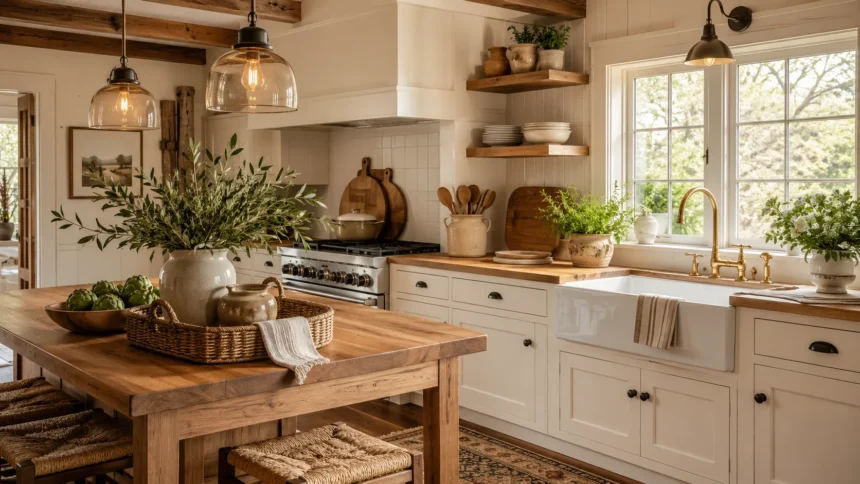
An apron-front or farmhouse sink is one of the most recognizable features associated with this kitchen style. Its exposed front creates a substantial visual feature while offering a deep basin suitable for washing large pots, trays, and dishes. The design can therefore contribute practical value as well as traditional character.
White fireclay sinks remain popular because they provide a clean contrast against wood or colored cabinetry. Stainless steel, copper, stone, and darker finishes can also work depending on the overall design. A farmhouse kitchen does not need to follow one formula, so the sink should complement surrounding countertops and cabinets.
Pair the sink with a faucet that adds subtle personality. Bridge faucets, gooseneck designs, brushed brass, aged bronze, matte black, or polished nickel can all suit farmhouse interiors. Choose the finish according to durability and maintenance needs as well as appearance, particularly in a heavily used kitchen.
If installing a new sink requires major cabinetry changes, you can create a similar feeling through surrounding decor instead. Wooden cutting boards, linen towels, ceramic soap dispensers, warm lighting, and traditional-style hardware can bring farmhouse character to an ordinary sink area without requiring a full renovation.
Create Warmth With Farmhouse Kitchen Lighting
Lighting strongly influences whether a farmhouse kitchen feels cozy or clinical. Large pendants above an island, lantern-inspired fixtures, simple chandeliers, and warm metal sconces can introduce decorative character while improving practical illumination. Lighting is also an effective way to update a kitchen without changing permanent architectural elements.
Materials such as aged brass, bronze, blackened metal, glass, ceramic, and woven fibers complement farmhouse interiors particularly well. Fixtures do not need to look antique, however. Clean-lined contemporary pendants can create an attractive contrast against traditional cabinets, wood beams, or a farmhouse dining table.
Layering several light sources produces a more comfortable environment. Ceiling fixtures can provide general brightness, under-cabinet lights can illuminate work surfaces, and pendants can define islands or dining areas. This approach allows the kitchen to transition easily from daytime food preparation to softer evening meals.
Warm-toned bulbs are generally more flattering to wood, cream cabinetry, brass, and earthy colors than extremely cool illumination. Dimmers can provide additional control when compatible with the fixtures. The goal is to create enough task lighting for safety while maintaining the soft atmosphere associated with a welcoming farmhouse interior.
Decorate With Vintage and Antique-Inspired Pieces
Vintage objects can give a farmhouse kitchen a sense of history that newly purchased decorations sometimes struggle to achieve. Old wooden stools, ceramic crocks, enamelware, framed botanical prints, copper pans, baskets, or antique cutting boards can introduce character without requiring major structural changes.
Choose items because you genuinely appreciate them rather than simply because they appear old. One authentic or meaningful vintage object usually has more visual impact than a shelf filled with mass-produced accessories designed to imitate age. Farmhouse interiors feel strongest when their decorative story develops naturally.
Practical vintage pieces are especially useful. Wooden breadboards can double as serving boards, baskets can hold produce or linens, and pitchers can become utensil holders or vases. Combining function with decoration keeps the kitchen from becoming cluttered and reinforces the practical roots of farmhouse style.
Be selective about placement. A vintage scale on the counter, an antique painting near a breakfast nook, or a small collection of copper cookware may be enough. Spreading distressed objects across every surface can make the room feel more like a themed store display than a comfortable working kitchen.
Style Kitchen Counters With Useful Decor
Farmhouse countertops should feel welcoming without interfering with food preparation. Start by identifying items you actually use every day, such as cutting boards, cooking utensils, oils, coffee equipment, or fruit bowls. Attractive versions of these essentials can function as decor while remaining conveniently accessible.
Group smaller objects instead of scattering them across the counter. A wooden tray might hold olive oil, salt, and a ceramic utensil vessel, creating one organized visual zone. Grouping objects makes surfaces appear cleaner and allows empty areas to remain available for chopping, baking, and serving.
Natural materials work especially well for countertop styling. Wooden boards, stone bowls, woven baskets, ceramic containers, glass jars, and linen towels can introduce subtle texture. Fresh herbs, seasonal fruit, or a small vase of greenery can add color without requiring decorative objects that occupy valuable workspace permanently.
Avoid filling every corner simply because it looks empty. Open counter space is useful and contributes visually to a calm interior. Leaving breathing room around a few well-chosen objects often creates a more sophisticated farmhouse kitchen decor scheme than covering the entire counter with accessories.
Add Texture With Farmhouse Kitchen Textiles
Textiles soften the hard surfaces commonly found in kitchens. Linen towels, café curtains, upholstered stools, seat cushions, washable runners, and natural-fiber rugs can introduce warmth without requiring permanent changes. These details are particularly useful in kitchens dominated by stone, tile, metal, or painted cabinetry.
Simple patterns tend to work best. Narrow stripes, gingham, small checks, understated botanical prints, and subtle plaids can provide classic farmhouse character. Use patterns selectively so they complement rather than compete with wood grain, tile, cabinetry, and decorative objects already present in the space.
Layering textures is often more effective than adding numerous colors. A woven rug, slightly crumpled linen towel, cotton curtain, and upholstered bench can create depth within a simple neutral palette. This allows the room to feel comfortable and visually interesting while maintaining an organized appearance.
Choose washable and durable fabrics wherever spills are likely. Kitchen textiles should support everyday life rather than create unnecessary maintenance. Performance materials and washable rugs can preserve a soft farmhouse aesthetic while making the room practical for children, pets, cooking, and regular entertaining.
Make a Farmhouse Kitchen Island Feel Inviting
A kitchen island naturally becomes a focal point, making it an ideal place to introduce farmhouse character. A contrasting wood finish, muted paint color, or furniture-style detailing can distinguish the island from surrounding cabinets while giving the room a more collected and less uniform appearance.
Wooden or upholstered stools can make the island feel comfortable for quick meals and conversations. Choose designs that allow enough legroom and circulation around the kitchen. Farmhouse style should never come at the expense of practical movement, especially in spaces where several people cook or gather simultaneously.
Pendant lighting can visually anchor the island from above. Two or three well-proportioned fixtures can create symmetry and provide useful task lighting. Black metal, aged brass, woven shades, or simple glass pendants all work well, depending on whether you want the farmhouse look to feel traditional or more contemporary.
Keep island styling restrained. A large ceramic bowl, wooden tray, vase of branches, or bowl of seasonal fruit may be enough. Because islands often serve as preparation, dining, and homework areas, excessive decoration can quickly become inconvenient. Functional flexibility should remain the priority.
Bring Life Into the Kitchen With Greenery
Plants and fresh greenery complement farmhouse interiors because they introduce natural color and soften hard architectural surfaces. Potted herbs such as basil, rosemary, mint, or thyme can be particularly appropriate because they contribute to cooking while also providing fragrance and texture near a sunny window.
Larger kitchens may have room for a substantial potted plant or vase filled with leafy branches. These simple botanical elements can make a strong statement against neutral cabinets and natural wood. Seasonal greenery can also refresh the kitchen throughout the year without requiring permanent decorative changes.
If natural light is limited, choose plants suited to the actual conditions rather than selecting greenery solely for appearance. High-quality faux botanicals can also be used sparingly where live plants would struggle. The objective is to create a natural feeling without adding difficult maintenance to your routine.
Fresh flowers can provide a softer, more traditional farmhouse touch. Instead of elaborate arrangements, use simple seasonal stems in ceramic pitchers, glass jars, or understated vases. The informal presentation usually fits farmhouse design better than highly structured floral arrangements that might feel too formal for the space.
Use Rustic Wall Decor Without Overdoing It
Farmhouse wall decor should add personality while supporting the wider design rather than dominating it. Vintage artwork, landscape paintings, botanical prints, wooden shelves, pottery displays, or framed family pieces can work beautifully. Larger, meaningful pieces often look more polished than numerous small decorations covering every wall.
Avoid relying too heavily on word signs or decorative slogans. While they can be used if personally meaningful, large collections of scripted farmhouse signs can quickly make a kitchen feel dated. Artwork, photography, antique pieces, or handmade objects generally create more lasting visual interest.
Architectural texture can sometimes replace wall decor entirely. Brick, shiplap, beadboard, limewash, plaster, or subtle paneling can introduce enough character that little additional decoration is required. These treatments work particularly well on breakfast nook walls, island backs, or selected feature areas.
Consider the amount of visual activity already present in the kitchen. If cabinets, open shelves, lighting, and backsplash materials are detailed, leaving some walls relatively simple can create necessary breathing room. Farmhouse style should feel layered but never overcrowded.
Choose a Farmhouse Backsplash With Lasting Appeal
A backsplash provides an opportunity to introduce subtle texture and traditional character. Handmade-look subway tiles, glazed ceramic, natural stone, brick-inspired surfaces, and simple square tiles can all work well. Slight variation in color or surface texture often adds warmth without requiring a complicated pattern.
Classic white subway tile remains a flexible option, particularly when paired with warmer grout, wood shelves, or colored cabinets. For a softer look, cream, beige, sage, or off-white tiles can prevent the kitchen from feeling too bright. Their subtle variation often complements farmhouse materials more naturally.
Natural stone can create a more rustic or European farmhouse atmosphere. Limestone, marble, and textured stone bring organic variation, although maintenance requirements should be considered carefully. Highly porous surfaces may need sealing or additional care in areas exposed regularly to grease and water.
Avoid selecting a backsplash simply because it is currently fashionable. Since tile can be inconvenient and expensive to replace, choose materials that complement permanent elements such as cabinets and countertops. Smaller trends can be introduced more safely through accessories, paint, or textiles.
Add Rustic Charm With Baskets and Storage
Woven baskets are particularly useful in farmhouse kitchens because they combine natural texture with practical storage. They can hold produce, linens, pantry items, baking supplies, or miscellaneous objects while keeping shelves and counters visually organized. Materials such as rattan, willow, and seagrass also introduce warmth.
Use baskets where they genuinely improve storage rather than adding them solely for decoration. Large baskets can occupy open island shelves, while smaller versions work inside pantries or on shelving. Matching every basket is unnecessary, but using related natural materials can help create visual consistency.
Wooden crates, ceramic crocks, glass jars, and metal containers can provide additional farmhouse-inspired storage. Clear jars are especially practical for frequently used dry ingredients because their contents remain visible. Choose containers that suit your routine instead of transferring every packaged ingredient purely for appearance.
Closed storage should still handle most visually messy items. Farmhouse kitchens do not need every object displayed openly. Combining concealed cabinets with a few attractive storage pieces produces a calmer environment and makes daily cleaning easier, particularly for households with busy cooking schedules.
Make the Dining Area Feel Like Part of the Kitchen
A dining nook or nearby table can reinforce the farmhouse atmosphere by creating an obvious place for gathering. Solid wood tables are particularly effective because scratches and natural wear can add character over time rather than immediately making the furniture look damaged.
Dining chairs do not have to match perfectly. Combining a bench with wooden chairs or mixing two complementary chair styles can create a relaxed, collected feel. Keep the color palette connected so the arrangement looks intentional rather than assembled from unrelated furniture.
Lighting helps define the dining zone in an open-plan room. A simple chandelier or pendant centered above the table can visually separate dining from food preparation areas. The fixture should relate to kitchen hardware or lighting without needing to match every metal finish exactly.
A runner, ceramic bowl, vase, or seasonal branch arrangement may be all the table needs. Farmhouse dining areas are most appealing when they remain usable for meals, homework, and conversation. Decorations should enhance that experience rather than requiring constant removal whenever the table is needed.
Blend Modern and Farmhouse Elements Carefully
Modern farmhouse design works best when traditional elements are balanced with cleaner contemporary details. A farmhouse sink and wooden island can coexist beautifully with streamlined cabinetry, simple hardware, and modern appliances. The contrast prevents the kitchen from feeling either too rustic or excessively sleek.
Use farmhouse details as highlights rather than applying them to every surface. Rustic wood beams, antique accessories, apron sinks, open shelving, and vintage lighting all have personality. Using all of them heavily in one room can create visual overload, while choosing a few allows each feature to have greater impact.
Contemporary materials can also make farmhouse kitchens easier to maintain. Quartz countertops, performance fabrics, durable flooring, integrated lighting, and modern storage systems can provide practical advantages while natural wood and classic shapes maintain the desired warmth.
The strongest modern farmhouse kitchens feel authentic because they are designed around present-day life. Rather than recreating a historical farmhouse exactly, they borrow the comfort, craftsmanship, and practical spirit of the style while adapting it to modern cooking, technology, storage, and family routines.
Farmhouse Kitchen Decor Ideas for Small Spaces
Small kitchens can still incorporate farmhouse style without feeling crowded. Begin with a light, warm color palette and prioritize furniture or decor that also serves a practical purpose. Wooden shelves, attractive cookware, hanging utensils, and woven storage can add character while making efficient use of limited space.
Use vertical areas carefully. One or two shelves above a counter can provide additional storage without occupying floor space. Peg rails can hold towels, small baskets, or frequently used tools, creating an organized farmhouse look while keeping surfaces relatively clear.
Choose decorative elements with appropriate scale. Oversized signs, large collections, and bulky furniture can make compact kitchens feel smaller. A small vintage print, wooden stool, ceramic pitcher, or linen curtain may provide enough rustic personality without competing with essential kitchen functions.
Good lighting is especially important in smaller rooms. Keep windows as open as privacy allows and use under-cabinet fixtures to brighten work areas. A well-lit kitchen with warm materials and controlled decoration can feel considerably more spacious than one crowded with unnecessary farmhouse accessories.
Affordable Farmhouse Kitchen Decor Ideas
Creating a warm farmhouse kitchen does not require replacing cabinetry or appliances. Start with inexpensive updates such as new cabinet hardware, wooden cutting boards, linen towels, secondhand artwork, ceramic containers, or a washable runner. Small changes can significantly alter how the room feels.
Secondhand stores and flea markets can be useful sources for authentic-looking accessories. Wooden stools, framed art, pottery, baskets, and vintage kitchen tools may have more character than newly manufactured distressed decor. Choose pieces carefully so the kitchen does not become crowded with objects simply because they were inexpensive.
Paint can also deliver a major visual change for relatively modest cost. Walls, pantry doors, islands, or existing furniture can be refreshed with warm neutrals or muted farmhouse colors. Always prepare surfaces correctly and use finishes appropriate for kitchens where moisture and regular cleaning are expected.
Focus your budget on areas you touch or see every day. Comfortable stools, useful lighting, quality hardware, or a durable rug may have a greater impact than numerous small decorations. Good farmhouse design is defined by warmth and function, not by how much money is spent.
Common Farmhouse Kitchen Decor Mistakes to Avoid
One of the biggest mistakes is using too many obviously themed decorations. Rooster motifs, scripted signs, distressed mason jars, and artificial antique accessories can overwhelm the space when used together. Farmhouse character is more convincing when it comes from materials, craftsmanship, texture, and practical objects.
Another mistake is making every surface look intentionally distressed. Reclaimed wood and genuine vintage pieces can add beauty, but artificially aging cabinets, shelves, furniture, and accessories simultaneously may make the interior appear forced. Balance rustic texture with clean surfaces for a more current result.
Clutter can also become a problem, particularly with open shelving and counter displays. If every plate, basket, cutting board, jar, plant, and utensil is visible, the kitchen may become visually exhausting. Edit displays regularly and keep enough empty space for the room to feel comfortable.
Finally, avoid sacrificing function for appearance. A beautiful farmhouse kitchen still needs accessible storage, sufficient lighting, clear worktops, durable finishes, and easy circulation. The warmest interiors are often the ones that make everyday tasks easier while naturally accumulating character through regular use.
Final Thoughts on Creating a Warm Farmhouse Kitchen
The best farmhouse kitchen decor ideas focus on creating warmth rather than following a strict checklist. Natural wood, warm neutrals, handmade textures, useful accessories, soft lighting, and thoughtfully selected vintage pieces can build character without requiring an expensive or dramatic renovation.
Start with the elements that influence the entire room, such as color, lighting, wood finishes, and furniture placement. Once the foundation feels cohesive, introduce smaller details through pottery, textiles, baskets, greenery, and artwork. Decorating gradually gives you time to understand what the kitchen genuinely needs.
Remember that farmhouse design should feel comfortable rather than perfect. Natural wood may develop marks, handmade pottery may have slight variations, and vintage furniture may reveal its age. These imperfections can contribute to the relaxed character that makes the style different from more polished contemporary interiors.
Ultimately, your farmhouse kitchen should support cooking, gathering, and everyday living. Choose decor that reflects your taste rather than copying every current farmhouse trend. When practical design and personal character come together, the kitchen can feel welcoming, timeless, and genuinely connected to the people who use it.
Frequently Asked Questions
What colors are best for farmhouse kitchen decor?
Warm white, cream, beige, greige, sage green, muted blue, taupe, and earthy brown work beautifully. These shades pair naturally with wood, stone, brass, and rustic textures.
How can I make my kitchen look farmhouse-style?
Add natural wood, warm neutral colors, open shelves, vintage-inspired lighting, woven baskets, ceramic accessories, and simple textiles. Keep decorations useful and avoid overcrowding surfaces.
What is modern farmhouse kitchen decor?
Modern farmhouse decor combines rustic warmth with cleaner contemporary features. It often mixes wood, shaker cabinets, neutral colors, simple hardware, modern appliances, and restrained vintage accents.
Can farmhouse kitchen decor work in a small kitchen?
Yes. Use light warm colors, practical open shelving, compact wood accents, vertical storage, simple textiles, and limited decor to create farmhouse warmth without making the space feel crowded.
Is farmhouse kitchen decor still in style?
Yes, especially in a more refined form. Current farmhouse interiors favor warm woods, natural materials, earthy colors, vintage pieces, and functional decor instead of excessive distressed signs or themed accessories.