

How Fast Does a Blood Clot Travel From the Leg to the Lungs?
If you are wondering how fast does a blood clot travel from the leg to the lungs, the most important thing to understand is that there is no dependable timetable. A deep vein thrombosis, or DVT, can remain in a leg vein without moving, but if part of the clot breaks away, it can travel through the bloodstream and become a pulmonary embolism (PE). Pulmonary embolism symptoms can sometimes appear very quickly, making the condition a medical emergency rather than something that can safely be watched at home.
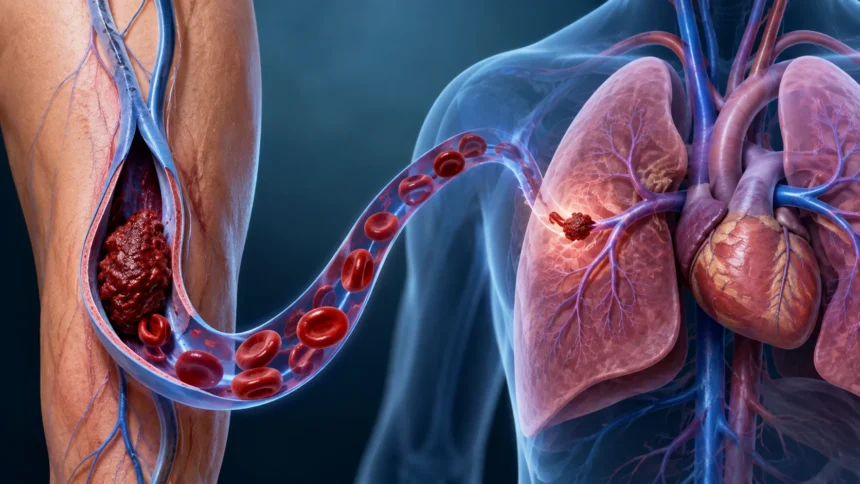
The clot does not slowly crawl from the leg toward the lungs over several predictable hours. Once a fragment becomes an embolus and enters the venous circulation, it is carried with blood through progressively larger veins toward the heart. It then passes through the right side of the heart and into the pulmonary arteries, where it can become lodged and partially or completely obstruct blood flow. The clinical consequences depend partly on the size and location of the obstruction and the person’s underlying health.
This is why doctors do not use a specific travel time to decide whether a suspected DVT is dangerous. Instead, they assess symptoms, medical history, risk factors, examination findings, and diagnostic testing to determine whether a clot is present. A suspected pulmonary embolism may require imaging and other medical tests because symptoms can overlap with conditions such as pneumonia or heart problems. Waiting to see whether symptoms worsen can be dangerous when a pulmonary embolism is possible.
Anyone experiencing sudden unexplained shortness of breath, chest pain that worsens with breathing, coughing up blood, fainting, severe lightheadedness, or an unusually fast heartbeat should seek emergency medical care immediately. These can be symptoms of pulmonary embolism, including in people who never noticed obvious symptoms of a leg clot beforehand. The question is therefore less about calculating exactly how long a clot takes to travel and more about recognizing the warning signs quickly enough to receive urgent treatment.
What Happens When a Blood Clot Forms in the Leg?
A blood clot that develops within a deep vein is known as deep vein thrombosis. DVT most commonly occurs in deep veins of the lower leg, thigh, or pelvis, although clots can develop in other parts of the body as well. The clot can partially or completely interfere with normal venous blood flow. Some people develop noticeable symptoms, while others may have a DVT without realizing that a clot has formed.
Typical DVT symptoms include swelling, pain or tenderness, warmth, and redness or discoloration in the affected area. Symptoms often affect one leg rather than both, although symptom patterns are not reliable enough to diagnose the condition without medical assessment. Other problems involving muscles, joints, veins, or skin can produce similar symptoms. For this reason, medical testing is often required when clinicians suspect that a person has developed a deep vein blood clot.
The most serious immediate concern is that a portion of the DVT may separate from the original clot. Once detached, that fragment becomes an embolus that can travel through the bloodstream. It may eventually reach the arteries supplying the lungs and create a pulmonary embolism. Not every DVT will become a PE, but the possibility is serious enough that suspected DVT generally requires timely medical evaluation rather than waiting for symptoms to disappear on their own.
Treatment is designed partly to reduce the risk of the clot enlarging or additional clots developing. Anticoagulants, commonly called blood thinners, are frequently used in the treatment of venous thromboembolism. These medicines do not simply make an existing clot vanish immediately; rather, they help prevent additional clot formation and stop existing clots from getting larger while the body gradually manages the clot. The exact treatment depends on the patient’s condition and medical history.
How Does a Blood Clot Reach the Lungs?
Understanding the pathway helps explain why a pulmonary embolism can develop rapidly after a clot breaks loose. Deep veins in the leg return blood toward the heart. When a piece of a DVT separates, normal blood flow can carry it upward through veins in the leg and pelvis and into larger central veins. It then travels toward the right side of the heart rather than entering the arteries that deliver oxygenated blood throughout the body.
After reaching the right side of the heart, the circulating clot is pumped toward the lungs through the pulmonary circulation. The pulmonary arteries progressively branch into smaller vessels. Eventually, a clot may encounter a vessel too narrow for it to pass through and become lodged there. This obstruction is called a pulmonary embolism when it blocks pulmonary arterial blood flow.
The seriousness of a PE can vary dramatically. A smaller embolus located farther into the pulmonary circulation may produce different effects from a large clot obstructing major pulmonary arteries. A significant obstruction can interfere with the movement of blood through the lungs and can reduce the body’s ability to maintain adequate oxygen delivery. Large pulmonary emboli can therefore become life-threatening and require immediate medical treatment.
A person cannot normally feel a clot physically moving through the veins toward the lungs. There is no sensation that reliably tracks its movement from the calf through the body. Symptoms instead arise from the effects of the DVT or from the pulmonary obstruction once a PE develops. That is why relying on whether you can “feel the clot moving” provides no dependable protection against pulmonary embolism.
How Fast Can a Blood Clot Travel From the Leg to the Lungs?
There is no medically reliable travel time that applies to every clot. A DVT could exist without breaking apart, meaning that asking how many minutes it needs to reach the lungs may not describe what actually happens. The critical event occurs when part of the clot detaches. After that point, the fragment is carried by circulating blood rather than moving independently at a slow or predictable speed.
Pulmonary embolism symptoms can appear suddenly. According to the NHLBI, PE symptoms may develop quickly within seconds to minutes in some people, although symptoms can also develop more gradually over days or even weeks. This does not mean every detached leg clot reaches the lungs within a scientifically established number of seconds or minutes. Instead, it demonstrates why clinicians cannot give patients a safe waiting period after concerning symptoms appear.
Several factors influence what happens clinically, including the location and size of the original DVT, whether part of it separates, how much clot material reaches the pulmonary arteries, and the person’s cardiovascular and respiratory health. Two people with leg clots can therefore have very different experiences. One may have localized DVT symptoms, while another may present with symptoms of pulmonary embolism without previously noticing any leg symptoms at all.
Because of this unpredictability, a person with possible DVT should not use internet estimates of clot travel speed to decide how quickly to obtain treatment. If you have new one-sided leg swelling, pain, tenderness, warmth, or discoloration—particularly if you have risk factors for blood clots—contact a healthcare professional promptly. If chest symptoms or breathing difficulty appear, seek emergency medical attention immediately.
What Is a Pulmonary Embolism?
A pulmonary embolism occurs when an artery in the lungs becomes suddenly blocked. The blockage is most commonly caused by a blood clot that originated elsewhere in the body, particularly a DVT in the leg. After a piece of the clot breaks away, it travels through the bloodstream until it reaches the pulmonary circulation and becomes trapped in a vessel that it cannot pass through.
PE and DVT are closely connected and together belong to a broader condition known as venous thromboembolism, often shortened to VTE. A person may first notice signs of DVT before developing pulmonary symptoms, but this sequence does not happen in every case. Some people can experience a pulmonary embolism without recognizing symptoms of a preceding DVT, making awareness of both sets of warning signs important.
When a pulmonary artery becomes obstructed, blood cannot flow through the affected portion of the pulmonary circulation normally. A significant PE can make it harder for the body to maintain effective oxygen delivery and can put considerable strain on the cardiovascular system. The consequences range from relatively limited symptoms to cardiovascular collapse, depending on the amount of obstruction and the patient’s overall medical condition.
Pulmonary embolism should therefore never be treated as simply another form of ordinary leg pain or temporary shortness of breath. It is a potentially life-threatening complication that requires appropriate medical assessment. The earlier a serious clot is identified and treated, the sooner clinicians can begin therapies designed to stop additional clotting, support circulation, and manage complications.
Warning Signs That a Leg Clot May Have Reached the Lungs
Sudden shortness of breath is one of the most important pulmonary embolism warning signs. A person may feel unable to take a satisfying breath or may become unusually breathless without an obvious explanation. Symptoms can sometimes occur while resting rather than only during exercise. Because breathing problems have many possible causes, pulmonary embolism cannot be diagnosed from this symptom alone, but unexplained sudden breathlessness warrants urgent medical attention.
Chest pain is another common sign, particularly pain that becomes worse when taking a deep breath or coughing. This is sometimes described as pleuritic chest pain. People may mistakenly attribute the sensation to indigestion, a pulled muscle, anxiety, or another minor problem. However, chest pain occurring with breathlessness, a rapid heartbeat, faintness, or known DVT symptoms should be regarded as potentially serious until evaluated by medical professionals.
Other possible PE symptoms include coughing, coughing up blood, rapid breathing, an elevated or irregular heartbeat, lightheadedness, and fainting. Very low blood pressure can occur in severe cases. No single symptom proves that a pulmonary embolism is present, and the absence of one particular symptom does not exclude it. Different patients can experience substantially different combinations and levels of severity.
If these symptoms develop, do not wait for them to disappear or attempt to calculate how long a blood clot has been traveling. Emergency medical evaluation is appropriate because clinicians can perform imaging and other diagnostic tests that cannot be replicated at home. A pulmonary embolism may resemble other illnesses, making professional assessment essential for determining what is actually causing the symptoms.
Warning Signs of Deep Vein Thrombosis in the Leg
One-sided leg swelling is among the best-known signs associated with DVT. The affected leg may appear noticeably larger than the other or feel tighter than usual. Swelling may involve the calf, ankle, or a larger portion of the leg depending on the location of the clot. However, swelling has many other causes, so it cannot confirm DVT without proper medical evaluation and, when indicated, diagnostic testing.
Pain or tenderness is another possible symptom. Some people describe aching, soreness, cramping, or discomfort that becomes noticeable while standing or walking. Unfortunately, these sensations can easily be mistaken for a pulled muscle or ordinary exercise soreness. The possibility of a clot becomes especially concerning when pain appears alongside swelling, warmth, redness, or recognized risk factors for venous thromboembolism.
The skin over the affected area may feel warmer or appear red or otherwise discolored. Again, these signs are not unique to blood clots and could result from infection, inflammation, or other conditions. Self-diagnosis based solely on visual appearance is therefore unreliable. Healthcare professionals use the overall clinical picture and may perform imaging tests, such as ultrasound, when evaluating a suspected deep vein thrombosis.
Perhaps most importantly, DVT can sometimes occur without obvious symptoms. Likewise, a person may develop pulmonary embolism symptoms without first noticing pain or swelling in the leg. The absence of dramatic leg symptoms should therefore not reassure someone who has suddenly developed shortness of breath or chest pain consistent with a possible PE.
Who Is More Likely to Develop DVT or Pulmonary Embolism?
Blood clot risk generally increases when normal blood flow slows, blood vessels are damaged, or the blood becomes more prone to clotting. Prolonged immobility is an important example because the leg muscles are less active in helping circulate venous blood. Long periods of sitting, hospitalization, bed rest, or limited movement following illness or injury can therefore contribute to conditions that favor clot formation.
Major surgery and serious injury can also increase VTE risk. Surgery may involve both tissue injury and periods of reduced mobility during recovery. For that reason, medical teams assess blood clot risk around many surgical procedures and may use preventive strategies when appropriate. Serious infections and inflammatory conditions can also increase the likelihood of blood clotting in susceptible individuals.
Other recognized risk factors can include previous blood clots and certain inherited tendencies toward abnormal clotting. Hormonal exposures may also matter in some circumstances. Importantly, risk factors often interact rather than working independently. Someone with several risk factors can have a substantially different risk profile from someone with only one, which is why personalized medical assessment is important.
Having a risk factor does not mean that a person definitely has or will develop a DVT. Likewise, absence of an obvious risk factor cannot completely rule one out. Symptoms, clinical history, examination findings, and diagnostic testing must be considered together. If you are concerned about your personal risk because of surgery, medication, pregnancy, previous clots, illness, or family history, discuss it with a healthcare professional rather than relying on generalized online risk estimates.
Can Walking Cause a DVT to Break Loose?
People who suspect they have a blood clot sometimes worry that walking will automatically dislodge it and send it directly to the lungs. The relationship is not that simple, and activity recommendations depend on whether a DVT has been diagnosed, whether treatment has started, and the person’s overall medical condition. For this reason, someone with a suspected or confirmed clot should follow advice from the healthcare team managing the condition.
It is particularly unhelpful to experiment with vigorous exercise, massage, or other attempts to physically “move” a suspected clot. A person cannot safely diagnose the stability, size, or position of a blood clot by touching the leg. If symptoms raise concern for DVT, the appropriate response is medical assessment rather than attempting to manipulate the affected area or test how the symptoms respond to strenuous movement.
Once a DVT has been diagnosed and appropriate therapy has begun, clinicians may provide individualized advice about mobility and returning to normal activities. Recommendations depend on factors such as symptoms, clot characteristics, treatment, bleeding risk, other medical conditions, and the person’s general health. Follow those instructions instead of relying on universal advice obtained from someone else’s experience.
The more important message is that normal movement should not become a substitute for medical care when a blood clot is suspected. Someone with significant new swelling or unexplained leg pain should seek assessment, and anyone who develops breathing difficulty or chest pain suggestive of pulmonary embolism needs immediate emergency attention. The potential seriousness of PE makes professional evaluation much more important than trying to predict whether a particular movement will dislodge a clot.
How Doctors Check for a Blood Clot
Doctors cannot diagnose DVT reliably simply by looking at the leg. They begin by considering symptoms, medical history, risk factors, and examination findings. Because several other conditions can resemble a blood clot, diagnostic testing is often necessary when suspicion is significant. The exact combination of tests depends on the patient’s clinical situation and the likelihood that DVT or pulmonary embolism is present.
Imaging tests can be used to look for clots in deep veins or in the lungs. Ultrasound is commonly associated with investigation of suspected DVT, while pulmonary embolism evaluation may involve specialized chest imaging. Other tests can contribute additional information, depending on the situation. The goal is not merely to determine whether symptoms “sound like” a clot but to obtain objective evidence whenever clinically appropriate.
Clinicians may also use blood testing as part of their diagnostic approach. A D-dimer test, for example, measures a substance associated with clot breakdown and can be useful within specific diagnostic strategies. However, an abnormal result does not by itself prove that someone has a pulmonary embolism, and interpretation depends heavily on the patient’s clinical circumstances. Imaging may still be needed to establish or exclude the diagnosis.
This diagnostic complexity is another reason people should avoid trying to determine at home whether leg pain represents a harmless muscle problem or a dangerous clot. Heart attack, pneumonia, pulmonary embolism, and other disorders can also produce overlapping symptoms. Healthcare professionals use structured evaluation and appropriate testing to distinguish among these conditions.
How Are DVT and Pulmonary Embolism Treated?
Anticoagulant medication is a major component of treatment for venous thromboembolism. These medicines are often described as blood thinners, although they do not literally dilute the blood. Their primary role is to prevent existing clots from growing larger and reduce the formation of additional clots. Examples include heparin, warfarin, and direct oral anticoagulants, although the appropriate drug depends on the individual patient.
Treatment decisions are individualized because doctors must balance the danger posed by clotting against the possibility of bleeding from anticoagulant medication. The patient’s kidney function, medical history, other medicines, pregnancy status, bleeding risk, clot location, and severity of illness can all influence treatment choices. People taking anticoagulants should follow instructions carefully rather than changing doses or stopping medication without medical guidance.
More serious pulmonary embolism situations may require additional hospital-based treatment and close monitoring. Treatment intensity depends partly on whether the clot is significantly affecting circulation and placing the patient at immediate risk. This is why rapidly developing shortness of breath, fainting, severe chest symptoms, or low blood pressure should be treated as emergency warning signs rather than waiting for a routine medical appointment.
Early diagnosis matters because treatment can reduce the risk of additional clot formation and serious complications. Someone who has already been diagnosed with a DVT should understand their prescribed treatment, know which symptoms require emergency care, and attend recommended follow-up appointments. Being informed is valuable, but it should complement—not replace—the medical plan provided by the clinicians treating the clot.
Can a Pulmonary Embolism Happen Without DVT Symptoms?
Yes. One of the most important facts about venous thromboembolism is that pulmonary embolism can occur without obvious symptoms of DVT. A person may never notice the characteristic swelling, warmth, or pain in the leg before developing breathing problems or chest discomfort. For that reason, doctors do not require a history of recognizable leg symptoms before considering pulmonary embolism as a possible diagnosis.
This can be confusing because people commonly picture a blood clot progressing through a predictable series of stages: first calf pain, then worsening swelling, then movement toward the chest, and finally a pulmonary embolism. Real clinical presentations are often less orderly. Some DVTs produce pronounced symptoms, some produce subtle symptoms, and others may remain clinically unnoticed until a complication develops.
Likewise, pulmonary embolism symptoms can vary from person to person. Some cases produce sudden dramatic breathing difficulty, while others may initially create less obvious symptoms. NHLBI notes that PE symptoms can appear rapidly or develop more slowly. Therefore, neither the presence nor absence of a dramatic beginning reliably determines whether a pulmonary embolism is occurring.
Anyone with unexplained chest pain, shortness of breath, coughing up blood, fainting, or other concerning symptoms should seek appropriate medical care regardless of whether their leg feels normal. The absence of calf swelling should never be used as a reason to dismiss serious pulmonary symptoms. Professional assessment is the only appropriate way to determine whether a pulmonary embolism or another medical condition is responsible.
Why You Should Not Wait to See Whether a Clot Travels
The biggest problem with waiting is that no home method can tell you whether a DVT will remain where it is or whether part of it will break away. There is also no countdown showing how much time remains before a pulmonary embolism might occur. A person could spend hours searching for an estimated travel speed and still have no reliable information about what is happening inside their own bloodstream.
Another risk is misinterpreting temporary changes in symptoms. Leg pain may become less noticeable even though the underlying cause has not been established. Likewise, early pulmonary symptoms may be mistaken for anxiety, fatigue, indigestion, or a respiratory infection. Symptoms alone cannot reliably determine whether a clot is present, which is why diagnostic testing plays such an important role in suspected DVT and PE.
Seeking medical care does not automatically mean that a dangerous blood clot will be found. Many people evaluated for leg swelling or chest discomfort ultimately have another explanation. The purpose of evaluation is to distinguish serious conditions from less dangerous ones. Because pulmonary embolism can be life-threatening, ruling it out appropriately is far safer than assuming symptoms are harmless because they do not perfectly match a typical description.
If you currently have significant one-sided leg swelling, pain, tenderness, warmth, or discoloration, contact a medical professional promptly. If you have sudden unexplained breathlessness, chest pain, fainting, coughing up blood, or severe lightheadedness, seek emergency medical care immediately. Do not attempt to monitor those symptoms based on an estimated clot-travel timeline.
Final Thoughts: How Quickly Can a Leg Clot Reach the Lungs?
The central answer to how fast does a blood clot travel from the leg to the lungs is that medicine does not provide a single dependable number of minutes or hours. A DVT can remain in place, but if part of it breaks loose, the fragment can travel through the venous bloodstream, through the right side of the heart, and into the pulmonary arteries. The resulting blockage is known as a pulmonary embolism.
What makes the condition particularly important is its unpredictability. Pulmonary embolism symptoms can sometimes develop very rapidly, while in other cases symptoms develop more gradually. The fact that symptoms may appear differently between patients means that estimating travel time is not a safe way to assess personal risk.
Knowing the warning signs is considerably more useful. DVT may cause swelling, tenderness, pain, warmth, or discoloration in an affected limb. Pulmonary embolism may produce breathing difficulty, chest pain that worsens when breathing deeply, a fast or irregular heartbeat, coughing or coughing up blood, lightheadedness, or fainting.
If you suspect that you may have a blood clot, seek medical assessment rather than trying to determine how quickly it might move. If symptoms suggest pulmonary embolism, treat the situation as an emergency. Rapid evaluation allows healthcare professionals to perform the tests needed to determine whether a clot is present and begin appropriate treatment when necessary.
Frequently Asked Questions
How long does it take for a blood clot to move from the leg to the lungs?
There is no fixed timeframe. A DVT may remain in the leg, but once part of it breaks loose, pulmonary embolism symptoms can potentially develop rapidly.
Can you feel a blood clot traveling to your lungs?
You generally cannot feel a clot physically moving through your veins. Instead, you may notice DVT symptoms in the leg or PE symptoms such as sudden breathlessness and chest pain.
What are the first signs that a blood clot has reached the lungs?
Common warning signs include sudden shortness of breath, chest pain that worsens with deep breathing, rapid heartbeat, coughing, lightheadedness, or fainting.
Can a blood clot reach the lungs without leg pain?
Yes. A pulmonary embolism can occur even when a person has not noticed obvious symptoms of DVT in the leg.
Is a blood clot in the lungs an emergency?
Yes. A pulmonary embolism can be life-threatening and requires prompt medical evaluation, especially when sudden breathing difficulty, chest pain, fainting, or coughing up blood occurs.