

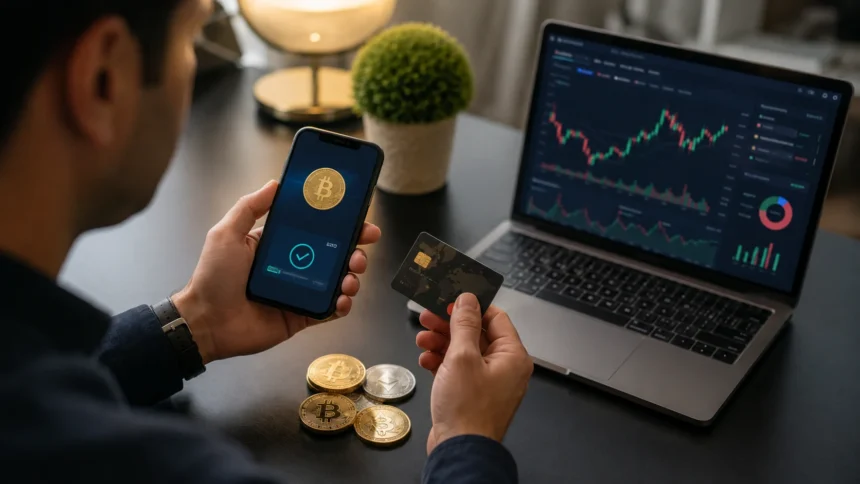
How to Buy Cryptocurrency: A Beginner-Friendly Step-by-Step Guide
Buying cryptocurrency can seem complicated when you first encounter terms such as exchanges, wallets, blockchain networks, private keys, market orders, and transaction fees. In reality, the basic buying process is fairly straightforward once you understand what each step does. Most beginners start by choosing a cryptocurrency platform, creating and verifying an account, depositing money, selecting the cryptocurrency they want, and placing an order. The more important challenge is learning how to perform those steps safely rather than simply finding the fastest possible way to buy digital assets.
Before learning how to buy cryptocurrency, it helps to understand what you are purchasing. Cryptocurrency is a type of digital asset that can be transferred through blockchain or similar distributed-ledger networks. Bitcoin and Ether are among the most familiar examples, but thousands of other crypto assets exist with very different technologies, purposes, liquidity levels, and risk profiles. Purchasing crypto therefore should not begin with choosing whichever coin is trending on social media. Understanding the asset and why you are buying it should come before clicking the buy button.
Cryptocurrency prices can move significantly over relatively short periods, which makes risk management especially important for beginners. An asset can rise quickly, but it can also lose a substantial portion of its value. New investors sometimes enter the market after seeing dramatic gains and assume recent price movements will continue indefinitely. A more thoughtful approach involves understanding volatility, deciding how much money you can realistically place at risk, and avoiding purchases made purely because of fear of missing out.
Security is equally important. Cryptocurrency transactions can be difficult or impossible to reverse once completed, and scammers deliberately target beginners who are unfamiliar with wallet addresses, recovery phrases, exchanges, and account verification. Creating strong passwords, enabling multi-factor authentication, avoiding suspicious links, checking website addresses carefully, and never sharing wallet recovery information are fundamental habits. Learning these protections before buying cryptocurrency can prevent mistakes that are far more costly than paying a slightly higher trading fee.
This guide explains how to buy crypto for beginners from start to finish, including choosing a platform, verifying an account, depositing money, selecting a cryptocurrency, understanding order types, comparing fees, storing assets, and avoiding scams. It is designed to help you understand the process rather than encourage you to purchase any particular coin. Cryptocurrency is speculative, and the appropriate decision depends on your financial circumstances, goals, risk tolerance, and local rules.
Step 1: Understand Cryptocurrency Before You Buy It
Cryptocurrency is a digital asset that generally relies on cryptography and blockchain technology to record ownership and transactions. Unlike money held in a traditional bank account, cryptocurrency may be transferred through decentralized networks where transactions are validated according to the blockchain’s rules. Different cryptocurrencies operate differently, so understanding Bitcoin does not automatically mean you understand every token available on an exchange. Each project can have its own supply structure, consensus system, utility, governance, and technical risks.
Bitcoin, for example, was designed around a decentralized monetary network with a limited maximum supply and proof-of-work consensus. Ether serves an important role within Ethereum, a programmable blockchain supporting smart contracts and decentralized applications. Other crypto assets may be associated with payment systems, blockchain infrastructure, gaming ecosystems, decentralized finance, stablecoins, or highly speculative projects. Some tokens have active networks and significant liquidity, while others may have limited adoption or uncertain long-term usefulness.
Beginners should therefore research the cryptocurrency they want to buy rather than evaluating everything simply by price. A coin costing $0.10 is not automatically “cheaper” than Bitcoin because the number of units in circulation can be dramatically different. Market capitalization, supply, trading volume, liquidity, network activity, development, token distribution, and use cases provide additional context. Unit price alone tells you very little about whether a crypto asset is expensive or inexpensive relative to its overall market.
You should also understand that cryptocurrencies do not guarantee returns. Price movements are driven by supply and demand, investor sentiment, adoption, regulation, macroeconomic conditions, technological developments, liquidity, and many other factors. Smaller cryptocurrencies can sometimes move much more dramatically than established assets. Large gains can attract attention, but the same volatility can produce equally dramatic losses. This is why research and position sizing matter before making a first purchase.
A useful starting principle is to avoid purchasing an asset you cannot explain in simple terms. You should know what the cryptocurrency is, what network it uses, why people use it, how its supply works, and what could cause demand to decrease. You do not need to become a blockchain developer before making a purchase, but understanding the fundamentals reduces the likelihood of buying something solely because an influencer, friend, or online community claimed its price would rise.
Step 2: Decide How Much Cryptocurrency You Can Afford to Buy
Before opening an exchange account, decide how much money you are comfortable placing at risk. Cryptocurrency markets can be highly volatile, meaning even widely traded assets can experience substantial price declines. Money needed for rent, mortgage payments, food, healthcare, emergency savings, tuition, or other essential expenses generally should not depend on a speculative asset maintaining its value. Your buying amount should reflect the possibility that the investment performs much worse than expected.
Beginners sometimes believe they need hundreds or thousands of dollars to buy cryptocurrencies such as Bitcoin. That is not normally the case because many cryptocurrencies are divisible into small units. You do not have to purchase one whole Bitcoin. Most platforms allow customers to buy fractional amounts, meaning someone may be able to purchase a relatively small dollar value rather than an entire coin. This flexibility allows beginners to learn how transactions and custody work without immediately committing a large amount.
A small first purchase can also reduce pressure while you become familiar with the platform. Learning how to deposit funds, place an order, read transaction history, understand fees, and potentially withdraw crypto to a wallet is easier when the amount involved does not make every click stressful. Once you understand the process, you can decide whether cryptocurrency deserves a larger role within your broader financial plan.
Some buyers use dollar-cost averaging, a strategy involving purchases of fixed amounts at regular intervals rather than investing everything at one price. For example, someone might make smaller periodic purchases rather than attempting to predict the perfect market entry. This approach does not eliminate risk or guarantee profits, but it can reduce the emotional pressure associated with trying to time short-term price movements. Whether it makes sense depends on your objectives and circumstances.
The key is to decide the amount before market excitement influences your judgment. Rapidly rising prices can make people abandon their original plans and increase purchases simply because they fear missing further gains. Establishing limits in advance creates discipline. Cryptocurrency should fit within your financial circumstances rather than forcing you to reorganize essential finances around a highly volatile market.
Step 3: Choose a Cryptocurrency Exchange or Buying Platform
For most beginners, the simplest way to buy cryptocurrency is through a cryptocurrency exchange or another regulated platform available in their jurisdiction. An exchange connects buyers and sellers and provides an interface for purchasing, selling, and sometimes storing digital assets. Platforms differ considerably in supported cryptocurrencies, payment methods, trading tools, security practices, custody arrangements, fees, withdrawal rules, and geographic availability.
Security should be one of the first criteria you evaluate. Look for platforms that provide strong account protection, transparent security information, multi-factor authentication, and clear procedures for withdrawals and account recovery. You should also research the company’s history, reputation, legal status where you live, and how it handles customer assets. A slick mobile application or large advertising campaign does not automatically prove that a platform is trustworthy.
Fees deserve careful attention because cryptocurrency platforms can charge several different types. There may be deposit fees, trading commissions, spreads, instant-purchase charges, withdrawal fees, and blockchain network fees. A platform advertising “zero commission” may still make money through a spread between buying and selling prices. Before purchasing, preview the transaction and determine the total amount you will receive after all applicable costs.
Asset selection also matters. Large platforms may list hundreds of cryptocurrencies, but having more options is not necessarily better for a beginner. A platform should support the specific assets you have researched and, if you eventually want self-custody, allow withdrawals through the correct blockchain networks. Some simplified buying applications provide exposure to cryptocurrency prices but place greater restrictions on transferring the actual assets.
Ease of use should be considered alongside security and cost. A beginner may prefer a straightforward interface rather than advanced charts and complex derivatives. More experienced users may prefer exchanges offering detailed order books, limit orders, and lower trading fees. The best platform is not necessarily the one with the greatest number of features; it is the one that provides the functionality you genuinely need while meeting appropriate security, legal, and cost considerations.
Step 4: Create and Verify Your Cryptocurrency Account
After choosing a platform, the next step is normally creating an account. You will typically provide an email address or phone number and create a password. Use a unique password that you have not reused on email, banking, shopping, or social-media accounts. If one service suffers a data breach, reused passwords can allow attackers to attempt the same credentials across many other websites, making password reuse particularly dangerous for financial accounts.
Enable multi-factor authentication whenever the platform provides it. Multi-factor authentication requires another verification method in addition to the password. Depending on the service, this might involve an authenticator application, hardware security key, or another method. Extra authentication creates another barrier for someone who manages to obtain your password. Protecting the email account connected to your cryptocurrency exchange is equally important because email can sometimes be involved in password resets and withdrawal notifications.
Many cryptocurrency platforms require identity verification before allowing full account access. This process is commonly associated with Know Your Customer, or KYC, requirements. Depending on the platform and country, you may be asked to provide your legal name, date of birth, address, government-issued identification, and sometimes additional information. Verification requirements vary considerably by jurisdiction and service.
Identity verification can take anywhere from a short automated process to a longer review when information requires additional checking. Make sure you are using the authentic platform before uploading identification. Fraudulent websites can imitate legitimate exchanges and request personal information. Rather than following links sent through unsolicited messages or advertisements, carefully confirm that you are accessing the platform through its official website or application.
Once verification is complete, review the account’s security and withdrawal settings before adding significant funds. Some platforms allow address whitelisting, anti-phishing codes, withdrawal delays, device management, security keys, or additional protections. Taking a few minutes to configure these controls before buying cryptocurrency can significantly strengthen the security of the account you will use to hold or transfer digital assets.
Step 5: Add Money to Your Crypto Account
After account creation and verification, you will need to fund the account before purchasing cryptocurrency unless the platform supports a direct purchase method. Funding options vary by country and exchange but can include bank transfers, debit cards, credit cards, payment services, or other local methods. Each option can have different fees, settlement times, transaction limits, and restrictions, making it worth comparing them before depositing.
Bank transfers frequently offer lower costs than instant card purchases, although they may take longer depending on the payment system. Debit-card purchases can be faster and convenient but may come with higher transaction charges or spreads. Credit-card purchases may involve additional fees, cash-advance treatment, interest, or restrictions from the card issuer. Using borrowed money to purchase volatile cryptocurrency can also increase financial risk considerably.
Before depositing, confirm what currency the exchange accepts and whether conversion charges apply. If your bank account uses a different currency from the platform’s primary trading currency, the payment provider or bank may apply foreign-exchange costs. Small percentage differences can become meaningful when transaction sizes increase, so comparing the total funding cost is more useful than looking only at an exchange’s advertised trading commission.
Beginners should consider starting with a small deposit to confirm that the payment method works correctly. Once the funds appear in the account and you understand the platform interface, additional deposits can be made according to your plan. Sending a large amount before you know how deposits, withdrawals, and support processes work can create unnecessary stress if something is delayed.
Be cautious if anyone contacts you privately and offers to “help” deposit money into a cryptocurrency investment platform. Legitimate purchasing should occur through an account you control rather than by sending funds or cryptocurrency to a stranger who promises to invest for you. Scammers frequently create fake investment websites displaying fabricated balances and profits while preventing victims from withdrawing real money.
Step 6: Choose Which Cryptocurrency You Want to Buy
Once your account contains funds, you need to choose the cryptocurrency you actually want to purchase. Beginners often start their research with highly established assets because information, liquidity, and market history tend to be easier to find. However, popularity alone does not make any cryptocurrency suitable for every person. The asset should be evaluated according to its technology, economics, use case, risks, and how it fits your financial objectives.
Start by understanding the project’s purpose. Ask what problem the blockchain or token is designed to solve and whether people genuinely use it. Review the network’s history, decentralization characteristics, token supply, issuance model, developer ecosystem, liquidity, and security record. For smaller projects, investigate how tokens were initially distributed and whether a small number of insiders control a large percentage of the circulating supply.
Trading volume and liquidity are also important. A cryptocurrency with deep liquidity generally allows buyers and sellers to transact with less price disruption. Thinly traded tokens may experience extreme price movements and make it difficult to exit a position at the expected price. High quoted returns in an obscure asset mean little if buyers disappear when you want to sell.
Be particularly cautious around meme coins, newly launched tokens, and cryptocurrencies promoted aggressively through social media. Some develop active communities and meaningful markets, but others can be dominated by speculation, manipulation, or concentrated ownership. A rapidly increasing price does not provide evidence of sustainable value. By the time a coin is trending widely, early participants may already be sitting on large gains and looking for new buyers.
A sensible buying decision should be explainable without relying on phrases such as “everyone says it will go up.” Research cannot eliminate cryptocurrency risk, but it can help distinguish an informed decision from pure speculation. If you cannot find clear information about what an asset does, how supply works, or who controls important parts of the project, that uncertainty is itself useful information.
Step 7: Learn Market Orders and Limit Orders Before Buying
When you are ready to purchase, the exchange may offer different crypto order types. The most basic is a market order, which instructs the platform to buy immediately using the best prices currently available in the market. Market orders prioritize execution speed rather than a specific purchase price. They are simple for beginners but can produce a slightly different final price than expected, particularly in markets with low liquidity or rapid volatility.
A limit order works differently. Instead of buying immediately, you specify the maximum price you are willing to pay. The order remains available until the market reaches your chosen price or the order expires or is cancelled, depending on the platform. A limit order provides more control over price but does not guarantee execution. If the market never reaches your limit price, the cryptocurrency will not be purchased.
For example, imagine a cryptocurrency is trading around $100. A market order attempts to purchase it immediately near current market prices. A limit order at $95 waits for sellers willing to transact at $95 or lower. If the price rises instead of falling, that limit order may remain unfilled. Neither order type is automatically superior; they simply solve different problems.
The difference becomes particularly important in volatile or thinly traded markets. A large market order can consume several available sell orders at progressively higher prices, causing slippage between the price visible before the transaction and the average price actually paid. This effect may be relatively minor in highly liquid markets but more noticeable in smaller cryptocurrencies.
Beginners should review the order preview carefully before confirming anything. Check which cryptocurrency is being purchased, how much money is being spent, the estimated quantity received, the price or order conditions, and all displayed fees. The few seconds spent reviewing a transaction can prevent accidental purchases involving the wrong asset, order size, or trading pair.
Step 8: Buy Your First Cryptocurrency
After researching the asset and understanding the order interface, you can enter the amount you want to purchase. Many platforms allow the amount to be entered in your local currency rather than requiring you to calculate the exact quantity of cryptocurrency. For example, you might enter an amount equivalent to a small test purchase and allow the platform to calculate the corresponding fraction of the selected crypto asset.
Before pressing the final confirmation button, review everything carefully. Confirm the asset’s ticker symbol because unrelated cryptocurrencies can sometimes have similar names. Check the amount, transaction price, spread, fees, and total cost. If you are using a market order, understand that the final execution price may move slightly before the transaction completes, especially during periods of high volatility.
Once the purchase is executed, the cryptocurrency balance should appear within the platform account. This does not necessarily mean coins have physically moved into a personal wallet you control. On a custodial exchange, the platform usually manages the underlying private keys while your account shows your ownership or entitlement within its system. Understanding this custody arrangement becomes important when deciding how to store the cryptocurrency afterward.
Your transaction history should record the purchase details, including the amount bought, execution price, and fees. Keep appropriate records because cryptocurrency transactions may have tax or reporting implications depending on where you live. Future sales, swaps, spending, staking, or other transactions may also create record-keeping requirements, so maintaining organized transaction information from the beginning can save considerable effort later.
Your first purchase does not need to be large. In fact, a small initial transaction can function as a learning exercise. Explore where your balance appears, how order history works, what withdrawal options are available, and how security settings function. Becoming comfortable with the process before managing larger amounts can reduce the likelihood of expensive mistakes.
Step 9: Understand Cryptocurrency Buying Fees
Cryptocurrency fees can be confusing because several different charges may appear within the same buying process. The first is usually a trading fee, which the exchange charges for executing a purchase or sale. Some platforms use maker-and-taker fee schedules, while beginner-focused interfaces may charge a simplified transaction fee. Fees can sometimes decrease as trading volume increases, although exact structures differ between platforms.
Another cost is the spread. The spread represents the difference between prices available to buyers and sellers. Some instant-purchase services include a spread within the quoted cryptocurrency price rather than displaying it as a separate commission. This means a platform advertising low or zero explicit trading fees can still produce a relatively high total transaction cost.
Funding fees may also apply depending on how you deposit money. Bank transfers can sometimes be inexpensive, while card purchases can add noticeable costs. Banks, card providers, or payment processors may impose their own charges independently of the cryptocurrency exchange. Always evaluate what ultimately leaves your bank account rather than focusing only on one line within the exchange’s pricing page.
Withdrawal fees become relevant if you move cryptocurrency from the exchange to your own wallet. The platform may charge a fixed withdrawal fee, while blockchain transactions can also involve network fees paid for processing transactions on the relevant network. Network fees can change according to blockchain activity and are not necessarily controlled entirely by the exchange.
These costs make comparison important, especially for small purchases. Paying several separate fees on a very small transaction can consume a meaningful percentage of the amount invested. Before confirming a purchase, review the final quote showing exactly how much cryptocurrency you will receive. The lowest advertised commission does not always equal the lowest total cost.
Step 10: Decide Where to Store Your Cryptocurrency
After buying cryptocurrency, you need to decide how it will be stored. Beginners commonly leave small balances on the exchange where they made the purchase because this is convenient. In this arrangement, the platform generally acts as the crypto custodian, controlling the private keys required to access the blockchain assets. You access your balance by logging into your account.
Custodial storage can be simple because the platform handles much of the technical key management. Depending on the service, account-recovery procedures may also exist if you forget your password. However, holding assets with a third party introduces platform risk. If the custodian experiences financial, operational, regulatory, or cybersecurity problems, access to customer assets could potentially be affected.
The alternative is self-custody, where you control the wallet’s private keys. Cryptocurrency wallets can generally be divided into hot wallets and cold wallets. Hot wallets operate on internet-connected devices and are convenient for regular transactions. Cold wallets, often implemented through hardware devices, keep critical key material more isolated from everyday online environments and are commonly considered for longer-term storage.
Self-custody offers greater direct control but also greater personal responsibility. If you lose the wallet recovery phrase and no valid backup exists, there may be no company that can restore access. If someone else obtains the seed phrase, they may be able to control the cryptocurrency. Recovery words should therefore never be shared with support agents, websites, social-media contacts, or anyone claiming to need them for verification.
The right storage approach depends on factors such as the amount held, how frequently you use the cryptocurrency, your technical comfort, and your ability to maintain backups securely. Some users keep an operational amount in a hot wallet while storing longer-term holdings separately. The important point is to understand who controls the keys and what happens if either your device or the service you use becomes unavailable.
Step 11: How to Transfer Cryptocurrency to Your Own Wallet
If you decide to use self-custody, you will need to withdraw cryptocurrency from the exchange to a personal wallet address. This step deserves extra care because blockchain transactions are usually difficult or impossible to reverse. A typo, incorrect network, fraudulent address, or misunderstanding about compatibility can result in serious problems. Beginners should understand both the sending platform and receiving wallet before initiating a transfer.
The receiving wallet provides a public address for the cryptocurrency you want to receive. Copy that address carefully and select the correct withdrawal network on the exchange. Some crypto assets exist across multiple blockchain networks, and choosing an incompatible network may prevent the funds from arriving where expected. Do not assume that two options are interchangeable simply because the token name looks similar.
Before transferring a large amount, consider sending a small test transaction when practical. Wait for the test transfer to arrive and confirm that you can see and access it correctly. You can then transfer the remaining amount using the verified process. A test transaction creates an additional network fee, but many users consider the extra step worthwhile when moving significant holdings.
Always verify the address rather than blindly trusting copy-and-paste. Malicious software can sometimes replace cryptocurrency addresses copied to a computer’s clipboard. Compare the address displayed by your receiving wallet with the address shown on the exchange withdrawal screen. Hardware-wallet users should verify receiving details through the trusted wallet device according to the wallet’s instructions.
Once the exchange processes the withdrawal, the transaction can usually be tracked on the relevant blockchain. Confirmation times vary depending on the network and current activity. A delay does not automatically mean the funds are lost, but you should verify the transaction status before attempting another transfer. Understanding this process is an important part of becoming comfortable with cryptocurrency self-custody.
Step 12: Protect Your Cryptocurrency Account From Hackers
Account security begins with a unique, strong password. Do not reuse the same password that protects your email or another important account. A password manager can help generate and securely organize unique credentials. If attackers obtain credentials from an unrelated website and you reused the same password on a cryptocurrency exchange, they may attempt to access your financial account automatically.
Multi-factor authentication adds an important second layer. When possible, consider stronger authentication options rather than relying solely on basic text-message codes. Protect any device or authenticator used for account access, and safely store recovery methods provided during setup. Losing every authentication method can make legitimate account recovery difficult even when no attacker is involved.
Be cautious with email messages claiming to come from cryptocurrency platforms. Phishing emails may warn that your account is being closed, withdrawals are pending, or immediate verification is required. Their purpose is often to create urgency so you click a fraudulent login link without thinking. When something appears suspicious, open the known official application or website independently instead of using the message link.
Device security matters too. Keep operating systems, browsers, and legitimate applications updated, and avoid installing unknown wallet software or browser extensions. Public or shared computers are poor places for accessing cryptocurrency accounts because you cannot easily verify their security. Protect phones and computers with appropriate locks and avoid storing recovery phrases in screenshots, unsecured notes, or ordinary cloud files.
Finally, periodically review account activity. Look for unfamiliar login sessions, devices, API keys, withdrawal addresses, or transactions. If the platform offers withdrawal whitelists, security notifications, or other safeguards, consider whether those tools fit your needs. Good cryptocurrency security does not depend on one perfect setting; it comes from multiple layers that make unauthorized access progressively more difficult.
Step 13: Learn How to Spot Cryptocurrency Scams
Cryptocurrency has attracted many legitimate users and businesses, but it has also become a popular payment method for scammers because blockchain transactions can be difficult to reverse. One of the strongest warning signs is someone unexpectedly contacting you and promising unusually high, guaranteed, or risk-free returns. Real investment markets do not provide guaranteed high profits simply because someone claims to have special trading knowledge.
Crypto investment scams often begin through social media, messaging applications, dating platforms, online advertisements, or investment group chats. A stranger may slowly build trust before recommending a trading platform. The fake website can display convincing account balances and rapidly increasing profits, encouraging the victim to deposit larger amounts. When the victim tries to withdraw money, the platform may demand additional “taxes,” “unlock fees,” or deposits.
Another common scam involves impersonation. Someone may claim to represent a government agency, bank, major company, cryptocurrency exchange, or technical-support department and insist that you send cryptocurrency to solve a supposed emergency. Requests to pay an unexpected debt, fine, security problem, or prize fee exclusively in cryptocurrency should raise immediate suspicion.
Recovery-phrase scams are especially dangerous for self-custody users. Anyone who obtains the seed phrase may be able to recreate the wallet and move its assets. Legitimate wallet support should not require you to reveal the recovery phrase through a website, email, social-media message, or phone call. Treat the words as secret access credentials rather than ordinary account information.
Social-media giveaways deserve similar skepticism. Scammers may impersonate well-known entrepreneurs, celebrities, exchanges, or crypto projects and promise to send back more cryptocurrency than you first send them. The blockchain does not contain a mechanism that guarantees such returns. If participation requires transferring cryptocurrency to an unknown address based purely on a promise of receiving more, assume the funds may never return.
Step 14: Avoid Common Cryptocurrency Buying Mistakes
One of the most common beginner mistakes is buying because a cryptocurrency has already risen sharply. Rapid price increases create fear of missing out, causing people to purchase without understanding the asset or considering whether they can tolerate a decline. Markets do not move upward forever. A disciplined buyer decides why they are purchasing before price excitement makes the decision emotionally difficult.
Another mistake is investing too much immediately. Someone unfamiliar with exchanges, withdrawals, wallet security, and price volatility may be better served by learning with smaller amounts. A technically simple mistake becomes dramatically more stressful when the entire cryptocurrency allocation is involved. Gradual learning reduces the financial consequences of unfamiliarity.
Ignoring fees is another avoidable problem. Instant-buy buttons can be convenient but may include higher costs than a standard trading interface. Card funding, spreads, trading fees, and withdrawals can combine into a noticeable expense. Always review the total transaction rather than assuming a platform is inexpensive because one particular fee is advertised as zero.
Sending cryptocurrency through the wrong blockchain network can create another serious mistake. Modern exchanges sometimes provide multiple withdrawal options for the same or similarly named assets. Always verify that the receiving wallet supports the exact network being selected. When uncertain, learn the process before sending rather than treating a blockchain transfer like an ordinary bank transfer that customer support can simply reverse.
The final mistake is assuming security is somebody else’s responsibility. When assets are on an exchange, you still need to secure the account. When assets are in self-custody, you need to secure the private keys and recovery backup. Buying cryptocurrency successfully involves more than obtaining coins; it means understanding how those coins will remain accessible to you and inaccessible to everyone else.
Step 15: Should You Buy Cryptocurrency All at Once or Gradually?
There are several ways to approach the timing of a cryptocurrency purchase. A lump-sum purchase means committing the planned amount at one point in time. If the cryptocurrency rises afterward, the entire allocation benefits from that increase. If the price falls significantly soon after buying, however, the investor experiences the entire decline immediately. The outcome therefore depends heavily on the entry point.
A gradual strategy divides the planned amount into smaller purchases. Dollar-cost averaging into cryptocurrency can reduce the importance of choosing one exact entry price because purchases occur across different market conditions. Sometimes this results in buying at higher prices and sometimes at lower prices. It does not guarantee better performance than investing everything at once, but some people find the structure easier to follow emotionally.
Regular purchases can also reduce the temptation to constantly predict short-term market movements. Cryptocurrency markets operate around the clock, and attempting to react to every price change can become exhausting. A predetermined schedule creates a process that does not require making a new emotional decision every day. The trade-off is that fees can accumulate if each small purchase has a fixed charge.
A third option is combining methods. Someone may make an initial purchase and keep additional funds available for future scheduled purchases. There is no universally correct approach because the suitable strategy depends on risk tolerance, investment horizon, cash flow, market outlook, and personal behavior. What matters is having a plan before volatility creates pressure to change it.
Whichever approach you choose, avoid believing that any strategy eliminates cryptocurrency’s fundamental risk. Dollar-cost averaging can change the average purchase price but cannot protect an asset that permanently loses value. A buying strategy should complement careful asset selection and risk management rather than substitute for them.
Step 16: Can You Buy Cryptocurrency Without Buying a Whole Coin?
Yes. One of the most common misconceptions among beginners is that purchasing Bitcoin requires enough money to buy one full Bitcoin. Cryptocurrencies can generally be divided into much smaller units. Bitcoin, for example, is divisible into tiny fractions, allowing people to purchase an amount based on their available budget rather than the current price of a complete coin.
This divisibility means the headline price of a cryptocurrency does not tell you whether it is accessible. If a Bitcoin costs tens of thousands of dollars, a buyer can still purchase an amount worth far less. The exchange calculates the corresponding fraction automatically. The same principle applies to many other digital assets, although their specific divisibility rules vary.
Fractional ownership also explains why comparing cryptocurrencies solely by unit price is misleading. A token trading for $1 is not automatically more affordable or more likely to increase than a cryptocurrency trading for thousands of dollars. Total supply and market capitalization provide essential context. Multiplying an asset’s price by the number of circulating units helps demonstrate why two projects with very different unit prices can have similar overall valuations.
For beginners, this means there is no need to search specifically for “cheap cryptocurrencies” simply because established coins appear expensive per unit. A smaller fractional purchase of a well-researched asset may make more sense than purchasing thousands of units of an obscure token based solely on the hope that it will someday reach a much higher unit price.
The amount invested should therefore be determined by your financial plan rather than by how many whole coins appear in the account. Owning 0.01 of one cryptocurrency can represent more economic value than owning one million units of another. Focus on the value of the position, asset fundamentals, and risk rather than the visual appeal of owning a large number of tokens.
Step 17: Is It Better to Keep Crypto on an Exchange or in a Wallet?
Leaving cryptocurrency on an exchange can be convenient. You can usually sell, trade, or convert it quickly without first transferring it from another wallet. Beginners may also appreciate familiar account-recovery features. For small balances or actively traded cryptocurrency, custodial storage can provide practical advantages depending on the reliability and security of the platform.
The trade-off is that the exchange controls the private keys. This creates custodial risk because you depend on the platform’s operational security, solvency, withdrawal policies, and legal environment. A user can protect their password perfectly and still be affected if the custodian itself experiences a serious problem. Researching the company holding your assets therefore remains important even after the purchase is complete.
Self-custody reverses that relationship. The user controls the wallet credentials, reducing dependence on a central custodian. However, personal responsibility becomes much greater. Losing the recovery phrase, approving a malicious transaction, or exposing private keys can result in permanent loss without a traditional customer-support process capable of reversing the mistake.
Cold wallets can provide additional isolation for long-term cryptocurrency storage because private keys are kept away from continuously internet-connected environments. Hardware wallets are popular implementations of this model. They can reduce certain online attack risks but still require careful recovery-phrase management, transaction verification, device security, and backup planning.
Many users therefore avoid treating custody as an all-or-nothing decision. They may keep a smaller amount accessible for trading or spending while protecting larger long-term holdings separately. What matters is understanding the risks of each storage method rather than assuming either exchanges or self-custody are automatically safe under every circumstance.
Step 18: Understand Taxes and Cryptocurrency Records
Buying cryptocurrency can create record-keeping responsibilities even when the initial purchase itself does not create an immediate tax bill in every jurisdiction. Rules differ substantially between countries, so you should check requirements where you live. Maintaining records from the beginning is easier than reconstructing years of activity after completing hundreds of transactions.
Keep information about the date of purchase, quantity acquired, currency spent, exchange rate, trading fees, and platform used. If you later sell, exchange, spend, gift, stake, or transfer cryptocurrency, additional records may become relevant. Some jurisdictions treat exchanging one cryptocurrency for another as a taxable disposal even though no traditional cash was received.
Moving cryptocurrency between wallets you personally control is economically different from selling it, but records are still useful. Without clear transaction history, wallet transfers can later look like unexplained withdrawals or deposits when reviewing tax software or account history. Labeling personal transfers helps distinguish them from actual purchases and sales.
Exchange reports can assist with record keeping, but relying entirely on one platform can be problematic if you later use multiple wallets or services. The exchange may know that cryptocurrency left your account but not what happened after it reached an external wallet. Maintaining your own records provides continuity across platforms.
Tax rules for digital assets continue to evolve in many jurisdictions. For significant holdings or complicated activity, professional guidance may be worthwhile. The important beginner habit is simple: save transaction information from day one. Good records support both financial tracking and any future reporting obligations that may apply.
Step 19: How to Buy Cryptocurrency More Safely as a Beginner
Start slowly. You do not need to master the entire cryptocurrency ecosystem before making a small purchase, but you should understand the steps that directly affect your money. Learn how the exchange works, how fees appear, what order you are placing, and where the cryptocurrency will be stored. Avoid increasing the amount until the process feels understandable rather than mysterious.
Use security controls immediately rather than planning to add them later. Create unique passwords, enable multi-factor authentication, protect your email account, review withdrawal settings, and keep devices updated. Security becomes more emotionally difficult after significant funds are already present because every change can feel risky. Setting strong defaults from the beginning is much easier.
Double-check anything involving transfers. Cryptocurrency addresses, blockchain networks, and wallet compatibility deserve deliberate verification. Use small test transfers when appropriate, particularly when moving significant amounts to a new wallet for the first time. The few extra minutes spent verifying a transfer can prevent an irreversible mistake.
Treat unexpected investment advice with skepticism. Someone approaching you privately with guaranteed returns, insider information, automated trading profits, or an urgent investment opportunity has not earned your trust simply because their profile appears professional. Verify platforms independently and never allow another person to control your wallet recovery phrase or pressure you into sending cryptocurrency.
Finally, remember that safe cryptocurrency buying includes financial risk as well as cybersecurity. A perfectly secured wallet cannot protect against a cryptocurrency falling dramatically in value. Strong security prevents unauthorized access; careful investment decisions manage market risk. Both are necessary when deciding whether cryptocurrency belongs in your financial life.
Conclusion: How to Buy Cryptocurrency With Greater Confidence
So, how do you buy cryptocurrency? For most beginners, the process involves researching a crypto asset, selecting a suitable exchange, creating and securing an account, completing any required identity verification, depositing money, choosing an order type, purchasing the cryptocurrency, and deciding how it will be stored. The individual steps are relatively simple, but performing them carefully makes an enormous difference.
Your choice of cryptocurrency deserves as much attention as the platform used to buy it. Thousands of digital assets exist, ranging from established blockchain networks to highly speculative tokens with limited histories. Avoid selecting coins solely because they are inexpensive per unit, trending online, or promoted by influencers. Understand what the asset does and why you believe it deserves your money.
Security should be established before significant funds enter the account. Unique passwords, multi-factor authentication, phishing awareness, careful transaction verification, and secure custody practices can reduce many common risks. If you choose self-custody, protecting the recovery phrase becomes one of your most important responsibilities because losing or exposing it can permanently affect access.
Buying small amounts initially can be a practical way to learn. You can experience deposits, order execution, transaction records, fees, and withdrawals without making every unfamiliar step financially significant. Once the process becomes comfortable, you can decide whether additional cryptocurrency purchases fit your overall risk tolerance and financial plan.
Ultimately, learning how to buy cryptocurrency safely is less about finding a secret platform or perfect coin and more about developing good habits. Research before buying, understand every fee, protect your accounts, verify transfers, avoid promises of guaranteed profit, keep accurate records, and never invest money you cannot afford to expose to significant loss. Those habits matter far more than rushing to make the fastest possible first purchase.
Frequently Asked Questions About Buying Cryptocurrency
How can a beginner buy cryptocurrency?
A beginner can choose a reputable crypto platform available in their region, create and verify an account, deposit money, select a cryptocurrency, and place a purchase order. Start with a small amount while learning how fees and storage work.
How much money do I need to buy cryptocurrency?
You usually do not need enough money to purchase an entire coin because many cryptocurrencies are divisible. Most platforms allow fractional purchases, although minimum transaction amounts vary between services.
Is it safe to buy cryptocurrency online?
Cryptocurrency can be purchased online through established platforms, but risks include price volatility, scams, account hacking, platform failure, and transaction mistakes. Strong account security and careful platform research are essential.
Can I buy Bitcoin without buying one whole Bitcoin?
Yes. Bitcoin can be purchased in fractions, so you can buy an amount based on your budget rather than purchasing one complete Bitcoin. The exchange automatically calculates the fraction you receive.
Where should I keep cryptocurrency after buying it?
You can keep crypto with a custodian such as an exchange or transfer it to a self-custody wallet. Exchanges offer convenience, while personal wallets provide greater direct control but require careful management of private keys and recovery information.