

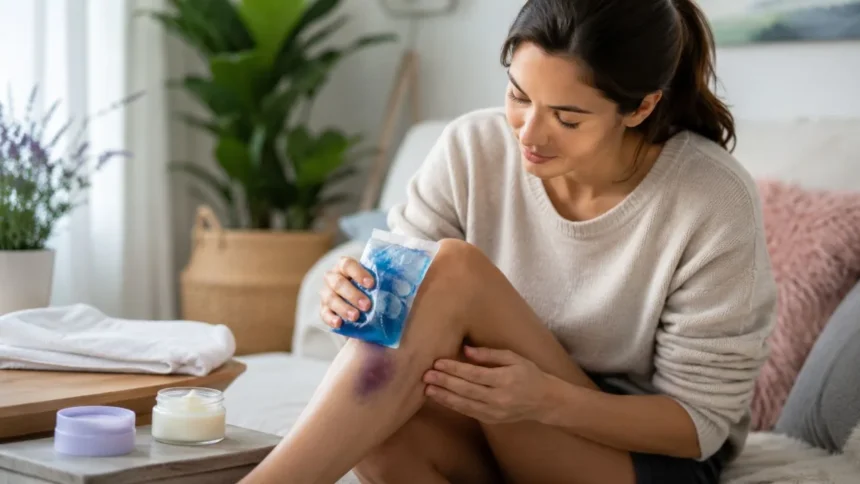
How to Get Rid of Bruises: Safe Ways to Support Healing
A bruise can appear after a bump, fall, sports injury or another impact that damages tiny blood vessels beneath the skin. The trapped blood creates a tender patch that may look red, purple, blue or almost black. Although bruises can be uncomfortable and noticeable, most gradually disappear without medical treatment.
You cannot erase a bruise instantly because your body needs time to break down and absorb the leaked blood. However, early first aid may limit swelling, reduce discomfort and prevent the injury from becoming more irritated. Cold treatment, elevation and temporary protection are usually the most useful first steps.
After the first couple of days, gentle movement and mild warmth may help the injured area feel less stiff. The correct approach depends on where the bruise is located, how it happened and whether another injury is present. A large painful bruise may involve deeper muscle, bone or joint damage.
This guide explains how to get rid of bruises safely, what to do during each stage of healing and which popular remedies are unlikely to help. It also covers unexplained bruising, blood-thinning medicines and the warning signs that require prompt medical attention.
Key Takeaways
Apply a wrapped cold pack for approximately 10 to 15 minutes at a time during the first 24 to 48 hours. Cold may reduce pain and swelling around a recent injury. Never place ice directly against bare skin because this can cause cold-related skin damage.
Rest and protect the affected area during the early stage, particularly when movement increases pain. Elevating a bruised arm or leg above heart level may limit swelling. A comfortable compression bandage may help selected limb injuries, but it should never feel painfully tight.
After roughly 48 hours, a warm—not hot—compress may feel soothing when active swelling is decreasing. Gentle movement can prevent unnecessary stiffness, but aggressive rubbing and strenuous exercise may reopen damaged vessels or worsen a deeper injury.
Most ordinary bruises improve within approximately two weeks, although large or deep contusions may take longer. Seek medical advice for severe pain, unexplained bruising, rapidly increasing swelling, numbness, infection signs or bruising that does not begin improving.
What Is a Bruise?
A bruise, medically called a contusion or ecchymosis, forms when small blood vessels break beneath the skin. Blood leaks into nearby tissue but cannot leave through the unbroken skin. This produces the familiar discoloured area around the site of an injury.
The bruise may initially look pink, red or dark purple depending on skin tone and injury depth. It can feel tender, swollen or slightly firm when touched. Deeper bruises may cause significant pain before much colour becomes visible on the surface.
As the trapped blood is gradually broken down, the bruise may turn blue, green, yellow or brown. These colour changes are a normal part of healing rather than a sign that the injury is becoming infected. Bruise colour alone cannot determine its exact age.
Some impacts also damage muscles, ligaments, joints or bones. A visible bruise may therefore be only one part of the injury. Severe pain, inability to use the area or an abnormal limb shape should be assessed rather than treated as a simple skin bruise.
Can You Make a Bruise Disappear Overnight?
There is no proven method that can safely remove an established bruise overnight. The discolouration comes from blood trapped beneath the skin, and your body must gradually clear it. Creams, massage tools and household remedies cannot immediately extract this blood.
Early cold treatment may help limit additional swelling after the original impact. It may make a new injury more comfortable and potentially reduce how extensive the bruising becomes. It cannot instantly reverse blood that has already leaked into the tissue.
Cosmetics may temporarily cover a visible bruise when there is no open skin or significant swelling. Colour-correcting makeup can reduce its appearance for photographs or events. This changes only what other people see and does not speed biological healing.
Be cautious of products promising to remove bruises within hours. Aggressive rubbing, scraping or chemical applications can irritate the skin and make the area look worse. A realistic goal is to support natural recovery while watching for signs of a more serious injury.
1. Apply a Cold Compress Early
Cold treatment is most useful during the first 24 to 48 hours after a bruise develops. It can temporarily narrow local blood vessels, reduce swelling and numb some of the pain. Begin as soon as reasonably possible after a minor impact.
Wrap an ice pack, gel pack or bag of frozen vegetables in a thin towel. Hold it gently against the area for around 10 to 15 minutes, then remove it. Leave sufficient time between applications so the skin can return to its normal temperature.
Never place ice directly against the skin or leave a cold pack in place while sleeping. Stop if the skin becomes extremely pale, blotchy, blistered or painfully numb. People with reduced circulation or sensation should seek professional advice before using ice.
Cold treatment should not become a way to ignore worsening symptoms. Increasing swelling, severe pressure or an inability to move the injured area may indicate something more than a minor bruise. Arrange medical assessment when the injury is not behaving as expected.
2. Protect and Rest the Injured Area
Reduce activities that repeatedly press on, stretch or strike the bruised tissue during the early stage. Temporary rest allows damaged vessels and surrounding soft tissue to begin repairing. This does not always require complete immobility or staying in bed.
A bruised leg may benefit from avoiding running, jumping or heavy lower-body exercise for a short period. A bruised arm may feel better when heavy lifting is postponed. Let pain guide your activity rather than forcing the area through a demanding workout.
Protective padding may prevent another impact during necessary daily activities. Athletes should not return to contact sport simply because they can hide the discolouration under clothing. Another blow to the same area may create a larger hematoma or deeper muscle injury.
As discomfort begins settling, gentle use is often better than prolonged complete rest. Gradually return to ordinary movement without forcing painful ranges. Persistent weakness, instability or restricted movement should be evaluated by a healthcare professional.
3. Elevate a Bruised Arm or Leg
Elevation may help limit fluid accumulation and swelling in an injured limb. Support the bruised area above heart level whenever this is comfortable and practical. Pillows can be used beneath an arm, ankle or lower leg while resting.
Keep the limb supported rather than holding it up through muscular effort. The position should not strain your back, neck or nearby joints. Change your position when elevation causes numbness, tingling or increasing discomfort.
Elevation is particularly useful during the first day or two when swelling is actively developing. It can be combined with short cold-compress sessions. Continue moving unaffected fingers or toes gently unless a clinician has advised immobilisation.
Elevation cannot repair a fracture, torn ligament or serious muscle injury. Seek care when you cannot bear weight, grip normally or move the joint. A bruise accompanied by deformity or severe bone tenderness may require imaging.
4. Consider Gentle Compression
A flexible compression bandage may help control swelling around selected limb injuries. Wrap the bandage firmly but comfortably, beginning farther from the body and working upward. The goal is support rather than tightly squeezing the tissue.
Loosen or remove the bandage immediately if you develop numbness, tingling, increasing pain or colour changes in the fingers or toes. The skin beyond the bandage should remain warm and normally coloured. Never sleep in compression unless a clinician has advised it.
Compression may be inappropriate when a fracture, circulation problem or severe swelling is suspected. It should not be applied around the neck, chest, abdomen or head. Ask a pharmacist or healthcare professional when you are unsure how to wrap the area.
A bandage does not make the leaked blood disappear more quickly. It is primarily used to support an associated soft-tissue injury and limit swelling. Many small bruises do not require compression at all.
5. Use a Warm Compress After 48 Hours
After the first 48 hours, gentle warmth may soothe stiffness when swelling is no longer actively increasing. Use a warm cloth, warm shower or low-temperature heat pack. The treatment should feel comfortable rather than intensely hot.
Apply warmth for approximately 10 to 20 minutes, then allow the skin to cool. Wrap reusable heat packs according to their instructions and never sleep with one in place. Stop if the area becomes more painful, red or swollen.
Do not use heat immediately after a fresh injury because it may increase local blood flow while bleeding is still occurring beneath the skin. Hot baths, saunas and strong heat rubs are best avoided during the early stage.
Warmth is optional rather than essential. Some bruises continue healing normally without it, while others feel less stiff afterward. Return to cold treatment or seek advice if warmth repeatedly makes your symptoms worse.
6. Move the Area Gently as Pain Improves
Gentle movement can help prevent stiffness once the most painful stage has passed. Slowly bend and straighten the nearby joint within a comfortable range. Stop before the movement becomes sharp or causes the swelling to increase.
Begin with ordinary daily movements rather than heavy stretching. A bruised thigh, for example, may tolerate easy walking before running or deep squats. A bruised shoulder may manage small arm movements before pressing weights overhead.
Do not aggressively stretch a bruised muscle during the first stage of healing. Excessive tension can disturb repairing tissue and prolong discomfort. Increase activity gradually according to strength, mobility and the response several hours later.
A physiotherapist may be helpful when a deep muscle bruise limits movement or athletic performance. Individual rehabilitation can restore flexibility and strength without overloading the injury. This is particularly important after moderate or severe sports trauma.
7. Choose Pain Relief Carefully
Paracetamol, also called acetaminophen, may help reduce discomfort when it is safe for you. Follow the product label and check combination cold, flu or headache medicines for the same ingredient. Taking several products together can accidentally exceed the recommended amount.
People with liver disease, heavy alcohol use or certain medical conditions should ask a healthcare professional before taking paracetamol. Children require age- and weight-appropriate products. Never estimate a child’s dose using an adult tablet.
Aspirin can make bruising worse because it affects blood clotting. Ibuprofen and other anti-inflammatory medicines may also be unsuitable for people with ulcers, kidney problems, bleeding risks or anticoagulant treatment. Ask a pharmacist or clinician when uncertain.
Do not stop prescribed aspirin, warfarin, apixaban or another blood-thinning medicine because a bruise appears. Abruptly stopping treatment may increase the risk of a serious blood clot. Contact the prescriber when bruising becomes unusual, frequent or extensive.
8. Protect the Bruise From Another Impact
Bruised tissue remains vulnerable while damaged vessels and surrounding structures heal. Wear suitable padding or clothing if ordinary activities may expose the area to another bump. Rearranging furniture or clearing walkways can also prevent repeated accidents at home.
Athletes should wait until movement, strength and pressure on the area are comfortable before returning to contact activity. A visible colour change may remain after function has returned, but deep pain suggests that healing is incomplete.
Older adults may bruise after relatively minor contact because the skin becomes thinner and blood vessels become more fragile. Protective sleeves, proper lighting and fall-prevention measures may reduce repeated injuries. Medication review may also be useful when bruising increases.
Children with an ordinary bruise should be allowed to resume activity gradually as comfort returns. Seek medical advice when the explanation does not match the injury pattern or the child appears unwell. Multiple unexplained bruises deserve careful assessment.
How Long Does a Bruise Take to Heal?
Many small bruises begin fading within several days and disappear in approximately two weeks. The exact timeline depends on the force of the injury, location, bruise size, age and overall health. Larger bruises contain more blood for the body to clear.
Bruises on the lower legs may remain visible longer than those on the face or arms. Gravity and circulation can cause discolouration to move downward from the original impact. This spreading pattern may be normal when pain and swelling are improving.
A deep muscle contusion or bone bruise can take several weeks or longer to recover. These injuries may remain painful after the skin colour has faded. Persistent deep pain should not be judged solely by the appearance of the surface.
Contact a healthcare professional when a bruise shows no improvement after two to three weeks or continues enlarging. Assessment is also appropriate when repeated bruises take unusually long to heal. An underlying medicine or health condition may need review.
What Do Changing Bruise Colours Mean?
A fresh bruise may look red, pink, purple, blue or dark brown depending on skin tone and injury depth. Blood and oxygen changes beneath the skin influence the colour. The edges may appear less obvious on deeply pigmented skin.
As healing continues, the bruise may become green, yellow or light brown. These shades develop as haemoglobin and other blood components are broken down. The exact sequence and timing differ between individuals.
A changing colour pattern generally means the bruise is progressing through normal healing. It cannot reliably reveal the precise day when an injury happened. Lighting, skin tone, medications and bruise depth all affect its appearance.
Rapidly expanding purple discolouration with severe pain or swelling is not simply a normal colour stage. Seek care when the bruise enlarges substantially, feels extremely tight or is accompanied by numbness. These symptoms may indicate ongoing bleeding or dangerous pressure.
Can Massage Make Bruises Go Away Faster?
Avoid massaging a new bruise during the first 24 to 48 hours. Pressure can irritate damaged tissue and potentially encourage additional bleeding. Deep massage, scraping tools and vigorous foam rolling are especially inappropriate immediately after an injury.
Once swelling and tenderness have clearly decreased, very gentle movement around—not directly into—the area may feel comfortable. There is no need to press hard enough to “break up” the trapped blood. Your body will naturally process it without force.
Stop immediately if massage causes increased pain, swelling or darker discolouration. A tender lump may represent a hematoma or deeper injury that should not be manipulated. Seek professional advice when a firm mass persists.
Sports massage should be delayed after a significant muscle contusion until the injury has been assessed. Premature aggressive treatment may interfere with healing. A physiotherapist can advise when hands-on therapy is appropriate.
Do Arnica, Vitamin K Creams or Other Products Work?
Arnica gels and creams are frequently marketed for bruising, but results are inconsistent and product quality varies. They should not be expected to remove a bruise quickly. Never apply arnica to broken, infected or highly irritated skin.
Some topical products contain vitamin K, heparinoid ingredients or other compounds promoted for discolouration. Evidence and availability differ between products and countries. Ask a pharmacist before combining them with prescription medicines or applying them near sensitive areas.
A bruise cream cannot treat an underlying fracture, bleeding disorder or torn muscle. Temporary improvement in colour does not prove that the deeper tissue has healed. Pain, strength and movement remain important measures of recovery.
Test any new topical product on a small area and stop if burning, rash or swelling develops. Avoid applying several remedies at once because irritation may become difficult to trace. Simple cold care and time are often safer than an aggressive skin routine.
Home Remedies You Should Avoid
Do not rub toothpaste, vinegar, bleach, concentrated alcohol or essential oils onto a bruise. These substances do not remove trapped blood and may cause irritation or chemical burns. Broken or scratched skin is especially vulnerable.
Avoid puncturing, cutting or attempting to drain a bruise yourself. Ordinary bruising is located beneath intact skin and does not need to be released. Opening the area introduces infection and may damage nerves or blood vessels.
Do not strike, pinch or scrape the bruise in an attempt to improve circulation. More trauma can break additional vessels and restart bleeding. A painful treatment is not evidence that the bruise is healing faster.
Avoid intense heat, alcohol and vigorous massage during the first couple of days. Each may increase circulation or swelling around a fresh injury. Choose gentle, low-risk first aid rather than dramatic social-media remedies.
How to Treat a Black Eye
Apply a cold pack wrapped in a cloth around—not directly on—the eye during the first one or two days. Do not press on the eyeball. Keep your head slightly elevated when resting to help limit swelling.
After approximately 48 hours, a warm compress may feel soothing if swelling is decreasing. Avoid rubbing the eyelids or trying to force the eye open. Do not wear contact lenses when the eye is painful, irritated or affected by vision changes.
Seek prompt medical care for blurred or double vision, blood inside the eye, severe eye pain or difficulty moving the eye. Bruising around both eyes after a head injury also requires assessment. These signs can indicate damage beyond an ordinary black eye.
Emergency help may be needed when the injury involves loss of consciousness, vomiting, confusion or a worsening headache. Do not assume that visible bruising is the only injury after a strong blow to the face or head.
Bruises After a Head Injury
A scalp or facial bruise may occur after hitting your head, but the absence of a large bruise does not exclude concussion or internal injury. Pay attention to alertness, memory, balance, speech and behaviour after the impact.
Seek emergency help for loss of consciousness, repeated vomiting, seizure, increasing confusion or severe worsening headache. Weakness, numbness, unequal pupils or clear fluid from the nose or ears also requires urgent assessment.
Children, older adults and people taking blood-thinning medicine may require a lower threshold for medical advice after a head injury. Internal bleeding can develop even when the initial symptoms appear mild. Follow local head-injury guidance carefully.
Do not take aspirin for a headache after a head injury unless a healthcare professional specifically directs you. Rest and avoid alcohol or risky activity while symptoms are being monitored. Do not drive when dizzy, confused or unusually sleepy.
What Causes Unexplained Bruising?
Some people bruise more easily because their skin and blood vessels are naturally fragile. Ageing reduces protective fat beneath the skin, making vessels easier to damage. A minor bump may be forgotten by the time the mark becomes visible.
Medicines such as anticoagulants, antiplatelet drugs, corticosteroids and some supplements may increase bruising. These treatments may still be medically necessary. Discuss the pattern with the prescriber rather than stopping treatment independently.
Frequent unexplained bruises can sometimes be related to low platelets, clotting disorders, liver disease or nutritional problems. These causes cannot be confirmed by appearance alone. A clinician may recommend blood tests based on your history and other symptoms.
Arrange an appointment when bruises appear repeatedly without a remembered injury, become unusually large or occur with nosebleeds and bleeding gums. Blood in urine or stool, heavy menstrual bleeding, fatigue or fever should also be reported.
Bruising While Taking Blood Thinners
Warfarin, apixaban, rivaroxaban, dabigatran, clopidogrel and aspirin can make bruises appear more easily. Their purpose is to reduce harmful clot formation, but they may also allow more bleeding beneath the skin after minor impacts.
Small stable bruises may be expected, particularly on the arms and legs. Record unusual bruising and mention it during routine monitoring. People taking warfarin should continue attending recommended blood tests and follow medication instructions carefully.
Contact the prescriber promptly when bruises appear without injury, rapidly expand or are accompanied by significant bleeding. Black stools, vomiting blood, blood in urine, severe headache or sudden weakness require urgent medical attention.
Never adjust or skip a blood thinner to make bruises heal faster. The risk from an untreated blood clot may be much greater than the cosmetic concern. A clinician can decide whether testing or a medication change is necessary.
When a Bruise May Be a Hematoma
A hematoma is a larger collection of blood that forms outside damaged vessels. It may create a raised, firm or swollen lump rather than a flat patch of discolouration. Some hematomas are small, while others develop deep within muscles or organs.
A mild superficial hematoma may improve with similar early care to an ordinary bruise. However, large or rapidly expanding lumps should be evaluated. Significant blood loss can occur internally without an open wound.
Seek urgent advice if the area becomes increasingly tense, extremely painful or numb. A limb that feels weak, cold or difficult to move may have impaired circulation or pressure on nearby nerves. These symptoms should not be managed through massage.
Hematomas after surgery, major falls or high-impact injuries require individual assessment. Imaging or drainage is occasionally needed, but most should never be opened at home. A healthcare professional can determine the appropriate treatment.
When a Bruise Could Mean a Fracture
Bruising frequently occurs around broken bones, sprains and dislocations. Severe pain directly over a bone, visible deformity or an inability to use the limb raises concern for a fracture. Swelling may develop quickly after the injury.
Do not repeatedly test the injured area by forcing movement or walking on it. Support it in the position found and apply a wrapped cold pack while arranging care. Remove rings or tight jewellery before swelling becomes severe.
Numbness, pale or blue fingers and toes, or a bone visible through the skin require emergency treatment. Do not attempt to straighten a deformed limb. Keep the person still and follow emergency-service instructions.
A smaller fracture may not produce an obvious deformity. Persistent point tenderness, worsening pain or difficulty bearing weight still deserves medical evaluation. An X-ray or other imaging may be required to confirm the diagnosis.
When Should You Contact a Healthcare Professional?
Arrange an appointment when bruising appears repeatedly without a clear cause. You should also seek advice when a bruise continues enlarging, remains very painful or fails to improve over approximately two to three weeks.
Contact a clinician when the area becomes hot, increasingly red or darker, or begins draining fluid. Fever, pus and spreading streaks may suggest infection, particularly when the skin was also cut or scraped during the injury.
Medical assessment is appropriate when bruising occurs with frequent nosebleeds, bleeding gums, heavy periods or prolonged bleeding from small cuts. These symptoms may indicate a clotting or platelet problem that requires testing.
People with liver disease, blood disorders or cancer treatment should report new unusual bruising according to their care plan. The same applies after starting a new medicine or supplement. Early review may identify a manageable cause.
When Is a Bruise an Emergency?
Seek emergency care if a bruised area becomes extremely painful, tight or swollen. Severe pressure inside a muscle compartment can reduce blood flow and damage nerves and tissue. Numbness, weakness or pain that seems excessive are important warning signs.
Call for emergency help after a major accident, crushing injury or high fall. Internal bleeding can occur in the abdomen, chest or pelvis without obvious external blood loss. Dizziness, fainting, pale skin or a rapid weak pulse may signal serious bleeding.
Emergency assessment is needed for bruising with confusion, difficulty speaking, one-sided weakness or severe sudden headache. These symptoms could involve bleeding or another emergency affecting the brain. Do not wait to see whether the bruise changes colour.
A rapidly spreading purple rash that does not fade under pressure, particularly with fever or severe illness, is not an ordinary bruise. Seek emergency help immediately. The same applies to breathing difficulty, collapse or significant uncontrolled bleeding.
How to Prevent Future Bruises
Improve lighting and remove clutter from walkways to reduce accidental bumps and falls. Use handrails on stairs and non-slip surfaces in bathrooms. Proper footwear can improve balance and protect the feet during everyday activities.
Wear protective equipment during sport, physical work and cycling. Pads, helmets and suitable clothing cannot prevent every bruise, but they can reduce injury severity. Replace damaged protective gear according to its instructions.
Strength, balance and mobility exercises may help reduce falls, particularly in older adults. Begin at an appropriate level and seek guidance when you have joint problems or balance difficulties. Regular vision checks can also address avoidable hazards.
Review frequent unexplained bruising with a healthcare professional rather than relying only on protective clothing. A medication, supplement or health condition may need attention. Prevention is most effective when the reason for bruising is understood.
Final Thoughts on How to Get Rid of Bruises
Most minor bruises heal naturally as the body clears blood trapped beneath the skin. You cannot make one disappear immediately, but early cold treatment, elevation and protection may control pain and swelling. Avoid causing additional trauma to the area.
During the first 24 to 48 hours, use a wrapped cold pack for short sessions and avoid strong heat or massage. After that stage, gentle warmth and comfortable movement may help stiffness when swelling is improving.
Choose pain relief carefully and never stop a prescribed blood thinner without medical guidance. Avoid household chemicals, puncturing the skin or aggressive rubbing. These approaches can create new problems without shortening the healing process.
Seek medical care when bruising is unexplained, severe, rapidly worsening or accompanied by bleeding elsewhere. Emergency symptoms include extreme pressure, numbness, fainting, neurological changes or signs of internal bleeding. Your overall symptoms matter more than the bruise’s colour.
Frequently Asked Questions
What is the fastest way to get rid of a bruise?
You cannot remove a bruise instantly. Apply a wrapped cold pack during the first 24 to 48 hours, elevate the area and protect it from another impact while your body heals.
Does heat help bruises heal faster?
Heat should usually be avoided on a fresh bruise. After approximately 48 hours, a gently warm compress may ease stiffness when swelling is no longer increasing.
Can you massage a bruise away?
Do not massage a new bruise because pressure may worsen bleeding and swelling. Gentle movement may be appropriate later, but deep or painful rubbing does not remove trapped blood.
How long should a bruise last?
Many ordinary bruises fade within about two weeks, although large or deep injuries can take longer. Seek advice if the bruise is worsening or has not improved after two to three weeks.
Why am I bruising without being hit?
Unexplained bruising may relate to ageing, medicines, fragile blood vessels or a clotting problem. Contact a healthcare professional if it happens frequently or occurs with other unusual bleeding.