

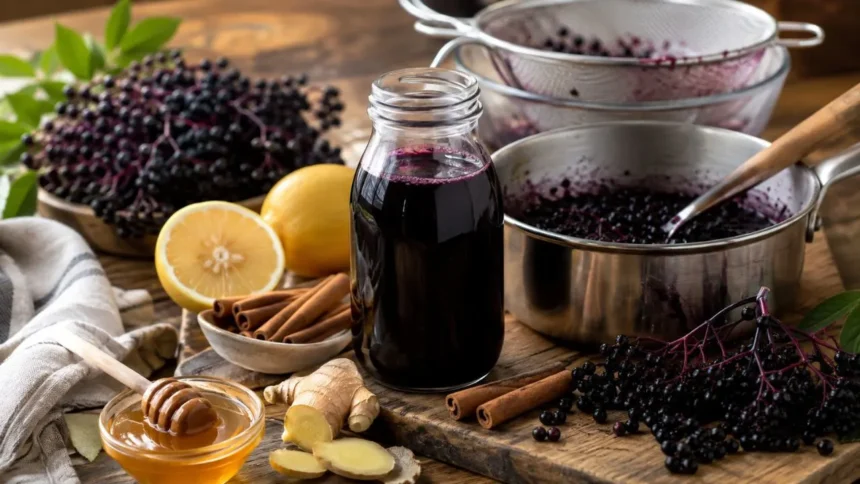
Learning how to make elderberry syrup at home gives you greater control over its sweetness, flavor, and ingredients. This dark, fruity syrup is commonly prepared with cooked elderberries, water, honey, and warming spices. The result is a rich homemade mixture that can be enjoyed by the spoonful or added to drinks and foods.
Homemade elderberry syrup has become especially popular during colder months when families look for comforting additions to their daily routines. Although elderberries contain useful plant compounds, the syrup should not be treated as a cure or replacement for medical care. It is better understood as a flavorful, traditional preparation that may complement a balanced lifestyle.
Safety matters because raw or unripe elderberries, along with the plant’s stems and leaves, contain compounds that can cause digestive illness. The berries must be properly identified, cleaned, and thoroughly cooked before use. Following a careful elderberry syrup recipe helps reduce unnecessary risks while producing a smoother, better-tasting syrup.
This guide explains how to make elderberry syrup using dried or fresh berries, how to select suitable ingredients, and how to store the finished product. You will also learn how to adjust the sweetness, avoid common preparation mistakes, and recognize when homemade syrup may not be appropriate for someone in your household.
What Is Elderberry Syrup?
Elderberry syrup is a sweetened liquid made by simmering ripe elderberries in water and then straining the cooked mixture. Honey, maple syrup, or another sweetener is usually added after cooking. Ginger, cinnamon, cloves, lemon, and orange peel may also be included to create a warmer and more balanced flavor.
The berries commonly used for homemade syrup come from elder plants belonging to the Sambucus genus. European black elderberry, also known as Sambucus nigra, is widely used in commercially prepared elderberry products. American elderberry varieties may also be used, provided the fruit is ripe, correctly identified, and thoroughly cooked.
When simmered, elderberries release their deep purple color, tart flavor, and naturally occurring plant compounds into the water. The liquid is then reduced to concentrate its flavor before being strained. Adding honey transforms the cooked elderberry liquid into a thicker, sweeter syrup that is easier to use in small amounts.
Commercial products may contain concentrated elderberry extract, preservatives, glucose syrup, flavorings, or added vitamins. A homemade elderberry syrup recipe is usually simpler and allows you to adjust each ingredient. However, homemade versions have a shorter storage life and must be handled carefully because they are not commercially processed or shelf stable.
Homemade Elderberry Syrup Recipe at a Glance
For a basic batch, gather one cup of dried elderberries or approximately two cups of fresh, fully ripe, destemmed elderberries. You will also need four cups of water and about one cup of honey. Optional flavorings include fresh ginger, a cinnamon stick, whole cloves, lemon juice, or a small piece of orange peel.
Place the elderberries, water, and selected spices in a medium saucepan. Bring the mixture to a full boil, then reduce the heat and let it simmer uncovered for approximately 30 to 45 minutes. The berries should cook thoroughly, and the liquid should reduce noticeably as water evaporates.
After simmering, remove the saucepan from the heat and carefully strain the liquid through a fine-mesh strainer or cheesecloth. Press the softened berries gently to release the remaining juice, but avoid breaking or grinding the seeds. Discard the cooked berries, seeds, spices, and any remaining plant material.
Allow the strained liquid to cool until it is warm rather than steaming hot. Stir in the honey until completely dissolved, then transfer the syrup to a clean glass container. Refrigerate it promptly and use a clean, dry spoon whenever serving to limit contamination and protect its freshness.
Ingredients Needed to Make Elderberry Syrup
Elderberries are the main ingredient, and both dried and fresh berries can work well. Dried elderberries are convenient because they are available throughout the year and require little preparation. Fresh elderberries offer a brighter seasonal flavor, but every stem, leaf, green berry, and damaged piece must be removed before cooking.
Water extracts the elderberry flavor and creates the liquid foundation of the syrup. Filtered drinking water may produce a cleaner taste, especially in areas where tap water has a strong mineral or chlorine flavor. The amount of water can be reduced during simmering, allowing you to control the final consistency without relying on artificial thickeners.
Honey is traditionally used because it adds sweetness, body, and a smooth texture. Regular pasteurized honey, raw honey, maple syrup, or granulated sugar may be used according to preference. Honey must never be served to children younger than 12 months, so another suitable sweetener is necessary when preparing a version intended for older babies.
Spices are optional but can make homemade elderberry syrup more enjoyable. Fresh ginger contributes warmth, cinnamon adds mild sweetness, and cloves create a stronger aromatic finish. Lemon juice can brighten the tart berry flavor, while orange peel adds a subtle citrus note without turning the syrup into an overly sweet fruit drink.
How to Make Elderberry Syrup Step by Step
Begin by checking the elderberries carefully. Remove stems, leaves, flowers, moldy fruit, unripe berries, and foreign material before placing the berries in a saucepan. When using fresh elderberries, rinse them under clean running water and drain thoroughly. Dried elderberries should come from a trustworthy food supplier and still require visual inspection.
Add one cup of dried elderberries or two cups of fresh ripe berries to the saucepan with four cups of water. Include one cinnamon stick, one tablespoon of sliced ginger, and three or four whole cloves when desired. Bring everything to a boil before reducing the heat to maintain a steady, gentle simmer.
Simmer the mixture uncovered for 30 to 45 minutes, stirring occasionally to prevent berries from sticking to the pan. The elderberries must cook for at least ten minutes, although the longer simmer allows the liquid to reduce and develop a richer taste. Stop cooking when approximately half of the original liquid remains.
Strain the mixture while it is still warm, then let the liquid cool before adding about one cup of honey. Taste the syrup and adjust the sweetness gradually rather than adding more honey immediately. Pour the finished syrup into a sanitized jar, label it with the preparation date, and place it in the refrigerator.
Why Elderberries Must Be Cooked Properly
Raw or unripe elderberries contain naturally occurring cyanogenic compounds that may release cyanide during digestion. Eating improperly prepared berries can result in nausea, stomach cramps, vomiting, or diarrhea. The leaves, bark, stems, and other green parts of the elder plant also contain undesirable compounds and should not be added to homemade syrup.
Proper heating significantly reduces the risk associated with these compounds. Bring the elderberry mixture to a boil and continue cooking it thoroughly rather than briefly warming or soaking the berries. Cold-infused elderberry water, raw berry smoothies, and uncooked elderberry juice should be avoided because they do not provide the same heat treatment.
Dried elderberries must also be cooked before consumption. Drying does not automatically make every elderberry product ready to eat, even when the package resembles dried raisins or other snack fruits. Follow the preparation directions from the supplier and use dried berries intended specifically for food rather than decorative, gardening, or crafting products.
Wild elderberries require additional caution because several dark-colored wild berries may look similar. Only harvest fruit when you can identify the plant confidently and know that the area has not been exposed to harmful sprays or roadside pollution. Buying food-grade elderberries from a reliable seller is generally easier and safer for beginners.
Fresh Elderberries vs Dried Elderberries
Fresh elderberries are harvested when the fruit has developed its mature color and separates easily from the clusters. They have a high water content, so a recipe usually requires about twice as many fresh berries as dried berries. Their seasonal availability can make fresh elderberry syrup feel more vibrant, but preparation takes additional time.
Dried elderberries are concentrated because much of their natural moisture has been removed. One cup is generally sufficient for a standard batch made with four cups of water. They are easy to measure, store, and order, making them a practical choice for anyone learning how to make elderberry syrup for the first time.
Regardless of the form used, the berries must be thoroughly cooked. Dried berries should not be chewed raw, sprinkled directly over cereal, or blended uncooked into smoothies. Fresh elderberries should never be used when they are green, partly ripe, or mixed with pieces of stem and leaf.
Frozen ripe elderberries may also be used after they have been properly identified, cleaned, and destemmed. They can usually be placed directly into the saucepan without thawing, although the cooking time may take slightly longer. Freezing preserves the berries but does not replace the cooking process needed before consumption.
How to Customize the Elderberry Syrup Recipe
For a warming elderberry syrup, combine the berries with ginger, cinnamon, and cloves. Keep the spices moderate during the first batch because cloves and fresh ginger can quickly dominate the elderberry flavor. Whole spices are easier to strain than powdered versions and produce a clearer, less gritty finished syrup.
For a lighter fruit flavor, add a strip of orange peel or a small amount of lemon zest during simmering. Remove as much bitter white pith as possible before adding citrus peel. Fresh lemon juice is best stirred into the strained liquid after cooking so you can adjust the tartness without making the syrup unpleasantly sour.
The amount of sweetener can also be changed according to personal preference. Start with half a cup of honey, taste the cooled mixture, and add more gradually. Reducing the honey creates a thinner and more tart elderberry syrup, but it may also shorten the period during which the syrup maintains its best quality.
People avoiding honey can use maple syrup or dissolved sugar instead. Maple syrup creates a softer, slightly caramel-like flavor, while ordinary sugar produces a more neutral sweetness. Changing the sweetener does not make homemade elderberry syrup shelf stable, so every variation must still be refrigerated or frozen promptly.
How to Make Elderberry Syrup Without Honey
To make elderberry syrup without honey, prepare and strain the elderberry mixture using the same cooking method. Once it has cooled slightly, sweeten it with pure maple syrup, agave syrup, or simple sugar syrup. Add the sweetener gradually because each option has a different strength and flavor.
Maple syrup pairs well with cinnamon and ginger, although it creates a thinner consistency than honey. Use approximately half to one cup, depending on the desired sweetness. Choose pure maple syrup when possible, as pancake syrups may contain corn syrup, artificial flavoring, and other ingredients that change the finished taste.
Granulated sugar can be dissolved directly into the warm strained elderberry liquid. Begin with half a cup and increase it slowly if needed. This method is useful when preparing syrup for someone who dislikes honey, but a homemade refrigerator recipe should not be treated as a tested canning recipe.
A honey-free version may be more appropriate for families with children younger than one year, but elderberry itself should not be given to an infant without guidance from a qualified pediatric professional. Age-appropriate feeding, allergies, existing health conditions, and medication use should always be considered before serving herbal preparations to young children.
How to Store Homemade Elderberry Syrup
Pour the syrup into a clean glass bottle or jar with a tightly fitting lid. Label the container with the date it was prepared so you do not have to rely on memory. Keep the syrup refrigerated rather than leaving it in a cupboard, pantry, kitchen counter, or warm area near the stove.
A conservative approach is to prepare small batches that can be used within a few weeks. Homemade recipes vary in sweetness, acidity, water content, and cleanliness, making an exact universal storage period difficult to guarantee. Discard the syrup sooner when its smell, appearance, taste, or texture changes unexpectedly.
For longer storage, divide the cooled syrup into small freezer-safe containers. Leave some empty space at the top because liquid expands as it freezes. You can also freeze small portions in an ice cube tray before transferring the frozen cubes into a labeled freezer bag or sealed container.
Do not attempt to make this refrigerator recipe shelf stable by simply pouring it into a canning jar. Elderberries can vary in acidity, and honey or sugar alone does not guarantee safe room-temperature preservation. Proper canning requires a current, research-tested recipe developed specifically for elderberry products.
How to Tell If Elderberry Syrup Has Spoiled
Fresh elderberry syrup normally has a dark purple color, a sweet-tart aroma, and a smooth liquid consistency. The exact appearance depends on the berries, spices, and sweetener used. Some natural sediment may settle at the bottom, especially when the syrup was strained through a regular kitchen sieve rather than cheesecloth.
Visible mold is a clear sign that the syrup must be discarded. Mold may appear as fuzzy white, green, blue, or black growth around the surface, lid, or rim of the container. Do not scoop away the affected area and continue using the syrup because contamination may extend beyond the visible growth.
Unexpected bubbling, pressure, foam, or a fermented smell may indicate yeast activity. A sour, alcoholic, musty, or otherwise unpleasant odor is another reason to throw the batch away. Tasting a suspicious product is not a reliable or safe method for deciding whether it is still suitable to consume.
Contamination can be reduced by using sanitized equipment and clean hands during preparation. Always remove syrup with a clean, dry spoon instead of drinking directly from the bottle or returning a used spoon to the jar. Prompt refrigeration and smaller containers can also help protect the remaining syrup from repeated exposure.
How to Use Elderberry Syrup
Elderberry syrup can be taken directly in a small amount or mixed into other foods and drinks. Because homemade recipes differ in concentration, there is no universal serving amount that applies to every batch. Begin with a modest quantity and remember that the syrup may contain a significant amount of honey or added sugar.
Stir a small spoonful into warm water, caffeine-free tea, or sparkling water for a fruity drink. Avoid adding it to boiling liquid when you want to preserve the fresh flavor of the honey and citrus. The syrup can also be drizzled over yogurt, oatmeal, pancakes, or unsweetened porridge.
Another option is to blend a little syrup into a fruit smoothie after all elderberries have already been cooked and strained. It may also be used as a sweetener in homemade salad dressings or fruit sauces. Its tartness works particularly well with apples, pears, citrus fruits, and warming spices.
Elderberry syrup should remain a food-based addition rather than a substitute for appropriate medical treatment. Seek professional care for breathing difficulty, severe dehydration, persistent fever, chest pain, confusion, worsening symptoms, or illness affecting a high-risk person. A homemade herbal preparation should never delay necessary evaluation.
Potential Benefits and Realistic Expectations
Elderberries naturally contain anthocyanins and other plant compounds responsible for their deep purple color. They also provide nutrients commonly found in dark-colored fruit. However, the exact nutritional content of homemade syrup depends on the variety of berries, cooking method, straining process, sweetener, and serving size.
Some research has explored whether elderberry products may help reduce the length or severity of certain upper respiratory symptoms. The findings remain limited, and products used in studies may differ significantly from a homemade elderberry syrup recipe. More high-quality research is needed before strong treatment claims can be made.
Elderberry syrup has not been proven to prevent every cold, cure influenza, or replace vaccines, antiviral medicines, antibiotics, or professional medical care. Claims promising guaranteed immunity or immediate recovery should be treated cautiously. Even natural products can produce side effects or interact with medicines and health conditions.
The most dependable reasons to make elderberry syrup are its flavor, ingredient flexibility, and traditional appeal. It can be part of a routine that also includes adequate sleep, nutritious meals, hydration, physical activity, and recommended healthcare. Keeping expectations realistic allows you to enjoy the syrup without relying on unsupported promises.
Elderberry Syrup Safety and Precautions
Do not consume raw elderberries, unripe berries, stems, leaves, bark, or roots. Cook ripe fruit thoroughly and strain away all solid plant material before adding the sweetener. Anyone experiencing vomiting, diarrhea, weakness, dizziness, or other concerning symptoms after consuming elderberry should stop using it and seek appropriate advice.
Pregnant or breastfeeding individuals should speak with a healthcare professional before using elderberry regularly because reliable safety information for these groups remains limited. The same caution applies to people with chronic medical conditions, severe allergies, weakened immune systems, or upcoming surgery. Personal circumstances can change whether an herbal product is suitable.
Ask a pharmacist or doctor about elderberry when taking prescription medicines, over-the-counter treatments, or other supplements. Herbal preparations may influence the effects of certain medicines or create overlapping side effects. Keeping healthcare professionals informed about supplements makes it easier for them to identify potential problems.
Honey-containing elderberry syrup must never be given to a child younger than 12 months because honey can expose infants to botulism spores. Parents should also consult a pediatrician before giving concentrated herbal preparations to older children. A product being homemade or natural does not automatically make it suitable for every age.
Common Elderberry Syrup Mistakes to Avoid
The most serious mistake is using raw, green, or incorrectly identified berries. Cooking berries that still contain large pieces of stem or leaf also increases avoidable risk. Inspect every batch carefully and purchase elderberries from a reliable food supplier when you are uncertain about plant identification or harvesting conditions.
Another mistake is simmering the mixture for only a few minutes. Elderberries require proper cooking, and the liquid also needs time to extract their color and flavor. Bring the mixture to a boil before maintaining a steady simmer, and do not use a cold infusion as a shortcut for a cooked syrup recipe.
Adding honey while the mixture is still rapidly boiling can make flavor adjustment difficult and may create unnecessary foaming. Let the strained elderberry liquid cool until it is comfortably warm, then stir in the honey. This approach also makes it easier to taste the syrup safely and avoid excessive sweetness.
Finally, do not store homemade syrup at room temperature or assume that a sealed jar has been safely canned. Refrigerate the finished product promptly and freeze extra portions when necessary. When a batch develops mold, fermentation, unusual pressure, or an unpleasant odor, discard it rather than attempting to rescue it.
Final Thoughts on Making Elderberry Syrup
Understanding how to make elderberry syrup begins with choosing ripe, food-grade berries and cooking them correctly. The process itself is straightforward: simmer the berries with water, strain the liquid, cool it slightly, and add honey or another sweetener. Careful preparation is more important than using numerous expensive ingredients.
Dried elderberries provide the easiest option for most home cooks because they are widely available and simple to measure. Fresh berries can also create excellent syrup when they are correctly identified, fully ripe, cleaned, and destemmed. Both forms require thorough cooking before the syrup can be safely enjoyed.
Once you understand the basic method, you can adjust the recipe with ginger, cinnamon, cloves, lemon, or orange peel. You can also change the amount and type of sweetener to suit your household. Make only manageable quantities so the syrup can be refrigerated and used while it remains fresh.
Homemade elderberry syrup can be a flavorful seasonal addition to drinks, breakfasts, and family recipes. Approach its potential benefits with realistic expectations and remember that it is not a proven cure for illness. Safe cooking, hygienic storage, sensible use, and timely medical care remain the most important priorities.
Frequently Asked Questions
How long does homemade elderberry syrup last?
Homemade elderberry syrup should be stored in a tightly sealed container in the refrigerator and used within a few weeks. Freeze extra syrup in small portions when you cannot use it promptly.
Can you make elderberry syrup with dried elderberries?
Yes, dried elderberries are convenient and work well in homemade syrup. They must still be thoroughly cooked and should never be treated like ready-to-eat dried fruit.
Can I use fresh elderberries for syrup?
Fresh elderberries can be used when they are fully ripe, correctly identified, cleaned, and completely removed from their stems. Use approximately twice the volume required for dried berries and cook them thoroughly.
Why should honey be added after cooking?
Adding honey after the elderberry liquid cools slightly helps preserve its fresh flavor and makes sweetness easier to control. Stir it into warm liquid so it dissolves completely without requiring further boiling.
Can babies have homemade elderberry syrup?
Babies younger than 12 months must not consume syrup containing honey because of the risk of infant botulism. Ask a pediatric professional before giving any concentrated elderberry preparation to a child.