

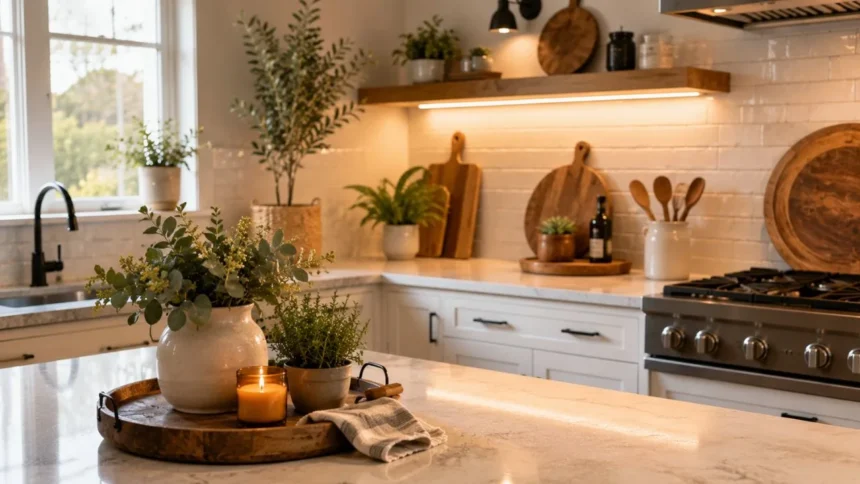
Kitchen counters must work harder than almost any other surface in the home. They support food preparation, cooking, cleaning, coffee making, grocery unloading, and everyday storage. At the same time, they remain highly visible, especially in open-plan homes where the kitchen connects directly with the living or dining area.
The challenge is not simply finding beautiful kitchen counter decor. It is deciding what deserves to remain visible without reducing usable preparation space. A stylish countertop should make daily routines easier, keep frequently used items accessible, and introduce enough personality to prevent the kitchen from feeling cold or unfinished.
Current kitchen design is moving toward natural materials, warmer colors, integrated storage, and carefully chosen decorative details. The 2026 NKBA trend report highlights growing interest in wood grain, natural quartzite, coordinated materials, and concealed storage, while recent design coverage also shows a shift toward deeper earth tones and expressive surfaces.
The best kitchen counter decor ideas therefore combine beauty with purpose. Instead of covering every empty corner, create a small number of organized zones using trays, cutting boards, bowls, plants, lamps, and attractive everyday tools. This approach keeps the kitchen visually welcoming while protecting the clear counter space required for real cooking.
Begin with the Way You Actually Use the Kitchen
Before purchasing decorative accessories, observe how you use the kitchen during a typical day. Notice where you prepare vegetables, make tea, assemble lunches, charge devices, and place incoming groceries. These routines should determine which parts of the countertop remain completely open and which areas can support permanent decor.
Divide the worktop into practical zones based on the activities that happen there. You might create a cooking zone beside the stove, a coffee station near an outlet, a washing zone beside the sink, and an open preparation area near the refrigerator. Keeping tools close to the place where they are used reduces unnecessary movement and makes the layout feel more intentional.
Do not decorate the busiest preparation area simply because it appears empty. Clear space is not wasted space in a working kitchen; it is a functional feature that supports chopping, mixing, serving, and unloading. Houzz’s kitchen-planning guidance similarly emphasizes balancing personality with storage, layout, accessible tools, and clutter-free countertops.
Consider the needs of every person who uses the room. A family kitchen may need a lunch-packing area, while an enthusiastic baker may require a clear surface for rolling dough. Kitchen countertop styling should support your household’s habits rather than imitate a professionally staged room that is rarely used for preparing food.
Clear the Counters Before Adding Anything New
Remove everything from the counters before deciding what should remain visible. Group the objects into daily essentials, occasional equipment, decorative pieces, and items that belong somewhere else. Starting with a blank surface makes it easier to recognize how much space you have and which objects create unnecessary visual noise.
Return only the items that you use frequently or genuinely enjoy seeing. A coffee maker used every morning may deserve permanent countertop space, while a large appliance used once a month can usually be stored in a cabinet. The goal is not to create an empty kitchen but to make every visible object earn its place.
Pay attention to duplicate items and incomplete groups. Several utensil containers, multiple fruit bowls, random bottles, and stacks of unopened mail can make the room appear disorganized. Combining similar tools in one attractive container often improves the kitchen more effectively than purchasing additional decorative accessories.
Once the essential items have returned, leave the kitchen for a few minutes and view it from the entrance. Objects that appeared harmless at close range may form a cluttered line when seen across the room. This final visual check helps you decide where to simplify, reposition, or group the remaining kitchen counter accessories.
Use Decorative Trays to Create Organized Zones
A tray is one of the most useful tools for practical kitchen counter decor. It visually connects separate objects, prevents small items from spreading across the worktop, and allows an entire arrangement to be moved when additional preparation space is needed. Recent designer guidance also recommends trays for combining organization, surface protection, and intentional countertop styling.
Use a tray beside the stove for oil, salt, pepper, and the seasonings you reach for daily. Near the sink, a waterproof tray can hold hand soap, dish soap, and a small brush. In a coffee corner, a tray can organize mugs, sugar, spoons, and coffee supplies without allowing the station to expand across the counter.
Choose a tray that contrasts gently with the countertop so the arrangement remains visible. A wooden tray can warm a pale stone surface, while ceramic, metal, or dark timber may stand out against lighter counters. The material should also tolerate the moisture, heat, and cleaning routine of its chosen location.
Keep the arrangement simple enough to remain useful. Three to five related objects are usually easier to manage than a crowded collection of bottles and decorations. Designers often use odd-numbered groupings because variation in height and shape can create a balanced composition without looking rigid or excessively matched.
Turn Everyday Cooking Essentials into Decor
Frequently used cooking tools can become part of the decor when their containers and finishes are chosen thoughtfully. A ceramic utensil holder filled with wooden spoons, a pepper mill, an oil bottle, and a salt container can create a practical vignette beside the stove. These objects remain accessible while contributing color and texture.
Avoid displaying every utensil you own. Select the tools used most often and store duplicates, specialized gadgets, and brightly mismatched pieces in a drawer. Leaving space between utensils also makes the holder easier to clean and prevents the arrangement from looking like an overcrowded storage solution.
Decanting oil or frequently used ingredients into suitable containers can create a more coordinated appearance, but practicality comes first. Containers should be easy to identify, securely closed, appropriate for their contents, and maintained according to the product’s storage requirements. Do not sacrifice safe storage or freshness merely to create a uniform display.
Repeat one or two materials across the cooking zone to make it feel cohesive. Wooden utensils may relate to a timber cutting board, while a dark pepper mill can connect visually with cabinet hardware. This subtle repetition creates a polished kitchen countertop arrangement without requiring every object to come from the same collection.
Display Cutting Boards as Functional Wall Art
Cutting boards are useful kitchen tools that can also introduce natural warmth. Leaning two or three boards against the backsplash fills an otherwise empty area without occupying much worktop depth. Their vertical position adds height and provides a softer contrast to stone, tile, metal, and painted cabinetry.
Mix boards with different shapes but related materials. A rectangular board, a round board, and a smaller handled board can create visual variation while remaining coordinated. Avoid stacking so many boards that removing the one you need becomes inconvenient or causes the entire display to fall forward.
Place the largest board at the back and overlap smaller pieces in front. You can add a framed print, recipe illustration, or decorative plate behind the arrangement when space allows. The layered effect should remain shallow enough that it does not interfere with outlets, switches, appliances, or food preparation.
Clean and dry working boards properly before returning them to the display. Boards used for raw ingredients should be handled according to appropriate food-safety practices and kept separate where necessary. Decorative styling should never make it difficult to wash, inspect, replace, or use essential kitchen equipment safely.
Add a Fruit Bowl That Encourages Everyday Use
A bowl of fresh fruit provides natural color while keeping frequently eaten food visible. Instead of choosing a bowl solely for decoration, select one with enough airflow and capacity for the amount of produce your household normally buys. An overflowing arrangement can bruise fruit and create unnecessary waste.
Position the bowl away from direct sunlight, stove heat, and splashing water. The center of an island, the end of a counter, or a section near the dining area may work well. Keep it outside the main chopping zone so it does not need to be moved every time you prepare a meal.
Choose a bowl that complements the kitchen’s existing finishes. Timber, ceramic, stoneware, wire, or woven materials can introduce texture, while a simple glass bowl allows colorful produce to become the focal point. A larger single bowl usually looks calmer than several small containers spread across the counter.
Edit the contents regularly rather than treating the bowl as a permanent still-life display. Remove damaged produce, wash the container, and avoid using artificial food purely to fill space. A functional fruit bowl looks most attractive when it reflects the food your household genuinely eats.
Bring in Greenery Without Losing Counter Space
Plants and culinary herbs can soften hard surfaces and introduce natural shape into a kitchen. Basil, mint, rosemary, or other suitable herbs may also be useful during cooking when the room provides appropriate growing conditions. Place them where they receive suitable light without interfering with food preparation or cleaning.
Select a planter with a saucer or sealed base to protect the countertop from moisture. The container should be easy to lift so the surrounding surface can be wiped regularly. Avoid placing soil-filled pots directly beside areas where uncovered food is prepared or served.
In a small kitchen, one healthy plant often creates more impact than several tiny pots. A compact plant near a window, a trailing variety on a raised shelf, or a vase containing fresh branches can add life without consuming the busiest sections of the countertop. Scale should relate to the available space.
Artificial greenery can be useful in dark kitchens, but it should still be cleaned because cooking residue and dust may collect on the leaves. Keep all plants a safe distance from open flames and hot appliances. The strongest small kitchen counter decor ideas introduce nature without creating another maintenance problem.
Create a Compact Coffee or Tea Station
A dedicated beverage station can organize one of the kitchen’s most frequent routines. Group the coffee machine or kettle with the supplies needed to prepare a drink, then position the station near water and a suitable power outlet. This prevents mugs, spoons, tea boxes, and sweeteners from spreading across several cabinets and counters.
Use a tray to define the station and add a small container for pods, tea bags, or spoons. Frequently used mugs may remain nearby on a shelf or mug tree, while larger collections should stay inside a cabinet. The visible arrangement should reflect daily habits rather than display every beverage product you own.
Consider height when styling the area. A framed print, small shelf, leaning cutting board, or narrow vase can visually connect the appliance to the wall behind it. Keep anything placed above steam-producing equipment far enough away to prevent heat or moisture damage.
Review the station occasionally and remove products no one uses. Empty packets, duplicate jars, and novelty mugs can quickly turn a convenient zone into clutter. A well-organized coffee bar should shorten the morning routine while still looking calm when viewed from the rest of the kitchen.
Keep Countertop Appliances Intentional
Countertop appliances should be selected according to frequency of use, available storage, and the amount of preparation space they consume. A toaster used daily may remain visible, while a stand mixer used occasionally might move to a pantry. Permanent placement should be based on real convenience rather than the price or appearance of the appliance.
When several appliances must remain out, avoid lining them evenly across the entire backsplash. Group related pieces into one zone and leave open space between the functional areas. This prevents the kitchen from resembling an appliance showroom and preserves larger sections of uninterrupted worktop.
Integrated and hidden storage continues to influence current kitchen design, with appliance garages and coordinated cabinetry helping create cleaner sightlines. The NKBA’s 2026 trend reporting reflects a broader preference for cohesive materials, concealed storage, and kitchens that connect smoothly with surrounding living spaces.
An appliance garage, deep drawer, pantry shelf, or lift-up cabinet can reduce visible clutter when renovation is possible. Without built-in storage, a basket inside a lower cabinet can keep appliance parts together. Easy storage matters because an appliance is unlikely to be put away regularly when retrieving it requires emptying an entire cupboard.
Add Warmth with a Small Lamp or Artwork
A small table lamp can make a kitchen feel more like a living space, especially in the evening when bright ceiling lights are unnecessary. Place it on a section of counter used mainly for serving, display, or beverages rather than beside splashing water or active cooking. Use a fixture and bulb appropriate for the location.
Artwork can also introduce personality without using much horizontal space. Lean a small framed print against the backsplash, place it on a narrow picture ledge, or hang it above a less active counter. Food illustrations, landscapes, family artwork, and abstract prints can all work when they relate to the room’s colors.
Protect decorative pieces from steam, grease, and direct heat. Paper artwork should not sit directly beside the stove, while fragile frames should remain away from areas where heavy cookware is handled. Decorative kitchen styling succeeds when the object’s location respects how the surrounding counter is used.
Current kitchen trends favor restrained drama, natural textures, richer colors, and singular focal points rather than excessive accessories. A sculptural lamp, expressive bowl, or distinctive artwork can therefore feel more current than multiple small signs and theme-based ornaments competing for attention.
Style the Area Around the Kitchen Sink Carefully
The sink area requires decor that can tolerate moisture and frequent cleaning. Start with only the products used every day, such as hand soap, dish soap, and a brush. Place them on a washable tray or shallow dish so water does not collect around separate bottles.
Choose refillable dispensers when they make the routine easier, but label containers clearly enough to prevent confusion. A small vase, plant, or candle may soften the area, although it should not block the faucet, crowd the draining board, or create another object that must be moved whenever the sink is cleaned.
Store extra sponges, dishwasher tablets, cloths, and cleaning products inside a nearby cabinet rather than displaying their packaging. Closed storage keeps the sink zone visually calm while allowing frequently needed supplies to remain accessible. A small under-sink bin or pullout organizer can simplify restocking.
Clean the sink and surrounding surfaces regularly because splashes can spread during food preparation. USDA guidance recommends washing countertops, utensils, cutting boards, and sinks with warm, soapy water to reduce cross-contamination, followed by sanitizing when surfaces have been exposed to potentially harmful contamination.
Decorate Small Kitchen Counters Without Crowding Them
Small kitchen counter decor should prioritize vertical and movable arrangements. Lean cutting boards against the backsplash, use wall-mounted rails, and group necessities on a compact tray. These methods add personality while preserving as much horizontal preparation space as possible.
Choose accessories with more than one purpose. A beautiful bowl can hold fruit, a wooden board can support food preparation, and a lidded container can store coffee while contributing color. Multifunctional objects are more valuable than ornaments that permanently occupy scarce counter space.
Use the corners carefully rather than automatically filling them. A corner may hold a coffee machine, plant, or tiered organizer, but it can also remain empty to create visual breathing room. Crowding every available section usually makes a small kitchen feel tighter and more difficult to maintain.
Reduce the number of colors and finishes visible on the countertop. Repeating two or three materials helps varied objects appear connected and makes the room easier to scan visually. Clean lines, useful objects, and a few natural textures can make a compact kitchen feel warmer without introducing excessive decoration.
Match the Decor to the Countertop Material
The countertop itself should guide the choice of accessories. Dramatically veined stone already provides strong visual movement, so simple wood, ceramic, or metal objects may be enough. A quiet solid-color surface can support more pattern, contrast, and decorative layering without appearing overly busy.
Light countertops can benefit from darker wood, black metal, colored ceramics, or woven textures. Dark counters may look more balanced with pale pottery, glass, warm timber, or light-colored stone. Contrast allows each object to remain visible rather than disappearing into the work surface.
Natural materials are especially relevant in current kitchen design. The NKBA’s 2026 findings identify growing interest in wood grain and natural quartzite, while design coverage points toward earthy reds, warm browns, and tactile finishes replacing colder, more uniform palettes.
Consider the maintenance requirements of the surface before placing decor. Trays may help catch oil drips, soap residue, or water, but they should be lifted frequently so the area beneath can be cleaned. Follow the countertop manufacturer’s recommendations for heat, moisture, cleaners, sealing, and stain prevention.
Refresh the Counter Decor with the Seasons
Seasonal kitchen decor works best when it changes a few details rather than replacing the entire arrangement. Update a bowl with seasonal produce, change a small branch arrangement, or introduce a different tea towel. These modest adjustments keep the kitchen feeling fresh without creating storage problems for unused decorations.
In spring and summer, herbs, fresh flowers, citrus fruit, and lighter ceramics can brighten the counter. During autumn, wood, pears, apples, and warmer pottery may create a more grounded look. Winter styling can include evergreen branches, textured linens, and a subtle candle placed safely away from heat and food preparation.
Avoid covering food-preparation areas with holiday figures, artificial garlands, or loose decorative materials. Decorations should not interfere with cooking, ventilation, outlets, or cleaning. Place seasonal pieces in low-activity zones, such as the end of an island, an open shelf, or a counter used mainly for serving.
Store seasonal items in one clearly labeled container and keep only pieces you regularly use. A limited collection encourages more thoughtful styling and prevents each holiday from producing another layer of countertop clutter. Seasonal decor should make the kitchen easier to enjoy, not harder to operate.
Keep Food Safety Part of the Styling Plan
Kitchen decor must be easy to move and clean because countertops are active food-preparation surfaces. Avoid permanent arrangements that make it difficult to wipe behind bottles, boards, planters, or appliances. A beautiful display quickly loses its appeal when grease, crumbs, or moisture accumulate underneath it.
Keep decorative objects away from areas used for raw meat, poultry, seafood, or eggs. Cross-contamination can occur when harmful bacteria spread to countertops, sinks, utensils, and other foods. USDA guidance emphasizes cleaning food-contact areas with warm, soapy water and sanitizing them when needed.
Wash trays, utensil holders, fruit bowls, soap dishes, and other countertop accessories as part of the normal kitchen-cleaning routine. Check underneath appliances and containers rather than cleaning only the exposed surface around them. Movable displays are useful because they allow the full worktop to be reached easily.
Use cleaning products that are appropriate for both the countertop material and the intended surface use. Follow product labels and manufacturer instructions rather than mixing chemicals or relying on unverified cleaning combinations. Practical counter decor should support a hygienic kitchen instead of creating hidden areas that are difficult to inspect.
Try Budget-Friendly Counter Decor Upgrades
Begin by reorganizing items you already own. A wooden board, ceramic bowl, attractive bottle, stack of cookbooks, or small framed print may become useful decor when removed from a cupboard and placed thoughtfully. Editing and regrouping can transform the counter without requiring new purchases.
Secondhand shops can provide trays, bowls, jars, boards, crocks, and small lamps at modest prices. Look for useful shapes and materials rather than trying to find a complete matching set. Clean and inspect every item carefully, particularly anything that will hold or come into contact with food.
Replace packaging gradually instead of purchasing many decorative containers at once. A single attractive utensil holder or soap dispenser may create enough improvement. Buying items slowly allows you to test whether each accessory makes the kitchen more functional before introducing another permanent object.
Paint, cabinet hardware, and backsplash changes can update the room, but they are not necessary for attractive countertop styling. Clear space, coordinated everyday tools, one natural element, and an organized tray can make a stronger difference than a collection of trend-driven ornaments.
Avoid Common Kitchen Counter Decorating Mistakes
The most common mistake is displaying too many small objects. Separate jars, signs, figurines, candles, plants, and appliances can create visual noise even when each piece is attractive. Group related essentials and remove accessories that do not contribute beauty, function, or personal meaning.
Another mistake is ignoring scale. Tiny decor may look lost on a long counter, while an oversized arrangement can consume the space needed for cooking. One substantial bowl, lamp, or vase often creates a cleaner focal point than several miniature accessories spread across the backsplash.
Avoid placing decor where it creates a safety or cleaning problem. Flammable materials should stay away from heat, fragile objects should not sit near busy preparation areas, and accessories should not block outlets or appliance ventilation. Practical placement is an essential part of successful modern kitchen decor.
Finally, do not copy a styled kitchen without considering your routine. A household that cooks daily needs more open space than a kitchen used mainly for simple meals. The most effective counter arrangement is not necessarily the most minimal or decorative; it is the one that makes your own kitchen easier to use.
Final Thoughts
The best kitchen counter decor ideas are stylish because they look intentional and practical because they support everyday routines. Begin with clear work zones, remove unnecessary objects, and identify which tools genuinely deserve permanent counter space. This foundation will make every decorative choice more effective.
Use trays to organize related items, display attractive cooking essentials, and add natural texture through wood, fruit, herbs, or ceramics. A small lamp, framed artwork, or meaningful bowl can introduce personality, but one strong feature is usually more effective than many disconnected decorations.
Keep the arrangement flexible so the counter can adapt to cooking, entertaining, and cleaning. Movable trays, limited appliances, and easy-to-wash accessories protect the function of the kitchen. Regular editing also prevents useful zones from slowly turning into crowded storage areas.
A beautifully styled kitchen does not need perfectly matched containers or completely empty surfaces. It should reflect the way your household cooks, eats, and gathers. When every visible item is useful, attractive, or personally meaningful, the counter can feel polished without becoming impractical.
Frequently Asked Questions
What should I put on my kitchen counters for decoration?
Use a limited combination of functional and decorative items, such as a tray, fruit bowl, cutting boards, utensil holder, plant, lamp, or framed print. Keep enough open space available for food preparation.
How do I decorate kitchen counters without creating clutter?
Group related items on trays, store rarely used appliances, and leave clear space between each functional zone. Remove anything that is neither frequently used nor visually meaningful.
What can I put in the corner of a kitchen counter?
A coffee station, small plant, cutting-board arrangement, lamp, fruit bowl, or compact appliance can work well. Choose one idea that suits your routine instead of filling the corner with unrelated accessories.
How many appliances should remain on a kitchen counter?
Keep only appliances used regularly enough to justify the space they occupy. Store occasional appliances in cabinets, a pantry, or an appliance garage so the primary preparation areas remain open.
How can I decorate a small kitchen counter?
Use vertical displays, compact trays, multifunctional accessories, and one or two coordinated materials. Avoid large decorative collections and prioritize objects that provide storage or support daily kitchen tasks.