

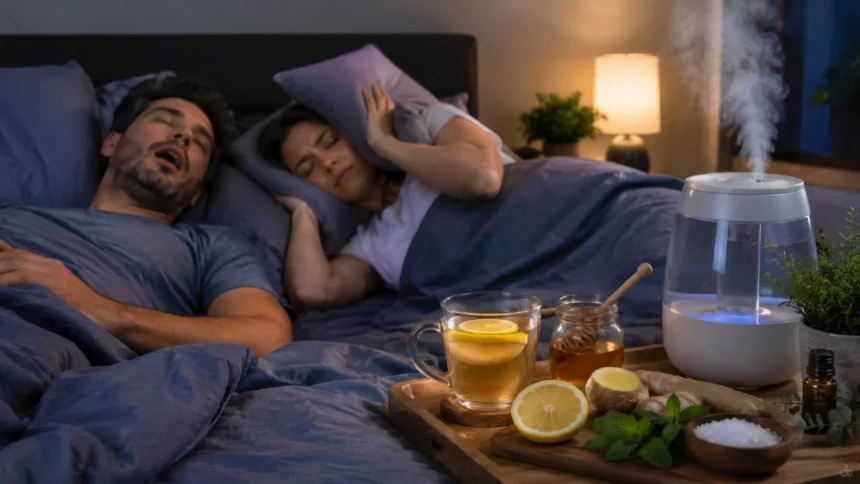
How to Stop Snoring at Night: Home Remedies That May Help
Snoring can disturb your sleep, affect your partner’s rest, and leave everyone feeling frustrated the next morning. Occasional snoring is common, particularly during a cold or after sleeping in an unusual position. However, loud or persistent snoring may indicate that air is not moving freely through your nose and throat while you sleep.
Many people searching for how to stop snoring at night with home remedies hope to find a quick solution. In reality, the most effective approach depends on why the snoring is happening. Sleep position, alcohol, excess body weight, nasal congestion, smoking, airway anatomy, and certain medicines can all contribute to nighttime breathing noise.
Simple lifestyle changes may reduce ordinary snoring, but home remedies cannot safely diagnose or treat obstructive sleep apnea. Sleep apnea causes repeated narrowing or blockage of the airway and may produce pauses in breathing, choking sounds, disrupted sleep, and excessive daytime tiredness. Not everyone who snores has sleep apnea, but persistent warning signs should not be ignored.
This guide explains evidence-based ways to reduce snoring naturally while avoiding misleading online cures. It also covers nasal congestion, sleeping positions, weight management, alcohol, anti-snoring devices, and the symptoms that require professional evaluation. The information is educational and should not replace personalized advice from a qualified healthcare professional.
Why Do People Snore at Night?
Snoring happens when air passes through a narrowed upper airway and causes relaxed tissues in the throat to vibrate. The sound may come from the soft palate, tongue, throat, or nasal passages. The narrower the airway becomes, the more turbulent the airflow may be and the louder the resulting vibration can sound.
The airway naturally relaxes during sleep, but several factors can narrow it further. Sleeping on your back may allow the tongue and soft tissues to move toward the back of the throat. Alcohol and certain sedating medicines can increase muscular relaxation, while nasal congestion may make normal breathing more difficult.
Body structure can also influence snoring. A long soft palate, enlarged tonsils, a deviated nasal septum, nasal polyps, excess throat tissue, or a relatively narrow airway may contribute to restricted airflow. These causes are unlikely to disappear simply by drinking tea or using an unproven herbal product.
Snoring may change from one night to another depending on sleep position, allergies, alcohol intake, illness, tiredness, and weight changes. Tracking when the sound becomes worse can help identify useful patterns. A partner’s observations or a simple sleep diary may provide information to discuss with a doctor if the problem continues.
Check for Sleep Apnea Before Relying on Home Remedies
Ordinary snoring generally produces continuous breathing noise without repeated breathing interruptions. Obstructive sleep apnea is different because the airway repeatedly becomes partly or completely blocked during sleep. Breathing may stop briefly and then restart with a loud gasp, snort, choking noise, or sudden body movement.
Warning signs include witnessed pauses in breathing, waking up choking, excessive daytime sleepiness, morning headaches, poor concentration, restless sleep, and loud snoring that disrupts other people. Some individuals also wake with a dry mouth or sore throat and may not realize how often their sleep is being interrupted.
Sleep apnea should be taken seriously because interrupted breathing can reduce sleep quality and affect daytime alertness. People with untreated sleep apnea may be more likely to experience driving or workplace accidents because of daytime drowsiness. Diagnosis typically involves medical evaluation and, when indicated, a sleep study.
Home remedies may support medically recommended treatment, but they should not replace it. Some people with sleep apnea need continuous positive airway pressure, an oral appliance, surgery, or another individualized treatment. The appropriate option depends on the type and severity of the condition and should be discussed with a healthcare professional.
Sleep on Your Side Instead of Your Back
Changing sleep position is one of the simplest home remedies for snoring. Sleeping on your back can allow your tongue and soft palate to settle toward the throat, reducing the available space for airflow. Turning onto your side may help keep the airway more open and decrease vibration in position-dependent snorers.
Use a supportive body pillow to make side sleeping feel more natural. Placing a pillow behind your back may discourage you from rolling over during the night, while a pillow between your knees can reduce pressure around the hips. A comfortable setup is more likely to become a sustainable habit than an intentionally painful positional trick.
Some people use specially designed positional belts, wearable devices, or contoured pillows to reduce back sleeping. These products may be useful when snoring consistently becomes worse in the supine position. However, a product that keeps you on your side will have limited value when nasal obstruction or another airway problem is the main cause.
Ask your partner whether the snoring becomes quieter after you turn over. You can also compare several nights of side sleeping with several nights in your usual position. If loud snoring, choking, breathing pauses, or daytime sleepiness continue regardless of position, arrange a medical evaluation rather than repeatedly changing pillows.
Raise Your Upper Body While Sleeping
Slightly elevating the upper body may help some people breathe more comfortably during sleep. Mayo Clinic guidance notes that raising the head of the bed by approximately four inches may reduce snoring. The goal is to change the sleeping angle gently rather than force the neck into an uncomfortable forward position.
A supportive wedge pillow can elevate the shoulders and upper torso more evenly than several soft pillows stacked beneath the head. Another option is to raise the head end of the bed with stable risers designed for that purpose. Any adjustment should keep the bed secure and maintain comfortable spinal alignment.
Elevation may be particularly worth testing when snoring becomes worse while lying completely flat. However, it will not correct enlarged tonsils, significant nasal obstruction, sleep apnea, or other structural causes. Treat it as a practical experiment rather than a guaranteed permanent cure for nighttime snoring.
Try the elevated position consistently for several nights and record whether snoring intensity, morning dryness, or sleep quality changes. Stop using the arrangement if it causes neck pain, back pain, numbness, or poorer sleep. Persistent breathing symptoms should still be assessed by a healthcare professional.
Avoid Alcohol Close to Bedtime
Alcohol can relax the muscles surrounding the upper airway and may make snoring or obstructive sleep apnea worse. Although alcohol sometimes creates an initial feeling of sleepiness, it can also disrupt sleep later in the night. Reducing evening alcohol is therefore one of the more practical lifestyle changes for snoring.
Begin by observing whether snoring is louder after drinking in the evening. Avoiding alcohol for several nights can provide a useful comparison with your usual pattern. People who already have loud snoring, witnessed breathing pauses, or daytime sleepiness should be especially cautious about using alcohol as a sleep aid.
Certain sleeping tablets, anti-anxiety medicines, opioid medicines, and other sedating substances may also influence nighttime breathing. Never stop a prescription medicine suddenly based on an article. Ask the prescribing clinician whether the medicine could be contributing to snoring or sleep-related breathing problems.
Replacing an evening drink with water or a non-caffeinated beverage may support a calmer bedtime routine. However, drinking large amounts immediately before bed may cause repeated bathroom visits and poorer sleep. The useful change is reducing alcohol-related airway relaxation, not forcing unnecessary quantities of fluid.
Clear Nasal Congestion Safely
A blocked nose can make breathing more difficult and may encourage mouth breathing during sleep. Colds, allergies, nasal polyps, sinus problems, or a deviated septum can all interfere with nasal airflow. Treating the underlying congestion may reduce snoring when the obstruction is mainly located in the nose.
A warm shower before bed may loosen mucus and provide temporary comfort. A properly prepared saline nasal spray or rinse may also help clear nasal passages for some people. Saline products do not correct throat-based snoring or sleep apnea, but they may be useful when temporary congestion is an obvious trigger.
Use nasal irrigation safely. The CDC advises using water labeled distilled or sterile, or tap water that has been boiled and allowed to cool. Water taken directly from a tap should not be used for sinus rinsing because organisms that are harmless when swallowed can cause serious infection when introduced through the nose.
Persistent congestion, facial pressure, reduced sense of smell, frequent nosebleeds, or difficulty breathing through one side of the nose deserves medical assessment. A clinician may evaluate for allergies, infection, polyps, or structural blockage. Do not continue self-treating a long-term obstruction without understanding its cause.
Try Nasal Strips or an External Nasal Dilator
Adhesive nasal strips sit across the outside of the nose and gently pull the nasal passages outward. An external nasal dilator works in a similar way by reducing resistance at the nostrils. These products may improve airflow when the snoring is related to narrow or congested nasal passages.
Nasal strips are easy to test because they do not require medicine and can be removed in the morning. Apply them to clean, dry skin according to the manufacturer’s instructions. Stop using the product if it causes persistent irritation, soreness, blistering, or an allergic skin reaction.
These devices are less likely to help when the vibration is coming mainly from the soft palate, tongue, or deeper throat. Mayo Clinic also notes that nasal strips and external nasal dilators are not effective treatments for obstructive sleep apnea. Reducing sound does not prove that nighttime breathing is safe.
Test the strip for several nights while keeping alcohol intake, bedtime, and sleep position reasonably consistent. This makes it easier to judge whether nasal opening is actually helping. If there is no noticeable improvement, avoid repeatedly purchasing similar products without investigating other possible causes.
Work Toward a Healthy Weight When Appropriate
Excess tissue around the neck and throat can contribute to airway narrowing in some people. When someone is overweight, gradual weight reduction may decrease snoring and may also support the management of obstructive sleep apnea. However, thin people can snore too, so weight is not the cause in every case.
Weight management should focus on sustainable habits rather than rapid diets marketed as snoring cures. Balanced meals, appropriate portion sizes, regular physical activity, and professional support can improve long-term success. A clinician or registered dietitian can provide personalized guidance when health conditions or medicines affect weight.
Do not delay an evaluation for possible sleep apnea while attempting to lose weight. Sleep-related breathing problems may require treatment now, even if weight reduction is part of the longer-term plan. CPAP, oral appliances, or other treatments may still be needed according to the results of a professional assessment.
If you are already within a healthy weight range, focus on other possible triggers such as position, alcohol, congestion, smoking, enlarged tonsils, or airway structure. Unnecessary dieting is not an appropriate solution for every snorer. The remedy should match the likely cause rather than a general assumption.
Stop Smoking and Reduce Airway Irritants
Smoking can irritate the tissues of the nose and throat and is associated with a greater likelihood of snoring. NHS guidance includes smoking among the common factors linked with nighttime snoring. Stopping smoking may support respiratory health and reduce one source of upper-airway irritation.
Quitting can be difficult, particularly when nicotine use is connected with stress, routines, or social situations. Evidence-based cessation support may include counseling, approved nicotine-replacement products, prescription treatment, or a combination of approaches. A healthcare professional can help select an option based on your medical history.
Secondhand smoke, strong fragrances, dust, and other irritants may also worsen nasal or throat symptoms in sensitive individuals. Keep the bedroom well ventilated, wash bedding regularly, and reduce obvious exposure to substances that trigger congestion. People with suspected allergies may need proper testing or medical treatment.
Stopping smoking should not be viewed only as a snoring remedy. It is a broader health decision that may provide benefits even when snoring does not disappear completely. If nighttime breathing remains noisy after irritants are reduced, investigate additional causes instead of assuming the change has failed.
Maintain a Consistent and Sufficient Sleep Routine
An irregular schedule can make sleep feel fragmented and may make healthy bedtime habits harder to maintain. A consistent sleep and wake time supports the body’s normal sleep-wake pattern. Adults generally benefit from protecting enough time for sleep rather than repeatedly staying awake until they are exhausted.
Good sleep hygiene is not a direct cure for an anatomically narrow airway, but it can improve overall sleep quality. Keep the room comfortably cool, dark, and quiet. Limit stimulating activities close to bedtime, and avoid using alcohol as a way to fall asleep because it may worsen later sleep and breathing.
Create a simple wind-down routine that you can repeat each night. This may include dimming lights, reading, taking a warm shower, preparing a nasal rinse when congested, or arranging a side-sleeping pillow. Consistency makes it easier to test whether your snoring responds to specific changes.
If you regularly sleep for an adequate amount of time but remain extremely tired during the day, do not assume that poor scheduling is the only explanation. Unrefreshing sleep, concentration problems, or unintended dozing may indicate that breathing interruptions are reducing sleep quality.
Use Hydration and a Humidifier Realistically
Drinking enough fluid during the day supports general comfort and can prevent an excessively dry mouth or throat. However, hydration alone is unlikely to stop snoring caused by sleep apnea, enlarged tissues, obesity, or airway anatomy. Treat claims that water can instantly eliminate snoring with appropriate skepticism.
A humidifier may feel helpful when indoor air is very dry and nasal or throat irritation becomes worse overnight. It does not mechanically open a blocked airway, so it should be considered a comfort measure rather than a proven cure. Excess humidity may also encourage mold growth or create an uncomfortable bedroom environment.
Humidifiers must be cleaned according to the manufacturer’s directions because standing water can support microbial growth. Replace the water regularly, allow components to dry, and avoid directing mist into bedding or against a wall. Anyone with asthma, allergies, or immune problems should ask a clinician whether a humidifier is suitable.
Use these measures alongside stronger strategies such as side sleeping, reducing alcohol, managing congestion, and seeking evaluation for warning signs. A home remedy is most useful when it addresses an identifiable trigger. It should not become a reason to postpone appropriate diagnosis and treatment.
Consider an Oral Appliance With Professional Guidance
A mandibular advancement device is worn in the mouth during sleep and holds the lower jaw slightly forward. This can increase space in the upper airway and reduce tissue collapse or vibration in selected patients. Oral appliances are used for certain cases of snoring and obstructive sleep apnea.
A custom appliance should be considered through cooperation between a medical professional and a dentist trained in sleep-related breathing disorders. The American Dental Association notes that a physician and dentist can determine whether oral appliance therapy is an appropriate option for a person with obstructive sleep apnea.
Low-cost over-the-counter mouthpieces are widely promoted, but they do not all have the same clearance, fit, adjustability, or safety information. Poorly fitted devices may cause jaw discomfort, tooth pressure, drooling, dry mouth, or bite changes. Do not assume that an ordinary sports mouthguard will treat snoring.
People with jaw-joint problems, loose teeth, dentures, gum disease, or possible sleep apnea should seek professional advice before using a mouthpiece. Even when an appliance reduces the noise, follow-up may be needed to confirm that breathing interruptions have been adequately treated.
Avoid Unproven or Potentially Unsafe Snoring Remedies
Mouth taping has become popular on social media, but covering the lips does not correct the underlying reason that someone cannot breathe properly during sleep. It may obstruct mouth breathing in a person with nasal blockage and can cause breathing difficulty, disrupted sleep, anxiety, or skin irritation.
Essential oils, herbal sprays, magnetic clips, anti-snoring rings, and similar products are often supported by dramatic testimonials rather than strong clinical evidence. A pleasant scent may feel relaxing, but it will not reliably treat a collapsing airway. Be especially cautious when a product claims to cure every type of snoring immediately.
Do not place unapproved objects inside the mouth or nose while sleeping. Products used near the airway should have clear instructions, appropriate safety information, and a legitimate intended use. A reduction in sound is not enough if the device causes choking risk, pain, tissue injury, or delayed sleep-apnea diagnosis.
Avoid giving unprescribed sleep medicine to someone who snores. Sedating products may increase airway relaxation or make it harder to recognize breathing problems. Discuss insomnia, anxiety, pain treatment, or medication-related sleep issues with a healthcare professional instead of experimenting with someone else’s medicine.
Follow a Simple Two-Week Snoring Action Plan
During the first few nights, record bedtime, sleep position, evening alcohol, nasal congestion, and how rested you feel in the morning. Ask a partner to note whether the snoring is continuous or interrupted by silence, gasping, or choking. These observations can help distinguish ordinary patterns from warning signs.
For the remainder of the first week, sleep on your side and avoid alcohol near bedtime. Use a wedge or mild bed elevation if it is comfortable. When congestion is present, try a correctly used nasal strip or safe saline method rather than combining several unproven remedies at once.
During the second week, maintain a consistent schedule and continue the changes that appeared useful. Reduce exposure to smoke and bedroom irritants, and keep any humidifier properly maintained. Comparing one controlled period with your normal routine provides more useful information than changing everything for a single night.
At the end of two weeks, review whether snoring frequency, volume, morning symptoms, and daytime alertness have changed. Arrange a medical appointment if there is no meaningful improvement or if warning signs are present. Take your notes and, where appropriate, your partner’s observations to the appointment.
When Should You See a Doctor About Snoring?
Consult a healthcare professional when snoring is loud, persistent, or severe enough to disturb your sleep or someone else’s. Medical advice is particularly important if your partner notices pauses in breathing, gasping, choking, or repeated awakenings. These features can occur with obstructive sleep apnea.
Seek evaluation when you experience excessive daytime sleepiness, morning headaches, difficulty concentrating, irritability, or unrefreshing sleep. Falling asleep while driving, working, or performing another safety-sensitive task requires urgent attention because severe sleepiness can cause serious accidents.
A child who snores regularly should also be discussed with a healthcare professional, especially when there are breathing pauses, gasping, mouth breathing, sweating, restless sleep, bed-wetting, behavioral changes, or school difficulties. Children can develop obstructive sleep apnea, often for different reasons from adults.
Medical assessment does not automatically mean that you will need surgery or CPAP. The clinician may examine the mouth and nose, review medicines and symptoms, evaluate risk factors, or arrange a sleep study. Treatment can then be matched to the actual cause instead of relying on trial-and-error remedies.
Final Thoughts on Stopping Snoring Naturally
The best home remedies for snoring are practical changes that address recognizable causes. Side sleeping, reducing evening alcohol, treating temporary nasal congestion safely, stopping smoking, maintaining a healthy weight, and improving sleep habits may reduce ordinary snoring for some people.
Results are unlikely to be immediate or identical for everyone. A remedy that improves nasal snoring may do little for vibration caused by the soft palate or tongue. Testing one or two sensible changes consistently is more useful than purchasing several products based on exaggerated marketing claims.
Snoring should never be treated as only a relationship inconvenience when it is accompanied by breathing pauses, choking, or severe tiredness. Those symptoms may indicate obstructive sleep apnea, which requires diagnosis and appropriate treatment. Silencing the noise is not the same as protecting the airway.
Understanding the cause is the most reliable answer to how to stop snoring at night. Home remedies can be a helpful starting point for mild, uncomplicated snoring, but persistent symptoms deserve professional attention. Better breathing—not simply a quieter bedroom—should remain the main goal.
Frequently Asked Questions
1. What is the quickest home remedy for snoring?
Turning onto your side may reduce position-related snoring immediately for some people. If the snoring includes choking, gasping, or breathing pauses, seek medical advice rather than relying on sleep-position changes.
2. Can drinking water before bed stop snoring?
Staying hydrated may reduce dryness, but water is not a proven cure for a narrowed or blocked airway. Avoid drinking so much before bed that repeated bathroom visits disrupt your sleep.
3. Does sleeping with your head elevated help snoring?
Slight upper-body elevation may reduce snoring in some people, particularly when lying flat makes it worse. Use a supportive wedge or safely elevate the bed instead of bending the neck with several soft pillows.
4. Are nasal strips effective for snoring?
Nasal strips may help when restricted nasal airflow contributes to the problem. They generally do not treat throat-based snoring or obstructive sleep apnea, even when they make nasal breathing feel easier.
5. How do I know whether my snoring is sleep apnea?
Warning signs include pauses in breathing, gasping, choking, excessive daytime sleepiness, morning headaches, and unrefreshing sleep. A healthcare professional and sleep study may be needed to confirm the diagnosis.