
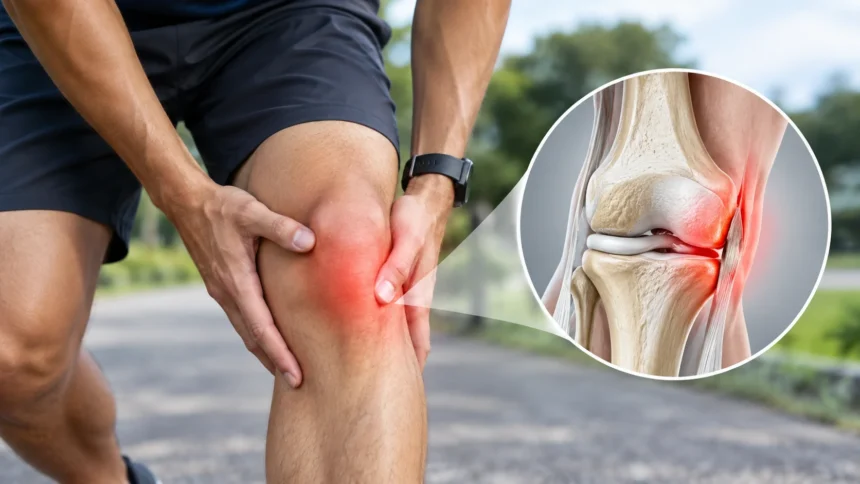
Pain on the inside of the knee can make walking, climbing stairs, exercising, or even getting out of a chair uncomfortable. This area, called the medial side of the knee, contains ligaments, cartilage, tendons, bursae, and part of the knee joint itself. Irritation or injury to any of these structures can create soreness, tenderness, swelling, or sharp pain.
The cause may be as simple as temporary overuse or as significant as a ligament or meniscus injury. Age-related joint changes, running, twisting movements, poor training habits, and repetitive stress can also contribute. The location, timing, and type of pain often provide useful clues about what may be happening.
If your pain is mild, temporary activity changes, gentle movement, and basic home care may help. However, severe swelling, inability to bear weight, joint locking, instability, or pain following a major injury should be assessed by a healthcare professional. Understanding the common causes can help you choose a safer next step.
What Does Pain on the Inside of the Knee Mean?
Pain on the inside of the knee refers to discomfort along the medial portion of the joint, closest to the opposite leg. This region includes the medial collateral ligament, medial meniscus, tendons, cartilage, and nearby soft tissues. Because several structures sit close together, identifying the exact source based on location alone can sometimes be difficult.
The pain may feel sharp, dull, burning, aching, or tender depending on the underlying problem. Some people notice discomfort only when bending the knee deeply, while others experience pain during walking, running, or climbing stairs. Swelling, stiffness, clicking, or a feeling that the knee might give way can provide additional information.
Pain that appears after a sudden twist may suggest a different problem than pain that develops gradually over several weeks. Sudden injuries are more likely to involve a ligament or cartilage structure, while gradual discomfort may be associated with overuse or joint changes. A proper evaluation is especially helpful when symptoms persist or interfere with daily activities.
Common Causes of Pain on the Inside of the Knee
Several conditions can cause medial knee pain, and symptoms often overlap. Common possibilities include medial collateral ligament irritation, meniscus injuries, pes anserine bursitis, osteoarthritis, tendon problems, and general overuse. Determining which condition is responsible usually depends on how the pain started, where it is most tender, and which movements make it worse.
Athletes may develop inside knee pain after running, cutting, pivoting, or changing training intensity too quickly. People who are less active can also experience symptoms after an awkward step, prolonged kneeling, or sudden increase in walking. Knee discomfort is therefore not limited to sports injuries and can affect people at many different activity levels.
Body mechanics may contribute as well. Weak hip muscles, limited ankle mobility, or poor control during squatting and stair climbing can increase stress around the knee. These factors do not automatically cause injury, but they may influence how force is distributed through the joint during repetitive activity.
Medial Collateral Ligament Injuries
The medial collateral ligament, or MCL, runs along the inside of the knee and helps control sideways movement. It can be injured when a force pushes the knee inward, particularly during contact sports or awkward falls. MCL injuries may range from mild stretching to more significant ligament damage, depending on the amount of force involved.
Pain from an MCL injury is usually felt directly along the inner knee. Tenderness, swelling, and discomfort when changing direction may develop soon after the injury. More substantial injuries can produce a feeling of instability, especially when walking, turning, or placing sideways stress through the joint.
Mild ligament irritation may improve with temporary activity modification and gradual rehabilitation. More severe injuries should be professionally assessed, especially when the knee feels unstable or weight-bearing becomes difficult. A clinician can determine whether the ligament is likely involved and whether additional imaging or structured rehabilitation is appropriate.
Medial Meniscus Injuries
The medial meniscus is a C-shaped piece of cartilage that helps distribute pressure and absorb shock inside the knee. It can be injured during twisting movements, deep bending, or sudden changes of direction. Meniscus changes may also develop gradually with age rather than resulting from one obvious accident.
Pain is often felt along the joint line on the inside of the knee. Some people experience catching, clicking, swelling, or difficulty fully bending or straightening the joint. A true locking sensation, where the knee cannot move normally, deserves medical attention because it may indicate that joint movement is mechanically restricted.
Not every meniscus injury requires surgery. Treatment depends on the type of injury, age, symptoms, activity level, and whether the knee remains stable and mobile. Exercise-based rehabilitation is often an important part of recovery, but persistent locking, significant swelling, or ongoing pain should be evaluated individually.
Pes Anserine Bursitis and Tendon Irritation
The pes anserine area is located on the inner side of the upper shin, just below the knee joint. Several tendons attach here, and a small fluid-filled sac called a bursa helps reduce friction. Irritation in this region can cause localized tenderness and aching that may be mistaken for pain coming directly from the knee joint.
Symptoms are often worse when climbing stairs, getting up from a chair, running, or repeatedly bending the knee. The painful spot may be slightly lower than the joint line and particularly sensitive when pressed. Overuse, rapid increases in activity, muscle tightness, or altered movement patterns may contribute to irritation.
Temporary reduction in aggravating activity, gradual strengthening, and addressing flexibility or movement issues may help. Aggressive stretching or repeatedly pressing hard into the painful area is not necessary and may increase irritation. Persistent symptoms should be assessed to distinguish bursitis or tendon problems from meniscus, ligament, or arthritic causes.
Can Arthritis Cause Inner Knee Pain?
Osteoarthritis commonly affects the medial compartment of the knee, particularly in middle-aged and older adults. It develops when joint structures change over time, leading to stiffness, aching, and reduced tolerance for certain activities. Symptoms can vary considerably, and the amount of arthritis seen on imaging does not always match the level of pain experienced.
Arthritis-related pain may be worse after prolonged activity, standing, or walking, although some people feel stiff after sitting for long periods. Mild swelling, reduced range of motion, and grinding sensations can also occur. Symptoms may fluctuate, with some days feeling considerably better than others depending on activity and irritation levels.
Joint sounds themselves do not always mean serious damage. Clicking, popping, or grinding can also occur in other areas of the body, including harmless neck crunching during movement. For knee symptoms, pain, swelling, mobility, and function are generally more important than noise alone when deciding whether evaluation is needed.
Why Does the Inside of My Knee Hurt When Walking?
Walking places repeated load through the knee joint, so irritated structures may become more noticeable with each step. Pain on the inside of the knee may come from the MCL, meniscus, arthritic changes, or nearby tendons and bursae. The exact pattern often depends on whether symptoms started suddenly or developed gradually.
Long walks, hills, uneven surfaces, or rapidly increasing daily step counts can aggravate an already sensitive knee. Footwear changes or altered movement after another injury may also affect how force passes through the joint. Reducing the distance temporarily may help determine whether repetitive loading is contributing to symptoms.
Walking does not necessarily need to stop completely when discomfort is mild. Shorter distances, slower pace, and flatter surfaces may allow you to remain active without repeatedly provoking the knee. If walking causes increasing swelling, limping, instability, or progressively stronger pain, professional assessment is more appropriate than simply pushing through it.
Why Does Inner Knee Pain Hurt When Bending?
Deep knee bending increases pressure through several structures around the medial joint. Squatting, kneeling, sitting back on the heels, or getting up from a low chair may therefore expose irritation that feels minimal during straight-leg positions. Meniscus problems, arthritis, bursitis, and tendon irritation can all become more noticeable during deeper flexion.
A painful catching sensation during bending may suggest that structures inside the joint are irritated. However, a single click or pop without pain is not enough to identify a specific condition. Look for patterns such as swelling, repeated catching, limited movement, or pain consistently occurring at the same part of the motion.
Avoid repeatedly forcing the knee into painful deep flexion in an attempt to loosen it. Instead, work within a comfortable range and gradually increase movement as symptoms allow. If the knee cannot bend or straighten normally, becomes locked, or develops significant swelling, a healthcare professional should assess the joint.
How to Relieve Pain on the Inside of the Knee at Home
Begin by reducing activities that clearly aggravate your symptoms rather than stopping all movement. Temporary changes may include avoiding deep squats, running, jumping, or long walks if these actions consistently increase pain. Gentle everyday movement is often preferable to complete inactivity when there has been no major injury or medical restriction.
Cold packs may provide temporary relief when the knee feels irritated or swollen. Wrap the pack in a cloth rather than placing ice directly on your skin, and use it for a short comfortable period. Heat may feel better for stiffness in some situations, although it should not be used as a substitute for evaluation when swelling or injury is significant.
Elevation can help when mild swelling develops after activity. Some people also find a supportive knee sleeve comfortable, although braces do not treat every cause of inner knee pain. If you are unsure which support is appropriate, professional advice can prevent unnecessary restriction or reliance on equipment that does not address the actual problem.
Gentle Exercises for Inner Knee Pain
A simple quadriceps contraction can help maintain muscle activation when knee movement feels uncomfortable. Sit or lie with the leg supported, tighten the thigh muscles, and gently press the back of the knee toward the surface. Hold briefly before relaxing, keeping the exercise pain-free and controlled rather than squeezing as hard as possible.
Straight-leg raises may help build strength without requiring deep knee bending. Lie on your back with one knee bent and the affected leg straight, then gently tighten the thigh and lift the straight leg a short distance. Lower it slowly and stop if the exercise produces sharp inner knee pain or causes symptoms to worsen afterward.
Hip strengthening can also support better leg control during walking, stairs, and squatting. Exercises such as gentle side-lying leg raises may help improve strength around the hip without directly loading the knee heavily. The best exercise program depends on the diagnosis, so persistent or significant symptoms may benefit from guidance from a physical therapist.
Stretches That May Help Knee Comfort
Tight muscles around the thigh and lower leg can influence how comfortable the knee feels during movement. Gentle hamstring stretching may improve flexibility without requiring deep knee flexion. Keep the stretch mild and controlled, and avoid bouncing or aggressively pulling the leg into a position that produces knee pain.
A gentle calf stretch may also be useful, particularly if ankle stiffness affects walking or squatting mechanics. Stand facing a wall with one leg behind you and keep the heel comfortably on the ground. Shift forward slowly until you feel a mild calf stretch without allowing the knee or ankle to move into a painful position.
Stretching should support comfortable movement rather than serve as a test of flexibility. More intense stretching is not automatically more effective, and forcing a painful knee can increase irritation. Strength, coordination, and gradual return to activity are often just as important as flexibility when managing recurring medial knee discomfort.
Should You Keep Exercising With Inner Knee Pain?
Whether you should exercise depends on the severity and cause of your symptoms. Mild discomfort that remains stable and settles after activity may allow modified exercise, while sharp pain, significant swelling, instability, or limping suggests that you should reduce the load. Pain should not be ignored simply to maintain a training schedule.
Low-impact activities may be easier to tolerate while the knee settles. Depending on your symptoms, gentle cycling, swimming, or shorter walks may place less stress on the joint than running or jumping. However, any exercise that consistently increases pain or swelling should be modified until the cause is better understood.
Returning to normal activity should be gradual. Increase one factor at a time, such as distance, resistance, speed, or frequency, rather than changing everything at once. This makes it easier to identify what the knee tolerates and reduces the chance of repeatedly irritating recovering tissues.
How to Prevent Pain on the Inside of the Knee
Gradual training progression is one of the most practical ways to reduce overuse problems. Sudden increases in running distance, hill work, sports practice, or gym volume can expose tissues to more stress than they are prepared to handle. Building activity progressively gives muscles, tendons, and joints more time to adapt.
Strengthening the hips, thighs, calves, and surrounding leg muscles can improve control during walking, running, and other activities. Exercise technique also matters, especially during squats, lunges, jumping, and direction changes. You do not need perfect movement, but good control can help distribute load more effectively across the lower body.
Recovery habits are also important. Adequate sleep, rest between demanding sessions, supportive footwear for your activity, and attention to early symptoms can reduce repeated irritation. If the same knee pain returns every time you increase activity, addressing the underlying movement or training issue may be more useful than repeatedly resting until symptoms disappear.
When Should You See a Doctor for Inner Knee Pain?
Seek medical assessment when knee pain is severe, persistent, or steadily worsening. Significant swelling, inability to bear weight, repeated giving way, or inability to fully bend or straighten the knee should also be evaluated. These signs may indicate a more substantial ligament, meniscus, joint, or other musculoskeletal problem.
Urgent assessment is appropriate after a major injury if the knee appears deformed, rapidly swells, or becomes impossible to use normally. Redness, warmth, fever, or severe unexplained swelling may also require prompt medical evaluation because not every painful knee is caused by a routine sports or overuse injury.
If mild symptoms have not improved despite reasonable activity modification and home care, a clinician or physical therapist can help identify the cause. Assessment may include movement testing, strength, joint stability, and tenderness patterns. Imaging is not necessary for every case, but it may be considered when the examination suggests a specific injury or condition.
Conclusion
Pain on the inside of the knee can come from several structures, including the MCL, medial meniscus, bursae, tendons, and joint surfaces. The way symptoms begin and the movements that aggravate them can provide useful clues. Mild overuse pain may settle with conservative care, while traumatic or persistent symptoms deserve closer assessment.
Temporary activity modification, gentle strengthening, comfortable movement, and appropriate heat or cold may help reduce mild symptoms. Avoid repeatedly forcing the knee through sharp pain or continuing high-impact activity when swelling and limping are increasing. Recovery is usually more effective when activity is adjusted rather than simply ignored or stopped indefinitely.
Pay particular attention to instability, locking, severe swelling, inability to bear weight, or symptoms that continue to worsen. These signs deserve professional evaluation rather than self-treatment alone. Identifying the source of medial knee pain makes it easier to choose rehabilitation and activity changes that match the actual problem.
FAQs
What is the most common cause of pain on the inside of the knee?
Common causes include MCL irritation, medial meniscus problems, osteoarthritis, pes anserine bursitis, and overuse. The most likely cause depends on age, activity, injury history, tenderness, swelling, and movement-related symptoms.
Can inner knee pain go away on its own?
Mild overuse-related knee pain can sometimes settle with temporary activity modification and gradual return to movement. Persistent, worsening, swollen, unstable, or injury-related pain should be assessed rather than simply waiting indefinitely.
Is walking good for pain on the inside of the knee?
Gentle walking may be appropriate when symptoms are mild and remain stable. Reduce distance or intensity if walking causes increasing pain, swelling, limping, or instability, and seek assessment if these symptoms continue.
Why does my inner knee hurt when I bend it?
Deep bending increases pressure through the meniscus, joint surfaces, tendons, and nearby soft tissues. Arthritis, meniscus irritation, bursitis, or other conditions can therefore make squatting, kneeling, or deep flexion uncomfortable.
When is inside knee pain serious?
Seek medical evaluation for severe swelling, inability to bear weight, knee locking, major instability, deformity, fever, or rapidly worsening pain. Significant symptoms following a fall, twist, or direct injury also deserve prompt assessment.