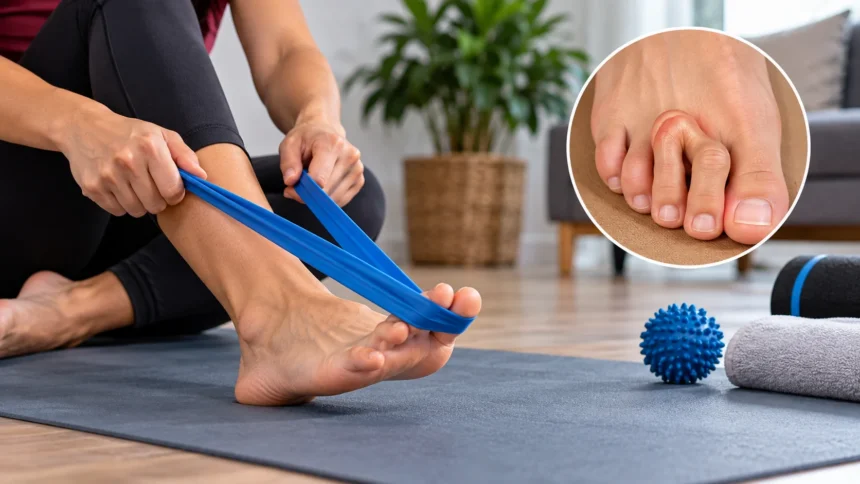
Hammer toe is a common foot problem in which one or more smaller toes bend abnormally at a middle joint instead of lying flat. The condition can make shoes uncomfortable, create pressure over the toe, and sometimes contribute to corns, calluses, or stiffness. Gentle exercises may help maintain mobility and strengthen supporting foot muscles, especially when the affected toe remains flexible.
Exercise cannot always straighten a structural hammer toe permanently, particularly when the joint has become rigid. However, appropriate stretching, toe-control exercises, footwear changes, and gradual strengthening may improve comfort and movement for some people. Understanding which exercises to use, how to perform them correctly, and when professional assessment is necessary can make self-care safer and more practical.
What Is Hammer Toe?
Hammer toe usually affects the second, third, or fourth toe and causes the middle joint to bend downward. The tip of the toe may point toward the floor while the raised joint rubs against footwear. The condition can begin as a flexible deformity, meaning the toe can still be moved relatively easily, before becoming more rigid in some cases.
Several factors may contribute to hammer toe development. Tight or narrow shoes, muscle imbalance, foot structure, previous injury, and certain medical conditions can influence the position of the toes. High heels may also increase pressure toward the front of the foot, which can make an existing toe deformity more uncomfortable.
Symptoms vary from person to person. Some people mainly notice the appearance of the bent toe, while others experience soreness, stiffness, corns, or difficulty finding comfortable shoes. If pain is persistent or the toe becomes increasingly rigid, a podiatrist or other healthcare professional can evaluate the deformity and discuss suitable treatment options.
Can Exercises Help With Hammer Toe?
Hammer toe exercises may help maintain flexibility when the affected joint can still move. Gentle stretching can encourage movement through the toe while strengthening exercises may improve control of the small muscles in the foot. These benefits can make exercises useful as part of a broader management plan, particularly during the earlier, flexible stages of hammer toe.
Exercises are less likely to fully correct a fixed or rigid deformity. Once the joint cannot be straightened manually, the problem may involve structural changes that stretching alone cannot reverse. In these situations, exercise may still help surrounding foot function, but expectations should remain realistic rather than assuming repeated exercises will permanently straighten the toe.
The most useful routine is generally comfortable, consistent, and matched to your current mobility. Exercises should not require aggressive pulling or forceful bending of painful joints. If your toe becomes increasingly painful, swollen, numb, or difficult to move, professional guidance is more appropriate than trying to push through discomfort with a harder exercise routine.
Gentle Toe Straightening Stretch
A simple toe straightening stretch can help maintain movement in a flexible hammer toe. Sit comfortably, cross the affected foot over the opposite leg, and gently hold the bent toe with your fingers. Slowly guide it toward a straighter position until you feel mild tension, but stop well before the movement becomes painful.
Hold the position for about 10 to 20 seconds while keeping your foot relaxed. Release slowly and repeat several times rather than applying strong force during one long stretch. The goal is to encourage comfortable joint movement, not to force the toe completely flat when its current range does not allow that position.
This stretch may be easier after a warm shower or several minutes of gentle walking because the foot tissues are already moving. Perform it consistently if it remains comfortable, but avoid aggressive manipulation. A rigid hammer toe that cannot be gently moved should be assessed rather than repeatedly forced into a straighter position.
Toe Curls for Foot Muscle Strength
Toe curls train the small muscles that help control the toes and support the front of the foot. Sit with both feet flat on the floor and slowly curl your toes downward without gripping so aggressively that your foot cramps. Hold briefly, then relax and allow the toes to lengthen again before beginning the next repetition.
Start with approximately 8 to 12 slow repetitions on each foot. Focus on controlled movement rather than trying to create the strongest possible contraction. If the affected toe is stiff, use only the range that feels comfortable and avoid forcing it into a deeper curl simply to match the movement of your other toes.
Toe curls can be included several times per week as part of a broader foot-strengthening routine. They may improve awareness and control of the smaller foot muscles, although they will not necessarily change the shape of a rigid hammer toe. Stop the exercise if it causes sharp joint pain or persistent cramping.
Toe Spreads for Better Toe Control
Toe spreading involves trying to separate the toes from one another while keeping the foot relaxed on the floor. Begin seated or standing with your weight evenly distributed, then gently spread your toes as wide as you comfortably can. Hold the position for several seconds before relaxing and allowing the toes to return naturally.
This exercise can feel surprisingly difficult because many people rarely practice moving their toes independently. You may initially notice very little visible movement, which does not mean the exercise is useless. Repeated attempts can improve neuromuscular awareness and help you develop better voluntary control of the small muscles surrounding the toes.
Perform several slow repetitions rather than forcing the toes outward with excessive tension. If necessary, you can gently use your fingers to position the toes before trying to maintain the spacing independently. Toe spreads are best viewed as a coordination and strength exercise rather than a method for mechanically correcting a fixed deformity.
Towel Scrunches for Hammer Toe
Towel scrunches provide resistance for the toes using a simple household item. Place a small towel flat on a smooth floor, sit in a chair, and rest your bare foot on one edge. Use your toes to slowly gather the towel toward you while keeping your heel reasonably stable on the floor.
Work gradually and avoid gripping so strongly that the underside of your foot begins to cramp. Once the towel has moved toward you, straighten it and repeat the exercise if your foot still feels comfortable. A few controlled passes can be enough, especially when you are new to strengthening the intrinsic muscles of the foot.
This exercise may not suit everyone with hammer toe because repeated gripping can irritate painful or rigid joints. If towel scrunches increase discomfort, choose gentler toe-control exercises instead. Exercise selection should reflect how your foot responds rather than assuming every popular foot exercise is appropriate for every type of toe deformity.
Marble or Small-Object Pickups
Picking up small objects with your toes can improve coordination and strengthen muscles involved in toe movement. Place several smooth objects, such as lightweight practice balls or similar safe items, on the floor beside a small container. Use your toes to grasp one object at a time and move it carefully into the container.
Keep the movement slow and avoid aggressively curling painful toes. If grasping is difficult, start with slightly larger and lighter objects that require less force. The purpose is to practice controlled toe movement rather than to complete a certain number of objects as quickly as possible.
This exercise is optional rather than essential for hammer toe care. Some people find it useful for improving foot coordination, while others experience discomfort from the gripping action. If the affected joint feels irritated afterward, replace object pickups with toe spreads or gentle stretching that places less pressure on the bent joint.
Calf and Ankle Mobility for Foot Function
The foot does not function in isolation from the ankle and lower leg. Limited ankle mobility or calf stiffness can change how you walk and how pressure moves through the foot during each step. Gentle calf stretching and controlled ankle movements may therefore complement toe exercises, even though they do not directly straighten a hammer toe.
Try a wall-supported calf stretch by placing one foot behind you and keeping the heel in contact with the floor. Gently shift your weight forward until you feel comfortable tension through the calf. You can also perform slow ankle circles or controlled ankle flexion to encourage movement without placing excessive force through the toes.
Lower-body strength can support overall movement mechanics as well. Exercises involving the hips, knees, and ankles may help build a more balanced foundation for walking, and movements such as hip extension exercises can strengthen major muscles used during gait. Foot care works best when it considers the entire lower limb rather than one joint alone.
Footwear Tips for Hammer Toe
Footwear can significantly influence hammer toe comfort because the raised joint may rub against the top or side of a shoe. Choose footwear with a wide, deep toe box that allows your toes to sit without constant compression. Shoes that are too short or narrow can increase pressure and may make corns or irritation more noticeable.
High heels can shift body weight toward the front of the foot and crowd the toes into a smaller space. Lower-heeled shoes with adequate room may feel more comfortable for many people with hammer toe. The correct fit matters more than a specific brand, so pay attention to pressure points when trying on new footwear.
Soft upper materials may also reduce friction around a raised toe joint. Some people benefit from pads, cushions, or orthotic devices recommended by a healthcare professional, depending on their foot mechanics and symptoms. Avoid using devices that create additional pressure or force the toe into an uncomfortable position throughout the day.
Common Hammer Toe Exercise Mistakes
One common mistake is stretching the affected toe too aggressively. A person may assume that more force will produce faster straightening, but excessive pressure can irritate the joint and surrounding tissues. Use mild tension and work within the movement you currently have rather than repeatedly forcing the toe into a position it cannot comfortably reach.
Another mistake is relying entirely on exercises while continuing to wear shoes that constantly compress the toes. Strength and mobility work may have limited benefit if the affected joint spends many hours rubbing against tight footwear. Combining exercise with more appropriate shoe space can create a more comfortable environment for the foot.
It is also easy to confuse normal muscular effort with joint pain. Mild fatigue in the foot muscles during strengthening may be expected, but sharp pain, increasing swelling, or persistent soreness should not be ignored. Reduce the exercise intensity or stop temporarily if symptoms become worse instead of assuming discomfort is necessary for improvement.
Best Practices for a Hammer Toe Exercise Routine
Begin with a small number of exercises rather than trying every movement at once. A routine might include gentle toe straightening, toe spreads, and one strengthening exercise performed several times per week. Starting gradually makes it easier to identify which movements feel helpful and which ones create unnecessary pressure around the affected joint.
Consistency usually matters more than performing a large number of repetitions. Five to ten minutes of comfortable foot mobility and strengthening can be enough for a basic routine. Increase repetitions gradually only when your toes and feet tolerate the current workload without lingering pain, swelling, or excessive cramping afterward.
Combine exercises with practical changes such as comfortable footwear, regular walking, and attention to pressure points. If symptoms remain unchanged or worsen despite these measures, further assessment may be useful. A podiatrist can determine whether the deformity is flexible or rigid and discuss options beyond exercises when necessary.
When to Seek Professional Help
Professional evaluation is recommended when hammer toe causes persistent pain or makes normal footwear difficult to tolerate. Recurring corns, open sores, significant swelling, or progressive stiffness also deserve attention. These symptoms can indicate that pressure around the toe is becoming difficult to manage with simple exercises and footwear adjustments alone.
People with diabetes, reduced circulation, loss of sensation, or a history of foot ulcers should be particularly cautious about self-treating painful foot problems. Small areas of pressure or skin irritation may require earlier medical attention in these situations. Avoid aggressive stretching, cutting corns yourself, or using treatments that could damage the skin.
A healthcare professional can examine toe flexibility, foot structure, walking mechanics, and footwear to determine the most appropriate approach. Management may include shoe modifications, padding, orthotics, exercises, or other treatments depending on severity. Surgery is generally considered only in selected cases when symptoms are significant and conservative approaches are insufficient.
Conclusion
Hammer toe exercises may help maintain flexibility, improve toe control, and strengthen smaller foot muscles, particularly when the affected joint is still flexible. Gentle straightening stretches, toe spreads, controlled curls, and selected strengthening activities can all be useful. Their purpose is to support function and comfort rather than guarantee that a structural deformity will disappear.
Good technique is essential when exercising a sensitive toe. Use a comfortable range, avoid aggressive pulling, and stop movements that create sharp or persistent pain. Combining exercises with roomy footwear and gradual lower-body strengthening can provide a more balanced approach than repeatedly stretching the toe in isolation.
If the toe becomes rigid, increasingly painful, swollen, numb, or difficult to fit into shoes, professional evaluation is appropriate. Exercises are only one part of hammer toe management and may not correct advanced deformities. Understanding these limitations can help you use movement safely while seeking additional treatment when symptoms require it.
FAQs
Can hammer toe be corrected with exercises?
Exercises may improve flexibility and muscle control when hammer toe is still flexible, but they may not permanently straighten a rigid structural deformity. More advanced cases often require additional professional treatment.
How often should I do hammer toe exercises?
Gentle exercises can often be performed several times per week if they remain comfortable. Start with short sessions and avoid increasing repetitions when the toe becomes painful, swollen, or irritated afterward.
Are toe stretches good for hammer toe?
Gentle toe stretches may help maintain movement in a flexible hammer toe. The stretch should feel mild and controlled, and you should never force a rigid or painful joint into a straight position.
What shoes are best for hammer toe?
Shoes with a wide, deep toe box generally provide more room and reduce pressure over bent toes. Avoid footwear that crowds the forefoot or repeatedly rubs against the raised toe joint.
When should I see a doctor for hammer toe?
Seek professional care if pain persists, the toe becomes rigid, sores develop, or footwear becomes difficult to tolerate. Earlier assessment is especially important for people with diabetes, poor circulation, or reduced foot sensation.