The inner thigh is an important part of the lower body because it contains muscles that help control hip movement, stabilize the pelvis, and support everyday activities such as walking, running, climbing stairs, and changing direction. Many people only think about this area when they experience tightness, soreness, chafing, weakness, or a sudden muscle strain.
Several muscles work together along the inner thigh, particularly the hip adductors. These muscles help bring the legs toward the midline of the body and contribute to balance during movement. Because they are involved in sports, workouts, and normal walking, they can become irritated when activity increases too quickly or movement is poorly controlled.
Understanding inner-thigh anatomy and common problems can help you exercise more effectively and recognize when symptoms need attention. This guide covers the muscles of the inner thigh, common causes of discomfort, strengthening exercises, stretching, chafing prevention, recovery tips, and signs that should prompt medical evaluation.
What Is the Inner Thigh?
The inner thigh is the area between the front and back of the upper leg, extending from the groin toward the knee. It contains several muscles, tendons, nerves, blood vessels, and other tissues. The most important muscle group in this region is commonly known as the hip adductors.
The adductor muscles include the adductor longus, adductor brevis, adductor magnus, gracilis, and pectineus. Together, they help pull the leg inward toward the body’s midline. They also assist with hip stability, controlled walking, running, side-to-side movement, and maintaining balance during activities involving one leg.
Because the inner thigh contains several closely positioned structures, pain in the area does not always come from one specific muscle. Groin problems, hip conditions, nerve irritation, or even referred discomfort from nearby regions can sometimes feel like inner-thigh pain. Location alone is therefore not enough to identify the cause.
What Do Inner-Thigh Muscles Do?
The main role of the inner-thigh muscles is hip adduction, which means moving the leg inward toward the opposite leg. This movement occurs during walking, running, skating, kicking, dancing, and many gym exercises. The muscles also work to prevent the leg from moving too far outward during weight-bearing activities.
Inner-thigh muscles contribute to pelvic and hip stability as well. When you stand on one leg, change direction quickly, or step sideways, the adductors help control movement and maintain alignment. Weakness or poor coordination can make these activities feel less stable and may place more stress on surrounding muscles.
The adductors also work with the glutes, hamstrings, hip flexors, and core muscles rather than functioning independently. Good lower-body performance depends on cooperation between these muscle groups. Training the inner thighs alone is therefore less useful than developing balanced strength throughout the hips and legs.
Common Causes of Inner-Thigh Pain
A muscle strain is one of the most common causes of sudden inner-thigh pain. Strains often happen during sprinting, kicking, slipping, rapid direction changes, or activities that stretch the leg unexpectedly. Pain may be sharp at first and followed by tenderness, stiffness, or discomfort when bringing the legs together.
Overuse can create a more gradual ache. Running, sports, heavy lower-body workouts, or repeatedly performing unfamiliar exercises can overload the adductors without one obvious injury. The discomfort may begin as mild tightness and become more noticeable during walking, lunging, squatting, or stretching.
Not all inner-thigh pain is muscular. Hip joint problems, groin conditions, nerve irritation, or other medical issues can sometimes cause discomfort in the same area. If symptoms are persistent, severe, or accompanied by weakness, swelling, numbness, or other unusual changes, professional assessment may be appropriate.
Inner-Thigh Muscle Strains
An inner-thigh strain occurs when muscle fibers or their associated tendons are overstretched or damaged. Mild strains may cause soreness without significantly limiting movement, while more serious injuries can make walking or changing direction difficult. Bruising and swelling may also appear when the injury is more significant.
Early management usually involves reducing activities that clearly aggravate the pain. Avoid repeatedly stretching the injured area aggressively because this can worsen symptoms during the early stages. Comfortable movement is often preferable to complete inactivity, but the appropriate level depends on the severity of the injury.
Recovery usually involves a gradual return to strength and movement. Once normal walking becomes comfortable, progressive exercises can help restore the adductors’ ability to tolerate load. If you cannot walk normally, symptoms are worsening, or you felt a significant tearing sensation, medical evaluation may be helpful.
Inner-Thigh Chafing and Skin Irritation
Inner-thigh chafing occurs when skin repeatedly rubs against skin or clothing. Heat, sweat, long walks, running, tight fabrics, and humid weather can increase friction. The skin may become red, tender, itchy, or sore, and continued rubbing can eventually cause raw patches.
Keeping the area dry and reducing friction can help prevent chafing. Breathable clothing, well-fitting shorts, and anti-chafing products may be useful during exercise or hot weather. Changing out of wet or sweaty clothing soon after activity can also reduce prolonged moisture against the skin.
Once irritation occurs, avoid activities or fabrics that continue rubbing the area until the skin begins to recover. Gentle cleansing and a protective barrier may help minor irritation. Seek medical advice if the skin becomes increasingly swollen, very painful, produces drainage, or shows other possible signs of infection.
Best Exercises for Stronger Inner Thighs
Side-lying hip adduction is a simple exercise that directly targets the inner thigh. Lie on your side with the lower leg straight and the upper leg positioned comfortably in front. Lift the lower leg slowly, pause briefly, and lower it with control rather than swinging through the movement.
Sumo squats and lateral lunges can also challenge the adductors while training other lower-body muscles. A wider stance increases the demand on the hips and inner thighs, but depth should remain comfortable. Keep your knees controlled and avoid forcing yourself into a range that creates sharp groin or hip pain.
More advanced exercises may include Copenhagen planks, resisted adduction, or controlled single-leg movements. These variations place considerably greater load on the adductor muscles and should be introduced gradually. Building strength over time is more useful than choosing the hardest exercise immediately and developing unnecessary soreness or strain.
How to Stretch the Inner Thigh Safely
A gentle butterfly stretch can target the inner thighs without requiring complicated equipment. Sit with the soles of your feet together and allow your knees to move outward naturally. Keep your spine comfortable and avoid aggressively pressing the knees toward the floor to force a deeper stretch.
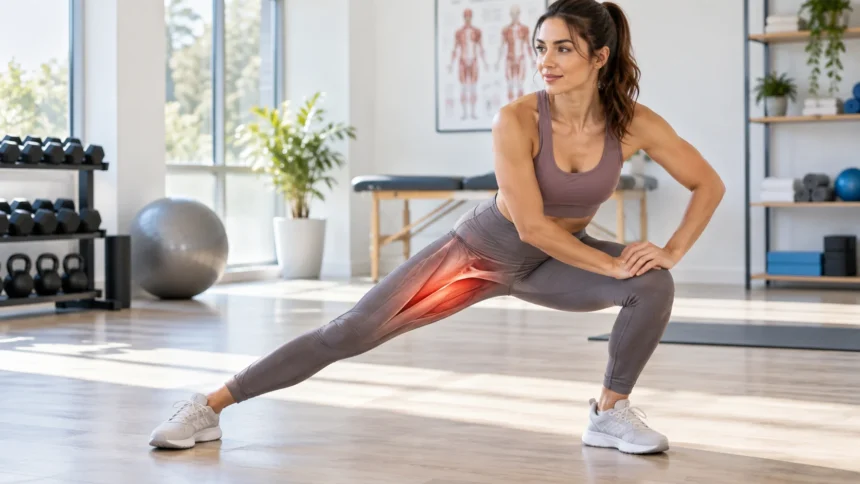
A wide-stance side shift can also stretch one inner thigh at a time. Stand with your feet wider than hip-width and gently shift your body toward one side while keeping the opposite leg relatively straight. Stop when you feel mild tension rather than sharp pain in the groin.
Stretching should feel controlled and comfortable. Avoid bouncing or forcing a recently injured muscle into a deep range, particularly after an acute strain. If stretching consistently makes symptoms worse, focus on gentle movement and seek guidance before assuming that more flexibility is the solution.
How to Train the Inner Thigh Without Overdoing It
Begin with manageable resistance and focus on controlled repetitions. Inner-thigh muscles can become surprisingly sore after unfamiliar exercises, especially if they have not been trained directly. Starting with a few sets and increasing volume gradually gives the muscles time to adapt.
Allow recovery between demanding lower-body sessions. Training the same muscle group intensely every day can reduce performance and increase irritation, particularly when combined with running, sports, or long periods of walking. Your total activity matters more than the number of exercises in one workout.
Balanced programming is also important. Include glute, hamstring, quadriceps, calf, and core exercises rather than concentrating only on the inner thighs. Strong movement patterns depend on several muscle groups working together, so balanced lower-body training generally supports better function than isolated adductor work alone.
When Inner-Thigh Pain May Come From Somewhere Else
Pain can sometimes be referred from nearby joints, nerves, or other structures rather than beginning directly inside the adductor muscles. Hip joint irritation, lower-back problems, and certain groin conditions can all create discomfort that feels as though it sits in the inner thigh. The overall symptom pattern matters.
Pay attention to whether the pain is accompanied by back discomfort, numbness, tingling, joint stiffness, or symptoms that change significantly with different positions. Similar principles apply when evaluating pain elsewhere in the body, such as persistent shoulder pain at night, where the apparent location does not always reveal the true source.
A healthcare professional may examine the hip, groin, back, and leg when inner-thigh symptoms do not behave like a straightforward muscle strain. This wider assessment can help avoid treating the wrong area repeatedly. Persistent pain deserves evaluation when basic activity modification does not lead to improvement.
When Should You See a Doctor?
Seek medical attention after a significant injury if you cannot walk normally, swelling is severe, or bruising develops rapidly. A major tearing sensation or sudden loss of strength can also suggest a more serious muscle or tendon injury. These symptoms may require professional examination and a structured rehabilitation plan.
You should also arrange an assessment if inner-thigh pain lasts for several weeks, repeatedly returns, or interferes with sleep and daily activities. Persistent groin or hip discomfort can have several causes that may not improve with stretching alone. Numbness, weakness, or pain spreading into other areas deserves further attention.
Urgent evaluation is important for major leg swelling, redness, warmth, chest pain, or shortness of breath because circulation problems can occasionally cause serious symptoms. Fever with significant swelling or rapidly worsening pain also requires prompt care. When symptoms seem unusual or severe, avoid assuming they are simply exercise soreness.
Conclusion
The inner thigh contains important muscles that help move and stabilize the hips during walking, running, sports, and everyday activity. The adductors work closely with surrounding lower-body muscles, which means strong inner thighs are most useful when they are part of balanced hip and leg function.
Common inner-thigh problems include strains, overuse soreness, tightness, and skin chafing. Gradual strength training, sensible stretching, activity progression, and appropriate recovery can reduce many of these issues. Avoid pushing through sharp pain or aggressively stretching an acutely injured muscle.
Persistent or severe inner-thigh pain should be evaluated when it does not improve as expected. Significant swelling, weakness, inability to walk normally, or circulation-related symptoms require more urgent attention. Understanding the cause is the best way to choose the right exercise, treatment, and recovery approach.
FAQs
What muscles are in the inner thigh?
The main inner-thigh muscles are the hip adductors, including the adductor longus, brevis, magnus, gracilis, and pectineus. They help move the leg inward and stabilize the hips.
Why does my inner thigh hurt?
Common causes include muscle strain, overuse, tightness, or irritation from exercise. Hip, groin, nerve, and other conditions can also cause similar pain, particularly when symptoms persist.
What exercise is best for inner thighs?
Side-lying hip adduction, sumo squats, lateral lunges, and progressive resisted adduction can all strengthen the inner thighs. The best choice depends on your current strength, mobility, and injury history.
Is stretching good for inner-thigh pain?
Gentle stretching may help uncomplicated tightness, but aggressive stretching can worsen a fresh strain. If pain is sharp or persistent, reduce aggravating activity and consider professional assessment before stretching deeply.
How long does an inner-thigh strain take to heal?
Recovery varies with injury severity. Mild strains may improve within a few weeks, while more significant injuries can take considerably longer and often benefit from gradual strengthening and rehabilitation.