Hip thrusts are one of the most popular lower-body exercises for building stronger glutes and improving hip extension strength. The movement involves driving the hips upward against resistance while the upper back is supported on a bench or similar surface. Although the glutes do most of the work, several surrounding muscles help stabilize and control each repetition.
You can perform hip thrusts with body weight, resistance bands, dumbbells, barbells, or specialized machines. This makes the exercise suitable for beginners as well as experienced lifters looking to increase resistance over time. Proper technique matters because small changes in foot position, range of motion, or spinal position can shift where you feel the exercise.
Understanding what hip thrusts work can help you decide how they fit into your training program. This guide explains the primary and secondary muscles involved, major benefits, correct technique, common mistakes, useful variations, and ways to progress the exercise safely.
What Is a Hip Thrust and How Does It Work?
A hip thrust is a strength exercise built around hip extension, the movement that occurs when the hips move from a bent position toward a straighter position. You begin with your upper back supported and hips lowered, then drive through your feet until the torso and thighs approach a straight line.
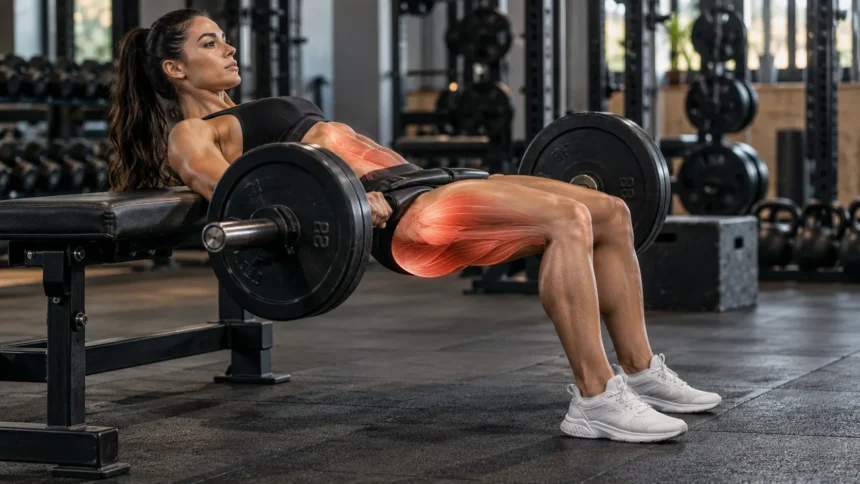
The gluteus maximus produces much of the force needed to extend the hips. As you push upward, the hamstrings, adductors, and core also contribute to stability and movement control. Resistance becomes greatest when weight is placed across the hips, making the exercise particularly demanding near the top of the repetition.
Unlike many standing lower-body exercises, hip thrusts allow you to focus heavily on hip extension without requiring as much knee movement. This can make them useful for people who want to emphasize the glutes. However, they work best as part of a balanced program rather than as the only lower-body exercise.
What Muscles Do Hip Thrusts Work?
The gluteus maximus is the primary muscle targeted by hip thrusts. It is the largest glute muscle and plays an important role in hip extension, powerful lower-body movement, and pelvic stability. The strongest contraction usually occurs near the top of the movement when the hips are fully extended.
The gluteus medius and gluteus minimus also contribute, mainly by helping stabilize the pelvis and control the position of the thighs. These muscles become especially important when resistance increases or when you perform single-leg variations. Their stabilizing role helps keep the knees and hips aligned during each repetition.
The hamstrings assist with hip extension, although they generally contribute less than the glutes during a well-performed hip thrust. Core muscles also help prevent excessive arching through the lower back. Together, these muscle groups create a controlled and powerful movement from the bottom position to full hip extension.
What Secondary Muscles Support the Movement?
Several secondary muscles help keep the hip thrust stable and efficient. The adductors on the inside of the thighs contribute to hip extension and help control leg position. They work alongside the glutes and hamstrings rather than functioning as completely separate muscle groups during the exercise.
The quadriceps may also contribute slightly, particularly depending on foot placement and knee angle. Meanwhile, the abdominal muscles and spinal stabilizers help maintain a strong trunk position. If your core relaxes, you may compensate by excessively arching your lower back instead of completing the movement through the hips.
Balanced hip training should therefore include more than one muscle group. Strengthening the glutes alongside the hamstrings, quads, and inner thigh muscles can support better lower-body control. A well-rounded program usually produces more useful strength than focusing on glute isolation alone.
Benefits of Hip Thrusts
One of the main benefits of hip thrusts is their ability to load the glutes directly through hip extension. This makes them useful for people who want to develop glute strength or muscle size. Progressive resistance can gradually increase the challenge as your technique and strength improve.
Stronger glutes can also support many everyday and athletic movements. Walking uphill, sprinting, jumping, climbing stairs, lifting objects, and standing from lower positions all involve hip extension. Hip thrusts can therefore contribute to broader lower-body strength when combined with squats, hinges, lunges, and other functional exercises.
Another advantage is flexibility in programming. Beginners can start with bodyweight hip thrusts, while more experienced lifters can use barbells, machines, bands, or single-leg versions. This makes the exercise easy to scale without completely changing the movement pattern as your strength improves.
How to Do a Hip Thrust Correctly
Sit on the floor with your upper back against a stable bench and your knees bent. Position your feet about hip-width apart and place resistance across the hips if you are using weight. The edge of the bench should support the upper back around the shoulder-blade area without causing uncomfortable pressure.
Brace your core, keep your chin slightly tucked, and drive through your feet as you raise your hips. Continue until your hips are extended and your torso and thighs form a relatively straight line. Squeeze the glutes at the top without aggressively pushing the hips beyond a comfortable range.
Lower your hips under control rather than dropping quickly toward the floor. Maintain tension through the glutes and keep your feet planted throughout the repetition. If you feel most of the exercise in your lower back rather than your glutes, reduce the load and review your setup and range of motion.
Common Hip Thrust Mistakes
One common mistake is excessive lower-back arching at the top. This often happens when people try to lift the hips higher than their available hip extension allows. Finish the repetition by squeezing the glutes rather than leaning backward through the spine to create extra movement.
Foot placement can also change how the exercise feels. Feet that are too far away may increase hamstring involvement, while feet that are too close can create unnecessary knee discomfort for some people. Adjust your position so your feet feel stable and you can reach the top without losing control.
Another mistake is using too much weight before mastering the movement. Heavy loads can encourage shortened repetitions, bouncing, or poor spinal position. Start with resistance you can control through the full range, then increase weight gradually when your technique remains consistent from the first repetition to the last.
Hip Thrust vs. Glute Bridge
Hip thrusts and glute bridges both train hip extension, but their setup and range of motion are different. In a glute bridge, your shoulders remain on the floor, which limits how far the hips can move. A hip thrust elevates the upper back and generally allows a larger range of motion.
Because of that greater range, hip thrusts are often easier to load heavily with a barbell or machine. Glute bridges can still be very useful for beginners, warm-ups, home workouts, or people who do not have access to a bench. Both exercises can strengthen the glutes when performed with appropriate resistance.
You do not necessarily need to choose only one. A program might use hip thrusts as a primary strength exercise and glute bridges as a lighter accessory movement. The best option depends on available equipment, comfort, training goals, and whether you can perform each exercise with good control.
How Many Hip Thrusts Should You Do?
The ideal number of repetitions depends on your goal and experience level. Beginners may start with two or three sets of eight to twelve controlled repetitions using body weight or light resistance. This range provides enough practice to learn the movement without creating unnecessary fatigue.
For muscle growth, moderate repetitions with progressively heavier resistance are commonly used. Some lifters may work in ranges such as six to twelve repetitions, while lighter sets may involve more. The most important factor is choosing a resistance that feels challenging while still allowing good technique.
Strength-focused lifters may occasionally use heavier loads and fewer repetitions. However, there is no need to chase maximum weight if your main goal is general fitness. Progress can also come from better control, longer pauses at the top, increased range, or more challenging variations rather than weight alone.
Useful Hip Thrust Variations
The bodyweight hip thrust is the simplest variation and works well for beginners learning the movement. Once it becomes easy, a resistance band placed above the knees can add tension and encourage control of the thighs. A dumbbell or weight plate across the hips can provide another manageable progression.
Barbell hip thrusts allow much heavier loading and are commonly used in strength programs. A padded barbell is positioned across the hips while the upper back remains supported. Specialized hip thrust machines can offer a similar movement while making setup easier for people who train in commercial gyms.
Single-leg hip thrusts increase the challenge without requiring heavy external resistance. They demand more stability from the pelvis and glute muscles, so they should usually be introduced after standard hip thrusts feel comfortable. Keep the hips level rather than allowing one side to rotate or drop during the movement.
Who Should Be Careful With Hip Thrusts?
Hip thrusts are appropriate for many people, but they should not cause sharp hip, back, or pelvic pain. Mild muscular effort or fatigue is expected, while sudden pain is a signal to stop. Reducing resistance, adjusting setup, or trying another exercise may be more appropriate than repeatedly forcing a painful movement.
People recovering from surgery, significant injury, or a diagnosed hip or spinal condition should follow professional guidance before adding loaded hip thrusts. The exercise may still be useful in some rehabilitation programs, but the amount of resistance and available range of motion should match the individual’s current condition.
If pain continues despite technique changes, consult a healthcare professional or physical therapist. Hip discomfort can have several causes that are not solved simply by strengthening the glutes. A proper assessment can determine whether the problem involves tendons, joints, nerves, muscles, or another structure.
Conclusion
Hip thrusts primarily work the gluteus maximus while also recruiting the hamstrings, inner thighs, core, and other stabilizing muscles. The exercise trains hip extension, which is important for lifting, walking, running, climbing stairs, and many athletic movements. Its resistance can also be adjusted easily for different ability levels.
Good technique involves stable foot placement, a braced core, controlled hip extension, and a strong glute squeeze at the top. Avoid excessive lower-back arching, uncontrolled repetitions, and loads that are too heavy for your current strength. Gradual progression usually produces better results than rushing toward heavier weights.
Hip thrusts can be an effective addition to a balanced lower-body program, but they do not need to replace squats, hinges, lunges, or other useful exercises. Combine them with varied movement patterns for more complete strength development. Choose the variation and resistance that allow you to move comfortably and consistently.
FAQs
What muscle does the hip thrust work the most?
The hip thrust primarily targets the gluteus maximus, the largest muscle in the buttocks. The hamstrings, adductors, core, and smaller glute muscles also contribute to movement and stability.
Do hip thrusts work the hamstrings?
Yes, the hamstrings assist with hip extension during hip thrusts. However, the glutes generally perform most of the work when the exercise is set up and performed correctly.
Are hip thrusts better than squats for glutes?
Both exercises can strengthen the glutes, but they load the body differently. Hip thrusts emphasize hip extension, while squats train the glutes alongside the quadriceps and several other lower-body muscles.
How often should I do hip thrusts?
Many people include hip thrusts one to three times per week depending on training volume and recovery. Allow enough recovery between challenging sessions and adjust frequency based on your overall program.
Can beginners do hip thrusts?
Yes. Beginners can start with bodyweight hip thrusts or light resistance and focus on technique. Resistance can be increased gradually once the movement feels stable, comfortable, and controlled.