
The inner thigh muscles play an important role in walking, running, balancing, changing direction, and stabilizing the hips and pelvis. Although people often notice these muscles only when they feel tight or sore, they work constantly during everyday movement. Understanding their location and function can make it easier to recognize common problems and exercise them appropriately.
Most of the muscles along the inside of the thigh belong to a group called the hip adductors. Their main job is to move the leg toward the body’s midline, but they also contribute to hip control and stability. Athletes, runners, and people who perform sudden side-to-side movements may place especially high demands on this muscle group.
Inner thigh discomfort can result from muscle strains, overuse, weakness, stiffness, or problems involving nearby joints and tendons. Mild muscular soreness often improves with appropriate rest and gradual movement, while severe or persistent symptoms may require professional assessment. Knowing how these muscles work helps you make safer decisions about exercise and recovery.
What Are the Inner Thigh Muscles?
The inner thigh muscles are primarily a group of muscles known as the hip adductors. They run from areas around the pelvis toward different parts of the femur, or thigh bone, with one extending toward the lower leg. Together, they help control the position of the thigh during standing, walking, running, and other lower-body movements.
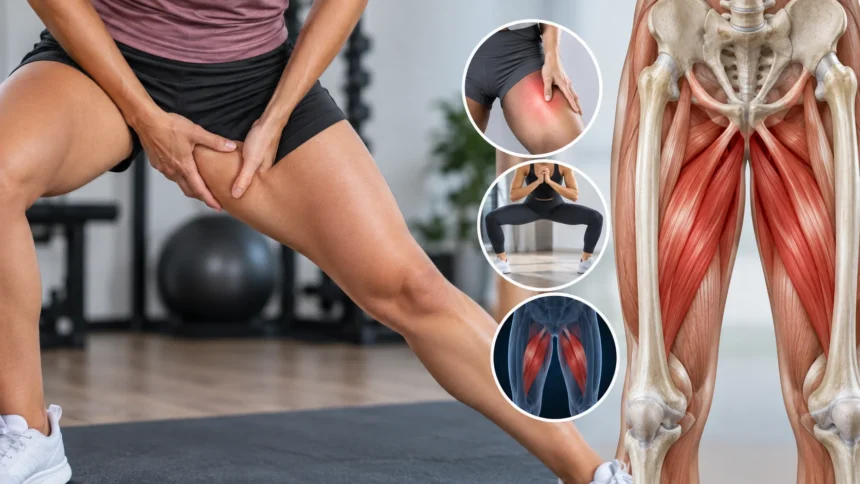
This group includes the adductor longus, adductor brevis, adductor magnus, gracilis, and pectineus. Each muscle has slightly different attachment points and responsibilities, but they often work together. Their combined action helps pull the leg inward while also contributing to hip flexion, extension, rotation, and overall pelvic stability.
These muscles are active during more movements than their name might suggest. They help stabilize your body while standing on one leg, control side-to-side motion, and support movements such as squatting and changing direction. This makes healthy inner thigh muscles important for both athletic performance and ordinary daily activities.
Where Are the Inner Thigh Muscles Located?
The inner thigh muscles are located along the medial, or inside, portion of the upper leg. Most begin near the pelvis around the pubic bone and extend downward toward the femur. Because they cover a relatively large area, discomfort from these muscles may be felt near the groin, middle thigh, or closer to the inner knee.
The adductor longus is one of the more superficial muscles and can sometimes be felt when squeezing the legs together. Other adductors sit deeper within the thigh and cannot be easily identified by touch. The gracilis is long and thin, running from the pelvis past the knee to attach along the inner portion of the lower leg.
Their close relationship with the hip, pelvis, and knee explains why symptoms can sometimes be difficult to localize. Pain that seems to come from the inner thigh may occasionally originate from a nearby tendon, joint, or other structure. Location is therefore useful, but it does not always provide a complete diagnosis by itself.
What Do the Inner Thigh Muscles Do?
The primary function of the inner thigh muscles is hip adduction, which means bringing the leg toward the center of the body. You use this action when bringing your legs together or controlling a leg that moves outward. Adduction is especially important during sports involving quick lateral movements, kicking, skating, or sudden changes of direction.
The adductors also help stabilize the pelvis while you walk or stand on one leg. Without adequate control from these muscles, the thigh and pelvis may move excessively during weight-bearing activities. Their role works together with muscles around the hips, buttocks, abdomen, and lower legs rather than functioning independently.
Some adductors also help flex, extend, or rotate the hip depending on joint position. This means their role changes during different phases of walking, running, squatting, or lunging. Rather than simply pulling the legs together, the inner thigh muscles provide coordinated control during complex movements involving the entire lower body.
Main Muscles of the Inner Thigh
The adductor longus helps move the thigh inward and also assists with some hip flexion. It is commonly associated with groin strains because it experiences substantial force during sprinting, kicking, and rapid direction changes. Tenderness after these activities may sometimes be felt near where the muscle connects around the upper inner thigh.
The adductor brevis sits deeper than the adductor longus and contributes to hip adduction and control. The much larger adductor magnus performs several functions depending on which fibers are active. Parts of the muscle help move the thigh inward, while other portions contribute to hip extension during movements such as standing up or accelerating.
The gracilis crosses both the hip and knee, making its function slightly different from many other adductors. The pectineus is located near the upper inner thigh and assists with adduction and hip flexion. Together, these muscles create a strong, coordinated system rather than acting as isolated structures.
How Inner Thigh Muscles Support Hip Stability
Hip stability depends on several muscle groups working together to control the femur and pelvis. The inner thigh muscles cooperate with the gluteal muscles, hip flexors, hamstrings, and deep hip stabilizers during movement. When one group lacks strength or coordination, other tissues may sometimes compensate for the reduced control.
During walking and running, the adductors help control how the leg moves relative to the pelvis. They can prevent excessive outward movement while contributing to smooth transitions from one step to another. This role becomes particularly demanding during faster activities, uneven terrain, and movements that require balancing on one leg.
Good hip control does not mean keeping the joint rigid. Healthy movement requires strength through a useful range of motion combined with coordination and flexibility. Training the adductors along with surrounding muscles may improve overall lower-body control more effectively than focusing exclusively on squeezing the knees together.
Common Causes of Inner Thigh Muscle Pain
Inner thigh pain can develop after a sudden movement or gradually from repeated stress. Sprinting, kicking, slipping, changing direction quickly, or stretching the legs too far apart can overload the adductors. Sports such as soccer, hockey, tennis, and basketball commonly involve movements that place significant demand on these muscles.
Overuse can also cause soreness when training volume increases faster than the body can adapt. Someone who suddenly adds more running, hill work, lunges, or lower-body exercise may experience discomfort without one obvious injury. Muscle fatigue can reduce movement control and make already tired tissues more sensitive during continued activity.
Not all pain in this area comes directly from muscle tissue. Hip joint problems, tendon irritation, hernias, nerve problems, and other conditions may produce symptoms around the groin or inner thigh. Severe, unexplained, or persistent pain should therefore not automatically be treated as a simple pulled muscle.
What Is an Inner Thigh Muscle Strain?
An inner thigh strain occurs when muscle fibers are overstretched or overloaded beyond what they can tolerate. Mild strains may involve small amounts of tissue irritation, while more significant injuries can damage a larger number of fibers. Symptoms often begin during sprinting, kicking, slipping, or suddenly changing direction.
A strain may cause sharp pain in the groin or inner thigh, followed by soreness or tenderness. More substantial injuries can also produce swelling, bruising, weakness, or difficulty walking comfortably. Squeezing the legs together against resistance may reproduce symptoms because this action activates the affected adductor muscles.
Recovery depends on injury severity and activity demands. Mild strains may improve with temporary activity modification and gradual rehabilitation, while more serious injuries can require a longer recovery period. Returning to sport before strength and movement have sufficiently recovered may increase the risk of repeated irritation or reinjury.
Why Do Inner Thigh Muscles Feel Tight?
Inner thigh tightness can develop after exercise, prolonged sitting, unfamiliar movements, or activities requiring repeated hip stabilization. The sensation of tightness does not always mean the muscles are physically shortened. Fatigue, soreness, sensitivity, or reduced movement confidence can sometimes create a similar feeling without a major loss of muscle length.
People who frequently perform running, cycling, or lower-body strength training may notice stiffness after demanding sessions. A proper warm-up and gradual progression in training volume can help tissues adapt more comfortably. Regular movement throughout the day may also prevent the hips and thighs from feeling unusually stiff after long periods of inactivity.
Stretching may provide temporary relief, but it is not always the complete solution. If the muscles feel tight because they are weak or overloaded, strengthening and better training management may be equally important. Persistent tightness accompanied by groin pain, weakness, or restricted hip movement may benefit from professional evaluation.
What Happens When Inner Thigh Muscles Are Weak?
Weak adductors may reduce your ability to control the leg during running, balancing, lateral movement, and changes of direction. However, weakness rarely works in isolation because lower-body control depends on many muscles operating together. Hip, trunk, thigh, and calf strength all contribute to efficient movement during daily and athletic activities.
Some people notice difficulty performing side lunges, squeezing movements, or single-leg exercises when the adductors lack strength. Athletes may also feel less stable during rapid cutting or skating motions. Weakness after an injury can remain even after pain decreases, which is one reason rehabilitation often continues beyond the point when symptoms first improve.
Gradual strengthening can improve the ability of these muscles to tolerate everyday and sporting demands. The goal is not to make one muscle group unusually strong but to restore balanced lower-body function. Exercises should progress from comfortable movements toward more demanding tasks as strength, coordination, and confidence improve.
Exercises to Strengthen the Inner Thigh Muscles
A gentle ball or pillow squeeze can be a simple starting exercise. Lie or sit comfortably with a soft object between the knees, then lightly squeeze the knees inward without holding your breath. Maintain the contraction briefly before relaxing, using only an intensity that does not produce sharp groin or inner thigh pain.
Side-lying hip adduction directly challenges the inner thigh muscles. Lie on one side with the upper leg positioned out of the way, then slowly raise the lower leg a short distance from the floor. Keep the movement controlled and lower the leg gradually instead of using momentum to complete each repetition.
More advanced exercises may include lateral lunges, sliding adduction movements, or Copenhagen-style adductor exercises. These movements can place considerably greater load on the inner thigh muscles and should be introduced gradually. Anyone recovering from a strain should progress based on comfortable strength and function rather than immediately attempting demanding exercises.
How to Stretch the Inner Thigh Muscles Safely
A seated butterfly stretch can gently target the inner thighs. Sit with the soles of your feet together and allow the knees to move comfortably outward while keeping your torso relaxed. There is no need to force the knees toward the floor, because aggressive pressure can irritate sensitive muscles without providing additional benefit.
A wide-stance side shift is another option. Stand with your feet wider than shoulder width and slowly shift your weight toward one side while keeping the opposite leg more extended. You should feel a gentle stretch along the inner thigh of the straighter leg without sharp pain or a pulling sensation near an injured area.
Stretching should feel mild and controlled rather than painful. If you are recovering from a recent strain, aggressive stretching during the early stage may aggravate symptoms. Restoring comfortable range of motion gradually while also rebuilding strength is generally more useful than repeatedly testing how far the injured muscle can stretch.
How Inner Thigh Problems Can Affect the Knee
Some inner thigh muscles and tendons influence movement around the knee as well as the hip. The gracilis, for example, crosses the knee joint and contributes to movement and stability. Changes in hip strength or control may also alter how forces are distributed through the leg during walking, running, and squatting.
Pain along the inner thigh can sometimes extend toward the medial side of the knee, making it difficult to determine where symptoms begin. However, knee pain may also come from structures such as the meniscus, medial collateral ligament, joint surfaces, or nearby bursae. Persistent inner knee pain should therefore not automatically be blamed on tight adductors.
Pay attention to the precise location and activities that trigger discomfort. Pain concentrated at the knee joint, significant swelling, locking, or instability may suggest a problem that requires a different approach than a simple muscle strain. Proper assessment helps identify whether symptoms originate from the thigh, knee, hip, or another nearby structure.
When Should You See a Doctor for Inner Thigh Pain?
Mild soreness after exercise may settle with temporary activity modification and gradual return to normal movement. However, seek medical assessment when pain is severe, continues worsening, or prevents you from walking normally. Significant bruising, swelling, or sudden weakness following an injury may indicate a more substantial muscle or tendon problem.
Professional evaluation is also appropriate when symptoms persist despite reasonable home care. Recurrent groin or inner thigh pain may require assessment of strength, hip movement, training habits, and nearby joints. A physical therapist or other qualified clinician can help determine whether rehabilitation, activity modification, or further investigation is appropriate.
Seek urgent medical attention for severe unexplained pain accompanied by major swelling, fever, significant redness, or other concerning symptoms. Sudden swelling of an entire leg, breathing difficulty, or chest pain also requires prompt care rather than exercise or massage. Not every inner thigh symptom is musculoskeletal, so unusual patterns should be evaluated appropriately.
Conclusion
The inner thigh muscles are an important group responsible for hip adduction, pelvic stability, leg control, and coordinated lower-body movement. They include the adductor longus, brevis, magnus, gracilis, and pectineus. These muscles contribute to everything from normal walking to demanding activities such as sprinting, kicking, and changing direction.
Common inner thigh problems include muscle strains, overuse soreness, tightness, and weakness. Gentle stretching, appropriate strengthening, gradual training progression, and temporary modification of aggravating activities may help when symptoms are mild. Recovery should focus on restoring comfortable movement and strength rather than simply trying to eliminate every sensation of tightness.
Persistent or severe inner thigh pain deserves professional assessment, particularly when it affects walking or follows a significant injury. Swelling, bruising, major weakness, or symptoms involving the hip or knee can provide important clues about the underlying problem. Identifying the source of pain makes it easier to choose the right recovery approach.
FAQs
What are the main inner thigh muscles?
The main inner thigh muscles are the adductor longus, adductor brevis, adductor magnus, gracilis, and pectineus. Together, they help move the thigh inward and stabilize the hip and pelvis.
What causes inner thigh muscle pain?
Common causes include muscle strains, overuse, sudden changes in direction, sprinting, kicking, and rapid increases in exercise. Hip, tendon, nerve, or other medical problems can sometimes cause similar symptoms.
How do you strengthen inner thigh muscles?
Exercises such as pillow squeezes, side-lying hip adduction, lateral lunges, and progressive adductor strengthening can help. Begin gradually and avoid movements that cause sharp or worsening pain.
Is stretching good for tight inner thighs?
Gentle stretching may temporarily improve comfort and mobility, especially after prolonged inactivity. However, strengthening and managing training load may also be necessary when recurring tightness is related to weakness or overuse.
When should inner thigh pain be checked by a doctor?
Seek evaluation for severe or persistent pain, major bruising, swelling, weakness, difficulty walking, or symptoms that repeatedly return. Urgent care is appropriate when unusual swelling or other serious symptoms develop.