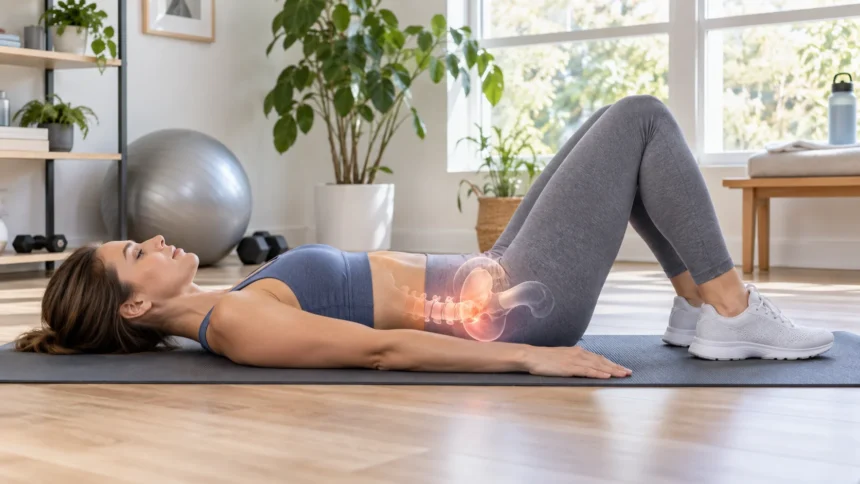
Pelvic tilts are simple exercises that gently move the pelvis and lower back through a small, controlled range. They are often used in mobility routines, core training, rehabilitation, and pregnancy-related exercise programs because they require little equipment and can be adjusted for different ability levels. Despite looking easy, technique matters if you want the movement to feel comfortable and useful.
A pelvic tilt is not designed to create a large or forceful motion. Instead, the exercise helps you become more aware of how your pelvis, abdominal muscles, and lower back work together. People may use pelvic tilts to practice core control, reduce feelings of stiffness, or prepare for other exercises.
Understanding when to perform pelvic tilts and when to be cautious can help you use them more effectively. This guide explains proper technique, common variations, possible benefits, safety considerations, timing, mistakes to avoid, and practical tips for adding pelvic tilts to your exercise routine.
What Is a Pelvic Tilt?
A pelvic tilt is a controlled movement in which you gently change the position of your pelvis relative to your spine. In a basic lying version, you alternate between allowing a small natural curve in the lower back and gently flattening that curve by rotating the pelvis backward. The movement should remain smooth and comfortable.
The exercise primarily involves coordination between the abdominal muscles, lower-back muscles, hips, and pelvis. It does not require heavy resistance, and the range of motion is usually quite small. The goal is often to improve awareness and control rather than build maximum strength.
Pelvic tilts can be performed lying down, standing, sitting, or in a hands-and-knees position. Each version changes how gravity and body position influence the movement. Beginners often start lying on their back because the floor provides support and makes it easier to feel the lower back and pelvis moving.
How to Do a Pelvic Tilt Correctly
Lie on your back with your knees bent and your feet flat on the floor. Keep your shoulders relaxed and allow your lower back to rest naturally rather than forcing it flat immediately. Take a slow breath and notice the small space that may exist between your lower back and the floor.
Gently tighten your abdominal muscles and rotate your pelvis backward so the lower back moves slightly closer to the floor. Avoid pressing aggressively or lifting your hips into a bridge. Hold the position briefly, then relax and return to your comfortable starting position.
Repeat the movement slowly for several controlled repetitions. Focus on smooth motion rather than trying to create the largest possible tilt. If you feel sharp pain, significant pressure, dizziness, or discomfort that increases with each repetition, stop and reassess the exercise before continuing.
What Muscles Do Pelvic Tilts Work?
Pelvic tilts involve the deep and superficial abdominal muscles that help control the position of the pelvis and spine. The rectus abdominis, obliques, and deeper core muscles may all contribute depending on how the exercise is performed. The lower-back and hip muscles also help coordinate the return to a neutral position.
The glutes may become lightly active during certain variations, but pelvic tilts are not primarily a glute-strengthening exercise. If you strongly squeeze the buttocks or lift the hips, the movement begins to resemble a bridge rather than a basic pelvic tilt. Keeping the exercise small helps emphasize control.
Pelvic floor muscles can also coordinate with breathing and core activity. However, pelvic tilts should not involve constant straining or forceful pelvic floor contractions. If you have pelvic pain, urinary symptoms, or difficulty relaxing these muscles, professional guidance may be more appropriate than adding more tension.
Potential Benefits of Pelvic Tilts
Pelvic tilts can help improve awareness of how the pelvis and lower back move together. This body awareness may make it easier to control posture and spinal position during exercises such as bridges, dead bugs, squats, and other core or lower-body movements. The exercise can also be useful as part of a gentle warm-up.
Some people find pelvic tilts helpful for reducing the sensation of lower-back stiffness, particularly after long periods of sitting or inactivity. The movement encourages gentle motion without requiring heavy loading. However, it should not be treated as a guaranteed treatment for every type of back pain.
Pelvic tilts can also support basic core coordination by teaching you to engage abdominal muscles without holding your breath. This control can be useful during everyday lifting and exercise. The benefits are usually greatest when pelvic tilts are combined with broader strength, mobility, and movement training.
When Is the Best Time to Do Pelvic Tilts?
Pelvic tilts can be performed during a warm-up before exercise because they gently introduce movement through the pelvis and lower back. A few controlled repetitions may help you become aware of your core position before strength training, walking, or mobility work. Keep the movement easy rather than turning the warm-up into a tiring workout.
They can also fit into a cooldown or separate mobility routine. People who spend long periods sitting may appreciate several gentle repetitions after work or during a movement break. Timing is flexible because the exercise usually creates relatively little fatigue when performed with light effort.
Avoid assuming you must perform pelvic tilts at one specific time of day to receive benefits. Consistency and comfortable technique matter more than timing. If your symptoms feel worse in the morning or after certain activities, adjust when you practice based on how your body responds.
Pelvic Tilts During Pregnancy
Pelvic tilts are sometimes included in pregnancy exercise programs because they can provide gentle movement and core awareness. Hands-and-knees or standing variations may be more comfortable as pregnancy progresses. However, exercise recommendations should always reflect individual health, pregnancy stage, and guidance from a qualified healthcare professional.
Some pregnant people use pelvic tilts to manage feelings of lower-back stiffness or to practice controlled movement around the pelvis. The exercise should remain gentle and should not create pain, dizziness, shortness of breath, bleeding, or contractions. Any concerning symptoms require stopping and seeking appropriate medical advice.
Comfortable positioning becomes increasingly important later in pregnancy. Prolonged flat-back exercise may not be suitable for everyone depending on stage and symptoms. A prenatal healthcare professional or qualified physical therapist can recommend safer variations when needed.
Common Pelvic Tilt Mistakes
One common mistake is making the movement too large. Pelvic tilts are subtle, and aggressively pressing the lower back into the floor can create unnecessary tension. Focus on smooth control rather than trying to flatten your back as forcefully as possible.
Holding your breath is another frequent error. Exhaling gently as you engage the abdominal muscles can make the movement easier to control. If you find yourself straining, clenching your jaw, or holding your breath, reduce the effort and slow down.
Some people also accidentally lift their hips into a bridge. A bridge is a useful exercise, but it has a different purpose and requires more hip extension. During a pelvic tilt, your hips should generally remain in contact with the floor while the pelvis rotates through a small range.
How Many Pelvic Tilts Should You Do?
Beginners can often start with around eight to twelve slow repetitions. Each repetition should be controlled and comfortable, with enough time to feel the pelvis move rather than rushing through the set. One or two sets may be enough when you are first learning the exercise.
You can gradually add repetitions if the movement feels easy and remains pain-free. There is usually little benefit in performing hundreds of pelvic tilts simply because the exercise is low impact. Quality, breathing, and movement control are more useful than extremely high volume.
Frequency can vary depending on your goals. Some people include pelvic tilts in daily mobility routines, while others perform them only during warm-ups or rehabilitation sessions. If they are part of treatment for pain or injury, follow the schedule recommended by your healthcare or rehabilitation professional.
How to Combine Pelvic Tilts With Other Exercises
Pelvic tilts work well alongside other gentle core and mobility exercises. After mastering the movement, you might progress to bridges, dead bugs, controlled leg movements, or other exercises that require maintaining pelvic control while the arms or legs move. Progress should remain gradual.
Balanced exercise should include movement for more than one area of the body. Combining core and pelvic mobility work with upper-body mobility, such as a gentle deltoid stretch, can create a more complete routine. The exact exercises should reflect your needs rather than following one generic sequence.
Strength training, walking, and regular daily movement are also important for overall function. Pelvic tilts can support these activities, but they should not replace a varied exercise program. Think of them as one tool for improving awareness and control rather than a complete workout by themselves.
When Should You Avoid or Modify Pelvic Tilts?
Stop or modify the exercise if it causes sharp back, hip, pelvic, or abdominal pain. Mild muscular effort is acceptable, but worsening pain is not something to push through. A different position or smaller range may feel better, depending on what is causing the discomfort.
People recovering from recent surgery, major injury, or certain spinal and pelvic conditions should follow professional advice before beginning new exercises. Pregnancy can also change which positions are appropriate. Individual medical circumstances matter more than general exercise instructions found online.
Seek medical attention if pelvic or back pain occurs with major weakness, numbness, loss of bladder or bowel control, fever, or severe unexplained symptoms. These warning signs require proper evaluation rather than self-treatment with mobility exercises. Pelvic tilts are not intended to diagnose or manage serious medical conditions.
Conclusion
Pelvic tilts are gentle exercises that help you practice controlled movement between the pelvis, lower back, and abdominal muscles. They can be useful for mobility, core awareness, warm-ups, and certain rehabilitation routines when performed correctly. The movement should remain small, smooth, and comfortable.
Timing is flexible, so pelvic tilts can be used before exercise, during mobility sessions, or as part of a regular movement break. Start with a manageable number of repetitions and focus on breathing and control. Avoid forcing the lower back flat or turning the movement into a bridge.
Pelvic tilts are generally simple, but they are not appropriate for every type of pain or medical condition. Stop if symptoms worsen and seek professional guidance for persistent discomfort, neurological symptoms, pregnancy-related concerns, or recovery after significant injury or surgery. Safe exercise should always match your individual needs.
FAQs
What does a pelvic tilt exercise do?
A pelvic tilt gently moves the pelvis and lower back while engaging the abdominal muscles. It can improve body awareness, core control, and comfortable spinal movement when performed correctly.
How many pelvic tilts should I do?
Beginners can often start with eight to twelve slow repetitions for one or two sets. Focus on controlled movement and stop if pain increases.
Are pelvic tilts good for lower-back pain?
They may help some people with mild stiffness, but lower-back pain has many possible causes. Persistent, severe, or worsening symptoms should be professionally assessed before relying on one exercise.
Can you do pelvic tilts every day?
Many people can perform gentle pelvic tilts daily if they remain comfortable. Frequency should depend on your goals, symptoms, and any guidance provided by a healthcare or rehabilitation professional.
Are pelvic tilts safe during pregnancy?
They may be appropriate for some pregnant people, especially in modified positions. Because needs change throughout pregnancy, discuss exercise choices with your prenatal healthcare professional when uncertain.