

Phlebitis: Symptoms, Causes, Treatment and Risks
Phlebitis is inflammation of a vein that commonly affects the legs, although it can also develop in the arms. The affected area may become painful, warm, swollen or discolored, and the vein can sometimes feel unusually firm beneath the skin. Although mild cases may improve with appropriate care, similar symptoms can occur with more serious blood clots. Understanding what phlebitis looks and feels like can help you avoid delaying an important medical assessment.
Some people use the terms phlebitis and thrombophlebitis interchangeably, but they do not always mean exactly the same thing. Phlebitis describes inflammation within a vein, while thrombophlebitis involves inflammation associated with a blood clot. Superficial thrombophlebitis affects a vein near the skin and is generally less dangerous than deep vein thrombosis. Nevertheless, a professional evaluation may be necessary because symptoms alone cannot reliably show how deep or extensive a clot is.
The condition may develop around varicose veins, after an injury or following the placement of an intravenous catheter. Long periods of inactivity, pregnancy, surgery, certain medications and existing clotting disorders can also increase the risk. In some cases, there is no obvious trigger. Because the underlying cause affects treatment decisions, identifying personal risk factors is just as important as relieving redness, tenderness or swelling.
Treatment for phlebitis depends on its location, severity and relationship to a blood clot. Mild superficial inflammation may be managed with movement, warm compresses, elevation or medication recommended by a clinician. More extensive superficial vein thrombosis may require an anticoagulant to stop the clot from growing. Deep vein thrombosis requires urgent medical treatment because part of the clot may travel to the lungs and cause a pulmonary embolism.
This article explains the symptoms, causes, diagnosis, treatment and potential complications of phlebitis in straightforward language. It is intended to help you recognize concerning changes and prepare for a conversation with a healthcare professional. It cannot determine whether swelling or pain is caused by phlebitis, DVT, infection or another medical condition. Seek prompt care for new symptoms, especially when they are sudden, severe or accompanied by breathing difficulties.
What Is Phlebitis and How Does It Affect a Vein?
Phlebitis means that the wall of a vein has become irritated and inflamed. Veins normally carry blood back toward the heart, assisted by surrounding muscles and small internal valves. When a vein becomes inflamed, the nearby tissue may feel sore, warm and swollen. Blood may also flow more slowly through that area, particularly when the person has been inactive or already has poor venous circulation. This combination can sometimes encourage a blood clot to form.
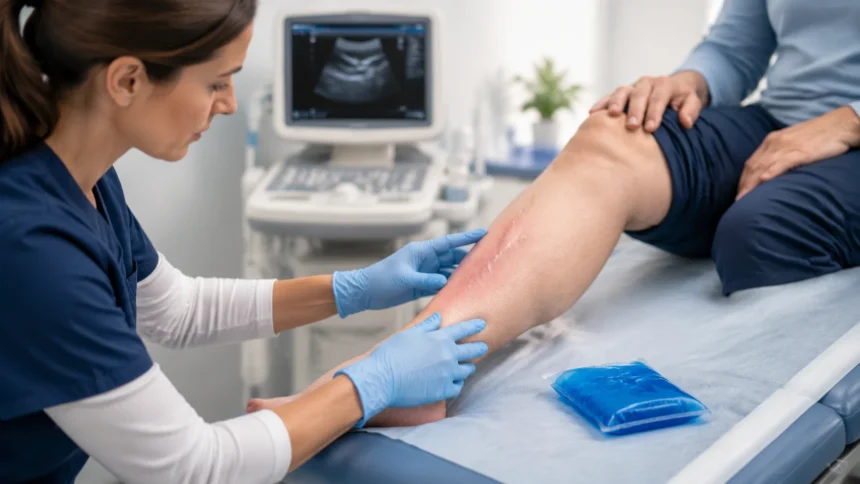
Superficial phlebitis develops in veins located close to the surface of the skin. It often produces a visible red, purple or darker line that follows the path of the inflamed vein. The vein may feel like a tender, hardened cord when touched gently. Because the inflammation is near the skin, the affected area is usually easier to see than a problem in a deep vein. However, appearance alone cannot confirm that deeper veins are unaffected.
Thrombophlebitis occurs when vein inflammation is associated with a thrombus, which is the medical term for a blood clot. When this happens in a superficial vein, it is called superficial thrombophlebitis or superficial vein thrombosis. The condition commonly affects people with varicose veins, but it can also follow an IV line, injury or period of reduced mobility. Symptoms may remain localized, although some clots can extend toward the deep venous system.
Deep vein thrombosis develops within a deeper vein, usually in the calf, thigh or pelvis, although it can also affect an arm. DVT may cause swelling, pain, warmth and skin discoloration, but some people have few or no noticeable symptoms. It is more dangerous than uncomplicated superficial phlebitis because a clot can break away and travel through the bloodstream. If it reaches the lungs, it can obstruct blood flow and cause a pulmonary embolism.
Phlebitis can therefore describe conditions with very different levels of risk. A short area of superficial inflammation after an IV catheter is not the same as a large blood clot near a major deep vein. Location, clot length, symptoms and individual risk factors all influence the treatment plan. A healthcare professional may use a physical examination and duplex ultrasound to determine which veins are involved and whether anticoagulant treatment is needed.
Symptoms of Phlebitis You Should Recognize
Pain or tenderness over a vein is one of the most common phlebitis symptoms. The discomfort may feel like burning, aching, pulling or soreness rather than the deeper cramping sometimes associated with a muscle injury. It may become more noticeable when the affected area is touched or when nearby muscles move. In superficial phlebitis, the pain generally follows the course of a visible vein instead of spreading evenly across an entire limb.
Redness or discoloration may appear over the inflamed vein, although the exact color can vary with skin tone. On lighter skin, the area may look pink or red, while darker skin may show purple, brown or less obvious discoloration. The skin may also feel warmer than the surrounding area. These changes can resemble cellulitis, an insect bite or a skin reaction, which is one reason self-diagnosis based only on appearance can be misleading.
Swelling can occur around a superficial vein or throughout a larger portion of the affected arm or leg. Localized swelling may remain close to the irritated vessel, particularly after an IV catheter has been removed. More extensive swelling, especially when one entire leg becomes noticeably larger, can suggest a deeper circulation problem. Sudden unexplained swelling deserves prompt medical assessment because deep vein thrombosis cannot be ruled out safely at home.
Another characteristic sign is a firm or rope-like vein beneath the skin. This hardened area develops because of inflammation and, in some cases, a clot inside the superficial vessel. It may remain firm for several weeks even after the pain and redness start improving. The affected vein should not be squeezed or aggressively massaged, as doing so will not dissolve a clot and may worsen discomfort or tissue irritation.
Symptoms such as chest pain, sudden shortness of breath, coughing up blood, fainting or an unusually rapid heartbeat are not typical signs of uncomplicated superficial phlebitis. They may indicate a pulmonary embolism and require emergency medical attention. Severe limb swelling, rapidly spreading redness, high fever or worsening pain also needs urgent evaluation. These warning signs are particularly important after surgery, prolonged immobility, pregnancy, hospitalization or a previous blood clot.
Common Causes of Phlebitis
Varicose veins are among the most frequent causes of superficial thrombophlebitis in the legs. These enlarged, twisted veins do not move blood as efficiently as healthy veins, allowing blood to pool and flow more slowly. The increased pressure can irritate the vein wall and make clot formation more likely. People with varicose veins may experience repeated episodes in the same limb unless the underlying venous problem is assessed and appropriately managed.
An intravenous catheter can cause phlebitis in the hand or arm by irritating the inner lining of a vein. The irritation may result from mechanical friction, the catheter material, medication delivered through the line or contamination that leads to infection. Symptoms often appear near the insertion site and may include tenderness, warmth, redness or a firm vein. The healthcare team may remove or replace the IV line when catheter-related phlebitis is suspected.
Injury to a vein can also trigger inflammation and clotting. Trauma may occur during surgery, after an injection, following a blow to the limb or as a result of a medical procedure involving a blood vessel. The body naturally activates its clotting system when tissue is damaged. Although this process helps control bleeding, it can sometimes produce an unwanted clot, particularly when other risk factors are present at the same time.
Slow blood flow is another major contributor to thrombophlebitis and deep vein thrombosis. It may develop during prolonged bed rest, hospitalization, long-distance travel or recovery from surgery. Limited movement reduces the action of the calf muscles, which normally help push blood upward through the leg veins. Paralysis, a plaster cast or an illness that keeps someone inactive can therefore increase the risk of venous blood pooling and clot formation.
Some people have blood that clots more readily because of cancer, inflammatory illness, pregnancy, hormone therapy or an inherited clotting disorder. Smoking, obesity, older age, dehydration and a previous history of DVT or pulmonary embolism may add to the overall risk. A single factor does not guarantee that phlebitis will develop, but several combined factors can be significant. Doctors consider this complete risk profile when deciding whether testing or preventive treatment is appropriate.
Who Is More Likely to Develop Phlebitis?
People with varicose veins or chronic venous insufficiency have a higher chance of developing superficial vein inflammation. Damaged vein valves allow blood to collect in the lower legs instead of returning efficiently toward the heart. This can increase venous pressure and contribute to aching, heaviness, ankle swelling and skin changes. When a superficial clot develops, the person may notice a newly painful, firm and discolored vein within an area that previously only looked enlarged.
Recent surgery and hospitalization can substantially increase the risk of blood clots. Surgery may damage blood vessels, activate clotting mechanisms and temporarily reduce a person’s mobility. The risk varies depending on the procedure, recovery time, age and existing health conditions. Hospitals commonly assess patients for venous thromboembolism and may recommend early movement, compression devices or preventive anticoagulant medication when the expected risk is considered significant.
Pregnancy and the weeks following delivery can make blood more likely to clot. The growing uterus can also place pressure on pelvic veins and slow the return of blood from the legs. Hormonal contraception and menopausal hormone therapy may increase clotting risk in some people, particularly when combined with smoking, obesity or a personal history of blood clots. Medication should not be stopped without discussing individual benefits and risks with a qualified clinician.
Cancer and certain cancer treatments are associated with an increased risk of venous thrombosis. Tumors may release substances that activate clotting, while surgery, chemotherapy, central venous catheters and reduced activity can add further risk. Unexplained or repeatedly occurring superficial thrombophlebitis sometimes prompts a doctor to look for an underlying health condition. However, most cases of phlebitis do not mean that a person has undiagnosed cancer.
A previous episode of DVT, pulmonary embolism or superficial vein thrombosis also raises the chance of another event. Inherited conditions affecting clotting proteins may be relevant when blood clots occur at a young age, happen repeatedly or appear without a clear trigger. Family history can provide useful information, but genetic testing is not necessary for everyone. A doctor will consider the circumstances of the clot before deciding whether specialist evaluation is justified.
How Phlebitis Is Diagnosed
Diagnosis usually begins with a discussion about when the symptoms started and how they have changed. The clinician may ask about recent surgery, travel, pregnancy, injuries, IV lines, medications and previous blood clots. They will also want to know whether the pain follows a superficial vein or affects a larger part of the limb. This medical history helps distinguish a local inflammatory problem from conditions that may require urgent imaging or anticoagulant treatment.
During the physical examination, the clinician checks for tenderness, swelling, warmth, discoloration and a hardened vein. They may compare both legs or arms to identify differences in size and appearance. The skin is also examined for wounds, infection, varicose veins or other possible explanations. Although superficial phlebitis may have a recognizable appearance, an examination cannot always determine whether the clot extends into deeper veins.
Duplex ultrasound is the main imaging test used when a blood clot is suspected. It combines conventional ultrasound images with Doppler technology to evaluate blood flow through the veins. The test can identify a superficial clot, estimate its length and show how close it is to a junction with the deep venous system. It is painless, does not use radiation and can provide information that directly affects the treatment decision.
A D-dimer blood test may be used in selected patients when the possibility of DVT is being evaluated. D-dimer is a substance produced when the body breaks down a blood clot, but an elevated result does not prove that a clot is present. Infection, pregnancy, recent surgery and several other conditions can also raise it. Doctors interpret the result alongside symptoms, risk factors and clinical probability rather than using it as a stand-alone diagnosis.
Other tests may be required when symptoms suggest infection, recurrent clotting or an underlying medical disorder. Blood tests can check for inflammation, infection or clotting abnormalities, while additional imaging may be needed if a clot is suspected in the pelvis or lungs. A diagnosis should not be based on squeezing the calf or performing unreliable home tests. Proper assessment is the safest way to distinguish superficial phlebitis from DVT, cellulitis and muscle injury.
Treatment Options for Phlebitis
Treatment for mild superficial phlebitis often focuses on easing inflammation and maintaining healthy circulation. A clinician may recommend warm compresses, gentle activity and elevation of the affected limb when resting. Staying mobile can help prevent blood from pooling, although strenuous exercise may need to be limited if it increases pain. Prolonged bed rest is generally avoided unless another medical problem makes activity unsafe.
Nonsteroidal anti-inflammatory drugs may help reduce pain and inflammation in some cases. These medicines are not suitable for everyone, especially people with stomach ulcers, kidney disease, bleeding problems or certain cardiovascular conditions. They may also interact with anticoagulants and other medications. A healthcare professional or pharmacist should therefore confirm whether an oral or topical anti-inflammatory treatment is appropriate before it is used.
Compression stockings may be recommended when superficial phlebitis affects the leg, particularly if varicose veins or venous insufficiency are present. Properly fitted compression can support blood return and reduce some swelling, but it is not appropriate for every circulation problem. A clinician may first check the arterial blood supply and the location of the clot. Stockings that are excessively tight, poorly fitted or used without guidance can cause additional discomfort.
Anticoagulants, commonly called blood thinners, may be prescribed when a superficial clot is extensive, close to the deep veins or associated with important risk factors. These medicines reduce the ability of a clot to grow and lower the risk of new clots forming. They do not immediately dissolve the existing clot, and they can increase the risk of bleeding. The specific medicine and treatment duration depend on the clot’s location and the patient’s health.
If an IV catheter has caused phlebitis, the line may need to be removed and replaced at another location. Antibiotics are used only when bacterial infection is suspected or confirmed; they do not treat ordinary noninfectious phlebitis. Rarely, surgery or another vein procedure may be considered for persistent, infected or repeatedly occurring disease. Every treatment plan should be based on a medical assessment rather than an attempt to manage a possible clot entirely at home.
Risks and Possible Complications of Phlebitis
Many cases of localized superficial phlebitis improve without causing lasting harm. Pain and redness may settle first, while a firm vein or area of discoloration can take longer to disappear. However, the condition should not automatically be dismissed as harmless. A superficial clot may occasionally extend along the vein, approach a major junction or enter the deep venous system, especially when important clotting risk factors are present.
Deep vein thrombosis is a more serious potential complication because the clot lies within the larger veins responsible for returning blood to the heart. DVT may produce one-sided swelling, tenderness, warmth or discoloration, but symptoms can be subtle. Without treatment, the clot can grow or part of it can break away. Prompt diagnosis and anticoagulation can reduce the likelihood of pulmonary embolism and other complications.
A pulmonary embolism occurs when clot material travels through the bloodstream and blocks an artery in the lungs. Symptoms can include sudden breathing difficulty, chest pain that worsens with a deep breath, coughing up blood, dizziness or fainting. A person may also develop a rapid or irregular heartbeat. Pulmonary embolism can be life-threatening and requires immediate emergency care rather than a routine appointment or home treatment.
Infected or septic thrombophlebitis is an uncommon but serious complication involving infection within or around an inflamed vein. It may develop after an IV catheter, injection, wound or bloodstream infection. Warning signs can include fever, chills, pus, spreading redness and worsening pain. Treatment may require antibiotics, removal of the catheter and, in severe cases, a procedure to remove infected tissue or drain an abscess.
Repeated episodes can indicate untreated varicose veins, chronic venous insufficiency or an ongoing tendency to form blood clots. Some people continue to experience swelling, heaviness, aching or skin changes after a deep venous clot has damaged the vein valves. This is known as post-thrombotic syndrome. Follow-up care can help identify persistent circulation problems and determine whether compression, medication, lifestyle adjustments or specialist treatment may be beneficial.
How to Support Recovery and Reduce Future Risk
Follow the treatment plan for the full period recommended by your healthcare professional. Symptoms may improve before the inflammation or clot has completely resolved, so medication should not be stopped early without advice. If an anticoagulant has been prescribed, take it at the correct time and attend any required monitoring appointments. Report unusual bleeding, black stools, severe headaches or other concerning effects promptly to the prescribing clinician.
Regular movement helps the calf muscles push blood through the leg veins and may reduce venous pooling. During long periods of sitting, change position, flex the ankles and take walking breaks when possible. After surgery or illness, begin moving as soon as the healthcare team says it is safe. People with limited mobility may need a personalized prevention plan involving physical assistance, compression devices or preventive medication.
Managing varicose veins and chronic venous insufficiency may reduce repeated episodes of superficial thrombophlebitis. Helpful measures can include maintaining a comfortable body weight, avoiding long periods of standing still and elevating the legs when swelling develops. Compression therapy or a procedure to treat problematic veins may be considered after professional evaluation. Treatment decisions should take symptoms, circulation and the person’s overall health into account.
Smoking cessation is especially important for cardiovascular and blood vessel health. Adequate hydration may also support normal circulation, particularly during illness, hot weather or long-distance travel, although drinking water cannot prevent every clot. People taking estrogen-containing medication should discuss their individual risk if they smoke or have a history of thrombosis. Medication changes should always be made with the prescriber rather than independently.
Knowing your personal risk factors can help you prepare for future surgery, hospitalization, pregnancy or travel. Tell healthcare professionals about previous DVT, pulmonary embolism, superficial thrombophlebitis or a strong family history of clotting. Ask whether preventive measures are needed before a procedure or period of reduced mobility. Early planning is particularly valuable because many blood clot risks become more significant when several factors occur at the same time.
When Should You See a Doctor for Phlebitis?
Arrange a prompt medical assessment if you develop a new painful, warm, firm or discolored vein. This is particularly important when the symptoms appear without an obvious cause or continue to worsen. A clinician can check whether the problem is limited to a superficial vein and whether ultrasound is needed. Early assessment may also reveal an infection, skin disorder or injury that requires a different form of treatment.
Seek same-day care for unexplained swelling of one leg or arm, especially when the limb also feels warm or tender. These symptoms can occur with DVT even when there is no visible hardened vein. The need for urgent assessment is greater after surgery, hospitalization, long-distance travel or prolonged bed rest. Pregnancy, cancer, estrogen therapy and a previous blood clot are additional reasons not to delay evaluation.
Emergency help is necessary for sudden shortness of breath, chest pain, coughing up blood, fainting or severe dizziness. These symptoms may indicate that a clot has reached the lungs. Do not drive yourself if you feel faint, severely breathless or unstable. Contact local emergency services immediately because pulmonary embolism can become life-threatening and cannot be safely assessed through an online article or routine appointment.
Fever, chills, pus or rapidly spreading redness may point to infected thrombophlebitis or cellulitis. These conditions may need urgent antibiotics and occasionally hospital treatment. Red streaking, significant swelling or escalating pain should also be evaluated quickly. People with diabetes, reduced immunity or an indwelling catheter should be especially cautious because an infection can progress more rapidly or enter the bloodstream.
Contact your clinician again if diagnosed phlebitis does not begin improving within the expected period. Worsening pain, expanding redness, new swelling or symptoms developing in another area may require repeat examination or imaging. Do not massage a suspected clot or adjust prescribed anticoagulant doses yourself. When symptoms change, reassessment is safer than assuming the condition is following a normal recovery pattern.
Conclusion
Phlebitis is inflammation of a vein that can cause pain, warmth, swelling, discoloration and a firm cord beneath the skin. It frequently affects superficial veins in the legs or develops near an IV catheter in the arm. Some cases involve inflammation alone, while others include a blood clot and are called thrombophlebitis. Recognizing this difference is important because the location and extent of a clot influence the level of risk.
Superficial phlebitis is generally less dangerous than deep vein thrombosis, but the two conditions can produce overlapping symptoms. A clot in a superficial vein may also extend toward the deeper venous system in certain cases. For this reason, sudden or unexplained limb symptoms should not be diagnosed from appearance alone. A clinical examination and ultrasound can show which veins are involved and guide the most appropriate treatment.
Treatment may include warm compresses, gentle activity, elevation, compression or anti-inflammatory medication when appropriate. Anticoagulants may be necessary for an extensive superficial clot or confirmed DVT. Antibiotics are reserved for cases involving bacterial infection. The safest plan depends on the person’s symptoms, medical history, medications and risk factors rather than a single treatment that works for everyone.
Many people recover well, although tenderness and vein firmness may take time to disappear completely. Following prescribed treatment, staying appropriately active and attending follow-up appointments can support recovery. Managing varicose veins, avoiding prolonged immobility and discussing clot risks before surgery or travel may help prevent future problems. People with a previous blood clot should make sure every relevant healthcare professional knows their history.
Most importantly, breathing difficulties, chest pain, coughing up blood, fainting or rapidly increasing limb swelling require urgent medical attention. These symptoms may represent a deep vein clot or pulmonary embolism rather than uncomplicated superficial phlebitis. Prompt assessment can prevent serious complications and provide reassurance when the cause is less dangerous. When in doubt, it is always safer to have a new or worsening vein problem professionally evaluated.
Frequently Asked Questions About Phlebitis
Is phlebitis the same as a blood clot?
Not always. Phlebitis means vein inflammation, while thrombophlebitis means the inflammation is associated with a blood clot. Medical evaluation may be needed to determine which condition is present.
How long does phlebitis usually take to heal?
Mild superficial phlebitis often improves over several weeks, although firmness or discoloration may remain longer. Recovery time depends on the cause, clot size, location and treatment.
Can phlebitis go away without treatment?
Some mild superficial cases improve with supportive care, but a suspected blood clot should still be assessed. More extensive clots may require anticoagulants to prevent progression or complications.
Is walking good for phlebitis?
Gentle walking is often encouraged because movement supports venous blood flow. However, follow your clinician’s advice if pain is severe, a DVT is suspected or another condition limits activity.
Can phlebitis become life-threatening?
Uncomplicated superficial phlebitis is rarely life-threatening, but an associated clot may extend into a deep vein. DVT and pulmonary embolism are medical emergencies that require prompt treatment.