

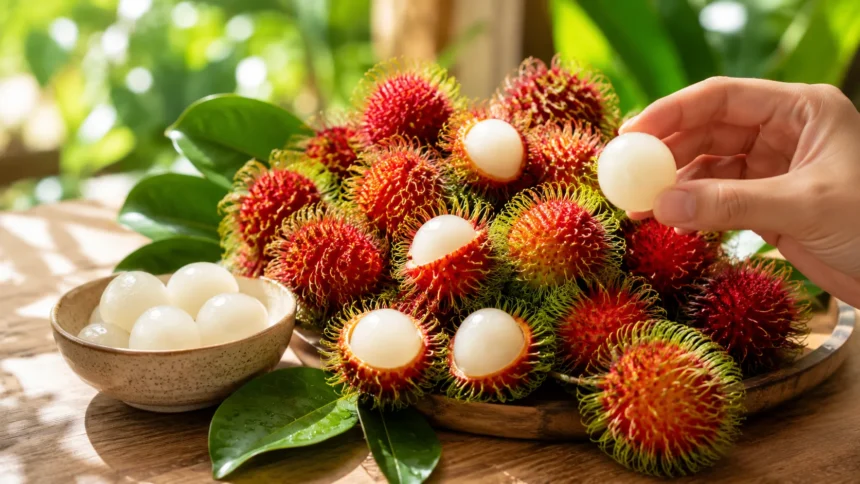
Rambutan may look unusual, but beneath its soft, hairy shell is a juicy fruit with a pleasantly sweet flavor. This tropical fruit is closely related to lychee and longan, although it has its own distinctive taste and texture. Rambutan is naturally refreshing and provides vitamin C, copper, carbohydrates, and beneficial plant compounds. Learning about rambutan benefits, nutrition and how to eat it can help you enjoy the fruit confidently while maintaining a balanced diet.
The fruit grows on the Nephelium lappaceum tree, which thrives in warm, humid climates. It is native to Southeast Asia but is now cultivated in several tropical regions around the world. Depending on the variety and ripeness, the outer skin may be red, yellow, orange, or a combination of these colors. Its flexible, hair-like spines make rambutan easy to recognize in fruit markets and grocery stores.
Inside the colorful shell is translucent or pale-white flesh surrounding a single seed. The flesh is soft, juicy, and slightly firm, with a flavor that can be described as sweet, floral, and mildly acidic. Some varieties separate easily from the seed, while others cling more tightly. Only the fleshy portion is normally eaten because the peel and raw seed are not considered suitable for regular consumption.
Rambutan can be eaten alone or added to fruit salads, smoothies, desserts, yogurt, and chilled drinks. Fresh fruit generally provides the best balance of flavor, texture, and nutrition. Canned rambutan is convenient, but products packed in heavy syrup may contain considerably more added sugar. Checking the ingredient list can help you select an option that matches your nutritional needs.
Although rambutan is nutritious, it should not be treated as a cure for a health condition. Its nutrients can support normal body functions when it is included in a varied eating pattern. The strongest benefits come from combining fruit with vegetables, whole grains, protein-rich foods, and healthy fats. Understanding what rambutan can and cannot do makes it easier to enjoy without falling for exaggerated wellness claims.
What Is Rambutan and What Does It Taste Like?
Rambutan is a small tropical fruit that usually grows in clusters on evergreen trees. Its name is derived from the Malay word for hair, referring to the soft projections covering its skin. A ripe fruit is commonly about the size of a golf ball, although size varies among cultivars. Despite its spiky appearance, the outer shell is generally flexible and can be opened by hand.
The edible flesh has a delicate flavor often compared with grapes and lychees. Rambutan is usually sweet when fully ripe, but some varieties have a noticeable tart finish. Its high water content gives it a refreshing quality that is especially enjoyable in warm weather. The texture is smooth and juicy, with enough firmness to produce a satisfying bite.
Rambutan and lychee belong to the same botanical family, but they are not identical fruits. Lychee has rough, bumpy skin, while rambutan has longer, hair-like projections. Rambutan flesh can be slightly creamier and less floral than lychee, depending on the variety. Both contain one central seed and are commonly enjoyed fresh or used in sweet recipes.
The fruit is widely cultivated in countries including Indonesia, Malaysia, Thailand, Vietnam, and the Philippines. It is also grown in suitable climates in Central America, the Caribbean, Africa, Australia, and Hawaii. Availability in other regions often depends on import seasons and local demand. Fresh rambutan may therefore appear only periodically in supermarkets, international grocery stores, and Asian food markets.
Ripeness has a major effect on rambutan’s taste and texture. An underripe fruit may taste sour and have flesh that is difficult to separate from the seed. An overripe fruit may become watery, fermented, or unusually soft. Choosing fruits with bright skin, flexible hairs, and no leaking liquid generally provides a better eating experience.
Rambutan Nutrition: Calories, Vitamins and Minerals
Fresh rambutan consists largely of water and carbohydrates, which makes it hydrating and naturally sweet. A 100-gram serving generally supplies roughly 70 to 85 calories, although the exact amount varies by variety and ripeness. Most calories come from naturally occurring sugars and other carbohydrates. The fruit contains only small amounts of protein and fat.
Vitamin C is one of the most recognizable nutrients found in rambutan. This water-soluble vitamin supports collagen production, normal immune function, wound healing, and antioxidant protection. The precise amount can vary because storage, maturity, transportation, and processing affect vitamin levels. Fresh, properly stored fruit will usually offer more nutritional value than heavily processed products.
Rambutan also supplies copper, a trace mineral required in relatively small quantities. Copper contributes to energy production, connective-tissue formation, nervous-system function, and normal iron metabolism. The fruit may also provide smaller amounts of manganese, potassium, magnesium, and certain B vitamins. However, rambutan should complement rather than replace other nutrient-dense foods.
The flesh contains dietary fiber, although it is not among the most fiber-rich fruits. Fiber supports normal bowel movements, feeds beneficial intestinal bacteria, and may improve satisfaction after eating. A serving of rambutan can contribute to daily fiber intake when combined with vegetables, beans, whole grains, nuts, and other fruits. Eating a variety of plant foods remains the most practical way to obtain enough fiber.
Canned rambutan can have a different nutritional profile from fresh fruit. When it is packed in sweetened syrup, the total sugar and calorie content can rise considerably. Draining the syrup may reduce some added sugar, but it will not remove all of it. Fruit packed in water or its own juice is usually a more suitable everyday choice.
Potential Rambutan Benefits for Everyday Health
One of the most practical rambutan benefits is its contribution to vitamin C intake. Vitamin C helps protect cells from oxidative stress and supports several immune processes. Eating rambutan cannot prevent every infection, but it can contribute to a nutrient-rich diet that supports normal immune function. Sleep, physical activity, vaccination, hygiene, and overall diet remain equally important.
Vitamin C is also necessary for the production of collagen, a structural protein found in skin, blood vessels, cartilage, and connective tissue. Adequate vitamin C intake helps the body maintain these tissues and repair wounds normally. Rambutan can make a modest contribution alongside citrus fruits, berries, peppers, tomatoes, and leafy vegetables. It should not be marketed as a replacement for medical skin treatments.
Another possible benefit comes from rambutan’s antioxidant plant compounds. Antioxidants help the body manage unstable molecules that can contribute to cellular damage when present in excess. Laboratory research has identified potentially useful compounds in different parts of the fruit. However, evidence from human studies is limited, so dramatic disease-prevention claims are not currently justified.
The combination of water and carbohydrates makes rambutan a refreshing source of quick energy. It may work well as part of a snack before light activity or alongside protein after exercise. Pairing it with unsweetened yogurt, nuts, or seeds can produce a more balanced and satisfying snack. The fruit alone does not provide enough protein to serve as a complete recovery meal.
Rambutan’s vitamin C may also help the body absorb non-heme iron found in plant foods. Eating the fruit alongside beans, lentils, spinach, or fortified grains could support iron absorption from the meal. Rambutan itself is not a significant treatment for iron deficiency or anemia. Anyone experiencing persistent fatigue, weakness, dizziness, or shortness of breath should seek appropriate medical evaluation.
Can Rambutan Support Digestion, Weight and Blood Sugar?
Rambutan contributes water and a modest amount of fiber, both of which support normal digestion. Water helps keep stool softer, while fiber adds bulk and assists movement through the digestive tract. The fruit may therefore fit into a constipation-prevention diet, but one serving is unlikely to correct an ongoing problem. Regular movement, adequate fluid intake, and a varied high-fiber diet remain essential.
Some sources make strong claims that rambutan can eliminate parasites or dramatically improve gut health. These claims often come from traditional uses or laboratory research involving the peel, seed, or plant extracts. Such findings do not prove that eating the flesh will produce the same effect in people. Rambutan should not replace tested medication or professional care for a digestive infection.
Rambutan may fit into a weight-management plan because fresh fruit provides sweetness, water, and some fiber without large amounts of fat. It can be a more nutritious alternative to sweets, pastries, or sugar-sweetened desserts. Nevertheless, weight change depends on total energy intake, activity, sleep, health conditions, and long-term habits. No individual fruit directly burns fat or guarantees weight loss.
The fruit contains natural sugar, so portion size may matter for people managing diabetes or insulin resistance. Eating a moderate amount with protein, fat, or additional fiber may help create a more balanced meal or snack. Fresh rambutan is generally preferable to fruit canned in heavy syrup. Individual blood glucose responses vary, making personalized guidance important when blood sugar is difficult to control.
Removing fruit entirely is not usually necessary simply because it contains sugar. Whole fruit provides water, micronutrients, and plant compounds that sugary drinks and candies generally lack. The important distinction is between naturally occurring sugar in intact fruit and large amounts of added sugar in processed products. People with medical dietary restrictions should follow advice from their doctor or registered dietitian.
How to Eat Rambutan Safely
Begin by washing the outside of the fruit under cool running water. Although the shell is discarded, washing helps prevent dirt and microorganisms from being transferred to the flesh while opening it. Drying the fruit can also make it easier to grip. Avoid eating rambutan that is leaking, moldy, fermented-smelling, or severely damaged.
Hold the fruit firmly and make a shallow cut around the middle of the skin with a clean knife. Do not cut deeply because the blade may pass through the flesh and strike the seed. You can also press a thumbnail into the natural seam if the fruit is fully ripe. Twist or pull the two sides apart to expose the edible interior.
Remove the pale flesh from the shell and place it in your mouth carefully. Bite gently around the central seed rather than biting directly through it. Some rambutan varieties release their seeds easily, while others have flesh that clings to the seed’s thin outer layer. Spit out or discard the seed after removing as much flesh as possible.
The colorful peel should not be eaten because it is tough, bitter, and not established as a safe everyday food. The raw seed should also be discarded rather than chewed or swallowed. Rambutan seeds contain natural compounds that may be harmful when eaten raw, particularly in uncertain quantities. Traditional methods of roasting seeds do not provide enough evidence to recommend preparing them at home.
Young children should receive rambutan only after an adult has removed the shell and seed. The whole fruit, slippery flesh, and large seed can present choking risks. Cut the flesh into age-appropriate pieces and supervise the child while eating. Anyone with swallowing difficulties should follow personalized advice regarding food texture and preparation.
How to Choose, Store and Use Rambutan
Choose rambutan with bright, relatively even coloring and plump-looking skin. The soft hairs should still have some flexibility rather than appearing completely dry and brittle. A few dark tips do not necessarily mean the fruit is spoiled, especially after transportation. However, extensive blackening, deep cracks, leaking juice, or a fermented odor suggests declining quality.
Color alone does not always confirm ripeness because different rambutan varieties mature into different shades. Some remain yellow or orange, while others become deep red. The fruit should feel firm but not rock-hard when pressed very gently. If possible, ask the seller when the shipment arrived because rambutan has a relatively short fresh-storage life.
Fresh rambutan can be kept at room temperature briefly if it will be eaten soon. For longer storage, place the unwashed fruit in a breathable or perforated bag in the refrigerator. Excess moisture can encourage spoilage, so wash the fruit immediately before eating rather than before storing it. For the best flavor and texture, consume it within several days.
Peeled rambutan can add natural sweetness to breakfast bowls, oatmeal, yogurt, and fruit salads. It pairs well with mango, pineapple, coconut, lime, mint, and other tropical ingredients. The flesh can also be blended into smoothies, frozen into fruit pops, or used as a topping for chia pudding. Always remove the seed before blending or serving.
Rambutan also works in savory dishes when used thoughtfully. Its sweetness can balance chili, lime, herbs, cucumber, and mildly salty ingredients in a fresh salsa or salad. It can be added to chilled seafood dishes or paired with grilled foods shortly before serving. Minimal cooking helps protect its delicate texture and fresh, floral flavor.
Rambutan Risks, Side Effects and Precautions
Most healthy adults can enjoy fresh rambutan in reasonable portions without difficulty. Eating a large amount at once, however, may cause bloating, gas, loose stools, or stomach discomfort in sensitive individuals. These effects can result from fruit sugar, fiber, or simply consuming too much food. Starting with a small portion is sensible if rambutan is unfamiliar to you.
Rambutan allergy appears uncommon, but an allergic reaction remains possible with any food. Warning signs can include itching, hives, lip or facial swelling, vomiting, wheezing, or difficulty breathing. Stop eating the fruit if symptoms develop. Breathing problems, throat swelling, faintness, or a rapidly worsening reaction require urgent medical assistance.
People with diabetes do not automatically need to avoid rambutan, but they should consider portion size and preparation. Canned versions in heavy syrup may contain much more sugar than fresh fruit. Combining fresh rambutan with plain yogurt or nuts may make the snack more filling. Blood glucose monitoring can help individuals understand their own response.
The peel and seed are sometimes promoted online as concentrated sources of antioxidants. Much of the supporting evidence comes from laboratory or animal studies rather than established human use. Concentrated extracts can behave differently from the edible flesh and may introduce safety concerns. Avoid homemade peel, seed, or leaf remedies unless a qualified healthcare professional confirms they are appropriate.
Food safety is another important consideration because rambutan can deteriorate quickly. Discard fruit with visible mold, an alcoholic smell, leaking liquid, or unusually slimy flesh. Refrigeration slows spoilage but does not make damaged fruit safe again. Pregnant people, older adults, young children, and those with weakened immune systems should be especially careful with spoiled produce.
Is Rambutan Worth Adding to Your Diet?
Rambutan is worth trying if you enjoy sweet, juicy fruit and want more variety in your diet. It provides vitamin C, copper, water, carbohydrates, and a modest amount of fiber. Its unusual appearance can also make healthy meals and snacks more interesting. Fresh rambutan is generally the simplest option because it does not contain added syrup.
The fruit’s nutritional benefits are valuable but should be kept in perspective. Rambutan is not a superfood that can detoxify the body, cure disease, or replace medical treatment. Its real strength is that it offers useful nutrients in an enjoyable form. Consistent dietary variety matters more than relying heavily on one fashionable ingredient.
How often you eat rambutan can depend on availability, cost, personal preference, and health needs. It can be enjoyed occasionally during its season or included more regularly where it is locally available. A moderate serving alongside other foods can help prevent accidental overconsumption. Rotating different fruits provides a wider selection of nutrients and plant compounds.
Freshness and preparation strongly influence the overall experience. Choose plump fruit, refrigerate it when necessary, wash the shell, and remove both the peel and seed. Select unsweetened canned products when fresh rambutan is unavailable. These simple steps allow you to enjoy the flavor while reducing unnecessary sugar and food-safety concerns.
Ultimately, understanding rambutan benefits, nutrition and how to eat it makes this tropical fruit far less intimidating. Beneath its dramatic exterior is a mild, refreshing food that fits easily into snacks, breakfasts, salads, and desserts. Enjoy it as one part of a varied eating pattern rather than expecting miraculous results. That practical approach offers the best balance of pleasure, nutrition, and safety.
Frequently Asked Questions About Rambutan
What does rambutan taste like?
Rambutan tastes sweet, juicy, and mildly floral, with a gentle acidic finish. Its flavor is often compared with grapes and lychees, although the exact sweetness depends on the variety and ripeness.
How many rambutans can you eat in a day?
There is no universal daily limit, but a modest serving of several fruits is reasonable for most healthy adults. People managing blood sugar or digestive symptoms may need a smaller, personalized portion.
Can you eat rambutan seeds?
Raw rambutan seeds should not be eaten because they contain natural compounds that may be harmful. Remove and discard the seed before serving the flesh, especially when preparing rambutan for children.
Is rambutan good for weight loss?
Rambutan can fit into a weight-loss diet because it provides water, sweetness, and some fiber. It does not burn fat directly, and successful weight management still depends on overall eating and lifestyle habits.
Is rambutan the same as lychee?
No, but rambutan and lychee are closely related tropical fruits. Rambutan has hairy skin and mildly creamy flesh, while lychee has rough skin and usually delivers a stronger floral flavor.