

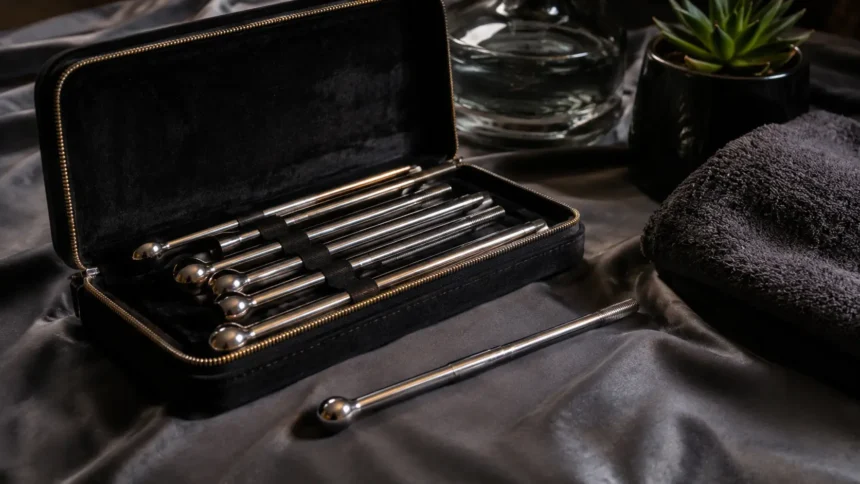
Sounding Rods: What They Are, Risks & Safety Concerns
Sounding rods are devices inserted into the urethra, the tube that carries urine from the bladder out of the body. The practice is commonly called urethral sounding, and it may occur for medical, exploratory, or sexual reasons depending on the context. Because the urethra is delicate and vulnerable to injury, inserting any object into it carries meaningful health risks. These risks include irritation, bleeding, urinary tract infection, urethral tears, scar tissue, and potentially serious complications if an object becomes stuck. People considering urethral sounding should understand that the activity is not medically risk-free simply because specialized tools exist. Knowing the anatomy, warning signs, and safer-health principles can reduce preventable harm.
Medical professionals sometimes use specialized urethral instruments for diagnostic or treatment purposes, but clinical procedures are performed under controlled conditions with appropriate equipment and training. Recreational sounding is different because it takes place outside a medical environment and may involve variations in technique, equipment quality, hygiene, and individual anatomy. These differences can significantly change the likelihood of infection or tissue injury. Even minor urethral damage can cause pain during urination, bleeding, swelling, or urinary symptoms that become worse over time. More substantial trauma can occasionally lead to strictures that narrow the urethra and interfere with urine flow. For these reasons, understanding the potential complications is essential before treating sounding as a low-risk activity.
The purpose of this guide is not to encourage urethral insertion but to explain what sounding rods are and why healthcare professionals take urethral injuries seriously. It also describes common warning signs that should prompt medical evaluation rather than continued self-treatment. People may hesitate to seek care because they feel embarrassed about how an injury occurred, but clinicians regularly evaluate intimate and urinary problems without needing judgment to provide treatment. Being honest about what was inserted, when symptoms began, and whether an object remains inside can help medical teams make safer decisions. Severe pain, significant bleeding, fever, inability to urinate, or a retained object can require urgent treatment. Understanding these concerns can help people respond appropriately if something goes wrong.
What Are Sounding Rods?
Sounding rods are smooth, narrow instruments designed to enter the urethral opening and extend varying distances into the urethral canal. The term “sound” originally comes from medical instrumentation used historically to explore narrow passages, detect abnormalities, or help evaluate urinary tract problems. Modern medical instruments used in urology are selected for specific clinical purposes and are handled by trained professionals using sterile or carefully controlled techniques. Recreational versions may be marketed in different sizes, shapes, and materials, but their availability does not make urethral insertion inherently safe. The urethra is lined with sensitive tissue that can be damaged by pressure, friction, contamination, or incorrect sizing. Any object entering this area can potentially create microscopic or visible trauma.
The urethra differs significantly between people depending on anatomy, and those differences affect both the experience and risks of insertion. In people with a penis, the urethra passes through the penis and prostate area before reaching the bladder, creating a relatively long pathway with natural curves and narrower regions. In people with a vulva, the urethra is much shorter and opens above the vaginal opening, which means bacteria can potentially reach the bladder more easily. Neither anatomy makes recreational sounding medically safe. The shape, diameter, sensitivity, and previous health history of the urethra can influence how easily irritation or injury occurs. Previous urinary procedures, infections, strictures, surgeries, or pelvic conditions may increase the complexity of urethral instrumentation.
Medical urethral instruments should not be confused with ordinary household objects or improvised items. Objects not designed for medical or body-contact use may have rough surfaces, seams, sharp edges, coatings, porous materials, or contaminants that increase injury and infection risk. Flexible objects can also fold, migrate, or become difficult to retrieve once inserted. Some materials may break or fragment under pressure, potentially leaving pieces inside the urinary tract. Even a smooth-looking object can cause significant injury if its diameter, shape, or movement creates excessive pressure against urethral tissue. The fact that an item physically fits into the urethral opening does not mean it is appropriate or safe for insertion. Medical evaluation may be necessary if any object becomes lodged.
The word “sounding” may also appear in medical discussions that have little to do with recreational urethral insertion. Urologists may use carefully selected instruments during procedures involving urethral dilation, catheterization, cystoscopy, or investigation of urinary obstruction. These procedures are performed for a specific clinical reason and may involve sterile equipment, lubrication, pain control, imaging, or direct visualization. Healthcare professionals also understand where resistance might indicate abnormal anatomy or where continuing could cause injury. Recreational sounding lacks many of these safeguards, even when a person uses commercially manufactured equipment. This distinction matters because copying the appearance of a medical procedure does not reproduce the safety controls of professional care.
Another important distinction involves the purpose of urethral dilation in people who have medically diagnosed strictures. Some patients may be instructed by a urologist to perform intermittent self-dilation using specific equipment, schedules, and techniques as part of a treatment plan. This is not the same as recreational sounding because the procedure is based on a diagnosed condition and individualized medical guidance. Using medical dilation information as a general guide for recreational insertion can be misleading and potentially harmful. People with urinary symptoms should not attempt to diagnose or treat presumed urethral narrowing on their own. Weak urine flow, spraying, straining, incomplete emptying, or recurrent infections may require professional assessment to determine the underlying cause.
Why Do People Use Sounding Rods?
People may encounter sounding rods through different contexts, including medical care, online discussions, sexual health information, or curiosity about body modification and sensation. Recreational urethral sounding is generally associated with exploration of unusual physical sensations rather than treatment of a medical condition. Some individuals may first learn about the practice through adult communities or specialty retailers without receiving much information about urinary anatomy or complications. This can create an inaccurate impression that specialized equipment eliminates most of the risk. In reality, the urethra remains susceptible to trauma regardless of the motivation for insertion. Understanding why the practice appeals to some people does not change the need to approach the health risks seriously.
Medical use of urethral instruments has a very different purpose from recreational use. Healthcare professionals may introduce specialized devices to examine the urinary tract, drain urine, assess obstruction, perform surgery, or treat certain urethral conditions. The instrument selected depends on the person’s anatomy and the medical goal of the procedure. Sterile technique, clinical training, and immediate access to treatment reduce some risks, although even medically necessary urinary procedures can occasionally cause complications. Recreational users do not have the same ability to identify internal injuries or abnormal resistance. This difference is one reason medical sounding procedures should not be treated as evidence that home urethral insertion is harmless.
Curiosity is another reason some people experiment with urethral insertion. Human beings explore unfamiliar sensations in many ways, and intimate practices can vary widely between individuals and communities. However, curiosity sometimes leads people to underestimate anatomical vulnerability, particularly when online content focuses on technique or novelty rather than complications. The urethra is not simply an empty tube capable of tolerating unlimited stretching or friction. Its lining contains delicate tissues and is closely connected to the urinary system, where bacterial contamination can cause infection. A person may experience little discomfort initially while still developing small abrasions that become painful later. Delayed symptoms can therefore create false reassurance immediately after an episode of sounding.
Some people may also assume that gradually increasing the size of inserted objects makes the practice reliably safer. While avoiding force may reduce certain types of immediate trauma, repeatedly stretching or irritating urethral tissue can still contribute to inflammation and scar formation. Scar tissue can narrow the urethra, resulting in a condition known as urethral stricture. Strictures may develop gradually and may not become obvious until urine flow becomes weaker or urinary infections begin recurring. Because symptoms can appear weeks or months after earlier trauma, individuals may not initially connect them with sounding. Any persistent change in urinary flow after urethral instrumentation deserves professional evaluation rather than repeated attempts to reopen or stretch the urethra.
Psychological factors can also influence risk decisions around intimate practices. People may continue despite discomfort because they believe pain is expected, want to reach a particular goal, or feel reluctant to stop after beginning. Alcohol or recreational drugs can further reduce awareness of pain and impair judgment about pressure, cleanliness, or injury. Partner involvement may introduce additional concerns if communication and consent are unclear or if someone feels pressured to continue. A basic health principle is that worsening pain, unexpected resistance, or bleeding should never be treated as something that must simply be pushed through. Pain is an important warning signal when delicate urinary tissue is being manipulated. Ignoring it can transform mild irritation into a more significant injury.
How Urethral Anatomy Affects the Risks
The urethra performs an essential function by carrying urine from the bladder to the outside of the body, and its tissues are designed for urine flow rather than repeated mechanical insertion. The inner lining is relatively delicate and can become irritated by friction or pressure. Small injuries may create burning during urination because urine passes directly across inflamed tissue. More substantial injuries can cause visible bleeding, swelling, or difficulty urinating. Because the urinary tract extends upward toward the bladder and kidneys, bacteria introduced at the urethral opening can potentially spread into deeper structures. This anatomical connection explains why cleanliness is especially important whenever the urinary opening is manipulated. Infection risk is not limited to the visible portion of the urethra.
In penile anatomy, the urethra follows a curved path that includes several distinct sections rather than forming a completely straight tube. Certain regions are narrower or more vulnerable to pressure, meaning resistance may occur even when an instrument entered the opening easily. Attempting to overcome resistance by increasing force can tear tissue or create a false passage beside the normal urethral channel. Such an injury can result in bleeding, significant pain, urinary retention, or later scar formation. A false passage may require medical management because continued instrumentation can worsen the damage. This is one reason healthcare professionals are trained to recognize anatomical resistance during catheter or instrument placement. Home users cannot reliably see what is happening internally.
In vulvar anatomy, the urethral opening is relatively close to the vaginal opening and anus, areas where bacteria naturally live. The urethra itself is also much shorter than in penile anatomy, which helps explain why urinary tract infections are generally more common in people with this anatomy. Introducing an object can potentially transfer bacteria toward the bladder, especially when equipment or hands are contaminated. Symptoms such as burning urination, urinary urgency, increased frequency, cloudy urine, or lower abdominal discomfort can appear after bacterial infection develops. Fever, chills, nausea, or pain near the back and sides may suggest that infection has spread higher into the urinary system. These symptoms warrant timely medical evaluation.
Natural variation also matters because not every urethra has the same diameter, flexibility, shape, or sensitivity. Previous surgery, congenital differences, inflammation, infection, childbirth-related changes, prostate conditions, and prior catheterization can all influence urinary anatomy. Someone with an existing narrowing may experience greater resistance and may be more vulnerable to trauma from insertion. Certain medications or medical conditions can also influence bleeding risk, healing, or infection susceptibility. For example, people taking anticoagulant medications may experience more significant bleeding after tissue injury. Individuals with impaired immunity or poorly controlled diabetes may face additional infection concerns. Personal medical history therefore changes the risk profile substantially and cannot be captured by generic online advice.
The urethra also contains tissues involved in continence and urinary control, which makes deeper injury particularly concerning. Trauma near the sphincter region or prostate can produce symptoms that are more complicated than temporary surface irritation. Swelling can restrict urinary flow, while inflammation may create urgency, frequency, or discomfort lasting beyond the initial event. Repeated injury can promote fibrosis, producing less flexible tissue and potentially narrowing the urethral channel. Once a clinically significant stricture forms, treatment may require specialist evaluation and procedures rather than simple home management. Preserving normal urinary function should therefore take priority over continuing any activity that produces repeated irritation. Persistent urinary changes after sounding deserve assessment by a healthcare professional.
Main Risks and Complications of Urethral Sounding
Urethral trauma is one of the most immediate risks associated with sounding rods. Friction, excessive pressure, incorrect sizing, rough surfaces, or force against resistance can injure the urethral lining. Minor trauma may cause temporary burning or a small amount of spotting, while deeper tears can lead to substantial bleeding and swelling. Damage may not always be obvious because much of the urethra cannot be seen externally. Continuing after an injury has begun can extend a small abrasion into a more significant tear. Severe pain, ongoing bleeding, inability to pass urine, or increasing swelling requires professional assessment. Attempting further insertion to check whether the urethra remains open can worsen existing damage.
Urinary tract infection is another major concern because sounding can introduce bacteria directly into the urethra. Bacteria from hands, skin, equipment, surrounding genital areas, or contaminated lubricants may travel upward toward the bladder. Early symptoms can include burning with urination, frequent urination, urgency, cloudy urine, pelvic discomfort, or blood in the urine. Some infections remain limited to the bladder, while others can progress toward the kidneys if they are not treated appropriately. Kidney infection may cause fever, chills, nausea, vomiting, or pain in the back or side. Anyone developing systemic symptoms after urethral instrumentation should seek medical care promptly rather than relying only on increased water intake.
Urethral stricture is a potentially longer-term complication caused by scar tissue narrowing part of the urethral channel. Trauma and inflammation can trigger healing that replaces flexible tissue with denser scar tissue. Symptoms may appear gradually and can include weaker urine flow, spraying, straining, prolonged urination, incomplete emptying, or recurrent urinary tract infections. Severe narrowing can make it difficult or impossible to empty the bladder properly. Repeatedly inserting larger objects in an attempt to correct weak flow can cause additional trauma and make the underlying problem worse. Urologists have several ways to investigate suspected strictures, including specialized imaging or endoscopic examination. Treatment depends on the location, length, severity, and recurrence of the narrowing.
Retained or lost objects represent another important emergency risk. An object can migrate deeper than expected, become lodged behind a narrowing, bend, break, or become difficult to grip after insertion. Trying to retrieve a stuck object with improvised tools can cause additional tearing, push the object farther inward, or introduce more bacteria. Medical teams have specialized instruments and imaging options that allow them to locate and remove foreign bodies more safely. In some situations, removal may require anesthesia or surgery, depending on the object’s size, shape, position, and associated injury. Embarrassment should never delay treatment when an object cannot be removed easily. Providing clinicians with accurate information about the item’s material and dimensions can help guide removal.
Less common but potentially serious complications include deep tissue injury, significant bleeding, severe infection, bladder injury, or systemic infection. These problems are more likely when substantial force, contaminated equipment, sharp objects, or delayed medical treatment are involved. Fever and rapidly worsening illness after urethral trauma can indicate an infection that requires urgent care. Complete inability to urinate can result from swelling, obstruction, or injury and should also be treated as an urgent problem. Severe abdominal or pelvic pain after insertion warrants evaluation even when no external damage is visible. Internal injuries cannot always be judged by appearance alone. Prompt medical care can reduce the chance that a manageable complication progresses into a more difficult urinary problem.
What Makes Sounding More Dangerous?
Using improvised objects greatly increases the unpredictability of urethral sounding. Household items may look smooth but can have microscopic roughness, seams, coatings, sharp corners, or materials that are difficult to disinfect properly. They may also bend or snap when exposed to pressure inside the body. Small removable components can detach and become retained in the urethra or bladder. Objects with irregular shapes can create concentrated pressure against the urethral wall, increasing the likelihood of tearing. Because such items were never designed for internal medical contact, their physical and chemical properties may be unsuitable for urethral tissue. Avoiding improvised objects is therefore a fundamental harm-reduction principle.
Poor hygiene significantly increases infection risk because the urinary tract can be vulnerable to organisms introduced from surrounding skin or contaminated equipment. Simply rinsing an object does not guarantee that microorganisms have been removed. Sharing urethral instruments between people introduces additional concerns related to bacteria and potentially transmissible infections. Reusing equipment without appropriate cleaning can also allow organisms to remain in small surface irregularities. Products made from porous or damaged materials may be especially difficult to clean reliably. Even when contamination is minimized, insertion itself can create microscopic injuries that give bacteria easier access to tissue. This combination of mechanical trauma and bacterial exposure explains why urinary symptoms after sounding should be monitored carefully.
Force is another major risk factor, particularly when an object encounters resistance. Resistance can reflect normal urethral anatomy, muscle tension, narrowing, scar tissue, the angle of the urethra, or another obstruction. Increasing pressure does not reveal which explanation is responsible and may simply convert resistance into injury. A sudden reduction in resistance after force is applied can sometimes indicate that tissue has been damaged rather than that the instrument has safely passed through. Pain, bleeding, or an unexpected change in sensation should therefore be treated as a reason to stop. Attempting to “work through” resistance is especially risky because internal tears may not be visible. Medical assessment is safer when unexplained obstruction or recurrent difficulty occurs.
Large or rapidly increasing instrument size can place excessive stretching force on the urethral opening and internal tissues. Tissue elasticity varies considerably between individuals, and there is no universal diameter that can be considered safe for recreational sounding. Repeated stretching may create inflammation even when no obvious tear occurs at the time. Swollen or irritated tissue is also more susceptible to injury during subsequent insertion before healing is complete. Performing the activity again while burning, tenderness, or urinary symptoms remain present can therefore compound damage. The absence of heavy bleeding does not prove that the urethra has fully recovered. Persistent irritation should be allowed to resolve and medically assessed if symptoms continue or worsen.
Reduced sensation or impaired judgment can make all of these hazards more difficult to recognize. Alcohol, sedatives, recreational drugs, or numbing products can decrease awareness of pain and make it easier to apply damaging pressure without noticing. Local anesthetics may be particularly misleading because they can suppress a warning sensation without preventing tissue injury. Partner-assisted insertion also carries risk if the person controlling the object cannot accurately feel what the receiving person feels. Clear communication and immediate stopping when pain or resistance develops are therefore essential harm-reduction principles. Any situation that decreases control, awareness, or the ability to respond quickly makes urethral trauma more likely. Intimate experimentation should never depend on ignoring bodily warning signals.
Harm Reduction and Safer-Health Considerations
The safest way to avoid complications from recreational urethral sounding is not to insert objects into the urethra. People who nevertheless choose to engage in the practice should understand that harm reduction can lower some risks but cannot eliminate them. A key principle is to avoid improvised household objects, sharp edges, damaged equipment, porous materials, or anything capable of breaking internally. Hands and external genital areas should be clean before any contact with the urethral opening. Equipment intended for body contact should be maintained according to appropriate hygiene standards. Any item that appears scratched, corroded, cracked, or otherwise damaged should not be placed inside delicate urinary tissue.
Lubrication is important from a medical harm-reduction perspective because dry friction can increase urethral irritation and tearing. Products used around the urethra should be appropriate for sensitive body tissue and should not contain ingredients that create burning or irritation. Saliva is not a substitute for a suitable lubricant because the mouth contains bacteria that can be transferred to the urinary tract. Oil-based or fragranced products may also irritate some individuals and can be difficult to remove from certain equipment. Excessive friction should never be considered an expected part of the activity. If discomfort increases despite lubrication, continuing can cause additional tissue injury. Burning that persists afterward should be monitored carefully for signs of trauma or infection.
People should also avoid treating pain as a goal or necessary part of sounding. Mild pressure and serious tissue damage can become difficult to distinguish once significant discomfort develops. Sharp pain, sudden resistance, bleeding, swelling, or a sensation that something has moved unexpectedly are reasons to stop immediately. Continuing after these warning signs increases the likelihood of deeper injury. Attempts to force an instrument farther inward can create false passages or worsen an existing tear. If an object becomes difficult to remove, escalating force is similarly dangerous. Medical removal is safer than repeated attempts that push, twist, or pull against damaged tissue.
After any urethral manipulation, attention should shift toward urinary symptoms and overall well-being. Temporary sensitivity may occur, but increasing pain, persistent burning, frequent urination, cloudy urine, worsening blood in the urine, or difficulty passing urine should not be ignored. Fever, chills, nausea, vomiting, or back pain may indicate an infection extending beyond the lower urinary tract. Symptoms continuing into the following days can suggest more than brief surface irritation. Repeated episodes of urinary discomfort after sounding may indicate recurring infection or progressive tissue damage. A healthcare professional can perform urine testing or additional examination when appropriate. Early evaluation is generally easier than treating complications after they have become severe.
Anyone with a history of urethral stricture, recurrent urinary tract infection, pelvic surgery, significant urinary disease, bleeding disorders, or immune-system problems should be particularly cautious about urethral instrumentation. The same applies to people taking anticoagulant or other medications that can affect bleeding and healing. A urologist can explain how an individual’s medical history changes the risks of urethral injury. People undergoing medically prescribed urethral dilation should follow the exact instructions provided by their treating clinician rather than advice intended for recreational sounding. Medical guidance is individualized to anatomy and diagnosis. When unusual urinary symptoms appear, obtaining professional assessment is safer than attempting to diagnose or correct the problem through further insertion.
When to Seek Medical Help After Sounding
Minor irritation can sometimes settle on its own, but persistent or worsening symptoms after urethral sounding deserve medical attention. Burning during urination that continues, increasing pelvic discomfort, persistent blood in the urine, or unusual urinary urgency may indicate tissue injury or infection. A healthcare professional may perform a urine test, physical examination, or other assessment depending on the symptoms. Providing an accurate description of what happened helps clinicians determine which complications need to be considered. There is no medical benefit in hiding the fact that an object was inserted into the urethra. Clinicians need practical information rather than judgment to provide appropriate care. Early treatment can sometimes prevent a minor problem from becoming more difficult.
Difficulty urinating is especially important because urinary obstruction can become urgent. A person who feels the need to urinate but cannot pass urine may have significant swelling, obstruction, trauma, or another problem affecting the urethra. Severe bladder pressure can become increasingly painful as urine accumulates. Complete urinary retention should not be managed by attempting to insert another object to open the passage. Doing so could increase swelling or create additional urethral damage. Emergency or urgent medical evaluation may be necessary to restore urine drainage safely. Clinicians have appropriate methods for managing urinary retention while minimizing additional trauma. Any sudden major reduction in urine flow following sounding also deserves prompt assessment.
Significant bleeding is another warning sign that should not be dismissed. A tiny amount of blood may occur after minor surface irritation, but ongoing bleeding, clots, or visibly bloody urine may indicate deeper injury. Bleeding accompanied by severe pain, weakness, dizziness, or difficulty urinating increases the level of concern. People taking blood-thinning medications may experience more substantial bleeding from injuries that might otherwise appear minor. Attempting repeated insertion after bleeding begins can reopen damaged tissue and increase blood loss. Medical professionals can determine whether observation, imaging, catheter management, or other treatment is necessary. Heavy or persistent urinary bleeding should therefore be evaluated rather than simply monitored indefinitely at home.
A retained sounding rod or other foreign object requires professional help when it cannot be removed easily without force. Objects can migrate deeper into the urethra or bladder, and repeated retrieval attempts may push them farther inward. Tools such as pliers, tweezers, magnets, wires, or additional inserted objects can create significant tissue damage and should not be used for improvised extraction. Emergency clinicians or urologists can use imaging and specialized instruments to determine the object’s location and remove it appropriately. In some circumstances, minimally invasive retrieval may be possible, while more complicated cases can require surgery. Seeking care promptly generally provides more options than waiting until swelling or infection develops.
Fever, chills, severe pelvic pain, vomiting, confusion, or rapidly worsening illness after urethral sounding may suggest a serious infection or other complication. These symptoms require urgent medical assessment because urinary infections can occasionally spread to the kidneys or bloodstream. Severe one-sided back pain combined with fever and urinary symptoms also deserves prompt evaluation. Individuals should not rely on leftover antibiotics because the medication, dose, or duration may be inappropriate for the infection involved. Proper testing helps clinicians choose suitable treatment and identify complications. Feeling embarrassed about an intimate activity should never outweigh concern about potentially serious symptoms. Healthcare professionals can provide confidential medical care and focus on resolving the problem safely.
Long-Term Effects and Urethral Health
Repeated urethral sounding can create cumulative effects even when individual sessions do not produce obvious injuries. Small abrasions and episodes of inflammation may heal without difficulty, but repeated trauma can increase the chance of fibrosis and scar formation. Scar tissue is less flexible than healthy urethral tissue and may gradually narrow the urinary channel. This can lead to urethral stricture symptoms months after the original injuries occurred. Because the progression can be slow, someone may initially notice only a slightly weaker urinary stream. Over time, straining, prolonged urination, spraying, or incomplete bladder emptying can become more noticeable. Persistent changes in urinary function deserve evaluation by a urologist.
Repeated urinary tract infections can represent another long-term concern. Each episode of urethral manipulation can introduce bacteria, particularly when hygiene is inconsistent or small injuries are present. Recurrent infections may cause repeated burning, urgency, frequency, and pelvic discomfort, creating a cycle of symptoms that significantly affects daily life. Some people may mistakenly assume that urinary burning is simply a normal consequence of sounding and therefore delay testing. However, recurrent urinary symptoms should not automatically be accepted as unavoidable. Urine testing can help distinguish infection from irritation or other urinary problems. When infections keep returning, a clinician may investigate whether structural changes, incomplete bladder emptying, stones, or another factor is contributing.
Chronic urethral or pelvic pain can also develop after repeated irritation or injury. Persistent pain does not always correspond directly with visible tissue damage because nerves and muscles surrounding the urinary tract may become sensitized over time. Some individuals experience discomfort with urination, sitting, sexual activity, or pelvic muscle tension long after an initial injury has healed. Evaluating chronic pelvic pain often requires considering several possible causes rather than focusing only on the urethra. Urologists, pelvic health specialists, and other clinicians may be involved depending on the symptoms. Continuing an activity that repeatedly triggers pain can make determining the underlying problem more difficult. Giving symptoms proper medical attention is therefore important when discomfort becomes recurrent.
Mental and emotional well-being can also influence how people respond to complications from intimate practices. Shame may cause someone to hide symptoms, avoid medical care, or give clinicians incomplete information about the cause of an injury. This can delay diagnosis and sometimes lead to unnecessary tests because healthcare professionals do not know which complications to prioritize. Medical staff need accurate information about the type of object used, how far it may have entered, whether it broke, and when symptoms began. The purpose of sharing those details is to guide safe treatment. Confidentiality protections generally allow adults to discuss intimate health concerns privately with clinicians. Seeking help early is a practical health decision rather than an admission of wrongdoing.
Maintaining urinary health involves paying attention to changes rather than assuming the body will adapt indefinitely to repeated urethral instrumentation. Weakening urine flow, recurrent infections, persistent pain, bleeding, or difficulty emptying the bladder should all be taken seriously. People who have previously experienced complications may be at greater risk of further injury if they resume urethral insertion before obtaining medical advice. A urologist can investigate whether scar tissue or another structural problem has developed. Treatment options vary depending on the diagnosis and may involve observation, medication, endoscopic procedures, or reconstructive surgery in more severe cases. Protecting normal urinary function is ultimately more important than continuing any activity that repeatedly causes symptoms or injury.
Frequently Asked Questions
What are sounding rods used for?
Sounding rods are instruments designed to enter the urethra and may be used in certain controlled medical procedures or, separately, for recreational purposes. Recreational urethral sounding carries risks including infection, tissue injury, bleeding, retained objects, and urethral stricture.
Can sounding rods cause a urinary tract infection?
Yes, inserting an object into the urethra can introduce bacteria that may lead to a urinary tract infection. Burning urination, urinary urgency, increased frequency, cloudy urine, fever, or worsening pelvic discomfort after sounding should be medically evaluated when persistent or significant.
Can urethral sounding cause permanent damage?
Significant or repeated urethral trauma can sometimes lead to scar tissue and urethral strictures that affect urine flow. Serious tears, infections, or retained objects can also cause complications that require specialist treatment.
Is bleeding after sounding normal?
Even a small amount of bleeding suggests that some degree of urethral tissue irritation or injury may have occurred. Persistent bleeding, clots, severe pain, difficulty urinating, or significant blood in the urine should prompt medical evaluation.
When should I go to the emergency room after urethral sounding?
Seek urgent care for severe pain, heavy or persistent bleeding, inability to urinate, fever with worsening illness, uncontrolled vomiting, or an object that has become stuck inside the urethra or bladder. Do not attempt aggressive home removal of a retained object because this can worsen internal injuries.