

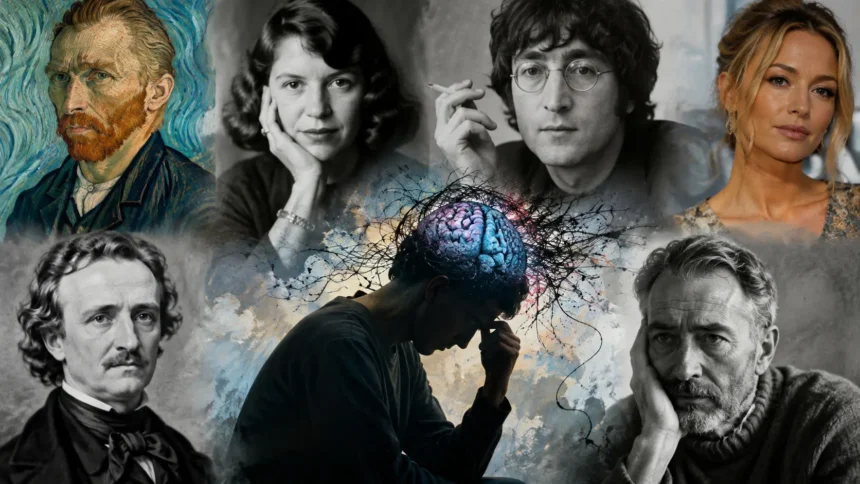
Famous People With Schizophrenia: Stories & Facts
Searching for famous people with schizophrenia often begins with curiosity, but the stories behind the names reveal something more meaningful than celebrity trivia. Schizophrenia is a complex mental health condition that can affect perception, thinking, motivation, emotions, communication, and everyday functioning in different ways. People living with the condition may experience hallucinations, delusions, disorganized thinking, social withdrawal, or difficulty maintaining routines, although symptoms vary considerably between individuals. Public stories can help challenge the assumption that schizophrenia automatically prevents someone from learning, creating, working, or building relationships. At the same time, achievement should never be used as a measure of whether someone is managing the condition “successfully.” Every person’s experience, treatment needs, support system, and path through illness can be different.
Conversations about celebrities with schizophrenia require particular care because mental health information is deeply personal. Some well-known individuals have publicly discussed their diagnosis, while others were diagnosed during their lifetime and had their experiences documented through biographies, interviews, family accounts, or medical histories. In other cases, internet articles casually label historical figures as having schizophrenia even though the evidence is uncertain or based on modern interpretations of behavior. Those claims should not be treated in the same way as a documented diagnosis. It is also important to distinguish schizophrenia from conditions such as bipolar disorder, schizoaffective disorder, severe depression, and substance-related psychosis. Similar symptoms can occur across different conditions, but that does not make the diagnoses interchangeable.
Another reason these stories matter is the stigma that still surrounds schizophrenia. Popular entertainment has often portrayed people with psychotic disorders as unpredictable, frightening, or disconnected from ordinary life, creating misconceptions that can persist long after someone encounters a more accurate explanation. In reality, schizophrenia exists across a wide range of human experiences, and many people receiving appropriate treatment live within their communities, maintain relationships, study, work, and pursue meaningful interests. Some need substantial daily support, while others function independently for long periods. Symptoms may improve, return, or change over time, especially when medication, therapy, stress, substance use, sleep, and social circumstances change. A famous person’s experience represents only one possible version of living with schizophrenia.
The public figures discussed below became known for mathematics, law, music, sports, writing, performance, and other areas rather than because of a psychiatric diagnosis alone. Their stories demonstrate that a diagnosis is one part of a person’s life rather than a complete description of identity. Some experienced serious periods of hospitalization and disability before reaching greater stability, while others continued working while managing persistent symptoms. Several also spoke openly about stigma, treatment, and the importance of support. Their experiences should not be romanticized, because schizophrenia can cause profound suffering and disruption. Instead, their stories offer a more realistic picture in which serious illness, treatment, personal strengths, setbacks, relationships, and achievement can exist at the same time.
This article explores several well-known people whose experiences with schizophrenia have been publicly documented, while avoiding unsupported internet speculation about people who were never reliably diagnosed. It also examines what these stories can teach us about schizophrenia symptoms, recovery, treatment, creativity, employment, and stigma. Readers should remember that noticing similar behaviors in themselves or someone else does not establish a diagnosis. Schizophrenia is assessed by qualified mental health professionals who consider symptoms, duration, functional changes, medical causes, substance use, and other psychiatric conditions. Anyone experiencing hallucinations, severe paranoia, significant confusion, or difficulty functioning should seek professional support rather than relying on comparisons with famous individuals. The goal is understanding, not self-diagnosis.
What Famous People With Schizophrenia Can Teach Us
One of the most valuable lessons from famous people with schizophrenia is that the condition does not produce one predictable life story. Two people can receive the same diagnosis yet experience dramatically different symptoms, challenges, and levels of functioning. One person may experience prominent auditory hallucinations, while another struggles primarily with suspicious beliefs, disorganized thinking, reduced motivation, or social withdrawal. Symptoms can also change over the course of a person’s life, especially during periods of stress or changes in treatment. Some individuals experience recurring episodes followed by relatively stable periods, whereas others have more persistent difficulties. This variability explains why generalizations based on one celebrity or historical figure can be misleading.
Public stories also challenge the outdated assumption that schizophrenia automatically means intellectual decline or lack of ability. The mathematician John Nash produced influential academic work despite experiencing severe psychiatric symptoms during parts of his adult life. Legal scholar Elyn Saks built a distinguished professional career while also describing experiences involving psychosis, hospitalization, and treatment. Musicians such as Tom Harrell continued creating and performing while managing a serious psychiatric disorder. These examples demonstrate that cognitive talent and schizophrenia can coexist, although symptoms can still interfere significantly with concentration, organization, motivation, and functioning. Achievement does not erase illness, and illness does not erase a person’s abilities.
Another important lesson is that recovery does not always mean that every symptom permanently disappears. In mental health care, recovery can include gaining greater stability, managing symptoms, maintaining relationships, working toward personal goals, developing coping strategies, and improving quality of life. Some people living with schizophrenia continue to experience occasional symptoms even while functioning effectively in important areas. Others may require repeated adjustments to medication, therapy, housing, employment, or social support. Public success stories sometimes oversimplify this process by presenting a dramatic transformation from illness to complete wellness. Real recovery is often less linear and may include setbacks, periods of improvement, and ongoing treatment.
Family, professional care, and community support also appear repeatedly in well-documented schizophrenia stories. Psychiatric medication can reduce psychotic symptoms for many people, while psychotherapy may help individuals understand experiences, manage stress, develop coping strategies, and improve everyday functioning. Stable housing, supportive relationships, meaningful activity, sleep, substance-use reduction, and access to ongoing medical care can also influence outcomes. No single intervention works identically for everyone, which is why individualized treatment is important. Some people need intensive services during periods of acute illness and less support during stable periods. Looking only at a famous person’s achievements can hide the network of treatment and assistance that may have helped make those achievements possible.
Perhaps most importantly, these stories encourage people-first language and a broader understanding of identity. Someone can be a mathematician, musician, athlete, professor, parent, friend, artist, or public speaker while also living with schizophrenia. Describing a person entirely through a diagnosis can unintentionally reduce a complex human life to a medical condition. This is particularly important when discussing celebrities with mental illness because sensational headlines often emphasize unusual behavior rather than context, treatment, or humanity. Respectful discussion acknowledges both the seriousness of schizophrenia and the individuality of those affected by it. Famous examples can reduce stigma when they are presented accurately, but they should never become stereotypes for millions of people with different experiences.
John Nash: Mathematics, Psychosis and Recovery
John Forbes Nash Jr. is probably one of the most widely recognized famous people associated with schizophrenia. The American mathematician became known for groundbreaking contributions to game theory, differential geometry, and other areas of mathematics before severe psychiatric symptoms disrupted his academic and personal life. His ideas in game theory later influenced economics, political science, evolutionary biology, computing, and numerous other fields. Nash eventually received the Nobel Memorial Prize in Economic Sciences in 1994 for work connected with non-cooperative games. His life became even more widely known through the biography and film titled A Beautiful Mind. However, the film simplified and altered important details of his actual experience with mental illness.
Nash began experiencing significant psychiatric difficulties during his early thirties, after he had already developed an international reputation as an exceptionally talented mathematician. His symptoms included elaborate delusional beliefs and periods in which his interpretation of reality became significantly altered. He received psychiatric treatment and spent time in hospitals during periods of severe illness. These experiences disrupted his professional career and placed substantial strain on his relationships and everyday functioning. His illness was not merely an unusual feature accompanying mathematical genius, as fictional portrayals can sometimes make it appear. It represented a serious health condition that affected many years of his life.
One widely misunderstood part of Nash’s story involves hallucinations. Popular audiences sometimes remember the film version of his life as showing vivid visual characters who appear and interact with him. Nash’s documented psychiatric experiences were more strongly associated with delusional thinking than with the particular visual hallucinations dramatized in the movie. This difference matters because films frequently modify mental health experiences to create a clearer or more dramatic narrative. Schizophrenia can involve hallucinations, but auditory hallucinations are generally discussed more commonly than elaborate recurring visual characters. Using fictionalized scenes as a template for identifying schizophrenia can therefore create misconceptions about what the disorder actually looks like in everyday life.
Over time, Nash experienced substantial improvement and gradually returned to intellectual life at Princeton. He later described learning to question or reject certain patterns of thinking that he had previously experienced as convincing. His recovery has sometimes been presented as evidence that a person can simply reason their way out of schizophrenia, but that interpretation oversimplifies decades of illness, treatment, personal adaptation, and changing symptoms. Nash had periods of medication use and psychiatric care, along with social and institutional support. His trajectory was unusual in several respects and should not be considered a universal model of recovery. What worked within his life cannot automatically be applied to another person with schizophrenia.
Nash’s story remains important because it challenges several stereotypes at once. A person could experience severe psychosis while still possessing extraordinary intellectual ability, and meaningful professional life could continue after years of disruption. His experience also demonstrates why schizophrenia should not be romanticized as a hidden source of genius. Mathematical brilliance did not arise because Nash had schizophrenia, and his illness caused substantial difficulties rather than providing a creative advantage. The more useful lesson is that psychiatric illness does not erase the abilities, history, personality, or potential of the person experiencing it. Nash should be remembered both for his remarkable mathematical contributions and for a complex life that included significant mental health challenges.
Elyn Saks: Living With Schizophrenia While Building a Career
Elyn Saks is another prominent figure frequently discussed in conversations about successful people with schizophrenia. She is a legal scholar and professor who has publicly described living with schizophrenia and experiencing severe psychotic episodes throughout different periods of her life. Her openness has helped many people understand that schizophrenia can affect individuals who are highly educated and professionally accomplished. Saks has discussed experiences involving paranoia, disorganized thoughts, hospitalization, and difficulty recognizing that certain beliefs were symptoms of illness. She has also spoken about the role of psychiatric treatment and supportive relationships in maintaining stability. Her story provides a particularly valuable perspective because she describes her experiences directly rather than through speculation about a public figure.
Saks experienced significant symptoms while pursuing demanding academic goals, including periods during her studies in which her mental health deteriorated considerably. Psychosis did not simply disappear because she was intelligent or knowledgeable about academic subjects. This is an important point because people sometimes assume that strong reasoning skills should allow someone to recognize and dismiss delusions. During psychosis, however, beliefs and perceptions can feel completely convincing to the person experiencing them. Insight may fluctuate, and someone can possess extensive knowledge in one area while struggling to evaluate psychiatric symptoms affecting their own thinking. Saks’s account helps explain why schizophrenia cannot be reduced to a failure of intelligence, willpower, or logic.
Treatment became an important component of Saks’s long-term management of schizophrenia. She has discussed psychiatric medication, psychotherapy, professional care, relationships, and structured work as meaningful elements in her life. Her experience also illustrates that accepting treatment can itself be a complicated process. People may stop medication because of side effects, concerns about identity, lack of insight into illness, or the belief that treatment is no longer necessary when symptoms improve. Modern schizophrenia treatment often requires balancing symptom control with medication tolerability and individual preferences. Collaborative relationships between patients and clinicians can therefore be especially important when making long-term decisions about care.
Saks has also challenged damaging assumptions about what people diagnosed with schizophrenia are capable of doing. Her professional work has included scholarship related to law, mental health, ethics, and the rights of people receiving psychiatric treatment. By discussing her own illness publicly, she helped place personal experience alongside professional expertise. Her story does not imply that every person with schizophrenia can or should pursue an elite academic career. Instead, it demonstrates why clinicians, families, employers, and society should avoid making assumptions about someone’s abilities based solely on a psychiatric label. Appropriate accommodations and support can sometimes allow people to continue education and employment even while managing substantial mental health challenges.
Her experience is also a reminder that outward functioning does not always reveal the severity of someone’s internal symptoms. A person may appear professionally successful while privately managing intrusive thoughts, paranoia, anxiety, medication effects, or fear of relapse. This can be true for schizophrenia as well as many other mental health conditions. Saks’s willingness to speak publicly has contributed to a more nuanced discussion of psychotic disorders by showing the complexity between symptoms and everyday functioning. At the same time, her life should not become a standard that other people feel pressured to match. Recovery should be measured according to an individual’s health, values, abilities, circumstances, and goals rather than comparison with exceptional public achievements.
Lionel Aldridge: Professional Football and Schizophrenia
Lionel Aldridge is frequently included among well-known athletes who lived with schizophrenia. Before experiencing serious psychiatric illness, Aldridge played professional American football and was part of successful Green Bay Packers teams during the 1960s. His athletic career placed him in a highly competitive environment requiring discipline, physical ability, teamwork, and consistent performance. Years later, his life changed dramatically as psychiatric symptoms became more severe. His experience eventually included periods of instability and homelessness before he regained greater stability. Aldridge later became an advocate and speaker who discussed mental illness publicly, making his story particularly important in conversations about schizophrenia and recovery.
The contrast between professional sports and later psychiatric disability demonstrates how disruptive schizophrenia can become when symptoms are severe. A person who previously managed demanding schedules, public attention, and elite competition may still develop difficulties with perception, judgment, relationships, employment, or housing. Mental illness does not follow social status, athletic ability, education, or previous achievement. Severe psychosis can interfere with everyday tasks that once seemed straightforward. This is why descriptions of schizophrenia should avoid portraying the condition only through personality traits such as being eccentric, withdrawn, or unusually creative. At its most serious, schizophrenia can substantially affect a person’s ability to navigate basic aspects of life.
Aldridge’s experience with homelessness also highlights an important social dimension of severe mental illness. People living with untreated or poorly controlled psychotic disorders can face difficulties maintaining employment, income, relationships, and stable housing. Homelessness is not an inevitable consequence of schizophrenia, but inadequate access to treatment and social support can increase vulnerability. Stable housing can itself become an important part of recovery because medication schedules, sleep, nutrition, medical appointments, and personal safety are harder to maintain without it. Effective mental health care therefore extends beyond prescribing medication. Community services, social programs, supportive housing, rehabilitation, and sustained relationships can play significant roles in improving long-term outcomes.
As Aldridge regained stability, he became involved in mental health advocacy and used his public profile to speak about his experiences. Advocacy by people who have lived through severe psychiatric illness can challenge stereotypes in ways that clinical descriptions alone may not accomplish. Hearing a former professional athlete discuss psychosis and recovery makes it harder to maintain the misconception that schizophrenia affects only a particular “type” of person. It can also encourage families to recognize that periods of severe disability do not necessarily determine someone’s entire future. Recovery can involve rebuilding practical skills, reconnecting with community, developing routines, and finding meaningful roles. For Aldridge, speaking publicly became part of that larger story.
His life also demonstrates why conversations about famous people with schizophrenia should include more than stories of extraordinary professional achievement. The most meaningful part of a recovery story may involve achieving stability, finding housing, rebuilding relationships, or becoming able to participate in everyday life. These accomplishments can be enormous for someone who has experienced persistent psychosis or extended instability. Celebrating only Nobel Prizes, academic careers, artistic fame, or professional sports can unintentionally create another unrealistic standard. People living with schizophrenia deserve dignity regardless of whether they become famous, wealthy, or professionally successful. Aldridge’s story is powerful partly because it includes both significant loss and meaningful rebuilding rather than presenting recovery as a simple upward path.
Tom Harrell, Peter Green and Musicians With Schizophrenia
Jazz trumpeter and composer Tom Harrell is often mentioned among musicians who have publicly lived with schizophrenia. Harrell built a respected career as a performer, composer, and recording artist while managing a serious psychiatric condition. His experience is notable because music performance requires concentration, coordination, memory, communication, and the ability to work collaboratively with other musicians. Public accounts of his career have described the contrast between difficulties he may experience away from performance and the focus he demonstrates while playing. That contrast should not be interpreted as evidence that music cures schizophrenia. Instead, meaningful activity can sometimes provide structure, motivation, identity, and connection within a broader treatment and support system.
Harrell’s story illustrates how symptoms may affect different areas of functioning unevenly. Mental health conditions do not necessarily impair every skill at the same level or at every moment. Someone may have difficulty with social interaction or everyday organization while retaining highly developed artistic, mathematical, technical, or musical abilities. This uneven pattern can be confusing to observers who expect serious illness to produce constant visible impairment. Schizophrenia symptoms can fluctuate, and people may develop routines that help them perform specific tasks effectively. Understanding this complexity can make workplaces and communities more supportive while reducing assumptions about what a person can or cannot accomplish.
British guitarist Peter Green, a founder of Fleetwood Mac, is another musician whose history has been associated with schizophrenia through documented accounts of his mental health treatment. Green was widely admired for his distinctive guitar playing and songwriting during the band’s early years. His life later included serious mental health difficulties, withdrawal from the music industry, and periods of psychiatric treatment. Discussions of his story frequently become entangled with his use of psychedelic drugs, particularly because his mental health declined during an era when substance use was common within parts of the music scene. Substance use can trigger or worsen psychotic symptoms in vulnerable individuals, but assigning a single cause to a complex psychiatric illness is usually inappropriate.
Green eventually returned to making music after spending substantial time away from the public career that had made him famous. His later appearances demonstrated that identity and creativity can remain meaningful even after a period of major psychiatric disruption. However, narratives about musicians with schizophrenia sometimes romanticize psychosis by suggesting that serious mental illness is responsible for artistic originality. That idea can minimize the pain, disability, and treatment challenges that people with schizophrenia may face. Creativity can exist alongside psychiatric illness without being caused by it. A musician’s talent comes from many influences, including practice, temperament, experience, culture, collaboration, and artistic choices rather than from a diagnosis alone.
The stories of Harrell and Green also show why discussions of mental illness in musicians need careful wording. Music history is filled with retrospective claims that certain artists “must have been schizophrenic” because they behaved unusually, used drugs, became socially isolated, or produced unconventional art. None of those features establishes schizophrenia. Accurate discussion should focus on people whose diagnosis or psychiatric history has been publicly documented rather than turning eccentricity into a medical conclusion. This distinction protects both factual accuracy and the dignity of the individuals being discussed. Mental health awareness improves when public stories explain complexity rather than using psychiatric labels as dramatic descriptions for unconventional behavior.
Other Public Figures and Historical Cases Linked to Schizophrenia
Wesley Willis was an American musician and visual artist who openly lived with chronic schizophrenia. He became known for distinctive songs, energetic performances, drawings, and an unconventional artistic style that developed a dedicated following. Willis also spoke about auditory hallucinations, describing distressing voices that were part of his everyday psychiatric experience. His work became closely associated with his public identity, but reducing his creativity to schizophrenia would overlook the deliberate effort and personality behind his music and art. For some listeners, learning about Willis created a more personal understanding of what persistent hallucinations can involve. His story shows that symptoms and creative expression can coexist without being the same thing.
Another name that sometimes appears in historical discussions is Eduard Einstein, the younger son of physicist Albert Einstein. Eduard developed serious psychiatric difficulties as a young adult and was diagnosed with schizophrenia during an era when psychiatric treatment was significantly different from modern care. He spent substantial periods in psychiatric institutions and experienced a life very different from the scientific fame associated with his father. His story is less about celebrity achievement and more about the historical realities faced by people with severe mental illness during the early twentieth century. Institutionalization was common, treatment options were limited, and social stigma was often intense. Modern readers should therefore avoid judging his experience through contemporary expectations alone.
Zelda Fitzgerald, writer, painter, and wife of novelist F. Scott Fitzgerald, is also frequently included in lists of famous people diagnosed with schizophrenia. She received a schizophrenia diagnosis during periods of psychiatric treatment in the early twentieth century, although later writers and clinicians have questioned how accurately that historical diagnosis would fit modern diagnostic criteria. Some retrospective interpretations have suggested other possible explanations for her symptoms, but no modern clinician can reliably reassess a historical individual in the same way they would evaluate a living patient. Her case demonstrates how psychiatric diagnoses evolve as medicine changes. A diagnosis recorded decades ago may not map perfectly onto the definitions clinicians use today.
Historical uncertainty is particularly important because schizophrenia itself has changed considerably as a diagnostic concept. Earlier psychiatric systems sometimes grouped a wider range of symptoms under categories that would now be separated into schizophrenia, bipolar disorder, severe depression, neurological conditions, substance-related disorders, personality disorders, or other diagnoses. Medical treatments and diagnostic interviews were also very different. Consequently, claims that historical artists, scientists, writers, or political figures had schizophrenia should be viewed carefully unless strong contemporaneous documentation exists. Internet lists frequently blur the distinction between confirmed diagnoses and speculation. Accurate mental health content should make that distinction clear instead of presenting every disputed case as established fact.
The safest approach is to focus primarily on individuals who discussed their diagnosis themselves or whose medical history is well documented. This prevents the harmful practice of diagnosing people from unusual quotes, biographies, creative work, or behaviors observed from a distance. It also recognizes that psychiatric labels can affect how the public remembers someone. A person’s entire legacy should not be reinterpreted through assumptions about mental illness. Famous cases can be valuable educational examples when they help readers understand symptoms, treatment, stigma, and recovery. They become less useful when diagnosis is treated as gossip or when uncertainty is hidden for the sake of creating a longer celebrity list.
Schizophrenia Facts, Symptoms and Common Misconceptions
Schizophrenia is often described as a psychotic disorder because psychosis can be one of its central features. Psychosis refers to difficulty distinguishing certain internal experiences or beliefs from shared external reality and can include hallucinations, delusions, or significantly disorganized thinking. Hallucinations involve sensory experiences without an external source, with hearing voices being one of the most commonly discussed examples in schizophrenia. Delusions are strongly held beliefs that remain convincing despite evidence that others do not share them. Symptoms can also affect speech, attention, emotional expression, motivation, and social engagement. A diagnosis depends on a broader clinical pattern rather than the presence of one unusual thought or isolated hallucination.
One of the most persistent myths is that schizophrenia means having multiple personalities. It does not. Dissociative identity disorder, historically called multiple personality disorder, is a different condition with different diagnostic features. The confusion partly comes from the word schizophrenia, which historically refers to disruption or fragmentation in mental processes rather than the existence of separate personalities. Someone with schizophrenia may experience disorganized thinking or feel that outside forces are influencing thoughts, but this is not equivalent to switching between distinct identities. Correcting this misconception is important because inaccurate language can make an already misunderstood psychiatric disorder even harder for the public to understand.
Another damaging stereotype is that people with schizophrenia are inherently violent. Most people with the condition are not violent, and individuals with serious mental illness can themselves be vulnerable to exploitation, victimization, homelessness, and social exclusion. Risk can vary depending on many factors, including active untreated symptoms, substance misuse, previous violence, environmental stress, and access to care. Reducing everyone with schizophrenia to a potential danger encourages fear rather than early treatment and supportive relationships. Sensational media stories may make rare incidents particularly memorable, which can distort public perception. Responsible discussion should recognize safety concerns when they genuinely exist without turning an entire diagnostic group into a stereotype.
Schizophrenia is also not caused by poor parenting, weak character, laziness, or lack of intelligence. Research suggests that vulnerability develops through a complicated interaction of genetic, neurological, developmental, and environmental factors. Having a family member with schizophrenia can increase risk, but genetics do not determine with certainty whether someone will develop the disorder. Stressful experiences and certain forms of substance use may contribute to symptom onset or worsening in susceptible individuals. There is therefore no single personality type, upbringing, or life event that explains every case. Understanding this complexity can reduce blame and encourage people to view schizophrenia as a health condition requiring appropriate assessment and care.
Treatment often involves antipsychotic medication, psychological support, education, rehabilitation, family involvement, and practical assistance tailored to the person’s needs. Some people respond well to the first treatment they receive, while others need multiple medication trials or specialized approaches for persistent symptoms. Side effects can affect adherence and quality of life, making ongoing discussion with clinicians important. Psychosocial interventions can address coping strategies, employment, communication, relationships, substance use, and independent living. Early treatment after psychosis begins is generally considered valuable because long periods of untreated symptoms can disrupt education, careers, relationships, and daily functioning. Recovery is possible, but it may take different forms and timelines for different people.
What These Stories Show About Living With Schizophrenia
The most important message from famous people with schizophrenia is not that anyone can become a Nobel Prize winner, professor, professional athlete, or celebrated musician despite the disorder. Such comparisons can create unnecessary pressure for people whose illness makes everyday tasks extremely difficult. A more useful message is that schizophrenia does not erase personhood, interests, intelligence, creativity, relationships, or the possibility of meaningful improvement. Some people will return to demanding careers, while others may define recovery as living independently, maintaining friendships, managing symptoms, or simply experiencing greater stability. Those outcomes are all meaningful. Recovery should be based on individual goals rather than society’s narrow definition of achievement.
These stories also emphasize how harmful delayed treatment can be. Psychotic symptoms may initially be misunderstood as stress, drug effects, unusual personality traits, anxiety, spiritual experiences, or temporary sleep deprivation. Families may not recognize what is happening, particularly when symptoms develop gradually. Someone experiencing paranoia may also mistrust doctors or relatives who encourage treatment, making early intervention challenging. Mental health professionals trained in psychosis can evaluate symptoms while considering medical conditions, substance use, mood disorders, trauma, and other possible explanations. Seeking assessment does not automatically mean someone will receive a schizophrenia diagnosis, but it can help identify what type of support is appropriate.
Support from other people can make a significant difference throughout the course of illness. Family members and friends may help with appointments, medication routines, transportation, housing, finances, stress management, or recognizing early signs of relapse. At the same time, support should respect the person’s autonomy and dignity whenever possible. Communication that is calm, nonjudgmental, and focused on the person’s distress can often be more helpful than arguing aggressively about whether a delusional belief is true. Caregivers may also need their own education and support because long-term psychiatric illness can affect entire households. Recovery is easier to sustain when responsibility does not fall on one exhausted person.
Work, study, volunteering, creativity, exercise, and structured routines can provide meaning for some people living with schizophrenia. These activities are not substitutes for medical treatment, but they can support social connection, identity, confidence, and daily structure. Employers and educational institutions may sometimes provide accommodations that help someone remain engaged while managing symptoms or medication effects. Flexible scheduling, reduced workload during periods of illness, quiet environments, predictable expectations, or time for medical appointments may be useful depending on the individual. Not everyone will be able to work continuously, and inability to work during severe illness should never be treated as a moral failure. Functional capacity can change over time.
Ultimately, famous schizophrenia stories are most valuable when they replace fear with informed understanding. John Nash, Elyn Saks, Lionel Aldridge, Tom Harrell, Peter Green, Wesley Willis, and historical figures associated with the diagnosis each represent very different lives. None of them provides a template for what every person with schizophrenia will experience. Their histories include talent and achievement, but also hospitalization, disrupted relationships, disability, stigma, treatment, and periods of substantial difficulty. A balanced view acknowledges both possibilities without minimizing the seriousness of the condition or assuming that diagnosis eliminates hope. Schizophrenia is a complex medical condition, but the individual experiencing it remains far more complex than the diagnosis.
Frequently Asked Questions About Famous People With Schizophrenia
Who is the most famous person who had schizophrenia?
Mathematician John Nash is among the best-known people publicly associated with schizophrenia, particularly because his life inspired A Beautiful Mind. He experienced serious psychiatric symptoms while also making major contributions to mathematics and later receiving the Nobel Memorial Prize in Economic Sciences.
Are there successful people with schizophrenia?
Yes, some people diagnosed with schizophrenia have built careers in academia, music, sports, art, advocacy, and many other fields. However, success looks different for everyone, and living safely, maintaining relationships, or improving daily functioning can be equally meaningful forms of recovery.
Did John Nash really have schizophrenia?
John Nash had a well-documented history of severe psychiatric illness and was diagnosed with schizophrenia. Some details in the popular film about his life were fictionalized, so the movie should not be treated as a precise clinical account of his symptoms.
Can someone with schizophrenia live a normal life?
Many people with schizophrenia can experience substantial improvement and build meaningful lives with appropriate treatment and support. The level of independence and ongoing symptoms varies considerably, so there is no single outcome that applies to everyone.
Does having schizophrenia make someone more creative or intelligent?
Schizophrenia does not automatically make a person creative, artistic, or intellectually gifted. Talented people can have schizophrenia just as people with many different levels of ability can, and romanticizing the illness can obscure the real challenges associated with psychosis and disability.