
A smartphone used every day needs to do more than produce impressive benchmark scores. It should open apps quickly, take dependable photos, maintain a stable mobile connection, and last through work, travel, entertainment, and communication. The best smartphones for everyday use balance these practical qualities without forcing users to pay for specialist features they may rarely need.
Battery life is particularly important because real-world smartphone use is unpredictable. A normal day may include navigation, video calls, social media, mobile payments, photography, music streaming, and background syncing. A phone that performs well in controlled tests can still become frustrating if it requires charging before the evening or loses power quickly when using mobile data.
Software quality matters just as much as hardware. A powerful processor cannot compensate for unreliable notifications, excessive preinstalled applications, delayed security patches, or a confusing interface. Long-term software support is also becoming an essential buying factor because many people now expect to keep a phone for four, five, or even six years.
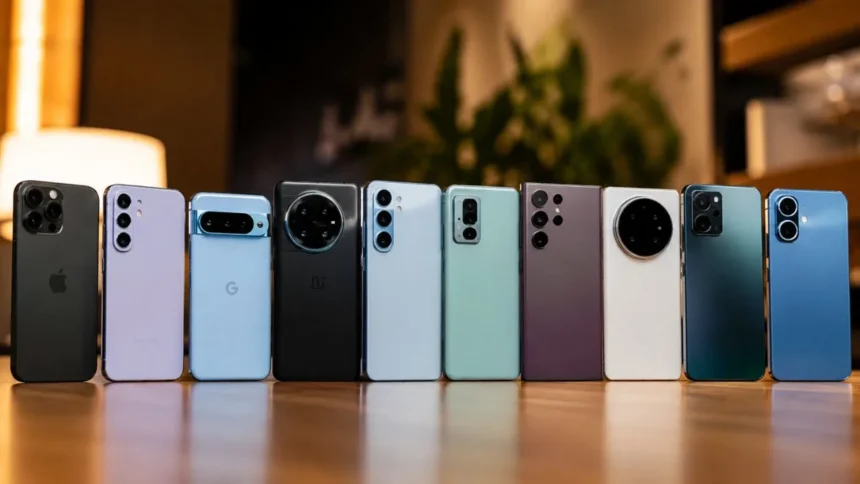
This guide compares ten of the best smartphones for daily use available in July 2026. The selection includes premium flagships, compact phones, affordable iPhones, mid-range Android devices, camera-focused models, and phones with long battery life. Prices and availability vary between countries, so buyers should confirm local warranties, network compatibility, and after-sales support before ordering.
How We Selected the Best Everyday Smartphones
This ranking focuses on practical ownership rather than specifications alone. Current independent smartphone roundups evaluate devices according to performance, camera quality, battery life, design, value, and usability. Those assessments were considered alongside official product specifications, software-support policies, charging capabilities, durability ratings, and regional availability.
Every phone on this list can comfortably handle common tasks such as messaging, video streaming, web browsing, navigation, photography, document viewing, and mobile banking. Greater importance was placed on consistent performance than short bursts of maximum speed. Display visibility, call reliability, storage capacity, biometric security, and comfortable one-handed use were also considered.
Camera quality was judged according to everyday usefulness rather than megapixel count. A reliable smartphone camera should capture moving children, pets, food, documents, landscapes, and nighttime scenes without requiring manual adjustments. Optical image stabilization, ultrawide coverage, portrait quality, video stability, and access to useful editing tools were therefore treated as meaningful advantages.
Value does not necessarily mean choosing the cheapest smartphone. A slightly more expensive device may provide better water resistance, longer update support, stronger resale value, or a more dependable battery. The most suitable everyday phone is one that meets the owner’s actual needs for several years without unnecessary compromises or premature replacement.
Top Smartphones at a Glance
The iPhone 17 and Samsung Galaxy S26 are the strongest all-round choices for people who want polished performance without moving to an oversized Ultra or Pro Max model. Both offer compact flagship designs, smooth displays, dependable cameras, advanced processors, and well-developed ecosystems for accessories, wearables, laptops, and cloud services.
The Google Pixel 10 is particularly attractive for mobile photography and helpful software features. The Xiaomi 17 and OnePlus 15R concentrate more heavily on battery capacity, processing power, high-refresh-rate displays, and fast charging. These models suit people who regularly stream, multitask, travel, or play demanding mobile games.
The iPhone 17e and Google Pixel 10a provide more affordable access to Apple and Google software. Samsung’s Galaxy A57 5G offers a large AMOLED display and a lengthy update commitment, while the Nothing Phone (4a) Pro combines distinctive design with a genuine optical zoom camera in the competitive mid-range category.
Motorola’s Edge 70 Fusion completes the list as a strong option for buyers who prioritize a large display and exceptionally high battery capacity. Its shorter operating-system upgrade commitment prevents it from ranking higher, but its combination of endurance, fast charging, and a responsive display remains compelling for the right user.
| Rank | Smartphone | Best For | Main Strength | Main Consideration |
|---|---|---|---|---|
| 1 | Apple iPhone 17 | Best overall | Balanced hardware and software | No long-range telephoto camera |
| 2 | Samsung Galaxy S26 | Best Android all-rounder | Versatile cameras and compact design | Charging is slower than some rivals |
| 3 | Google Pixel 10 | Best smart camera phone | Photography and Google AI features | Not designed around maximum gaming performance |
| 4 | Xiaomi 17 | Best compact battery flagship | Large battery and fast charging | Availability varies by market |
| 5 | OnePlus 15R | Best performance value | Huge battery and smooth display | Limited rear-camera versatility |
| 6 | Apple iPhone 17e | Best affordable iPhone | A19 performance and long usability | No ultrawide rear camera |
| 7 | Google Pixel 10a | Best value camera phone | Reliable cameras and seven-year support | Uses an older-generation processor |
| 8 | Samsung Galaxy A57 5G | Best long-term mid-range phone | Display, durability, and updates | Performance is below flagship level |
| 9 | Nothing Phone (4a) Pro | Best distinctive mid-range phone | Optical zoom and clean software | Unconventional design may divide buyers |
| 10 | Motorola Edge 70 Fusion | Best big-screen battery phone | 7,000mAh battery and 144Hz display | Only three promised Android upgrades |
1. Apple iPhone 17 Best Smartphone for Most People
The iPhone 17 is the most balanced choice for people who want a dependable smartphone without paying for a Pro model. Its 6.3-inch Super Retina XDR OLED display includes an adaptive refresh rate of up to 120Hz, making scrolling, animations, gaming, and general navigation noticeably smoother than on older standard iPhones. The phone weighs 177 grams, keeping it manageable for one-handed use.
Apple’s A19 chip provides more than enough processing power for everyday applications, mobile editing, multitasking, and demanding games. Performance is not its only advantage, as the close integration between Apple hardware and iOS generally creates a consistent experience across applications. People already using a Mac, iPad, Apple Watch, AirPods, or iCloud will gain even more convenience from the connected ecosystem.
The rear camera system combines a 48MP main camera with a 48MP ultrawide camera. The main sensor also provides a useful 2x optical-quality crop, while the ultrawide supports landscapes, architecture, group photographs, and macro photography. Apple additionally rates the phone for up to 30 hours of video playback, although real-world battery results will depend on brightness, signal strength, and application use.
The main limitation is the absence of a dedicated long-range telephoto camera. Buyers who regularly photograph concerts, wildlife, or distant subjects may need a Pro model or an Android flagship with stronger optical zoom. For everyone else, the iPhone 17 delivers an excellent combination of display quality, camera reliability, performance, manageable size, accessory support, and long-term usability.
2. Samsung Galaxy S26 Best Android Smartphone for Everyday Use
The Samsung Galaxy S26 is an excellent everyday Android phone for users who want flagship features in a relatively compact body. It has a 6.3-inch Dynamic AMOLED 2X display with an adaptive refresh rate between 1Hz and 120Hz. At approximately 167 grams, it is lighter than many premium competitors and should feel comfortable during extended reading, messaging, navigation, and photography sessions.
Its camera system is more versatile than that of many compact phones. Samsung includes a 50MP main camera, a 12MP ultrawide camera, and a 10MP telephoto camera with 3x optical zoom. This arrangement covers daily snapshots, portraits, group photographs, landscapes, documents, and moderately distant subjects without relying entirely on digital cropping.
Performance comes from either the Snapdragon 8 Elite Gen 5 for Galaxy or Samsung’s Exynos 2600, depending on the country and device variant. The phone also includes 12GB of memory and a 4,300mAh battery. Samsung states that the battery can support up to 30 hours of video playback, providing a meaningful improvement for commuters and frequent media users.
Samsung’s interface includes extensive customization, multitasking features, security tools, and Galaxy AI functions, but some buyers may find the number of Samsung and Google applications overwhelming. Charging is also less aggressive than the systems offered by Xiaomi and OnePlus. Even so, the Galaxy S26 remains one of the most complete 5G smartphones for users seeking a compact Android flagship with reliable cameras.
3. Google Pixel 10 Best Everyday Camera and AI Phone
The Google Pixel 10 is designed for people who want a straightforward Android experience supported by helpful photography and communication tools. Its interface is clean, its features are closely integrated with Google services, and its automated call and photo functions can reduce small daily frustrations. The phone is particularly suitable for users who prefer intelligent assistance over extensive manual customization.
Google equips the Pixel 10 with a triple rear-camera system consisting of a 48MP main camera, a 13MP ultrawide camera, and a 10.8MP 5x telephoto camera. That dedicated zoom lens makes the standard Pixel considerably more versatile for portraits, travel, events, and distant subjects. Super Res Zoom extends the available range, although the best detail will naturally come from the optical focal lengths.
The Tensor G5 processor is paired with 12GB of RAM, while the typical battery capacity is 4,970mAh. Google rates the phone for more than 24 hours of normal battery life and supports Qi2-certified Pixelsnap wireless charging at up to 15W. The magnetic charging system is especially convenient for stands, car mounts, wallets, and bedside accessories.
The Pixel 10 is not the obvious first choice for buyers who want the highest gaming frame rates or the fastest wired charging. Its appeal comes from image processing, useful software, security features, voice tools, and an uncluttered user experience. For parents, travelers, professionals, and casual photographers, it is one of the most human-friendly Android phones available.
4. Xiaomi 17 Best Compact Flagship for Battery Life
The Xiaomi 17 demonstrates that a compact flagship does not need a small battery. Its carefully shaped body contains a 6.3-inch display while remaining approximately 71.8mm wide, making it easier to grip than many large-screen competitors. The design is particularly appealing to people who want premium hardware without carrying a heavy Ultra-sized smartphone throughout the day.
Inside the phone is Qualcomm’s Snapdragon 8 Elite Gen 5 platform, supported by fast memory and an advanced cooling system. This provides ample performance for heavy multitasking, video editing, gaming, photography, and AI-assisted applications. The adaptive 1–120Hz display also helps balance smoothness with energy efficiency during reading, streaming, social media use, and navigation.
Its 6,330mAh silicon-carbon battery is unusually large for a phone of this size. Xiaomi supports 100W wired charging and 50W wireless charging, making the device suitable for travelers or professionals who have limited time near a charger. Xiaomi also states that the battery is designed to retain at least 80% health after 1,600 charging cycles under its testing conditions.
The triple 50MP Leica-branded camera system includes ultrawide, main, and floating telephoto cameras, giving users strong flexibility for daily mobile photography. The main considerations are regional availability, warranty coverage, network compatibility, and individual preferences regarding Xiaomi’s HyperOS interface. Where officially supported, the Xiaomi 17 is a powerful alternative to mainstream Apple and Samsung flagships.
5. OnePlus 15R Best Performance and Battery Value
The OnePlus 15R is built for people who prioritize speed, endurance, and a responsive screen. It uses the Snapdragon 8 Gen 5 platform with fast LPDDR5X memory and UFS 4.1 storage, allowing applications to load quickly and supporting demanding games. The 165Hz 1.5K display also makes animations, supported games, and rapid scrolling feel exceptionally fluid.
Its greatest everyday advantage is the 7,400mAh silicon-based battery. OnePlus pairs this capacity with 80W fast charging and claims that a 50% charge can be reached in approximately 22 minutes under its specified conditions. This combination reduces battery anxiety for travelers, mobile gamers, delivery workers, field staff, and people who frequently use mobile data.
The 50MP Sony main camera includes optical image stabilization, while the 8MP ultrawide camera provides broader framing. A 32MP autofocus front camera is useful for video calls, group selfies, and social media content. Image quality should be more than adequate for everyday photography, although the lack of a dedicated rear telephoto camera limits versatility compared with the Galaxy S26, Pixel 10, and Xiaomi 17.
The OnePlus 15R makes the most sense where the manufacturer has an established retail and service network. Availability, software distribution, and warranty support may differ significantly by region, so importing the device without checking local compatibility is not advisable. In supported markets, it is one of the strongest options for buyers seeking flagship-level performance without flagship-level battery anxiety.
6. Apple iPhone 17e Best Affordable iPhone
The iPhone 17e offers a more affordable route into Apple’s current smartphone ecosystem. It includes the same-generation A19 processor used across the iPhone 17 family, providing fast application performance and enough power for gaming, 4K streaming, photo editing, and long-term software use. Starting storage has also increased to 256GB, which is practical for users keeping large photo and video libraries.
Its 6.1-inch Super Retina XDR display is slightly smaller than the iPhone 17 screen, making the device comfortable for users with smaller hands or limited pocket space. Apple has also added MagSafe wireless charging at up to 15W, expanding compatibility with magnetic chargers, stands, wallets, grips, and car mounts. USB-C simplifies charging alongside many newer laptops and accessories.
The single 48MP Fusion rear camera can produce high-resolution photographs, 4K video, portraits, and a 2x optical-quality telephoto view. It is a capable everyday camera, but the phone does not include the separate ultrawide camera found on the standard iPhone 17. Apple rates the 17e for up to 26 hours of video playback, compared with up to 30 hours on the iPhone 17.
Choosing between the iPhone 17e and iPhone 17 depends on the price difference in your market. The 17e is ideal for messaging, calls, payments, social media, casual photography, and access to Apple services. Buyers who value a smoother ProMotion display, an ultrawide camera, or more flexible photography should consider spending more on the standard iPhone 17.
7. Google Pixel 10a Best Value Smartphone for Photography
The Google Pixel 10a brings many of Google’s most useful features into the mid-range smartphone category. Its 6.3-inch Actua pOLED display supports a refresh rate between 60Hz and 120Hz, along with high peak brightness for improved outdoor visibility. The size strikes a practical balance between comfortable media consumption and manageable everyday handling.
The rear camera system combines a 48MP main camera with optical image stabilization and a 13MP ultrawide camera. Google supplements the hardware with Night Sight, Macro Focus, Camera Coach, Magic Eraser, Best Take, Photo Unblur, and other computational photography tools. These features help ordinary users produce attractive photographs without learning complicated manual camera controls.
A 5,100mAh battery provides more than 30 hours of claimed use under Google’s testing methodology, while Qi wireless charging adds convenience that some mid-range phones omit. The Tensor G4 processor and 8GB of RAM are sufficient for normal daily tasks, although buyers focused on advanced gaming or sustained video editing may benefit from a more powerful flagship processor.
One of the Pixel 10a’s strongest advantages is its update policy. Google promises seven years of operating-system updates, security updates, and Pixel Drops from the phone’s original availability date. That extended support, combined with IP68 protection and dependable photography, makes it a sensible value-for-money smartphone for students, families, and professionals.
8. Samsung Galaxy A57 5G Best Mid-Range Phone for Long-Term Ownership
The Samsung Galaxy A57 5G is a practical mid-range Android phone for users who want a large, polished display and familiar software. Its 6.7-inch FHD+ Super AMOLED Plus panel provides ample space for reading, videos, social media, maps, and split-screen tasks. Slimmer bezels and a 6.9mm body help prevent the phone from feeling unnecessarily bulky.
Samsung uses the Exynos 1680 processor with 8GB of memory and either 128GB or 256GB of storage. It will not match premium flagships in demanding gaming or intensive editing, but it should deliver responsive performance for communication, productivity, streaming, photography, and common applications. A larger cooling chamber and faster memory also support smoother multitasking during extended use.
The camera system includes a 50MP stabilized main camera, a 12MP ultrawide camera, and a 5MP macro camera. Its 5,000mAh battery supports Samsung’s Super Fast Charging 2.0 system, with the company claiming up to 60% charging in 30 minutes under specified conditions. IP68 protection and Gorilla Glass Victus+ add useful durability for everyday ownership.
Samsung promises six operating-system upgrades and six years of security updates for the Galaxy A57 5G. This commitment helps justify the device for users who do not replace their phones frequently. Its processor is not designed for flagship performance, but the combination of display quality, water resistance, cameras, updates, and service availability makes it a dependable mid-range choice.
9. Nothing Phone (4a) Pro Best Mid-Range Phone for Design and Zoom
The Nothing Phone (4a) Pro is intended for buyers who find conventional smartphone designs repetitive. Its distinctive industrial appearance is paired with Nothing OS, an Android interface known for bold typography, visual widgets, and relatively focused software. The design will not appeal to everyone, but it gives the phone a recognizable identity in a market filled with similar glass rectangles.
Its 144Hz adaptive display provides exceptionally smooth scrolling for a mid-range device. Performance comes from the Snapdragon 7 Gen 4 platform, LPDDR5X memory, and UFS 3.1 storage. This combination is suitable for multitasking, everyday applications, AI tools, and moderate gaming, although it remains below the sustained performance available from current flagship processors.
The camera system is a significant attraction. Nothing includes a stabilized 50MP main camera and a 50MP periscope camera offering 3.5x optical zoom. The advertised 140x maximum figure relies heavily on digital processing and should not be treated like 140x optical magnification, but the genuine 3.5x lens remains unusually useful within the mid-range category.
Battery capacity is 5,080mAh in many markets and 5,400mAh in India, paired with 50W fast charging. The main buying considerations are local availability, repair support, the unconventional interface, and the phone’s relatively large design. For users who value visual personality, smooth performance, and a proper zoom camera, the Phone (4a) Pro offers something meaningfully different.
10. Motorola Edge 70 Fusion Best Large-Screen Phone for Battery Life
The Motorola Edge 70 Fusion is designed for users who consume large amounts of content and want to spend less time charging. Its 6.78-inch 1.5K AMOLED display supports a 144Hz refresh rate, HDR10+, and high brightness. The expansive screen works well for video streaming, reading, navigation, gaming, and document viewing, although it may feel oversized for people with smaller hands.
Its 7,000mAh silicon-carbon battery is one of the largest in this comparison. Motorola pairs it with 68W TurboPower charging and claims that a short ten-minute charge can provide substantial daily power under its test conditions. Battery performance will vary with signal strength, refresh rate, brightness, applications, and gaming, but the capacity gives the phone an obvious endurance advantage.
The Snapdragon 7s Gen 3 processor and up to 8GB of RAM provide competent mid-range performance. A 50MP Sony LYTIA main camera with optical image stabilization handles everyday photographs and 4K video. The phone is therefore well suited to entertainment, communication, social media, travel, and casual photography rather than intensive professional content creation.
Motorola promises three Android operating-system upgrades for this model, which is less generous than the support offered with the Pixel 10a and Galaxy A57. Buyers intending to keep their smartphone for many years should consider that limitation carefully. For users prioritizing battery capacity, rapid charging, and a large smooth display, however, the Edge 70 Fusion remains a strong practical option.
How to Choose the Best Smartphone for Daily Use
Begin by identifying the tasks that consume most of your screen time. Someone who primarily uses calls, WhatsApp, banking, maps, and social media does not need the same hardware as a mobile gamer or video creator. A good mid-range smartphone may provide a better ownership experience than an expensive flagship filled with specialist features that remain unused.
Battery capacity should be considered alongside processor efficiency, display size, refresh rate, and charging speed. A larger battery does not automatically guarantee better endurance, but it provides useful flexibility for navigation, mobile data, gaming, and travel. Frequent travelers should also check roaming bands, dual-SIM support, eSIM availability, charger compatibility, and local repair options.
For photography, examine the complete camera system instead of focusing only on megapixels. Optical image stabilization helps in low light, an ultrawide lens is useful for buildings and groups, and an optical telephoto camera improves portraits and distant photographs. Consistent image processing is often more valuable than an impressive specification that performs poorly outside ideal lighting.
Finally, check the manufacturer’s software policy and the phone’s remaining support period. Security updates protect banking, communication, passwords, photographs, and personal information. A phone with longer support, water resistance, adequate storage, and a replaceable battery service may deliver better long-term value even when its initial purchase price is slightly higher.
Final Verdict: Which Everyday Smartphone Should You Buy?
The Apple iPhone 17 is the best overall option for most people who prefer iOS. It combines a smooth display, powerful processor, dependable cameras, manageable dimensions, strong battery life, and extensive accessory support. It lacks long-range optical zoom, but its balanced experience makes it more practical for average users than larger and more expensive Pro Max devices.
The Samsung Galaxy S26 is the strongest broadly suitable Android alternative. Its compact construction, adaptive AMOLED display, versatile triple-camera system, and extensive software features make it useful in almost every daily situation. The Google Pixel 10 is a better fit for people who prioritize automated photography, Google services, voice assistance, and a clean Android experience.
Value-focused buyers should consider the Google Pixel 10a, iPhone 17e, or Samsung Galaxy A57 5G. The Pixel offers excellent photography and long software support, the iPhone provides affordable entry into Apple’s ecosystem, and the Galaxy combines a large AMOLED display with durability and six generations of operating-system upgrades.
Users who prioritize endurance should look closely at the Xiaomi 17, OnePlus 15R, and Motorola Edge 70 Fusion. The Nothing Phone (4a) Pro is the most distinctive choice, especially for buyers seeking optical zoom at a mid-range price. The final decision should reflect your operating-system preference, local availability, camera needs, hand size, and expected ownership period.
Frequently Asked Questions
1. What is the best smartphone for everyday use in 2026?
The iPhone 17 is the strongest overall choice for iOS users, while the Samsung Galaxy S26 is the best balanced Android option. Both combine reliable performance, quality displays, capable cameras, and manageable designs.
2. Which phone has the best battery life for daily use?
The OnePlus 15R and Motorola Edge 70 Fusion have particularly large batteries at 7,400mAh and 7,000mAh respectively. Actual endurance will still depend on screen brightness, network strength, applications, gaming, and refresh-rate settings.
3. What is the best affordable smartphone with a good camera?
The Google Pixel 10a is one of the strongest affordable camera phones because of its reliable main camera and computational photography tools. It also includes an ultrawide camera, IP68 protection, and seven years of updates.
4. How much storage is enough for an everyday smartphone?
A minimum of 128GB is suitable for lighter users who rely on cloud storage. Choose 256GB when keeping many photographs, videos, offline downloads, large games, or work files on the device.
5. Should I buy an iPhone or an Android phone for daily use?
Choose an iPhone for simple ecosystem integration, consistent software, and strong accessory support. Choose Android for greater hardware variety, customization, faster charging options, and more choices across different budgets.