

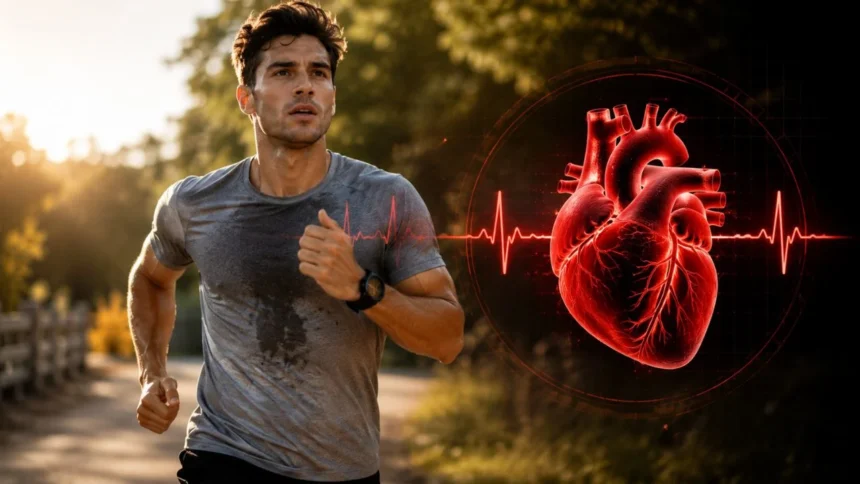
Your heart beats faster during exercise because your working muscles suddenly need more oxygen and energy than they require at rest. To meet that demand, the cardiovascular system must deliver oxygen-rich blood more quickly and remove carbon dioxide, heat, and other metabolic waste. Increasing the heart rate is one of the body’s fastest ways to raise blood flow. In most healthy people, this is a normal and necessary response to physical activity.
The increase may begin even before your workout becomes difficult. Your brain recognizes that movement is starting and adjusts the activity of the autonomic nervous system, which helps regulate functions you do not consciously control. Sympathetic nerve activity rises, while the slowing influence of the parasympathetic system decreases. These changes allow the heart to respond almost immediately to the demands of exercise.
As your exercise intensity rises, your pulse and breathing usually increase together. A gentle walk may cause only a small change, while running, cycling uphill, or performing fast intervals requires a much stronger cardiovascular response. The CDC explains that moderate activity causes noticeable increases in heart rate and breathing, while vigorous activity makes both rise considerably. This close relationship makes your pulse a useful, although imperfect, indicator of workout intensity.
A faster exercise heart rate does not automatically mean that something is wrong. The number can vary according to your age, fitness level, medication, hydration, temperature, health, emotions, and the activity being performed. What matters is whether the response fits the effort and whether it is accompanied by concerning symptoms. Understanding this process can help you exercise confidently without ignoring important warning signs.
Exercise Increases the Muscles’ Need for Oxygen
Muscles need energy to contract, whether you are walking upstairs, lifting a weight, or running on a treadmill. During exercise, the rate at which muscle cells produce and use energy rises above resting levels. Oxygen plays a major role in producing energy during sustained aerobic activities such as brisk walking, swimming, jogging, and cycling. The bloodstream must therefore carry more oxygen from the lungs to the active tissues.
Your heart acts as the pump that keeps this oxygen-delivery system moving. Each heartbeat sends blood through the lungs, where it can receive oxygen, and then through the arteries toward the muscles and organs. When exercise raises the muscles’ metabolic demand, the amount of blood being circulated each minute must also rise. The heart responds by beating faster and, in many situations, pumping more blood with each contraction.
The muscles also produce more carbon dioxide and metabolic by-products while they work. Blood carries these substances away from the active tissues, allowing carbon dioxide to reach the lungs and be exhaled. Increased circulation also transports nutrients that support muscular activity and recovery. Your faster pulse is therefore serving both a delivery function and a removal function during the workout.
Exercise also generates heat, especially during prolonged or vigorous activity. Blood flow to the skin can increase so that excess heat can be released into the surrounding environment. This cooling requirement adds to the demands placed on the cardiovascular system, particularly in warm or humid conditions. The heart may consequently beat faster at the same exercise pace on a hot day than it would in a cooler environment.
The Nervous System Tells the Heart to Speed Up
Your heartbeat is produced by electrical signals that normally begin in the sinoatrial node, a group of specialized cells often described as the heart’s natural pacemaker. At rest, the autonomic nervous system continually adjusts this pacemaker according to the body’s needs. When exercise begins, the balance shifts toward greater sympathetic activity. This tells the heart to beat more quickly and contract with greater force.
The body also releases chemical messengers known as catecholamines, including epinephrine and norepinephrine. Epinephrine is commonly called adrenaline and forms part of the body’s preparation for physical effort. These hormones stimulate the heart and support greater cardiac output during exercise. They also help the circulation adjust so that active tissues receive the blood supply they need.
At the beginning of light exercise, part of the initial increase in heart rate occurs because the parasympathetic system reduces its slowing effect on the heart. As the activity becomes more demanding, sympathetic stimulation and circulating hormones play increasingly important roles. This coordinated response allows your pulse to rise in proportion to the workload. The process happens automatically without requiring you to think about controlling each heartbeat.
Your brain, muscles, blood vessels, lungs, and heart continually exchange information during activity. Signals related to movement, blood pressure, oxygen demand, carbon dioxide, temperature, and muscle chemistry help regulate the cardiovascular response. The result is not simply a heart beating randomly faster. It is a closely controlled adjustment intended to maintain blood pressure and deliver enough blood to the tissues.
Heart Rate and Stroke Volume Raise Cardiac Output
Cardiac output is the amount of blood the heart pumps in one minute. It is calculated by multiplying heart rate by stroke volume, which is the amount of blood pumped with each beat. If either heart rate or stroke volume increases, cardiac output can rise. During exercise, both commonly increase to meet the body’s greater metabolic needs.
Suppose the heart pumps about 70 milliliters of blood per beat while beating 70 times per minute. Its cardiac output would be approximately 4.9 liters per minute. If the pulse and stroke volume rise during exercise, the amount of blood circulated each minute can increase substantially. This increased output supports oxygen delivery to the working muscles and other active tissues.
Stroke volume rises partly because more blood returns to the heart during movement. Contracting leg and body muscles help push venous blood back toward the chest, while deeper breathing also supports venous return. The heart fills with more blood and contracts more forcefully under the influence of sympathetic stimulation. Exercise-related increases in preload and contractility therefore help raise the amount pumped with each beat.
Increasing stroke volume alone cannot meet every level of exercise demand. As the workout becomes harder, heart rate becomes increasingly important for raising total cardiac output. Healthy cardiac output may increase several times above its resting value during intense activity, with highly trained athletes capable of particularly large increases. This is why a rapid but appropriately rising pulse is an expected part of vigorous exercise.
Blood Flow Is Redirected Toward Working Muscles
The cardiovascular response to exercise involves more than making the heart beat faster. Blood vessels in active muscles widen, a process known as vasodilation, which allows more blood to enter the tissues. Local chemical changes inside working muscles contribute to this widening. The increased blood flow delivers oxygen while supporting the removal of carbon dioxide and heat.
At the same time, the body can reduce blood flow to certain less active areas during demanding exercise. Sympathetic signals help redistribute circulation so that the muscles, heart, and other essential tissues receive an appropriate share of the available blood. This does not mean that other organs lose their blood supply completely. Instead, circulation is adjusted according to the body’s immediate priorities.
The heart muscle also needs additional oxygen because it is working harder. Coronary blood vessels supply the myocardium, which is the muscular wall of the heart. During exercise, coronary circulation must increase to support the stronger and more frequent contractions. Catecholamine-related changes help enhance blood flow to the working heart muscle as its oxygen requirements rise.
This carefully regulated blood-flow pattern helps explain why cardiovascular disease can sometimes cause exercise-related symptoms. If narrowed coronary arteries cannot deliver enough oxygen when the heart works harder, a person may develop angina or chest discomfort. Exercise-related chest pressure should not be dismissed as a normal sign of getting fit. It deserves prompt medical evaluation, especially when accompanied by breathlessness, nausea, sweating, or dizziness.
Breathing and Heart Rate Rise Together
Your lungs and heart work as partners during exercise. Breathing brings oxygen into the lungs and removes carbon dioxide, while circulation carries those gases between the lungs and tissues. As the muscles consume more oxygen and produce more carbon dioxide, breathing must become faster and deeper. The heart simultaneously increases blood flow so that the respiratory and circulatory systems remain coordinated.
During moderate-intensity activity, your breathing and heart rate should increase noticeably, but you can usually continue speaking in sentences. The CDC describes vigorous exercise as activity that makes breathing hard and fast and prevents you from saying more than a few words without pausing. This “talk test” offers a simple way to estimate intensity without a fitness tracker. It is especially helpful when an age-based heart-rate target may not suit the individual.
Breathing harder does not necessarily mean your blood oxygen level has become dangerously low. In most healthy people, the lungs increase ventilation to keep up with exercise demands. The sensation of breathlessness reflects the overall effort required from the respiratory muscles and cardiovascular system. It should improve when you reduce the intensity or stop and recover.
Severe, unexpected, or rapidly worsening breathlessness is different from ordinary exercise breathing. Stop exercising when breathlessness prevents comfortable speech, particularly when it occurs with chest discomfort, dizziness, weakness, faintness, or an irregular pounding heartbeat. These symptoms may need medical assessment rather than a harder attempt to push through the workout. Current cardiac rehabilitation guidance emphasizes stopping when such warning signs appear.
Exercise Intensity Determines How Fast the Heart Beats
The harder your muscles work, the more oxygen and blood flow they generally require. Your heart rate therefore tends to rise as exercise intensity increases. Slow walking may produce a modest rise, while running or climbing steep hills produces a larger response. This relationship allows heart-rate monitoring to serve as one way of estimating aerobic exercise intensity.
Moderate-intensity exercise usually makes the heart beat faster and breathing become heavier while still allowing conversation. Vigorous activity creates a greater increase and makes continuous talking difficult. These categories describe relative effort rather than one universal speed or workload. A pace that feels moderate to a trained runner may be vigorous for someone beginning an exercise program.
Exercise type also influences the cardiovascular response. Rhythmic aerobic activities involving large muscle groups usually produce a steady rise in pulse. Heavy resistance exercise can create shorter, sharper changes in heart rate and blood pressure, particularly when a person holds their breath. Interval training causes the pulse to repeatedly rise during hard efforts and fall during recovery periods.
Fitness watches can show useful trends, but their readings are not perfect medical measurements. Wrist movement, skin contact, device placement, temperature, and the activity being performed can affect accuracy. Pay attention to perceived effort, breathing, symptoms, and performance alongside the displayed number. A single unusual reading should be checked rather than immediately treated as proof of a health problem.
Fitness Changes the Heart’s Response to Exercise
Regular aerobic training can strengthen the heart muscle and improve its ability to pump blood. A trained heart often ejects more blood with each contraction, meaning it may not need to beat as frequently at rest or during a familiar submaximal workload. This is one reason physically fit people often have lower resting heart rates. It also explains why the same walking or cycling pace may feel easier after several weeks of training.
A beginner’s heart rate may rise quickly during an activity that feels relatively easy to an experienced exerciser. This does not necessarily mean the beginner’s heart is weak or unhealthy. Their body has not yet developed the same efficiency, movement skill, blood-volume adaptation, and muscular endurance. Consistent, progressive training generally reduces the strain associated with a familiar workload.
Heart-rate recovery describes how quickly the pulse falls after exercise ends. The rate does not return to its resting level immediately because circulation, breathing, temperature control, and metabolism remain elevated for a period. Regular training often improves recovery, allowing the heart rate to decline more efficiently after activity. The American Heart Association notes that people who exercise consistently may see their pulse return toward normal more quickly.
Recovery should be gradual rather than abrupt, particularly after vigorous activity. A cool-down involving slower movement allows breathing and circulation to settle progressively. Suddenly standing still can allow blood to pool in the legs and may contribute to lightheadedness in some people. The American Heart Association recommends warming up and cooling down to support gradual heart-rate and breathing changes.
Why Exercise Heart Rates Differ Between People
Age is one factor influencing maximum exercise heart rate, which generally declines over time. The commonly used estimate of 220 minus age provides only a rough starting point and should not be treated as an exact personal limit. Two healthy people of the same age can have noticeably different maximum and working heart rates. Genetics, fitness, activity type, health, and measurement conditions all contribute to individual variation.
Medications can significantly change the normal response. Beta blockers are designed to slow the heartbeat and reduce how forcefully the heart contracts, so a person taking one may not reach standard age-predicted target zones. Certain other medicines, inhalers, stimulants, and thyroid treatments may also affect pulse. Anyone using heart-rate-altering medication should ask a healthcare professional how to judge exercise intensity appropriately.
Temperature and hydration also matter. Exercising in heat requires additional blood flow to the skin for cooling, while fluid loss reduces the volume available for circulation. As dehydration develops, the heart may need to beat faster to maintain output at the same workload. CDC guidance notes that heart rate and body temperature can rise in proportion to dehydration during heat exposure.
Stress, anxiety, poor sleep, illness, caffeine, pain, and hormonal changes can alter the pulse before or during exercise. A workout performed after a stressful day may therefore produce a different reading from the same session under calm conditions. Exercise itself and excessive caffeine can also trigger noticeable palpitations in some people. Repeated changes from your normal pattern should be discussed with a qualified healthcare professional.
How to Measure Exercise Heart Rate Safely
You can measure your pulse manually at the wrist or side of the neck. Count the beats for 30 seconds and multiply the result by two to estimate beats per minute. Measure promptly when checking an exercise pulse because the rate may begin falling as soon as you slow down. Avoid pressing both sides of the neck at the same time.
Age-based target zones can provide general guidance for healthy adults. The American Heart Association describes moderate intensity as approximately 50% to 70% of estimated maximum heart rate and vigorous intensity as around 70% to 85%. These ranges are averages rather than strict requirements. Your appropriate zone may differ because of medication, fitness, medical history, pregnancy, heat, or individual physiology.
The talk test and a perceived-exertion scale are useful alternatives. During moderate exercise, you should usually be able to talk but not sing, while vigorous exercise normally limits speech to a few words. These methods focus on how hard your body is actually working rather than relying entirely on a formula. They can also help when wearable technology gives an unexpected reading.
People with known heart disease, previous heart procedures, unexplained fainting, significant rhythm problems, or exercise-related chest symptoms may need individualized advice. A healthcare professional may recommend an exercise stress test, cardiac rehabilitation, or a personalized intensity range. During a clinical stress test, heart rhythm, blood pressure, symptoms, and other responses can be monitored. This provides information that a general online target-heart-rate chart cannot supply.
When Is a Fast Exercise Heartbeat Normal?
A normal exercise-related increase is usually gradual and matches the activity. The pulse rises as the workload becomes harder, remains elevated while the effort continues, and begins declining during recovery. You may feel the heartbeat more strongly, especially during running, intervals, or strenuous climbing. In the absence of concerning symptoms, this pattern commonly represents normal sinus tachycardia.
An ordinary exercise heartbeat should generally feel regular, even when it is fast. Occasional awareness of pounding does not necessarily indicate a dangerous rhythm, particularly during strenuous activity. However, a sudden racing sensation unrelated to effort, persistent fluttering, or a clearly irregular pulse deserves attention. Record when it happens, how long it lasts, and whether other symptoms occur.
Stop exercising if you experience chest pain or pressure, severe or unusual shortness of breath, dizziness, faintness, confusion, nausea, or a pounding irregular heartbeat. Do not try to prove your fitness by continuing through these symptoms. Rest in a safe position and seek medical advice based on the severity and persistence of the problem. Exercise guidance for heart patients specifically identifies these symptoms as reasons to stop immediately.
Seek urgent emergency care for chest discomfort that lasts, returns, or occurs with shortness of breath, sweating, nausea, lightheadedness, or pain spreading to the arm, back, neck, jaw, or stomach. New palpitations accompanied by fainting, near-fainting, chest pain, or significant breathlessness also require prompt attention. The American Heart Association’s 2026 guidance advises evaluation when palpitations bring new symptoms or represent a change from baseline.
How to Support a Healthy Heart-Rate Response
Begin each session at an easy pace rather than moving immediately into intense exercise. A gradual warm-up allows the heart rate, breathing, muscle temperature, and circulation to rise smoothly. It also gives you time to notice whether the body feels unusually tired, dizzy, breathless, or uncomfortable. After the main workout, reduce the pace gradually during a cool-down.
Increase exercise duration and intensity progressively, especially when you are new to physical activity or returning after illness. Trying to match another person’s pace can push you above an appropriate effort level. Use your breathing, talk test, perceived exertion, and heart-rate trend together. Consistency at a manageable intensity usually provides more benefit than occasional workouts that leave you exhausted or unwell.
Pay particular attention to hydration and heat. Drink appropriately before and during prolonged exercise, adjust your pace in warm conditions, and choose cooler times of day when necessary. Stop activity and move to a cool place if you feel faint or weak in the heat. People with heart, kidney, or fluid-balance conditions should follow their clinician’s guidance rather than adopting a general hydration target.
Do not ignore a repeated change in your normal exercise response. A pulse that is suddenly much higher or lower than usual at the same workload may be influenced by illness, medication, dehydration, poor recovery, or another health issue. Rest and reassess instead of forcing the session. Seek professional evaluation when the change persists or is accompanied by symptoms.
Conclusion
The heart beats faster during exercise because active muscles require more oxygen, nutrients, blood flow, and waste removal. Your nervous system responds by increasing heart rate and contraction strength, while blood vessels and breathing adjust to support the workload. Together, these changes raise cardiac output. This is a normal part of the body’s response to physical activity.
The increase should generally match the intensity of the exercise. Light movement creates a smaller rise, while vigorous aerobic activity demands a faster pulse and heavier breathing. Training can improve cardiovascular efficiency, allowing the heart to pump more blood per beat. Over time, familiar activities may therefore produce a lower heart rate and faster recovery.
No single exercise heart-rate number is ideal for everyone. Age-based target zones can provide a starting point, but fitness, medication, temperature, hydration, stress, health, and genetics can all change the response. The talk test and perceived exertion add valuable context. Your personal pattern is often more useful than comparing your pulse with someone else’s.
A faster heartbeat is usually beneficial when it is a controlled response to exercise. It becomes concerning when it is unexpectedly irregular, does not match the effort, or occurs with chest pain, faintness, severe breathlessness, or other warning signs. Listen to symptoms as well as numbers. When in doubt, stop exercising and obtain appropriate medical advice.
Frequently Asked Questions
Why does my heart start beating fast as soon as I exercise?
Your nervous system quickly reduces the signals that slow the heart and increases sympathetic stimulation. This prepares the body to send more oxygen-rich blood to working muscles.
What is a normal heart rate during exercise?
There is no single normal number for everyone. Age-based ranges can offer general guidance, but your medication, fitness, health, temperature, and workout intensity can significantly change an appropriate rate.
Why does my heart beat faster in hot weather?
Your body must send additional blood toward the skin to release heat, while sweating can reduce circulating fluid. These demands may force the heart to beat faster at the same exercise pace.
Why does my heart keep beating fast after exercise?
Your body still needs increased circulation for cooling, oxygen delivery, and recovery immediately after activity. The rate should gradually fall, particularly when you complete a proper cool-down.
When should I worry about a fast heartbeat during exercise?
Stop and seek medical guidance for a rapid or irregular heartbeat accompanied by chest discomfort, faintness, severe breathlessness, weakness, or dizziness. Persistent or unexplained changes from your usual response should also be evaluated.